
What Size Brush Cutter Do You Need for Farm Clearing Work
brush cutter size guide, gasoline brush cutter, farm brush cutter, brush cutter for weeds, brush cutter for small shrubs, grass cutting machine, brush cutter engine size, 2 stroke brush cutter, brush cutter buying guide
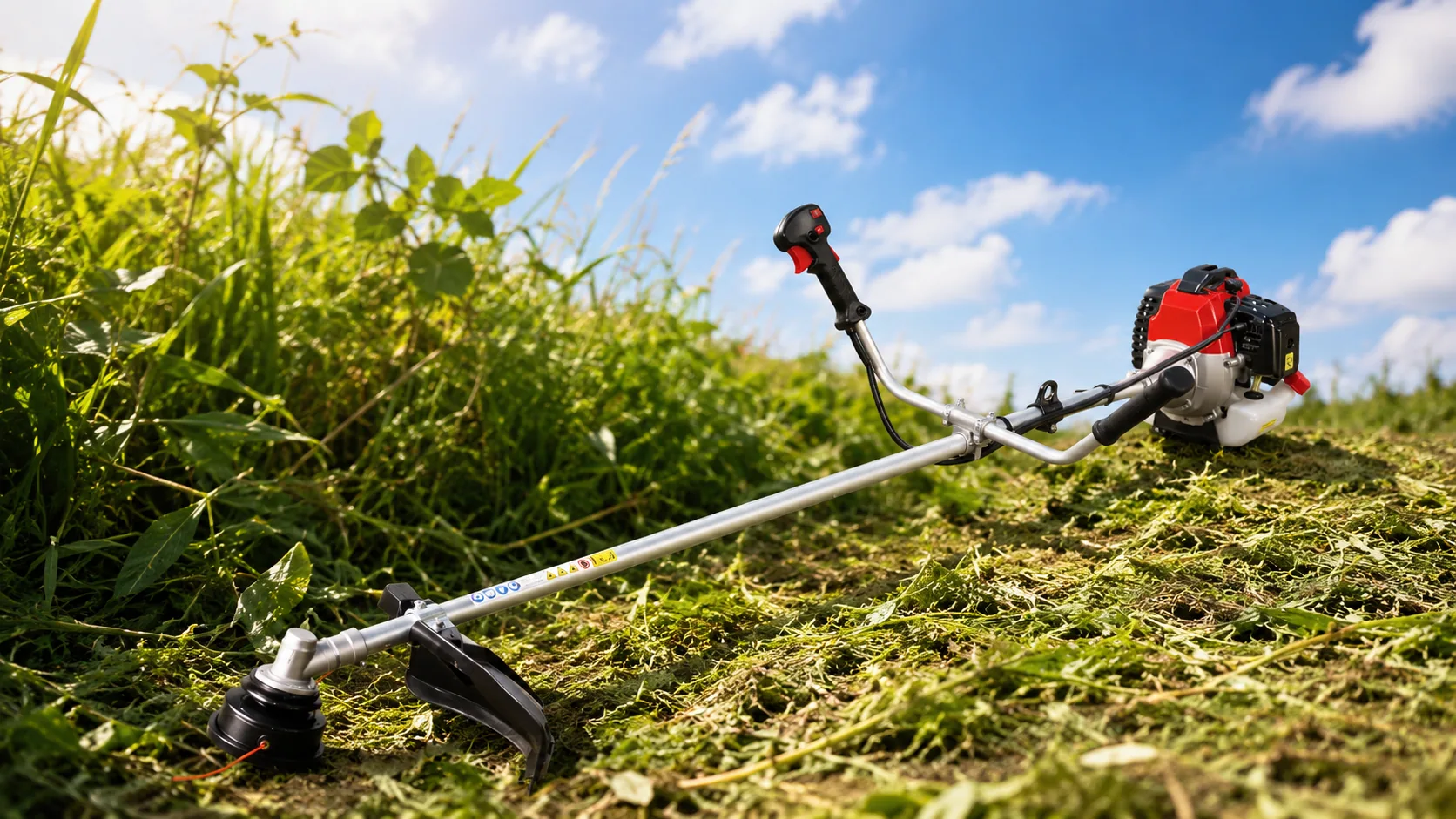
Choosing the right brush cutter size is not only about engine power. The best choice depends on what you need to cut, how often the machine will be used, the cutting attachment, and the working environment. Light grass, thick weeds, farm edges, orchard maintenance, and rough land clearing all require different levels of power and control.
For farmers, landscaping teams, dealers, and importers, selecting the right brush cutter model can directly affect user satisfaction, repeat sales, and after-sales support. A machine that is too small may not handle tough vegetation, while a machine that is too heavy may be uncomfortable for daily trimming work.
Looking for a Farm-Use Brush Cutter?The TM-CG520 52cc gasoline brush cutter is suitable for farm weed clearing, thick grass cutting, orchard maintenance, and general agricultural use.
|
Quick Guide: Brush Cutter Size by Cutting Job
| Cutting Job | Recommended Type | Suggested Attachment | Main Advantage |
|---|---|---|---|
| Soft grass and lawn edges | Lightweight side-mounted brush cutter | Nylon trimmer head | Easy control and comfortable operation |
| Thick weeds and farm edges | Medium to heavy-duty gasoline brush cutter | 3T blade or metal blade | Better cutting force for dense vegetation |
| Orchards and uneven ground | Side-mounted or backpack brush cutter | Nylon head or metal blade | Flexible for different working areas |
| Small shrubs and rough clearing | Heavy-duty brush cutter | Compatible metal blade | More stable performance for harder stems |
| Large flat grass areas | Hand-push or wheeled brush cutter | Blade or cutting head by model | Reduces operator carrying fatigue |
Start with the Material You Need to Cut
Before choosing a brush cutter, the first question should be simple: what will the machine cut most often?
For soft grass, lawn edges, and garden trimming, a lighter brush cutter is usually enough. These jobs do not require excessive power because the cutting resistance is low. A lighter machine is also easier to carry, easier to control, and more comfortable for long working hours.
For thick weeds, field edges, roadside grass, and uncultivated land, a stronger gasoline brush cutter is more suitable. These working areas often include dense vegetation, hidden stems, uneven ground, and mixed grass. The machine needs enough torque to keep the blade or trimmer head running smoothly.
For small shrubs, dry stems, and rough farm clearing, buyers should consider a heavier-duty model with a suitable metal blade. In this case, engine power, gearbox strength, shaft quality, and blade compatibility all become important.
Light Grass Cutting: Choose Comfort First
If the main job is trimming grass around gardens, yards, orchards, pathways, or small farms, comfort should come first. A brush cutter that is too heavy can make simple work tiring, especially when users operate the machine for several hours a day.
For this type of work, many users choose a side-mounted brush cutter with a nylon trimmer head. Nylon line is suitable for grass and soft weeds. It is also useful for cutting near walls, fences, trees, stones, and garden edges where a metal blade may not be the best choice.
A lighter machine is easier for new users to handle. It is suitable for home garden users, municipal cleaning teams, landscaping work, and small farm maintenance. For dealers, this type of brush cutter is often easier to sell to general users because it is simple, practical, and comfortable.
Thick Weeds and Farm Edges Need More Torque
When cutting thick weeds or overgrown farm edges, the brush cutter needs stronger cutting performance. Soft grass can be trimmed quickly, but dense weeds can slow the machine down if the engine and attachment are not suitable.
For this work, a gasoline brush cutter with a metal blade is often more effective than using only nylon line. A 3T blade is commonly used for grass, weeds, and general field clearing. It cuts faster in thicker vegetation and is practical for farms, orchards, roadsides, and uncultivated land.
However, buyers should not choose a machine only by engine size. A strong engine with a poor blade, weak shaft, or low-quality gearbox may still perform badly. Cutting performance depends on the full system: engine, shaft, gearbox, blade, trimmer head, and operator technique.
Recommended for Thick Weeds and Farm EdgesTM-CG520 is a 52cc gasoline brush cutter designed for stronger cutting work, including thick grass, farm weeds, orchard cleaning, and general agricultural clearing.
|
Small Shrubs Require the Right Blade, Not Just More Power
For small shrubs and harder stems, a brush cutter needs stable power and a suitable metal blade. A nylon trimmer head is not designed for woody material. If users try to cut shrubs with nylon line, the line will wear quickly and the work will be slow.
For tougher cutting jobs, buyers should choose a brush cutter that supports practical blade options. Different blades may be used for different vegetation, depending on the machine model and local working conditions. Before purchasing, buyers should confirm which attachments are compatible with the brush cutter.
This is especially important for B2B buyers. In many agricultural markets, end users do not only cut grass. They may need one machine for grass, weeds, crop edges, orchard cleaning, and light land clearing. A brush cutter that supports useful attachments will be easier to sell and easier to explain to customers.
Engine Size: Bigger Is Not Always Better
Many buyers ask, “How many cc should a brush cutter be?” The answer depends on the cutting condition, working hours, and target user group.
A smaller engine may be suitable for light trimming and garden work. It is easier to carry, usually more comfortable for general users, and can be a good choice for markets where customers mainly need grass cutting and simple maintenance.
A larger engine is more suitable for thick weeds, rough grass, and farm clearing. It provides stronger cutting force, especially when using metal blades. However, a larger engine can also make the machine heavier and more tiring during long operation.
For dealers and importers, it is usually better to offer several brush cutter models instead of relying on only one size. Entry-level users may prefer lighter models, while farm users often ask for stronger machines. A balanced product range helps cover more customer needs.
2-Stroke or 4-Stroke Brush Cutter?
A 2-stroke brush cutter is widely used in many agricultural markets because it has a simple structure, strong power-to-weight ratio, and good cutting performance for tough jobs. It is commonly selected for farms, roadside clearing, and areas where users need strong power and easy maintenance.
A 4-stroke brush cutter is often preferred by users who want smoother operation and do not want to mix gasoline with oil. It can be suitable for garden maintenance, landscaping, and users who value easier fuel handling.
For importers and wholesalers, local market habits are important. Some markets prefer 2-stroke machines because mechanics are familiar with them and spare parts are easier to support. Other markets may prefer 4-stroke models for specific customer groups.
Choose the Right Cutting Attachment
Nylon Trimmer HeadSuitable for soft grass, lawn edges, and areas near obstacles. It is flexible and useful for daily trimming work. |
3T BladeSuitable for weeds, thicker grass, and general farm clearing. It is a practical attachment for agricultural users. |
Metal BladeSuitable for heavier cutting work, depending on the brush cutter model and local working conditions. |
For wholesale orders, it is also important to check the standard accessory set. Many brush cutters are supplied with a blade, nylon trimmer head, tool kit, and shoulder belt, but the exact configuration may vary by supplier and model.
Handle Type Affects Control and Fatigue
Handle design affects how the machine feels during operation. A bike handle gives better control when cutting large open areas. It helps the operator swing the brush cutter more steadily from side to side, which is useful for farm clearing and roadside work.
A loop handle is often easier to use in narrow areas, around trees, or in garden spaces. It can be more flexible for trimming work, but it may not provide the same control for heavy clearing.
For long working hours, the shoulder belt or harness also matters. A good carrying system reduces arm fatigue and helps keep the machine balanced. Dealers should not ignore this point because operator comfort strongly affects customer satisfaction.
Side-Mounted, Backpack, or Wheeled Brush Cutter?
A side-mounted brush cutter is the most common choice for many users. It is practical, easy to transport, and suitable for grass cutting, weed clearing, orchard maintenance, and general farm work.
A backpack brush cutter can be useful in hilly areas, orchards, terraces, and uneven ground. Because the engine is carried on the back, some users find it easier to operate on slopes or during longer working hours.
A wheeled brush cutter, also called a hand-push brush cutter, is suitable for larger flat areas where users want to reduce carrying fatigue. It may not be ideal for narrow or uneven land, but it can be efficient for open grass areas.
What Should Importers Check Before Buying Brush Cutters in Bulk?
Importers and dealers should not only compare price. A low price is not useful if the model does not match local usage or if spare parts are difficult to support.
- What vegetation do local users cut most often?
- Do customers prefer 2-stroke or 4-stroke engines?
- Are spare parts easy to supply in the local market?
- What attachments are included as standard?
- Is the machine suitable for local fuel quality and maintenance habits?
- Do users prefer side-mounted, backpack, or wheeled brush cutters?
- Is the carton design suitable for retail sales?
- Can the supplier support stable quality and repeat orders?
A good brush cutter model should be easy to explain to customers. Dealers should be able to tell buyers which model is for grass trimming, which one is for farm weeds, and which one is for heavier clearing work.
Common Mistakes When Choosing a Brush Cutter
One common mistake is choosing the largest engine for every job. More power can help in tough conditions, but it also adds weight and may not be comfortable for light users.
Another mistake is using the wrong attachment. Many cutting problems come from using nylon line where a blade is needed, or using a blade in areas where nylon line would be safer.
Some buyers also ignore after-sales support. Brush cutters are working machines, and users may need spare parts such as trimmer heads, blades, spark plugs, carburetors, recoil starters, gearboxes, and other wearing parts. For dealers, spare parts availability can be as important as the machine itself.
How to Make the Final Choice
For light grass and garden trimming, choose a lighter brush cutter with a nylon trimmer head. For thick weeds and farm edges, choose a stronger gasoline brush cutter with a suitable metal blade. For shrubs and rough clearing, check engine power, blade compatibility, gearbox strength, and operator safety before use.
The best brush cutter is the model that fits the user’s real working condition. For B2B buyers, the goal is not only to buy a machine, but to select models that local customers can use, maintain, and recommend.
Recommended Model for Farm Weed ClearingFor buyers looking for a stronger gasoline brush cutter for farm use, thick weeds, and general field clearing, the TM-CG520 52cc gasoline brush cutter is a practical option. It is suitable for agricultural users who need more cutting power than light trimming models.
|
FAQ About Choosing Brush Cutter Size
What size brush cutter is best for farm use?
For general farm use, a medium to heavy-duty gasoline brush cutter is usually more suitable than a light trimming model. The best size depends on whether users mainly cut soft grass, thick weeds, or rough vegetation.
Is a bigger brush cutter always better?
No. A bigger engine can provide more power, but it also adds weight. For light grass and garden work, a lighter brush cutter may be more comfortable and easier to control.
Should I use nylon line or a metal blade?
Nylon line is suitable for soft grass and trimming near obstacles. A metal blade, such as a 3T blade, is better for thick weeds, farm edges, and heavier vegetation.
Which is better, 2-stroke or 4-stroke brush cutter?
A 2-stroke brush cutter is often preferred for strong power and simple maintenance. A 4-stroke brush cutter is suitable for users who want smoother operation and easier fuel handling.
What should dealers check before importing brush cutters?
Dealers should check engine type, model selection, spare parts support, standard accessories, packing, market preference, and after-sales service. A good model should match local cutting conditions and be easy for customers to maintain.