
How Should a Brush Cutter Manufacturer Lock 52cc Engine Specs?
See how a brush cutter manufacturer should control 52cc engine codes, displacement, rated output, labels and production records before bulk orders.
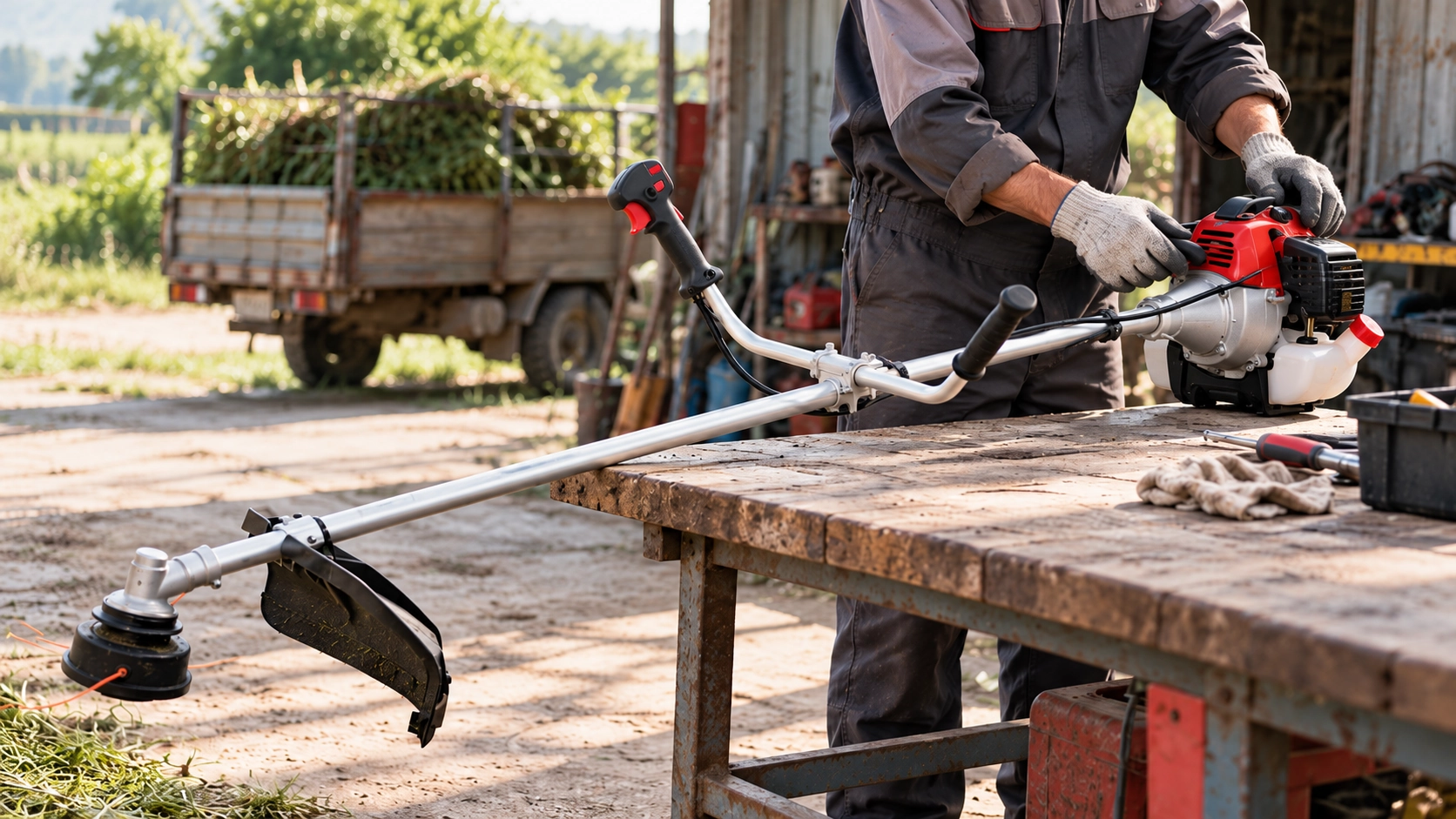
52cc Brush Cutter Manufacturer: How to Control Engine Specifications Before Bulk Production
A 52cc brush cutter manufacturer should confirm the exact engine specification before bulk production, rather than using “52cc brush cutter” as the only technical reference. The approved sample, quotation, production sheet, machine label and final inspection record should all identify the same engine configuration.
This is particularly important for importers ordering several brush cutters within the same displacement class. Two machines may both be marketed as 52cc models while using different engine versions, rated-speed references or service components. An undocumented engine substitution can affect OEM labeling, repeat orders and dealer after-sales support even when the finished machines look similar.
1. Why a 52cc Description Cannot Control Factory Production
Displacement describes an engine-size category, not the complete engine specification. A purchasing department may use “52cc brush cutter” as a convenient description, but the assembly line needs to know which engine version belongs to each production order.
The distinction becomes important when several similar machines enter production together. External appearance and nominal displacement do not establish that their engines, rated outputs or service components are identical.
Production risk: an incomplete engine description
A production instruction reading only “52cc / 1.8 kW” does not establish the engine model or the speed at which the power rating applies. If another engine version has a similar displacement, staff may not have enough information to distinguish the intended configuration.
The manufacturer should therefore connect the commercial machine model with a specific engine reference before ordering or releasing engines for assembly.
2. Use the TM-CG520 to Define an Engine Specification Record
The TM-CG520 52cc Gasoline Brush Cutter provides a practical example of how a machine model can be linked to identifiable engine information. Its published configuration specifies a 1E44F-5 two-stroke air-cooled engine with 51.7cc displacement and rated output of 1.8 kW at 7500 rpm.
| Specification Field | TM-CG520 Published Reference |
| Machine model | TM-CG520 |
| Commercial category | 52cc gasoline brush cutter |
| Engine model | 1E44F-5 |
| Engine type | Two-stroke, air-cooled |
| Actual displacement | 51.7cc |
| Rated output | 1.8 kW at 7500 rpm |
Each field serves a different purpose. The TM-CG520 is the complete machine reference. The 1E44F-5 identifies the listed engine model, while 51.7cc describes actual displacement. The value 1.8 kW at 7500 rpm states the rated output together with its associated engine speed.
These should remain separate fields in the factory record. Reducing them to “52cc” removes information that production, inspection and after-sales teams may later need.
Product Reference: TM-CG520
Model: TM-CG520 52cc Gasoline Brush Cutter
Relevant for importers who need a defined engine configuration to compare against the approved sample, bulk-production documents and OEM labels. The published values provide a starting reference; the final order configuration should still be confirmed before production.
| View TM-CG520 Specifications |
3. Lock the Engine at Sample Approval, Not Final Inspection
The approved sample should function as a technical production reference, not merely a machine that the buyer has seen or operated. Once the importer approves the sample, its confirmed engine specification should be recorded before bulk assembly begins.
An effective control process follows the engine reference through the factory rather than checking isolated documents at the end.
01 — Approved sample. Record the machine model, engine model, engine type, actual displacement, rated output and rated speed. Photograph or otherwise record the engine identification where appropriate.
02 — Quotation or proforma invoice. Confirm that the engine configuration being purchased matches the approved reference. Record any accepted alternative explicitly.
03 — Production sheet. Transfer the confirmed specification to the production order rather than copying engine data from a previous model.
04 — Incoming-engine identification. Link the engine batch or identification records to the correct finished-machine order before assembly.
05 — Label and final inspection. Check that installed engine identification and printed technical information correspond to the same approved configuration.
For repeat production of TM-CG520, this record allows the factory to refer back to the approved 1E44F-5 configuration rather than interpreting a request for the “same 52cc model” from memory.
4. Incoming Engines and Rated-Power Records Need Separate Checks
Engine identification begins before the engine reaches the assembly line. If several 51–52cc engine versions are being handled, an incoming batch should be linked to the intended production order using the confirmed engine model, supplier records or other factory identification references.
Similar external castings are not sufficient evidence. An engine that cannot be confidently connected to the approved configuration should not be released for assembly solely because it looks like the expected unit.
Rated output must include rated speed
For TM-CG520, the published output reference is 1.8 kW at 7500 rpm.
Writing only “1.8 kW” omits the operating-speed reference associated with that value. This matters when comparing factory quotations or preparing specifications, since rated power figures stated at different speeds should not be treated as directly equivalent without further technical context.
Rated output and rated speed should stay together in catalog data, technical sheets, production records and OEM artwork. If one value changes, the related specification must be reviewed rather than copied unchanged from another machine.
5. OEM Labels and Documentation Must Match the Confirmed Engine
A machine label is not the right place to discover that an old specification sheet was reused. Before printing labels in volume, compare the commercial model and every engine-related value shown on the artwork against the confirmed order specification.
For OEM orders, label artwork, cartons and manuals may be prepared separately from the factory's internal production sheet. If the engine configuration changes after artwork approval, those materials need another review. A correctly assembled brush cutter with incorrect technical labeling can still create service and identification problems after shipment.
| Document | Check Point | Consequence of Mismatch |
| Quotation / PI | Confirmed engine reference | The order may be interpreted using a different engine version |
| Production sheet | Engine model and rated specification | Assembly may follow an outdated reference |
| Machine label | Printed model and technical values | Dealers may identify the machine incorrectly |
| Manual and OEM artwork | Values copied from the correct configuration | Technical information may conflict across supplied materials |
| Final inspection record | Installed engine versus approved production identity | A substitution may go unrecognized before shipment |
Correcting a documentation error is not the same as adjusting the engine. If the listed rated speed is wrong, tuning the engine does not repair the record. Likewise, unexpected engine behavior should be diagnosed technically instead of rewriting specifications to make the unit appear acceptable.
6. Bulk-Order Engine Specification Checklist for Importers and Dealers
The following checks are intended for a 52cc brush cutter manufacturer and importer to use at two different stages: before authorizing production and before accepting the shipment.
|
Before Production
|
Before Shipment
|
Final inspection does not need to dismantle every engine or measure internal displacement on every machine. The immediate control objective is to establish that the installed engine, approved production record and supplied documentation all refer to the same configuration.
7. Recheck the Engine Reference Before Repeat Orders
A repeat order should not automatically assume that every engine component remains unchanged because the commercial model number is the same. Compare the new production request with the previously approved engine specification.
If an alternative engine is proposed, determine whether its identity or components affect machine labels, manuals, spare-parts planning or existing dealer service records. The distinction becomes more important once local stock and service parts have already been organized around the previous shipment.
For instance, a change in engine version may affect the selection of ignition, starter, carburetor or other engine-related replacement components. The precise compatibility of those parts must still be confirmed individually. Matching displacement or even an engine-family description does not establish complete interchangeability.
The production specification serves as the reference for what has been supplied; a separate model-specific parts check establishes what replacements actually fit.
8. Frequently Asked Questions About 52cc Engine Specification Control
Is a 52cc brush cutter engine always exactly 52cc?
No. A commercial 52cc category can include an engine with a different stated actual displacement. The TM-CG520, for example, lists 51.7cc. Procurement and production documents should use the confirmed technical displacement instead of deriving it from the product name.
What engine is listed for the TM-CG520 gasoline brush cutter?
The published configuration identifies a 1E44F-5 two-stroke air-cooled engine with 51.7cc displacement and a rated output of 1.8 kW at 7500 rpm. The specification used for an actual order should match the configuration confirmed with the manufacturer.
Why must rated engine power include rpm?
The rated speed identifies the engine-speed reference associated with the published power figure. Stating only 1.8 kW omits that reference and makes comparisons between specifications less clear.
How can an importer check the engine model without dismantling it?
Compare available engine identification, approved sample records, incoming-engine records and the factory's confirmed production specification. The appropriate checks depend on the engine's identification method; external appearance alone is not sufficient.
Can a manufacturer change the engine on a repeat wholesale order?
An alternative configuration should be discussed and approved before production. The quotation or PI and related production records should identify the accepted change, with any affected labels, manuals and service-part references reviewed accordingly.
Do two brush cutters with the same displacement use identical spare parts?
Not necessarily. Engine model, version and individual component specifications can differ. Displacement is not enough to establish whether starters, ignition components, carburetors or other replacement parts are interchangeable.
Confirm the Engine Specification Before Ordering TM-CG520
A brush cutter manufacturer should be able to connect the approved engine specification to the finished machine throughout production. For TM-CG520 wholesale or OEM inquiries, use the published 1E44F-5, 51.7cc and 1.8 kW at 7500 rpm configuration as the initial reference, then confirm the required engine setup and any order-specific changes before bulk production.
| Check TM-CG520 Engine Details |