
How Should a Brush Cutter Supplier Map Spare Parts Compatibility?
Brush cutter supplier spare parts compatibility should be checked by model family, shaft, gear case, cutting head, and service records before bulk ordering.
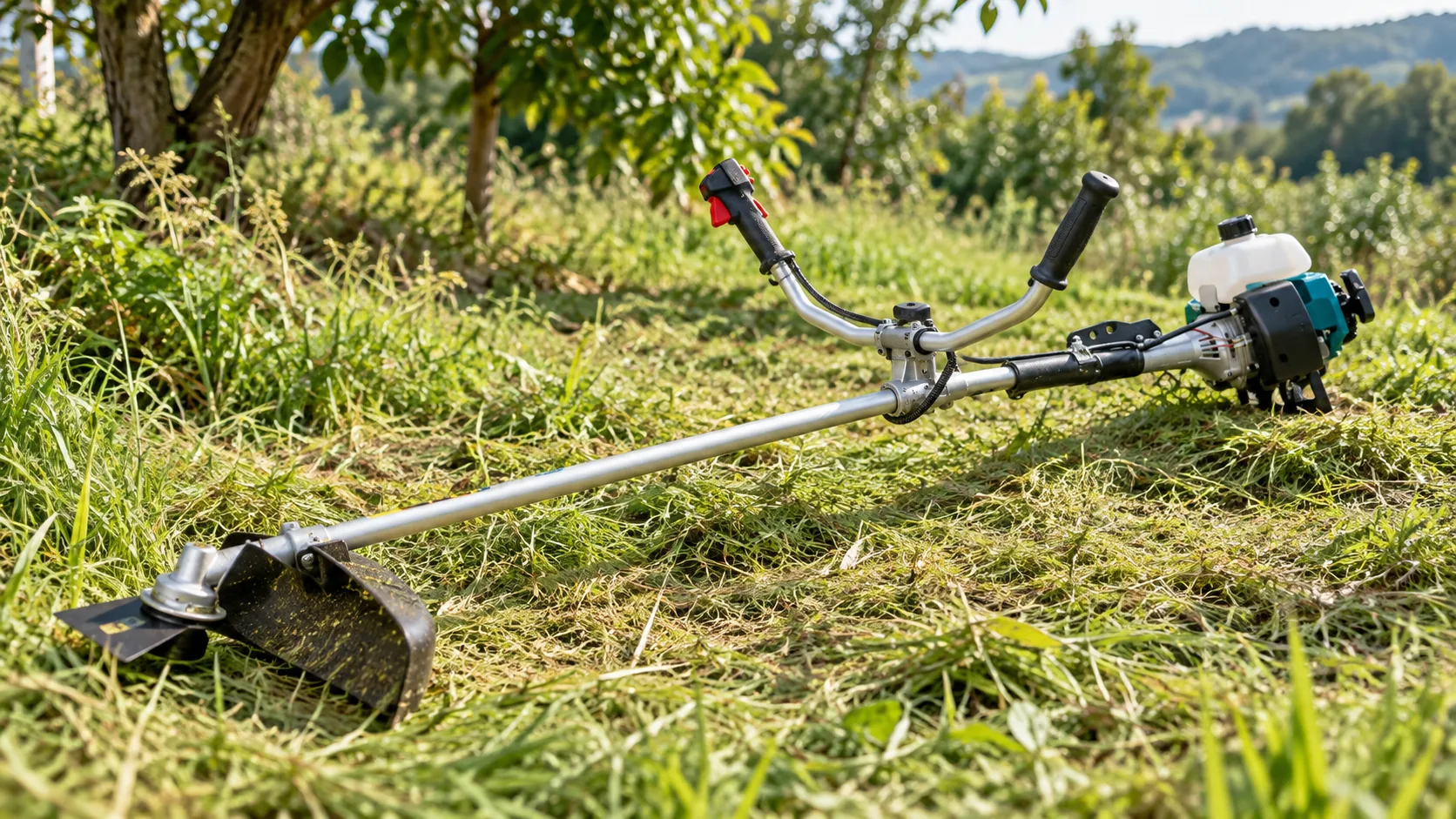
How Should a Brush Cutter Supplier Map Spare Parts Compatibility?
A brush cutter supplier spare parts compatibility system should be built around exact machine configurations, not around engine displacement or visual similarity. Two brush cutters may look closely related but still use different shaft assemblies, gear cases, control components, cutting attachments, or engine service parts.
This becomes especially important when an importer plans to carry several brush cutter models at the same time. Without a model-linked parts map, dealers can accumulate replacement parts that appear correct in the warehouse but cannot be installed when an actual service job arrives.
| QUICK ANSWER |
|
Quick answer: Build the spare-parts list from the exact brush cutter model and confirmed configuration first. Then verify shaft components, gear cases, cutting attachments, control assemblies, and engine service parts separately. Do not assume that two machines share parts because they use a similar engine size or look alike. For multi-model wholesale orders, importers should ask the supplier for a compatibility matrix showing which parts are model-specific, which are shared across confirmed models, and which depend on the final configuration. |
1. Start With the Exact Brush Cutter Model, Not the Engine Size
Engine displacement is useful for identifying a general power class, but it is not a dependable spare-parts reference. Two machines in a similar cc range can use different transmission shafts, handles, control boxes, fuel-system parts, gear cases, or cutting attachments.
The safer starting point is the exact model code together with the configuration approved for the order. When reviewing a brush cutter product range, separate machines into real configuration families rather than placing visually similar products into one spare-parts group.
| Weak MethodEngine size → assumed common part | Better MethodModel → confirmed configuration → compatible part |
If one component is genuinely shared across several confirmed machines, it can then be recorded as a common part. Compatibility should be the result of verification, not the starting assumption.
2. Shaft and Gear-Case Compatibility Need Separate Checks
The shaft assembly is one of the easiest areas to oversimplify. An outside tube diameter can look identical while the inner drive shaft, spline connection, tube length, clutch-side interface, or gear-case mounting differs.
For dealer service planning, avoid recording a vague item such as “brush cutter shaft spare part.” Break the assembly into the components that may actually be replaced.
| Component | What to Verify | Risk if Assumed Common |
| Outer shaft tube | Diameter, length, tube construction | Cannot mount correctly to the machine |
| Inner drive shaft | Length, spline or drive-end design | Drive connection does not engage |
| Clutch-side connection | Connection type and mounting arrangement | Assembly looks similar but cannot be installed |
| Gear case | Shaft interface, drive interface and output arrangement | Incorrect transmission or cutting-end fit |
| Complete shaft assembly | All interfaces as one confirmed set | Mixed components create installation problems |
Gear cases deserve the same discipline. Similar housings do not prove that the shaft connection, drive interface, blade mounting system, output arrangement, or fixing method is interchangeable.
3. Cutting Attachments and Control Parts Can Create Hidden Dealer Complaints
Cutting attachments are replaced more often than major transmission parts, so mistakes in this area become visible quickly. A nylon trimmer head, metal blade, or other attachment should be matched to the connection and mounting system supplied with the selected brush cutter.
Cutting Side
|
Control Side
|
Control assemblies are particularly easy to misidentify from photographs. A throttle box may look correct until installation reveals a different cable length, wiring arrangement, mounting position, or cable end. Model identification is more dependable than appearance alone.
4. Engine Service Parts Need Their Own Identification System
The complete brush cutter model and the engine service system should be linked, but they should not be treated as the same thing. Air filters, carburetor or fuel-system components, starter assemblies, ignition items, clutch components, gaskets, and related service parts need to match the confirmed engine configuration.
This matters for configurable B2B products. If an importer changes an engine option between orders, some service parts may also change even when the external brush cutter layout remains familiar.
5. Separate Universal Consumables From Model-Specific Components
A useful dealer inventory does not need to treat every item as completely universal or completely unique. The better approach is to divide stock according to how compatibility is actually determined.
| Stocking Group | Typical Examples | Control Level |
| Consumables | Trimmer line, suitable blades | Confirm size and attachment specification |
| Model-linked transmission parts | Gear case, shaft tube, inner shaft | Verify exact interfaces and dimensions |
| Control parts | Throttle assembly, cable, switch components | Match model and control configuration |
| Engine service parts | Filters, starter, ignition, fuel-system parts | Match confirmed engine configuration |
The commercial objective is not to claim the maximum possible number of common parts. It is to consolidate only the components whose compatibility has been confirmed, while keeping configuration-dependent items clearly separated.
6. Build a Compatibility Matrix Before the First Spare-Parts Order
Compatibility mapping is easiest before machines have already entered the dealer network. First confirm the intended brush cutter models. Then ask the supplier to identify commonly required service items and show where each part can actually be used.
A practical internal matrix can follow this format:
| Machine Model | Confirmed Configuration | Part Description | Compatibility Status |
| Selected model | Order-specific setup | Exact spare-part name | Model-specific / shared / configuration-dependent |
Where a part reference is available, record it as well. The important result is that the purchasing team, service department, and dealer can determine where the component belongs without relying on memory or appearance.
7. Review Spare Parts Whenever the Machine Configuration Changes
Compatibility records should follow the machine, not remain frozen after the first order. If a later shipment changes the engine, shaft, handle system, cutting attachment, control assembly, or another confirmed component, the affected spare-parts list should be reviewed at the same time.
This is especially relevant to repeat orders for different markets. Specifications can remain reference values until the final configuration is confirmed, so buyers should not automatically assume that parts purchased for the previous batch still apply to every future shipment.
| Dealer rule: whenever the machine configuration changes, review the affected spare parts before placing the replenishment order. |
Importer and Dealer Spare-Parts Checklist
Before approving a multi-model brush cutter and spare-parts order, use a model-linked audit rather than a generic accessory list.
| 01 | Confirm the exact model code used for every machine in the order. |
| 02 | Record the final configuration rather than organizing parts only by engine displacement. |
| 03 | Separate outer tube and inner drive-shaft details when checking transmission parts. |
| 04 | Verify gear-case interfaces instead of assuming that similar housings are interchangeable. |
| 05 | Confirm blade and trimmer-head mounting requirements for each selected model. |
| 06 | Check throttle cables, switches and control assemblies by model and connection details. |
| 07 | Match engine service parts to the confirmed engine configuration. |
| 08 | Mark each item as model-specific, shared, or configuration-dependent. |
| 09 | Keep unconfirmed parts separated rather than treating them as universal stock. |
| 10 | Recheck compatibility on repeat orders whenever the machine configuration changes. |
Brush Cutter Range for Compatibility Planning
| BRUSH CUTTER Product Range
Importers building a multi-model range can use the product category as the starting point for selecting the actual machines that need a spare-parts compatibility map. Confirm the final models first, then request model-linked parts information for the configurations that will actually be ordered.
|
FAQ: Brush Cutter Supplier Spare Parts Compatibility
Can two brush cutters with the same engine size use the same spare parts?
Not automatically. Engine displacement does not define the complete machine. Shaft assemblies, gear cases, controls, cutting attachments, and even engine service components can differ depending on the confirmed configuration.
Is shaft diameter enough to confirm shaft compatibility?
No. Diameter is only one reference. Buyers may also need to confirm shaft length, inner drive-shaft design, spline connection, tube construction, clutch-side interface, and gear-case mounting.
Should a dealer stock one universal brush cutter gear case?
Only if compatibility across the selected models has actually been confirmed. Similar housing shape is not enough because the transmission connection and cutting-end arrangement may differ.
What information should be included in a spare-parts compatibility list?
A useful list should show the machine model, confirmed configuration, spare-part description, part reference where available, applicable model or model family, and whether compatibility depends on the ordered configuration.
Do repeat brush cutter orders need another spare-parts check?
Yes when the configuration has changed. A different engine, shaft, handle system, cutting attachment, or control component can affect which replacement parts should be ordered.
When should importers request a compatibility matrix?
Ideally before the first spare-parts order and before the machines enter the dealer network. This gives the purchasing team time to separate common parts from model-specific or configuration-dependent items.
| Plan Spare Parts Around the Models You Will Actually Import
A practical brush cutter supplier spare parts compatibility system starts with confirmed models and configurations. Review transmission components, cutting attachments, control parts, and engine service items before consolidating stock for wholesale or dealer after-sales use. |
|