
Mini Tiller Replacement Tines: What Should Dealers Order?
Order mini tiller replacement tines by assembly reference, shaft fit and supplied hardware so dealers receive service parts matched to the imported machine.
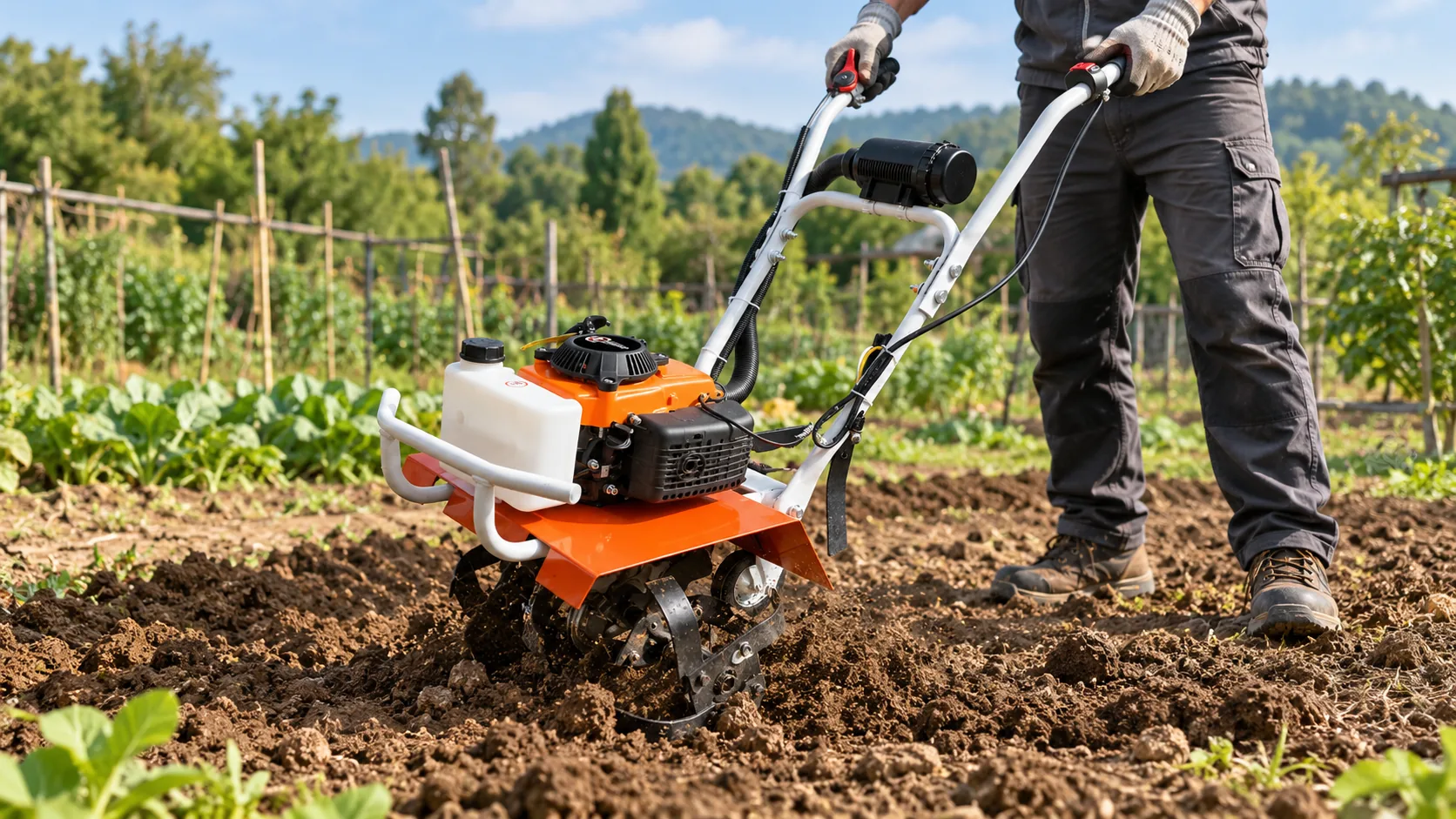
Mini Tiller Replacement Tines: What Importers and Dealers Should Check Before Ordering
Ordering mini tiller replacement tines requires more than matching engine displacement or working width. The replacement must correspond to the exact cutting assembly installed on the machine, including the relevant mounting interface, component position, orientation and retaining hardware.
For agricultural machinery importers and spare-parts distributors, the first purchasing decision is what constitutes one replacement unit: a single blade, an assembled tine section or a complete set for one machine. If this is not defined before quotation approval, two suppliers may offer different quantities and components under the same description, leaving dealers with stock that cannot complete the intended repair.
| QUICK ANSWER |
Quick answer: Mini tiller replacement tines should be identified through the manufacturer's illustrated cutting-assembly drawing and the specific production configuration. Before comparing prices, determine whether each quoted item is an individual blade, an assembled section or a full machine set. Confirm applicable left/right positions, orientation, mounting dimensions, shaft connections and included retaining hardware. Approve a service sample against an identified machine before bulk purchasing. For dealer stock, assign separate part references and quantities to each replaceable item so repeat orders can be matched without relying on a photograph or the engine-size label. |
1. Define What One Replacement Tine Unit Actually Contains
A supplier quotation describing “one set of tiller blades” is incomplete unless the included components and quantities are clearly defined. The same wording may refer to individual cutting blades, a preassembled section or all the tine components required for one machine.
Begin with the service procedure the dealer intends to support. If technicians replace only a damaged blade, a complete tine assembly may create unnecessary inventory cost. If the manufacturer's service arrangement calls for a complete assembled unit, pricing loose blades alone may not support the intended repair.
| Replacement Unit | What the Quotation Must Define | Dealer Purchasing Risk |
| Individual blade | Exact part reference, quantity, mounting interface and applicable position. | Blade arrives without the required retaining hardware or has the wrong orientation. |
| Assembled section | Included blades, holder or hub, connection details and assembly position. | Partially assembled delivery requires work not included in the dealer's repair plan. |
| Complete machine set | Illustrated contents, number of components and included fastening or locking parts. | Quoted set contains fewer components than needed for a complete replacement. |
Use a separate item code and unit of measure for each option offered. Hardware visible in a supplier photograph should not be assumed to be included. When comparing costs, calculate the price for equivalent replacement contents rather than comparing two quotations labeled simply “one set.”
2. Use TM-WG144F Specifications to Identify the Machine, Not the Blade Dimensions
The TM-WG144F mini tiller is listed with a 63cc two-stroke, air-cooled engine, 30cm working width and 10–15cm working depth.
These specifications establish the machine reference and its intended working configuration. They do not identify individual tine geometry, blade count, mounting holes, hub profile or retaining method. The 10–15cm working-depth figure is not a blade-length measurement, and the 30cm working width cannot be used to calculate the dimensions of individual cutting parts.
TM-WG144F Identification Record
| Machine model | TM-WG144F |
| Engine | 63cc, two-stroke, air-cooled |
| Working width | 30cm |
| Working depth | 10–15cm |
| Cutting-assembly part reference | To be confirmed from the ordered production version |
| Replacement tine reference | To be confirmed from the illustrated parts breakdown |
Request the manufacturer's illustrated cutting-assembly breakdown and associate it with the exact machine configuration or relevant production revision. If the installed tine assembly changes between shipments, the corresponding spare-parts approval must be reviewed instead of automatically repeating the previous order code.
3. Identify Blade Position and Orientation Using One Fixed Viewpoint
Some tine assemblies contain position-specific or handed components. Importers should not assume that all blades are interchangeable, nor should they presume that every mini tiller uses separate left- and right-hand blade designs.
If positional differences exist, the supplier should identify them on the drawing. Define left and right from one agreed reference, such as the normal operator position, and use the same reference in the parts list, photographs, packaging labels and service instructions.
Do not reduce installation instructions to an assumption such as “sharp edge forward.” A part should be installed according to the actual manufacturer's diagram, not reconstructed from the visual appearance of an unmarked loose blade.
4. Confirm Mounting Interfaces and Retaining Hardware
Compatibility depends on the component being replaced. An individual blade may require mounting-hole and fastening checks, while an assembled tine unit may need shaft-interface, hub and locking-feature verification. The supplier should document whichever features apply to the actual TM-WG144F assembly.
| Interface Feature | Information to Request | Possible Consequence |
| Mounting holes | Applicable hole dimensions, spacing and drawing references. | Individual blade cannot be mounted as specified. |
| Hub or socket | Connection profile and dimensions where used. | Assembled section does not match the shaft interface. |
| Seating and positioning | Installed location, section width and relevant positioning features. | Incorrect assembly location or clearance. |
| Retaining components | Specified fastener, pin, clip, washer or spacer references where applicable. | Repair cannot be completed using the supplied contents. |
Not every tine assembly uses all these connection features. The approved manufacturer's drawing determines which dimensions and hardware matter. If retaining items are supplied separately, list them as separate quotation lines and identify which should accompany the dealer's service kit.
Compatibility warning: Do not approve an unconfirmed replacement by drilling additional holes, modifying the tine shaft, substituting generic retaining hardware or forcing a sample into position. A mismatch requires clarification against the manufacturer's approved assembly specification.
5. Validate the Replacement Sample Before Bulk Purchasing
A replacement part should be inspected in the exact form the dealer will receive it. When purchasing a complete kit, review the kit contents, supplied hardware, labels and instructions together rather than checking only one loose blade.
Before examining or handling the cutting assembly, stop the engine, allow it to cool and prevent accidental starting according to the machine instructions. Suitable gloves and appropriate handling precautions are necessary around cutting edges. Any operational validation must follow the manufacturer's procedure under controlled conditions.
Use an unworn approved reference or the manufacturer's drawing when comparing dimensions. A distorted or damaged used tine is not a dependable dimensional standard. A successful fit check also does not, by itself, establish material properties or service life.
6. TM-WG144F Mini Tiller: Replacement Tine Procurement Reference
7. Build Replacement Tine Inventory Around Actual Repair Requirements
Dealer spare-parts quantities should reflect the repair units actually used. Where a machine contains distinct position-specific items, the total number of blades in stock is less useful than the quantity available for each necessary part reference.
Do not assign an arbitrary universal percentage of replacement tines to every mini tiller order. Local service history, workshop capability and the manufacturer's supported repair options provide a more meaningful basis for initial inventory planning.
Each service package should carry a traceable part reference, stated quantity and machine applicability. Where retaining hardware is necessary for the approved repair, keep its reference connected to the replacement assembly so it is not overlooked when a dealer places another order.
Mini Tiller Replacement Tines FAQ
1. Are mini tiller replacement tines interchangeable between machines with the same engine size?
Not necessarily. Engine displacement does not define the tine assembly, mounting interface, blade orientation or retaining method. Compatibility must be checked against the actual machine configuration and manufacturer's parts documentation.
2. Does the TM-WG144F 30cm working width tell buyers which blades to order?
No. The 30cm value describes the machine's working width. It does not establish individual blade dimensions, blade count, hole spacing or hub configuration.
3. Should dealers stock individual tiller blades or complete tine assemblies?
That depends on the manufacturer's supported replacement options, repair procedures and workshop capability. Some repairs may be supported by individual parts; others may require an assembled section. Each purchasing unit needs a defined list of included components.
4. How can buyers distinguish left- and right-hand tiller tines?
If the design uses handed components, identify them using the manufacturer's drawing and one consistent viewing direction. Do not assume that visually similar blades are interchangeable or that a particular edge direction is sufficient for identification.
5. Are pins, bolts and washers normally included with replacement tines?
Inclusion depends on the specific quoted unit. Importers should request an illustrated contents list and confirm whether retaining hardware is included, sold separately or not required for the approved replacement procedure.
6. What information is needed to reorder TM-WG144F replacement tines?
Provide the machine model and applicable production configuration together with the approved replacement-part reference, quantity, position where relevant and hardware requirements. An illustrated parts breakdown helps prevent confusion between individual blades and complete tine units.
Confirm TM-WG144F Replacement Tine Details Before OrderingFor a TM-WG144F wholesale machine and spare-parts order, request an illustrated quotation showing the exact cutting assembly, each replacement unit, applicable mounting interfaces, supplied hardware and approved part references. This makes mini tiller replacement tines identifiable for the initial shipment and subsequent dealer service orders. |
|
|