
Brush Cutter Blade Stocking Guide for Dealers and Importers
Build a practical brush cutter blade range based on machine compatibility, local vegetation, sales turnover, packaging, and replacement demand.
|
Accessory Inventory
02
Blade SKUs reviewed for dealer stock planning
255mm 3T
305mm 2T Mounting parts Compatibility control |
A practical inventory plan for choosing core replacement blades, testing alternative diameters, confirming compatibility and reducing slow-moving accessory stock. |
A brush cutter dealer does not need to stock every available blade design. A more practical range begins with one fast-moving general replacement blade, one alternative diameter for application-specific demand and clear compatibility information for every SKU.
The main inventory risk is not simply choosing between two blades. It is importing accessories that look popular in a catalogue but do not match the brush cutters, blade holders, vegetation types and buying habits already present in the local market.
|
Quick Answer
Begin with a narrow, documented blade range.
|
01
Core SKU The blade matching the dealer’s most common brush cutters. |
02
Test SKU An alternative diameter or tooth format in a smaller quantity. |
03
Support Parts Holders, washers, nuts, guards and compatibility records. |
Start With the Brush Cutters Already Sold in Your Market
Blade inventory should be built around the installed base of brush cutters. Before selecting blade sizes, dealers should review the machines sold during the previous one or two seasons.
For each machine, record the engine category, original blade diameter, center-hole specification, blade holder, gearbox arrangement, guard size and standard accessory package. This creates a clearer picture of future replacement demand.
Build a Small Range With Clearly Defined Roles
|
A
|
Core Replacement SKU Highest stock quantity | Fits commonly sold brush cutters and routine grass or weed cutting applications. |
|
B
|
Alternative Application SKU Medium or test quantity | Covers customers requesting another diameter, tooth configuration or compatible machine group. |
|
C
|
Specialized SKU Add after demand is proven | Serves a narrow vegetation type, tender requirement or specific machine configuration. |
|
Core Replacement Candidate
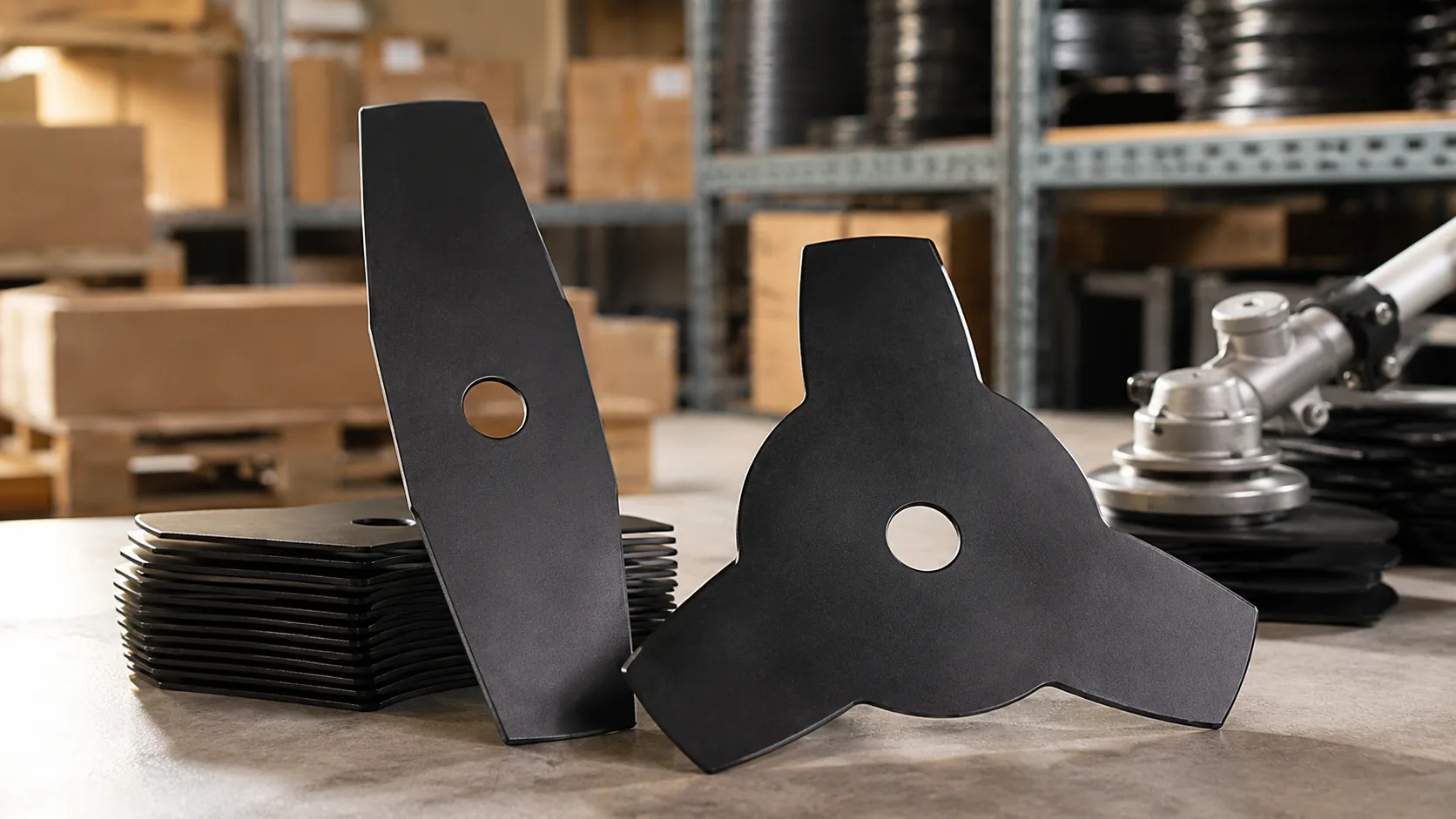
255mm 3T Brush Cutter BladeA three-tooth blade for compatible brush cutters used for grass cutting, weed trimming, farm maintenance and routine outdoor clearing.
|
Dealer Position
Use as the main SKU when 255mm blades match the majority of machines already sold.
The stock quantity should be supported by machine sales history, replacement inquiries and repair-shop feedback rather than by catalogue popularity alone. |
|
Dealer Position
Use as a supporting or test SKU when compatible 305mm machines are already present.
A larger diameter should not be treated as an automatic upgrade. Guard clearance, balance, blade holder and machine approval must be checked first. |
Alternative Application Candidate
305mm 2T Brush Cutter BladeA two-tooth blade offering dealers another diameter and cutting format for compatible brush cutters used in grass, weed and outdoor maintenance work.
|
Do Not Use Tooth Count as the Only Sales Description
Labels such as 2T and 3T are easy for customers to recognize, but tooth count alone does not confirm whether a blade is suitable for a particular machine.
A professional product label should identify the complete specification. This helps retailers, technicians and end users select the correct product and reduces incorrect installation.
|
|
|
Create a Compatibility Sheet Before Ordering
Each blade SKU should be connected to the actual brush cutter models sold by the distributor. Do not approve a combination only because the mounting hole appears to fit.
| Blade SKU | Machine Model | Center Hole | Guard Clearance | Mounting Parts | Approved |
|---|---|---|---|---|---|
| 255mm 3T | Model A / Model B | Confirm | Confirm | Holder, washer, nut | Yes / No |
| 305mm 2T | Model C / Model D | Confirm | Confirm | Holder, washer, nut | Yes / No |
What Should Be Tested Before Declaring a Blade Compatible?
| 1 | Confirm that the blade seats correctly and evenly on the holder. |
| 2 | Check whether the washer and blade nut lock securely. |
| 3 | Verify that the blade clears the guard during complete rotation. |
| 4 | Check for abnormal vibration, poor balance or unusual gearbox noise. |
| 5 | Confirm that the engine maintains stable speed under normal cutting load. |
| 6 | Ensure that the blade can be removed without damaging the nut, washer or holder. |
Use Your Sales Channel to Set the Blade Assortment
Set the First-Order Quantity From Evidence, Not Guesswork
When there is no reliable blade sales history, avoid splitting the order equally between every available type. Build the first shipment around the blade supplied with current brush cutter models, previous replacement inquiries and repair-shop feedback.
|
Main Order Share
Core compatible blade
|
Smaller Test Share
Alternative diameter
|
After 3–6 Months
Review sales evidence
|
The performance of each SKU should be measured using:
| Units Sold | Gross Margin | Repeat Orders | Customer Returns |
| Compatibility Complaints | Regional Sales | Machine-Model Sales | Remaining Stock Age |
Package the Blade for Fast and Accurate Selection
Blade packaging should do more than prevent transport damage. Retailers and customers should be able to identify the product without opening the carton.
Product information
|
Packing protection
|
Both Teamax blade pages state that kraft-carton or customized color-box packaging is available. They also list bulk production at 40–60 days after deposit. Final packing quantity, customization requirements and delivery schedules should still be reconfirmed for the actual order.
Sell Mounting Parts With the Blade Range
A dealer may lose a blade sale when the customer cannot find the correct holder, washer, nut or guard. Accessory inventory should therefore be planned as a complete mounting system rather than as isolated blades.
| Mounting Hardware Upper holders, lower holders, blade nuts, washers and fastener kits | Machine Parts Gearbox assemblies, guards, shafts and locking tools | Operator Accessories Harnesses and approved blade-and-mounting kits |
Add New Blade Types Only After a Demand Gap Appears
A larger catalogue does not automatically create more accessory sales. Every new blade SKU adds purchasing, labelling, warehousing, training and after-sales requirements.
Information to Include in a Brush Cutter Blade RFQ
|
|
Importer and Dealer Checklist
| Installed machine base | Review blade sizes, holders and guards used on machines already sold. |
| Compatibility | Test center hole, holder contact, guard clearance, balance and locking parts. |
| Stock ratio | Give the proven replacement blade the highest quantity and test alternative formats. |
| Packaging | Confirm labels, dimensions, edge protection, rust prevention and carton quantities. |
| Related parts | Stock holders, nuts, washers, guards, tools and selected gearbox parts. |
| Repeat-order control | Monitor returns, complaints, stock age, margin and consistency between production batches. |
Brush Cutter Blade Stocking Questions
| FAQ 01 |
How many brush cutter blade types should a new dealer stock?Begin with one proven replacement blade, one alternative SKU in a smaller quantity and the necessary mounting parts. Add specialized blades only after demand is confirmed. |
| FAQ 02 |
Is a 305mm blade automatically better than a 255mm blade?No. Diameter must match the machine, guard, holder and approved accessory limits. A larger blade can create compatibility, balance or operating problems when installed on an unsuitable brush cutter. |
| FAQ 03 |
Can tooth count confirm brush cutter blade compatibility?No. Tooth count is only one product feature. Dealers must also confirm diameter, center hole, thickness, holder, guard clearance, machine category and maximum permitted speed. |
| FAQ 04 |
Which blade should receive the highest first-order quantity?The highest quantity should normally go to the blade matching the greatest number of brush cutters already sold by the distributor. |
| FAQ 05 |
What mounting parts should be stocked with brush cutter blades?Common supporting products include upper and lower holders, washers, blade nuts, guards, locking tools, gearbox assemblies and fastener kits. |
| FAQ 06 |
How should dealers decide whether to reorder an alternative blade?Review units sold, margin, repeat purchases, compatibility complaints, regional demand and remaining stock age after three to six months. |
|
Start With a Documented Blade Range
Compare 255mm and 305mm Brush Cutter BladesFor dealers entering the brush cutter spare-parts market, Teamax Power offers blade formats that can occupy different inventory roles. Confirm compatibility, stock ratio, packaging and mounting parts before placing the wholesale order.
|
Stock Strategy
1+1
One core replacement SKU plus one proven alternative
|