
Why Does a Brush Cutter Vibrate After Changing the Blade?
Brush cutter vibrates after changing blade? Check blade centering, balance, holder parts and cutting-end alignment before inspecting the shaft or gearbox.
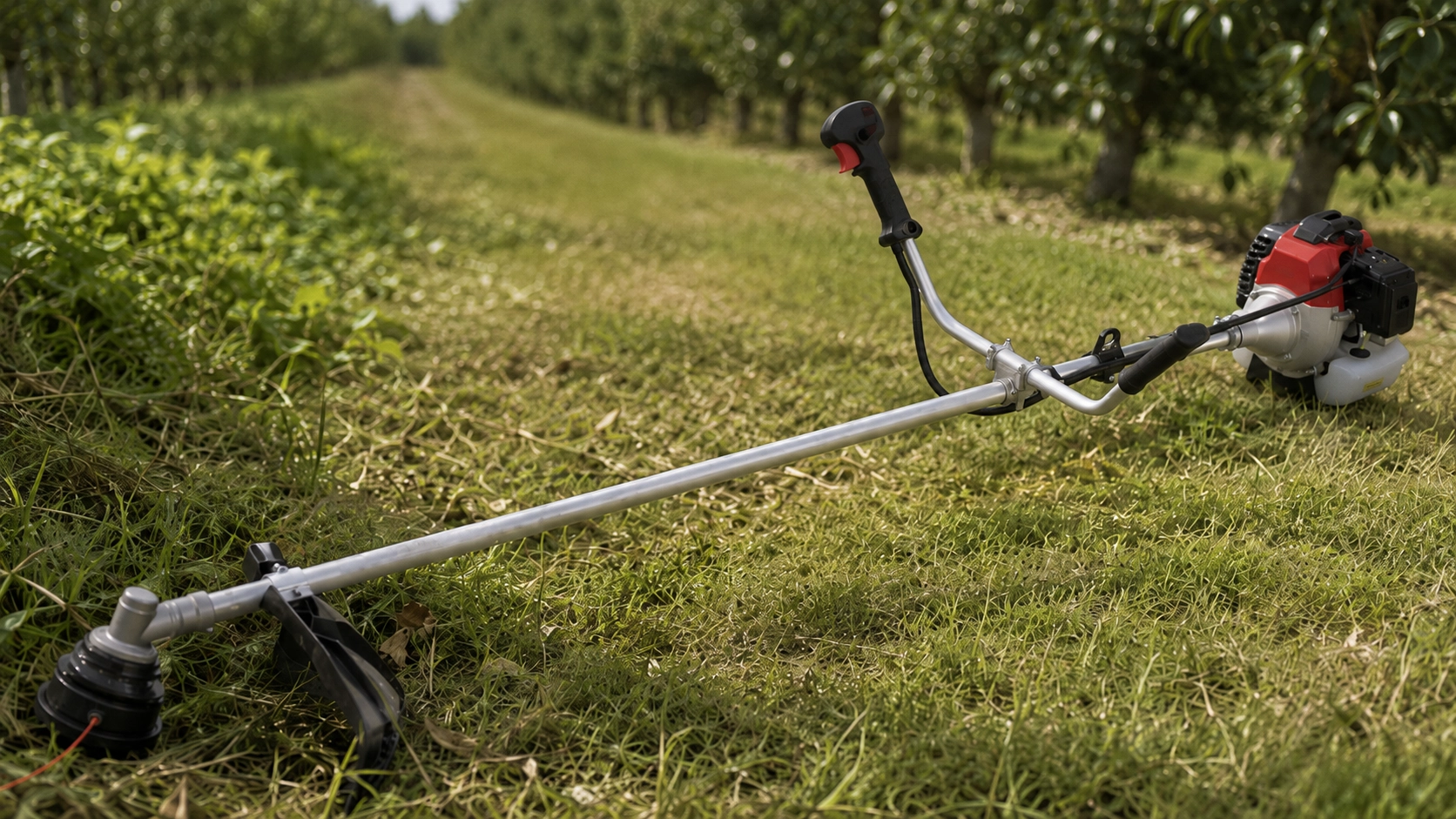
Why Does a Brush Cutter Vibrate After Changing the Blade?
A brush cutter that vibrates after changing the blade usually has a problem at the cutting end rather than an engine fault. If the machine ran smoothly before the old blade was removed and started shaking immediately after the replacement was installed, blade centering, mounting-part order, blade condition and the contact surfaces around the gearbox should be checked first.
Do not continue operating the brush cutter at full throttle to see whether the vibration disappears. A metal blade rotates at high speed, so even a small centering error or damaged blade can create noticeable vibration through the gearbox, shaft and handlebar. For dealers and repair shops, identifying this symptom correctly also avoids unnecessary carburetor adjustment or engine disassembly.
1. Confirm That the Blade Change Actually Caused the Vibration
The timing of the symptom is one of the most useful diagnostic clues. If the brush cutter was operating normally before the old blade was removed and begins shaking immediately after another blade is fitted, start with the parts that were disturbed during replacement.
There is little reason to adjust the carburetor, change the fuel mixture or open the engine before checking the blade assembly. Instead, observe exactly when the vibration becomes strongest.
| Observed symptom | What it suggests | First inspection area |
| Smooth before blade change, vibration immediately afterward | Installation or replacement-blade issue | Blade, holder, flange and retaining parts |
| Relatively normal at low speed, strong shaking as rpm rises | Off-center or unbalanced rotating attachment | Blade centering and blade condition |
| Vibration appears before the blade enters grass | Not primarily caused by cutting load | Blade mounting and rotating assembly |
| Machine already vibrated before the blade was changed | Fault may extend beyond the replacement blade | Shaft, gearbox, mounts and other rotating parts |
2. Check Whether the Blade Is Centered on the Holder
A blade can be tightly clamped and still be mounted incorrectly. The center hole of a metal blade normally needs to sit accurately around the locating portion, or boss, of the blade holder. If the blade catches on the edge instead of seating concentrically, tightening the retaining nut can lock it in an off-center position.
At low rotational speed, the error may not feel severe. As speed rises, the eccentric mass creates repeating vibration that transfers through the gear case, shaft and handles. Manufacturer attachment guidance specifically warns that incorrect alignment between the blade center hole and blade-holder locating area can produce excessive vibration.
Blade centering inspection
- Stop the engine and disconnect the spark-plug cap before servicing the cutting system.
- Remove the blade according to the correct procedure for the actual brush cutter.
- Clean the locating surfaces around the blade holder.
- Place the blade onto the holder without forcing it into position.
- Confirm that the blade center hole sits fully around the locating boss.
- Check that the blade sits flat instead of rocking on one side.
- Keep the blade centered while the retaining components are installed and tightened.
Do not assume that tightening the nut will automatically pull a misaligned blade into the correct position. If the blade was not seated correctly before tightening, the clamping force may simply hold the installation error in place.
3. Inspect the Holder, Flanges, Washer and Retaining Parts
Blade installation involves more than the cutting blade itself. Depending on the brush cutter configuration, the assembly may include a blade holder, upper or lower flange, washer, retaining nut, blade cap or related locating parts.
If one component is missing, reversed or taken from a different cutting attachment, the blade may not clamp evenly. This deserves particular attention when vibration begins after changing between different blade types or after a machine has been assembled by a dealer from packed components.
| Part to check | Possible problem | Procurement / service consequence |
| Blade holder | Incorrect locating diameter or damaged seating area | Blade may clamp off center |
| Flange / washer | Reversed or incorrect component | Uneven contact or poor seating |
| Retaining hardware | Wrong sequence or mismatched part | Incorrect clamping of blade assembly |
| Replacement blade | Center-hole or mounting incompatibility | Vibration despite apparently tight installation |
Do not copy the washer order, nut direction or attachment hardware from another brush cutter simply because both machines use similar engine displacement. The correct arrangement should match the actual gearbox and cutting attachment supplied with the model.
4. Inspect the Replacement Blade for Bending, Damage or Imbalance
Correct installation cannot compensate for a damaged blade. Remove the replacement blade and inspect it on a flat surface. Look for obvious bending, distorted cutting tips, cracks around the center hole, uneven wear or previous impact damage.
Uneven sharpening can also change the balance of a metal blade. If substantially more material has been removed from one side, the mass distribution around the rotational center changes. The machine may appear acceptable at low speed but develop much stronger vibration as the blade approaches working speed.
Suitable for reinspection
|
Stop and replace
|
Do not try to straighten a badly bent or cracked blade for continued high-speed operation. For distributors supplying replacement blades, compatibility is not determined by blade diameter alone. The center-hole fit and the way the blade locates against the holder are also important.
5. Clean the Mounting Surfaces Before Reinstalling the Blade
Grass fibers, dried soil and other debris can collect around the gear case and blade holder during field use. If a replacement blade is installed without cleaning these contact surfaces, trapped material may prevent the blade from seating completely flat.
Before reassembly, clean around the holder and inspect the surfaces that contact the blade and retaining components. Manufacturer blade-installation guidance also calls for removing collected grass, stones and other foreign material around the gearbox mounting area before fitting the cutting attachment.
Service priority: If vibration began immediately after workshop servicing or blade replacement, cleaning and reinstalling the cutting assembly correctly should come before internal gearbox diagnosis. It is a simple external check and directly addresses the parts that were just disturbed.
6. When the Problem May Be in the Shaft or Gearbox
If the blade is correctly centered, undamaged and installed with the proper hardware but the brush cutter still shakes, the next step is to determine whether the vibration source has moved beyond the cutting attachment.
With the engine stopped, inspect the shaft tube, gear case and mounting points for visible impact damage or looseness. Ask whether the machine recently struck a rock, concrete edge, fence post or another hard object. A heavy blade impact can affect more than the blade itself.
Move beyond blade installation checks when:
- vibration remains after installing a known-correct blade;
- the output assembly appears to rotate with visible runout;
- the shaft tube has visible bending or impact damage;
- more than one correctly installed cutting attachment produces the same vibration;
- unusual mechanical noise accompanies the vibration.
At this point, repeatedly replacing blades is unlikely to solve the problem. The gearbox output area, drive shaft and related transmission components should be inspected before the machine returns to service.
7. TM-CG520 Reference for Dealers and Replacement-Blade Orders
TM-CG520 52cc Gasoline Brush CutterModel: TM-CG520 The TM-CG520 uses a 1E44F-5, air-cooled 2-stroke engine with 51.7cc displacement, rated output of 1.8 kW at 7500 rpm and a 28 mm shaft. The product information also lists an idle-speed reference of 3000 ±200 rpm, a 1:30 mixed-fuel ratio and a 1200 ml fuel tank. These engine specifications should not be altered merely because vibration appeared immediately after a blade replacement. |
Relevant purchasing point Confirm the actual blade, holder and retaining-part configuration before ordering replacement blades in volume.
|
The listed engine and shaft specifications describe the machine configuration, but the exact blade bore and retaining-hardware arrangement should still be confirmed for the selected order configuration rather than assumed from another 52cc brush cutter.
This distinction matters for importers carrying spare blades for several product families. A replacement blade can look similar and still be unsuitable if the locating dimensions or required holder components differ.
8. Importer and Dealer Checklist Before Returning the Machine to Service
For distributors, repair shops and regional dealers, a repeatable inspection procedure makes it easier to separate a simple blade-installation complaint from a gearbox or transmission issue.
A blade that vibrates while remaining securely clamped should also be separated from a blade that repeatedly becomes loose. Repeated loss of clamping force requires a different inspection of the retaining hardware, installation direction, threads and holder components.
FAQ: Brush Cutter Vibration After Blade Replacement
Why does my brush cutter vibrate only after fitting a new blade?
If the machine was smooth before replacement, the new vibration most likely points toward blade centering, mounting-part order, contamination between mounting surfaces or the condition of the replacement blade. Check these external parts before adjusting the engine.
Can a brush cutter blade be tight but still cause vibration?
Yes. The retaining nut can clamp a blade firmly even when the blade center hole is not seated correctly on the holder. A securely clamped but off-center blade can create significant vibration as rotational speed increases.
Should I adjust the carburetor if the vibration started after changing the blade?
Not as the first step. When the symptom appears directly after blade installation, inspect the blade, holder, flanges, retaining parts and mounting surfaces first. Carburetor adjustment does not correct an off-center or damaged cutting attachment.
Can an unbalanced brush cutter blade cause vibration at high speed?
Yes. A bent blade, impact-damaged blade or blade that has been sharpened unevenly can become unbalanced. The effect may be small at low rpm and become much more noticeable as the cutting attachment reaches operating speed.
When should the gearbox or drive shaft be inspected?
Inspect further when abnormal vibration remains after a correctly centered, compatible and undamaged blade has been installed. Visible output runout, shaft bending, impact history or unusual mechanical noise also justify checking the gearbox and transmission components.
What should importers confirm when ordering replacement brush cutter blades?
Do not select only by engine size or general blade diameter. Confirm the blade dimensions, center-hole location and compatible mounting hardware against the actual machine configuration. This is particularly important when a distributor stocks spare parts for several brush cutter models.
Confirm the Cutting Configuration Before a Bulk OrderFor TM-CG520 orders, replacement blades or dealer spare-parts planning, confirm the actual cutting attachment and retaining-part configuration before shipment. A brush cutter that vibrates after changing the blade should be checked from the cutting end first: centering, clean contact surfaces, correct mounting components and blade condition all come before unnecessary engine adjustment. |
|