
Chainsaw Not Oiling the Chain: What Should You Check First?
Chainsaw not oiling chain? Check the oil level, bar groove, lubrication hole and delivery path before assuming the internal oil pump has failed.
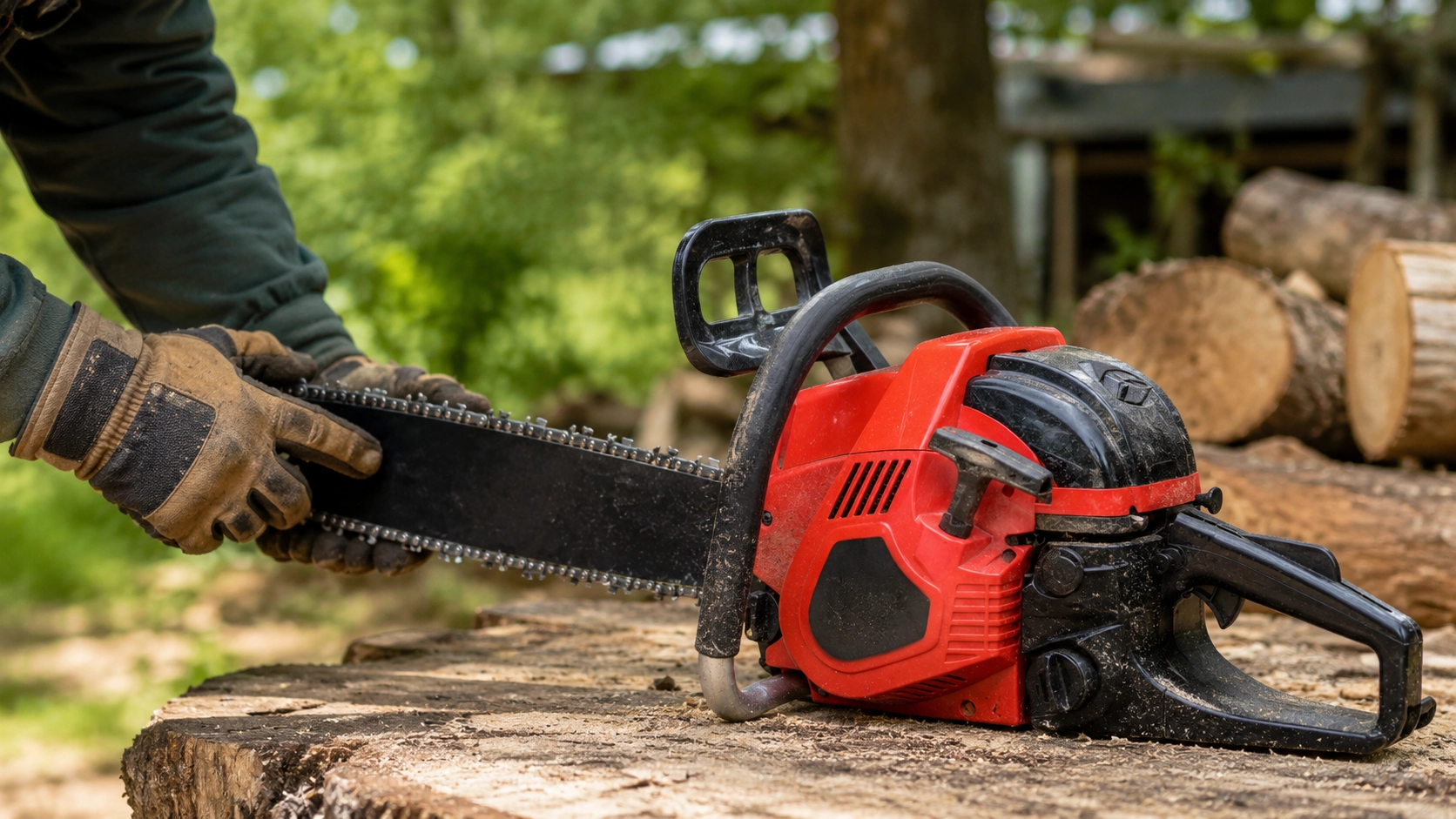
Chainsaw Not Oiling the Chain: What Should You Check First?
If your chainsaw is not oiling the chain, do not immediately assume the oil pump has failed. Start with the chain-oil reservoir, guide-bar groove and lubrication holes. Packed sawdust, an incorrectly fitted replacement bar or a blocked oil passage can leave the chain dry even when the pump itself is still capable of moving lubricant.
This troubleshooting guide deals specifically with a chain and guide bar that remain dry or receive too little visible lubrication. It does not cover a chain that becomes hot and tight during cutting or a chainsaw that leaks bar oil while sitting in storage. Those symptoms require different checks.
1. First Confirm Where the Chain Oil Stops
A dry-looking chain after several cuts does not automatically prove that the complete lubrication system has stopped working. The more useful diagnostic question is where the lubricant stops moving.
Manufacturers generally recommend checking chain lubrication before work. A running lubrication check should only be performed according to the chainsaw's operating instructions, with the bar directed safely away from people and surrounding objects. If a running test cannot be performed safely, stop the engine and continue with the external inspection instead.
| What You Observe | Likely Inspection Area | Next Action |
| Oil reaches the bar mounting area but not the chain | Guide bar, oil hole, groove or installation | Clean and verify bar alignment before opening the saw |
| No oil reaches the mounting area | Oil pickup, hose, vent, drive or pump | Inspect the supply path after external checks |
| Oil level changes but chain still looks unusually dry | Blocked groove or guide-bar inlet | Remove the bar and clean the lubrication passages |
This separation is important for workshops and dealers because it prevents an oil-pump replacement from becoming the first response to every customer complaint about a dry chain.
2. Check the Oil Tank and Lubricant Condition
Start with the reservoir before removing mechanical parts. If the tank is nearly empty, refill it with lubricant intended for chainsaw bars and chains according to the operating requirements of the actual machine. An engine can continue to run normally while the cutting attachment receives little or no lubrication because the fuel and chain-oiling systems perform completely different jobs.
Also watch what happens to the oil level during use. If the chain remains dry while the reservoir level barely changes after a reasonable period of operation, oil may not be moving correctly through the delivery path. Do not use tank consumption alone as a pass-or-fail measurement, however. Flow varies depending on machine design, operating conditions and the confirmed guide-bar configuration.
3. Clean the Guide-Bar Groove and Oil Hole
The guide bar is one of the highest-priority checks because sawdust collects directly in the route used to distribute lubricant. Stop the engine and make sure the cutting attachment cannot move before removing the bar and chain.
Inspect the full groove around the edge of the guide bar. Sawdust mixed with chain oil can form a compact deposit inside the groove even when the outside of the bar looks clean. This is especially common after cutting resinous wood, dirty logs or material that creates large amounts of fine debris.
Next, locate the small lubrication opening near the mounting end of the guide bar. This inlet connects the chainsaw's oil outlet with the bar groove. If the opening is blocked, the oil pump may still be operating while very little lubricant reaches the chain.
- Remove the bar and chain safely. Do not work around the cutting attachment while the machine can start or move.
- Clear the complete bar groove. Do not limit the inspection to the mounting end.
- Clean the lubrication inlet. Remove packed debris without enlarging the original opening.
- Check the oil path into the groove. Look for an obvious obstruction between the inlet and chain groove.
- Inspect the mounting face. Sawdust trapped between the bar and saw body can interfere with correct oil transfer.
Do not drill the guide-bar oil hole larger in an attempt to increase flow. The hole size and position belong to the bar and lubrication-system design. Altering them can introduce a new lubrication or leakage problem.
4. Make Sure the Replacement Guide Bar Actually Matches
A perfectly clean lubrication hole will still fail to receive oil if it does not align with the outlet on the chainsaw body. This makes bar compatibility particularly important after a replacement cutting attachment has been installed.
Nominal guide-bar length alone is not enough for spare-parts selection. Mounting pattern, oil-hole position, chain pitch and the other relevant cutting-attachment dimensions must match the selected chainsaw configuration.
| Bar Check | Why It Matters When a Chainsaw Is Not Oiling the Chain |
| Oil-hole alignment | A partly covered inlet can restrict oil transfer even when the pump is supplying oil. |
| Mounting pattern | A bar that physically fits onto the studs may still use a different lubrication layout. |
| Chain configuration | Pitch and other dimensions must correspond with the confirmed cutting attachment. |
| Mounting-face cleanliness | Debris between the bar and saw body can obstruct the oil-transfer area. |
For dealers stocking replacement bars, this is an important after-sales issue: supplying a bar only because its advertised length matches the customer's old bar can create a lubrication complaint that appears to be a chainsaw fault.
5. Check the Oil Supply Path Before Replacing the Pump
Once the guide bar, groove, oil inlet and mounting area are clean, determine whether lubricant is reaching the oil outlet on the chainsaw itself. Do not immediately dismantle the clutch area or replace the pump.
| Oil Reaches the Saw Outlet The likely restriction is farther outward. Recheck the guide-bar oil hole, groove, bar alignment and assembly before replacing internal components. | No Oil Reaches the Saw Outlet The problem may be farther upstream. Inspect the accessible supply components according to the actual model before condemning the pump. |
Depending on the chainsaw design, the oil-delivery system may include an oil pickup, strainer or filter, hose, tank ventilation, pump-drive components and an oil pump. The exact arrangement should be confirmed from the machine's parts information rather than assumed from another saw with a similar engine displacement.
- Look for contamination around the oil pickup or filter.
- Inspect accessible oil lines for kinking, hardening or disconnection.
- Check oil connections for damaged sealing areas.
- Consider abnormal tank-vent restriction where applicable.
- Inspect pump-drive engagement and the pump only after lower-cost external causes have been eliminated.
Internal clutch-area and oil-pump inspection may require special tools and knowledge of the particular pump-drive arrangement. For dealer workshops, opening this area too early can increase repair time without addressing a simple blocked-bar problem.
6. TM-CS5202 Cutting Attachment and Oiling Checks
The 18-inch and 20-inch bar options and the two listed chain-pitch configurations should not be treated as interchangeable spare-parts information. Compatibility still depends on the confirmed production specification.
7. Importer and Dealer Lubrication-System Checklist
For bulk purchasing, the chain-oiling system should be checked together with the cutting attachment and after-sales parts plan. A mismatch between bar configuration and spare-parts stock can create unnecessary warranty-style complaints for distributors even when the chainsaw itself was supplied correctly.
| No. | Importer / Dealer Check | Procurement Reason |
| 1 | Confirm the final guide-bar length | Spare bars must match the ordered configuration, not only the model family. |
| 2 | Confirm chain pitch | TM-CS5202 lists 0.325-inch or 3/8-inch options depending on configuration. |
| 3 | Match guide-bar mounting and oil-hole position | Nominal bar length alone does not guarantee correct lubrication alignment. |
| 4 | Confirm replacement saw chains | After-sales chains need to correspond with the confirmed cutting attachment. |
| 5 | Identify the correct oil-pump assembly | Avoid ordering internal parts based only on engine displacement. |
| 6 | Check pump-drive components | Pump-drive design should correspond with the actual production specification. |
| 7 | Confirm oil hoses or filters where applicable | Small supply components are useful workshop parts when compatibility is known. |
| 8 | Include oil-tank caps and related sealing parts if required | Tank components should be kept separate from troubleshooting a true oil-delivery fault. |
| 9 | Record the confirmed configuration for repeat orders | Consistent bar, chain and oiler specifications simplify dealer spare-parts stocking. |
8. Frequently Asked Questions
Why is my chainsaw chain not getting oil even though the oil tank is full?
A full tank only confirms that lubricant is available. The guide-bar oil hole, bar groove, mounting area, oil pickup, hose or another part of the supply path may still be restricted. Start with the external bar and outlet checks before assuming the pump has failed.
Can a clogged guide-bar oil hole stop chain lubrication?
Yes. If the bar inlet is packed with sawdust or residue, oil may reach the saw's outlet but fail to enter the guide-bar groove correctly. Cleaning this hole is one of the first checks for a chainsaw oiler not working as expected.
Does a dry chain always mean the chainsaw oil pump is bad?
No. A blocked guide-bar groove, misaligned replacement bar, restricted oil line or other supply problem can produce the same symptom. Pump inspection should come after the reservoir, guide bar, lubrication hole and accessible oil path have been checked.
Can I fit any 20-inch bar to a 52cc chainsaw?
No. Nominal length and engine displacement are not enough to confirm compatibility. The mounting arrangement, lubrication-hole position, chain configuration and other relevant dimensions must correspond with the actual saw.
Should dealers stock chainsaw oil pumps as spare parts?
Oil-pump assemblies can be useful after-sales parts, but they should be ordered for the confirmed chainsaw configuration. Dealers should also consider lower-cost related parts such as compatible guide bars, chains, pump-drive components, hoses, filters and oil-tank parts where applicable.
When should I stop using a chainsaw that is not oiling the chain?
Stop cutting when adequate chain lubrication cannot be confirmed. Continuing to operate with insufficient oil can damage the guide bar and chain. If cleaning and external checks do not restore oil delivery, the lubrication system should be inspected before the saw returns to service.
Confirm the Chainsaw Configuration Before Ordering Spare PartsA chainsaw not oiling the chain should be checked from the oil tank and guide bar toward the internal supply system. For wholesale TM-CS5202 orders, confirm the selected 18-inch or 20-inch guide bar, chain pitch and related spare-parts configuration before finalizing the order. |
|