
Why Does a Gasoline Leaf Blower Overheat During Long Use?
Gasoline leaf blower overheating can come from blocked cooling airflow, dirty fins, low engine oil or heavy continuous use. Check these areas before repair.
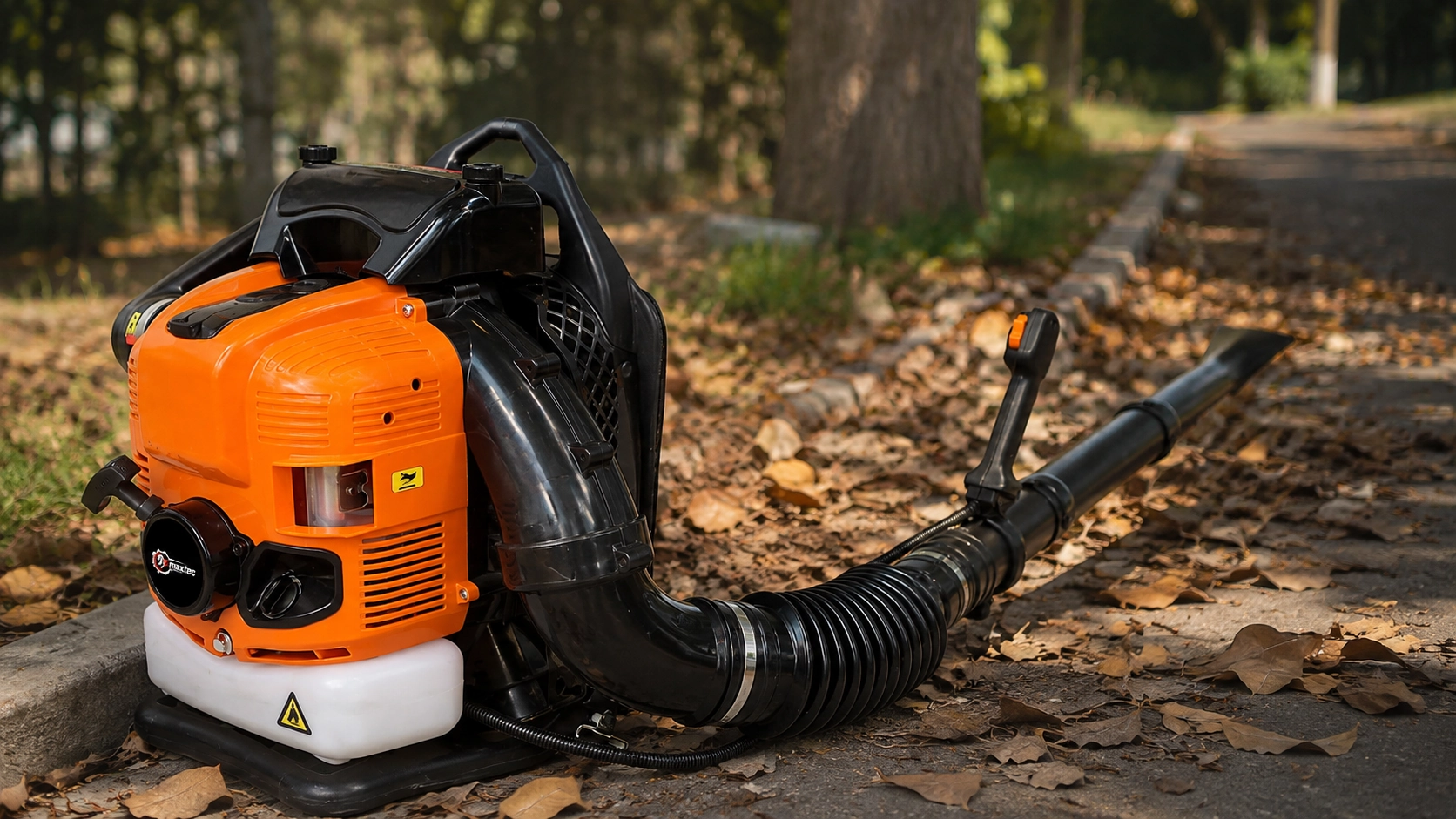
Gasoline Leaf Blower Overheating During Long Use: Cooling and Engine Checks
A gasoline leaf blower overheating during long use should first be checked for restricted cooling airflow, packed dust around the engine and incorrect four-stroke engine-oil condition before internal engine faults are suspected. Some heat around the cylinder and muffler is normal, but repeated power loss, shutdown, smoke or a strong burning smell after extended operation deserves inspection.
This guide focuses on a blower that operates normally at first and becomes abnormally hot only after running for a period of time. It does not cover a blower that dies immediately when the throttle is applied or one that produces weak airflow from startup. Those symptoms should be diagnosed separately. :contentReference[oaicite:0]{index=0}
| QUICK ANSWER |
Quick answer: Begin with the cooling-air path. After the blower has fully cooled, inspect the starter housing, ventilation openings, cooling-air intake and cylinder fins for dust, grass and leaf debris. On a four-stroke blower, also confirm the engine-oil level and condition according to the actual engine instructions. If external cooling, oil condition and the air filter are acceptable but the engine still becomes unusually hot, loses rpm or shuts down after extended use, stop operating it and move to controlled engine inspection. |
1. Confirm That the Heat Is Actually Abnormal
A gasoline blower naturally becomes hot during operation. The cylinder, muffler, exhaust area and nearby engine covers may remain hot for some time after shutdown. Temperature alone is therefore not enough to diagnose overheating.
The useful distinction is whether the increasing temperature is accompanied by a change in machine behavior. For a dealer or service technician, that symptom boundary determines whether the machine simply feels hot or is actually developing a heat-related operating fault.
| Observed Condition | How to Treat It |
| Engine and muffler become hot but performance remains stable | Heat may be part of normal operation; continue with routine cooling-system inspection. |
| Power falls only after extended running | Treat as a possible heat-related problem and inspect airflow, oil condition and engine breathing. |
| Machine repeatedly shuts down after becoming very hot | Stop continued operation and investigate before returning the blower to service. |
| Smoke or strong burning smell appears | Stop the engine, allow it to cool and inspect for contamination, lubrication or engine-related faults. |
Do not touch the muffler, cylinder or other hot engine components to judge temperature. Allow the machine to cool before inspection.
2. Inspect the Cooling-Air Path Before the Engine
An air-cooled engine depends on a continuous flow of air around the cylinder and related hot areas. Leaf blowers work in exactly the type of environment that can interfere with this system: fine dust, dry grass, lightweight leaf fragments and airborne debris constantly circulate around the machine.
With the engine stopped and completely cooled, inspect the exterior openings before removing major components.
Check First
|
Look For
|
Remove loose contamination with a suitable brush or dry cleaning method. Avoid forcing dirt farther inside the housing while trying to clean an external vent.
3. Check the Cylinder Fins and Backpack Installation
A clean outer housing does not prove that cooling airflow is reaching the engine correctly. Cylinder fins increase the surface area available for heat dissipation, and packed dust between those fins can reduce cooling even when the external covers look acceptable.
This is particularly relevant when the blower is used around dry soil, farm tracks, landscaping debris, dusty yards, grass clippings or fine leaf particles. A machine that develops heat only after twenty or thirty minutes of dusty work should therefore be inspected differently from a blower that performs poorly from the moment it starts.
Look at how the machine is worn. Loose clothing, accumulated leaves, plastic material, added padding or a shifted cover can overlap a cooling opening. Also confirm that the backpack frame and covers remain in their intended positions after transport or repair.
Do not permanently remove designed covers or guards in an attempt to make the engine run cooler. Those parts may also direct cooling air through the intended path.
4. Check Four-Stroke Engine Oil and the Air Filter
A four-stroke blower requires a different lubrication check from a conventional two-stroke machine using premixed fuel. Before extended operation, the engine oil should be checked according to the instructions for the engine actually fitted to the blower.
- Check the oil level. Use the correct machine position and surface specified for the engine.
- Confirm the oil type. Do not assume the grade from another blower of similar displacement.
- Inspect oil condition. Severely contaminated or overdue oil deserves attention.
- Look for external leakage. Leakage can indicate that the oil level should not be judged by assumption.
- Do not overfill. Adding extra oil without checking the actual level is not a correct response to an overheating complaint.
The engine air filter should be inspected at the same stage, especially on blowers that work in dusty environments. Heavy dust loading, oil contamination, damaged filter material or incorrect filter installation can affect engine breathing and overall running condition.
The cleaning method depends on the actual filter type. Foam, paper and combination elements should not automatically be serviced in the same way.
5. Separate Working Conditions From a Mechanical Fault
A blower may perform normally during short cleaning jobs yet become noticeably hotter during extended operation in very hot or dusty conditions. That pattern should be recorded before parts are replaced.
| Question | Why It Helps Diagnosis |
| Does overheating occur only during long continuous jobs? | Helps separate operating-duration effects from a fault present immediately after startup. |
| Does it appear faster in very hot weather? | Ambient conditions may increase the cooling demand on an air-cooled engine. |
| Is fine dust rapidly covering the engine housing? | Frequent contamination can shorten the useful interval between cooling-system inspections. |
| Does the problem improve after the cooling system is cleaned? | This points attention back toward restricted airflow rather than immediate internal engine replacement. |
For commercial landscaping, farm cleaning and other dusty applications, maintenance frequency may need to reflect actual contamination rather than only a fixed calendar interval.
6. Do Not Confuse Blower-Tube Airflow With Engine Cooling
The air discharged through the blower tube and the airflow used to cool the engine perform different functions. A machine can still produce substantial air at the nozzle while the engine's cooling intake or fins are becoming contaminated.
Diagnostic boundary: Strong blower output does not prove that the cylinder has enough cooling airflow. When heat is the complaint, inspect the engine-cooling intake, covers and fins directly. Weak blower output from startup belongs to a different diagnostic path involving the blower housing, air path, throttle setting or fan system.
7. TM-EB9900: Why This Model Fits the Overheating Check
TM-EB9900 Gasoline BlowerEngine: 75.6cc, 4-stroke, air-cooled Rated output: 2.2 kW at 7500 rpm Idle speed: 3000 ±200 rpm Air volume: at least 0.40 m³/s Air speed: at least 70 m/s Because this is a four-stroke, air-cooled backpack blower, cooling-air condition, engine-oil maintenance and dust management are directly relevant when diagnosing overheating after extended operation. The product information does not state a fixed engine model, oil capacity or oil grade, so those details should be confirmed for the actual production configuration rather than guessed. |
|
The published airflow figures describe blower performance, not permission to operate indefinitely with blocked engine-cooling passages or incorrect maintenance conditions.
8. Dealer Inspection Checklist Before Returning the Blower to Service
For distributors and service departments, the goal is not merely to make the machine restart after cooling. The cause of the repeated temperature rise should be identified before the blower is returned to the customer.
01 — Cooling intake: Confirm that starter-housing openings, ventilation slots and intake screens are not packed with debris.
02 — Cylinder fins: Check for dust or oily deposits between the cooling fins where accessible according to the service procedure.
03 — Backpack installation: Verify that covers, frame parts, clothing or added padding are not blocking ventilation.
04 — Engine oil: Confirm oil level, condition and maintenance requirements for the actual four-stroke engine supplied.
05 — Air filter: Inspect contamination, filter condition, seating and the surrounding housing.
06 — Operating pattern: Record whether overheating occurs only after long operation, in high ambient temperature or in very dusty conditions.
07 — Exhaust and running condition: If external checks are normal, inspect exhaust restriction, ignition, fuel delivery and hot-running behavior.
08 — Four-stroke engine condition: Where symptoms continue, check engine adjustment, valve condition and abnormal internal friction according to the actual engine design.
09 — Spare-parts compatibility: Confirm air-filter elements, cooling covers, starter housing, spark plugs, exhaust parts and engine service parts against the actual supplied configuration.
If the cooling intake, fins, oil condition, backpack installation and air filter are all acceptable but the blower still becomes abnormally hot, diagnosis should move to the engine based on the exact symptom. An engine that remains hot but keeps stable rpm is not the same case as one that loses power, shuts down and cannot restart until it cools.
Frequently Asked Questions
| 1 |
Why does my gasoline leaf blower overheat after 20 or 30 minutes?If the machine operates normally when cold and becomes abnormally hot only after extended use, inspect restricted cooling airflow, packed cylinder fins, engine-oil condition, air-filter contamination and the working environment before assuming an internal engine failure. |
| 2 |
Can blocked cooling fins make a leaf blower lose power?Restricted cooling around an air-cooled engine can contribute to excessive operating temperature and may accompany changing engine performance. Clean the cooling path first and then compare the blower's behavior before and after the obstruction is removed. |
| 3 |
Does strong air from the blower tube mean the engine is cooling correctly?No. Nozzle airflow and engine-cooling airflow serve different functions. A blower can still move air through the tube while dust or debris restricts the cooling intake or cylinder-fin area. |
| 4 |
Should I add more oil if my four-stroke blower runs hot?Not without checking the actual level first. The correct oil specification and quantity depend on the engine supplied. Overfilling is not a proper fix for overheating, and the TM-EB9900 product information does not specify a fixed oil capacity or oil grade. |
| 5 |
Can a dirty air filter contribute to heat-related running problems?A heavily contaminated filter can affect engine breathing and should be inspected when a blower is repeatedly used in dusty conditions. Service the element according to the actual filter type rather than applying one cleaning method to every design. |
| 6 |
When should a dealer move from cleaning checks to internal engine diagnosis?Move deeper when the cooling intake, fins, oil condition, air filter and backpack installation are acceptable but the blower still develops excessive heat, loses rpm, repeatedly shuts down or shows another consistent heat-related symptom. At that point, exhaust, ignition, fuel delivery, valve condition and internal friction can be investigated according to the actual engine. |
Confirm the Blower and Service-Parts Configuration Before Bulk OrderingA gasoline leaf blower overheating during long use should be checked from the external cooling system inward. For TM-EB9900 wholesale orders, confirm the actual engine-related maintenance information and compatibility of air filters, cooling covers, starter housings, spark plugs, exhaust parts and other service items according to the final production configuration. |
|