
2-Stroke vs 4-Stroke Backpack Brush Cutter: Which to Choose?
Compare a 2-stroke vs 4-stroke backpack brush cutter for fuel handling, working angle, maintenance and farm use before choosing a configuration.
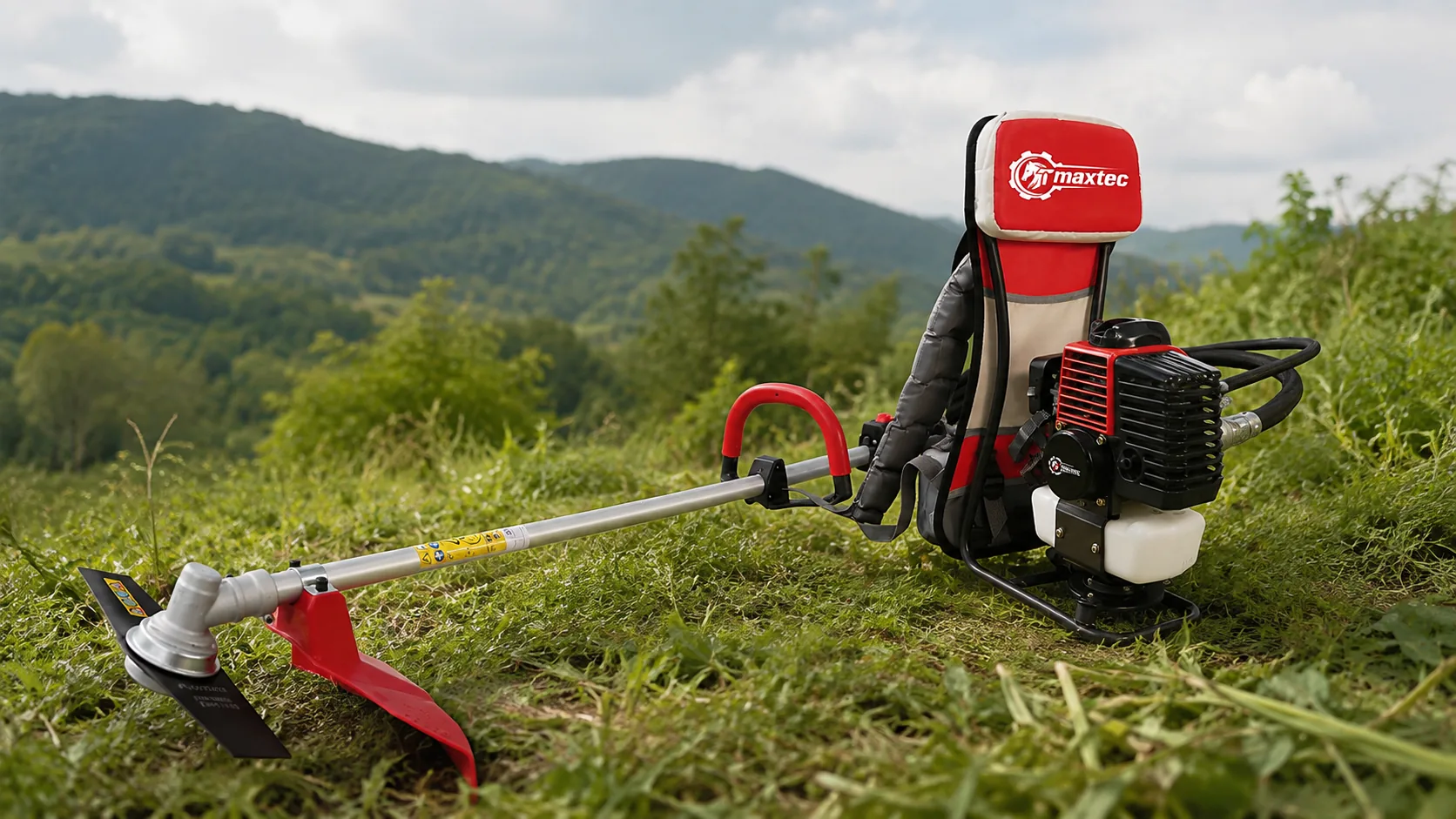
2-Stroke vs 4-Stroke Backpack Brush Cutter: Which Should Importers Choose?
A useful 2 stroke vs 4 stroke backpack brush cutter comparison starts with the way the machine will actually be fueled, carried, angled and serviced. A 2-stroke engine normally depends on gasoline mixed with 2-stroke oil, while a conventional 4-stroke engine separates engine lubrication from the fuel. Neither arrangement is automatically better for every farm, dealer network or export market.
Backpack and knapsack brush cutters also deserve a different evaluation from ordinary side-mounted machines. The engine remains on the operator's back while power is transferred toward the cutting attachment, so fuel practice, working orientation, backpack balance, flexible-drive routing and local repair knowledge can all influence whether a model is suitable after delivery.
1. Start With Fuel and Maintenance Habits, Not Engine Size
The largest practical difference between the two engine types is often what operators must do before and after refueling. A 2-stroke engine normally receives lubrication from oil mixed into the gasoline. This removes the separate crankcase-oil procedure associated with a conventional 4-stroke engine, but it makes correct fuel preparation part of normal operation.
Where chainsaws, earth augers and other small 2-stroke machines are already common, operators and mechanics may be comfortable measuring and mixing fuel. In that market, familiar service habits can matter more than the theoretical advantage of changing engine type.
A 4-stroke configuration uses gasoline without mixing 2-stroke oil into the fuel tank, but this does not remove maintenance. The operator instead needs to understand the correct engine-oil inspection, quantity and replacement procedure for the engine supplied with the machine.
| Purchase Point | 2-Stroke Backpack Brush Cutter | 4-Stroke Backpack Brush Cutter |
| Fuel handling | Gasoline and 2-stroke oil normally require correct mixing. | Gasoline is used without adding 2-stroke oil to the fuel tank. |
| Lubrication routine | Lubrication depends on correct oil-and-fuel preparation. | Engine lubrication is maintained separately according to the engine procedure. |
| Common operating error | Incorrect mixing ratio or poorly prepared fuel. | Incorrect oil level, oil quantity or maintenance procedure. |
| Dealer consideration | Useful where 2-stroke service knowledge is already widespread. | Useful where workshops and customers understand small 4-stroke engines. |
2. Backpack Layout Changes the Buying Decision
On a conventional side-mounted brush cutter, the engine, shaft and cutting attachment form one connected unit carried beside the operator. A backpack brush cutter redistributes this load. The engine is supported by the backpack frame while the operator moves the cutting tube separately.
This arrangement can be useful for farm grass cutting, orchard maintenance, uneven ground and other work where the cutting end needs freedom of movement. It also creates additional purchasing points that do not appear in a simple engine comparison.
Check the Engine Side
|
Check the Complete Machine
|
An engine can look appropriate on paper while the complete machine is inconvenient for the intended work. Sample evaluation should therefore include carrying, cutting movement and actual vegetation load rather than only starting the engine on a bench.
3. Do Not Use a General Rule for 4-Stroke Working Angles
Working orientation deserves special attention on a knapsack brush cutter. Operators may sweep around trees, work beside ditch edges, cross slopes or bend while the engine remains on the backpack frame. The engine position can change as the operator moves across uneven ground.
For this reason, statements such as “4-stroke brush cutters cannot work on slopes” are too broad for procurement. Different engine lubrication designs can have different operating requirements. The permitted orientation should be confirmed from the operating instructions for the actual engine and machine configuration.
For hilly agricultural markets:
Confirm the allowed working orientation before approving the order. This is more useful than assuming that a 2-stroke engine is always suitable for slopes or that every 4-stroke engine has the same angle restriction.
4. Compare Confirmed Output Instead of Guessing From the Model Name
Engine naming and product codes can create confusion in wholesale sourcing. Numbers inside a model designation should not automatically be read as engine displacement. The actual technical specification is what matters.
TM-BG520H Knapsack Brush Cutter — Reference Configuration
| Model reference on page | GX35 |
| Engine | 4-stroke, air-cooled |
| Displacement | 35.8cc |
| Rated output | 1.1 kW at 6500 rpm |
| Idle-speed reference | 3000 ±200 rpm |
| Listed applications | Farm grass cutting, garden maintenance and agricultural land clearing |
The TM-BG520H is relevant to this comparison because its listed configuration provides a concrete 4-stroke backpack brush cutter reference. Its 35.8cc displacement and 1.1 kW rated output should be read from the specification rather than inferred from the product name.
| Check TM-BG520H Specifications |
5. Match Engine Type With Vegetation and Daily Workload
A backpack brush cutter's engine type does not by itself determine whether the machine can handle a field. Light grass around trees creates a different load from repeated cutting through tall, tangled weeds, and a metal blade can place different demands on the drive system than a nylon trimming head.
For moderate agricultural clearing, a smaller-displacement 4-stroke machine may be appropriate when its rated output, cutting attachment and work method suit the vegetation. For heavier clearing, compare the complete specification and cutting system instead of simply selecting the largest displacement printed in the catalog.
| Application Question | What to Evaluate | Procurement Consequence |
| Light grass and routine garden work | Attachment, handling and operator comfort | Do not overspecify the engine only for a larger catalog number. |
| Tall or tangled weeds | Rated output, blade suitability and drive system | Evaluate the complete machine under representative cutting load. |
| Slope or ditch-edge work | Permitted engine orientation and backpack stability | Confirm operating instructions before shipment. |
| Longer working periods | Harness, backpack balance, flexible-drive routing and maintenance routine | Sample testing should include carrying and cutting, not only engine running. |
6. Dealer After-Sales Support Can Decide Which Type Sells Better
A technically suitable engine can still become an after-sales problem when the local workshop does not understand its routine service requirements. Importers should compare engine familiarity in the target market before treating one design as easier to maintain.
Typical 2-Stroke Support Topics
|
Typical 4-Stroke Support Topics
|
The exact procedure must follow the engine supplied with the machine. Dealers should also remember that a knapsack brush cutter has service requirements beyond the engine. The connection between the backpack-mounted power unit and the cutting end should be included in spare-parts planning.
7. Importer and Dealer Checklist Before Approving a Model
| 01 | Confirm the actual engine type and displacement rather than interpreting numbers in the product name as displacement. |
| 02 | Check the rated output and operating-speed references for the confirmed specification. |
| 03 | Confirm fuel and lubrication instructions so dealers know whether mixed fuel or separate engine-oil maintenance is required. |
| 04 | Verify permitted working orientation if the machine will be sold for slopes, orchards, ditch edges or uneven land. |
| 05 | Match the cutting attachment to the intended vegetation instead of judging capability from engine displacement alone. |
| 06 | Evaluate backpack balance, harness adjustment and cutting-tube handling with the complete machine assembled. |
| 07 | Check flexible-drive and connection parts because the after-sales stock plan should cover more than engine components. |
| 08 | Confirm local workshop familiarity with the selected 2-stroke or 4-stroke maintenance procedure. |
| 09 | Identify common consumable and repair parts according to the actual engine and brush cutter configuration. |
| 10 | Use the quotation or proforma invoice as the final configuration reference before bulk-order approval. |
8. Frequently Asked Questions
Is a 2-stroke backpack brush cutter better than a 4-stroke model?
Not universally. A 2-stroke configuration can make sense where mixed fuel and 2-stroke servicing are already familiar. A 4-stroke model can fit markets where buyers prefer straight gasoline refueling and can correctly manage separate engine-oil maintenance.
Do all 4-stroke backpack brush cutters have limited working angles?
No single rule should be applied to every engine. Permitted orientation depends on the actual lubrication design and engine configuration. Confirm the operating instructions for the machine being purchased.
Does a larger displacement automatically mean a better backpack brush cutter?
No. Displacement should be considered together with rated output, cutting attachment, drive system, vegetation type and the complete backpack configuration.
What is the listed engine specification of the TM-BG520H?
Its product page lists a GX35 reference, 4-stroke air-cooled engine, 35.8cc displacement, rated output of 1.1 kW at 6500 rpm and an idle-speed reference of 3000 ±200 rpm.
Is the TM-BG520H suitable for farm work?
The product page describes applications including farm grass cutting, garden maintenance and agricultural land clearing. The actual cutting attachment and confirmed order configuration should still be matched to the vegetation and working conditions.
What should dealers confirm before placing a wholesale backpack brush cutter order?
Confirm the engine configuration, rated output, cutting attachment, permitted operating orientation, backpack and drive arrangement, compatible service parts and maintenance instructions. Final specifications should follow the confirmed quotation or proforma invoice.
Compare the Confirmed Backpack Brush Cutter ConfigurationFor a wholesale 2 stroke vs 4 stroke backpack brush cutter decision, use actual fuel practice, working orientation, vegetation, service capability and confirmed engine data rather than the model name alone. The TM-BG520H provides a 35.8cc 4-stroke reference for buyers evaluating farm grass cutting, garden maintenance and agricultural land-clearing applications. |
|