
Chainsaw Won’t Restart When Hot: What Should You Check?
A chainsaw won’t restart when hot due to fuel, ignition, airflow or heat-related issues. Check the simplest causes before adjusting internal engine parts.
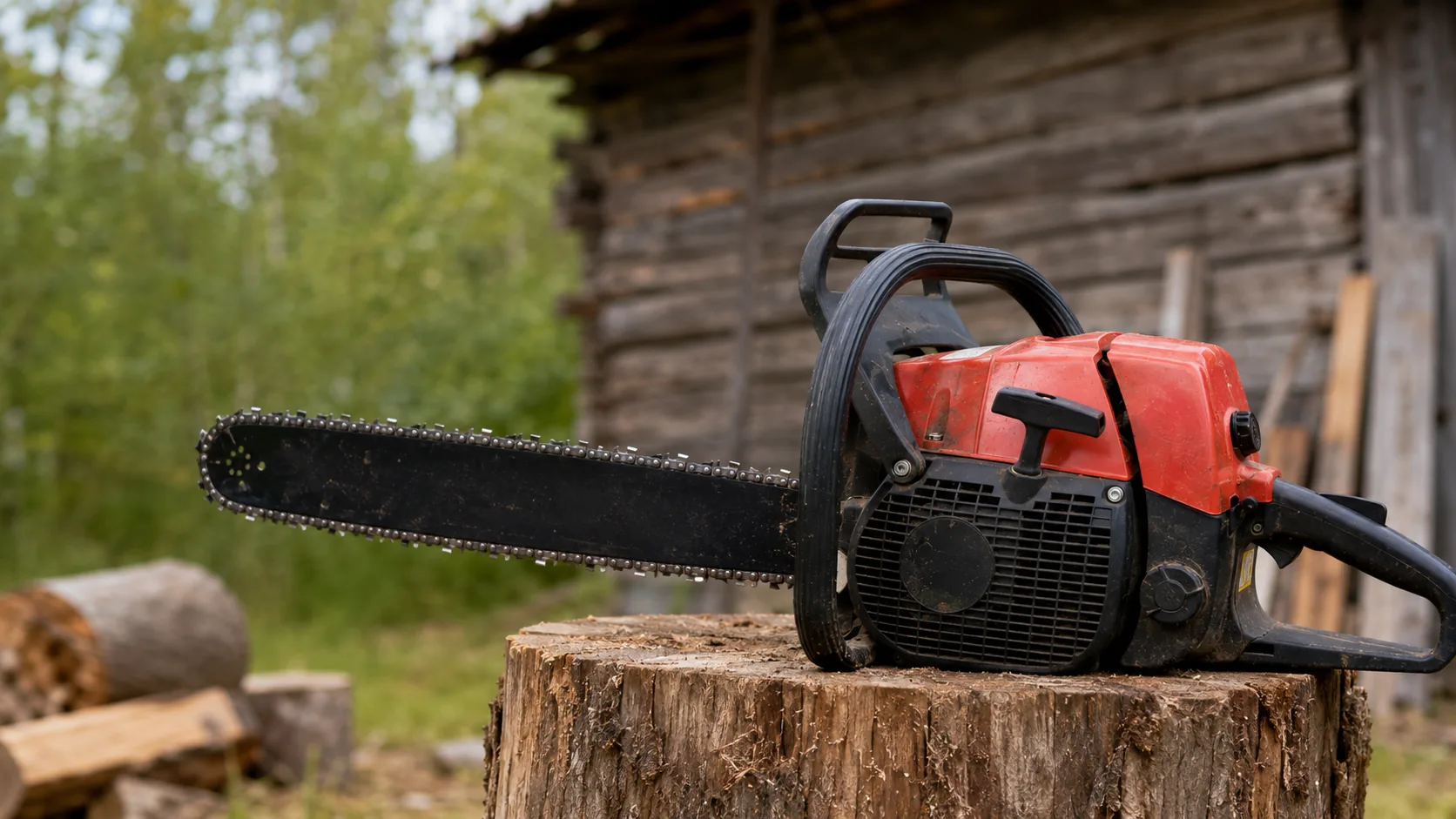
Chainsaw Won’t Restart When Hot: Causes, Checks and Dealer Troubleshooting
If a chainsaw won’t restart when hot but starts normally from cold, the temperature pattern is the most useful diagnostic clue. Begin with the warm-start procedure, possible flooding and fuel-tank venting before adjusting the carburetor or replacing ignition parts. If those external checks are normal, compare spark and fuel delivery while the failure is actually present.
This guide applies to a chainsaw that completes a cutting session, is deliberately switched off, then becomes difficult or impossible to restart while the engine is still hot. It does not cover a saw that has been stored for weeks, an engine that dies whenever the throttle is released, or a chain that stops when it enters wood. Those symptoms require different troubleshooting sequences.
Quick answer:
| 1 | First: use the correct warm-start procedure and avoid repeating the full-choke cold-start sequence on an already hot engine. |
| 2 | Next: check whether the plug is wet or dry, whether the fuel tank is venting, and whether the air filter and external fuel lines are in normal condition. |
| 3 | If the fault remains: compare ignition while hot, after cooling and during a normal cold start. Dealers should diagnose the machine while it still refuses to start rather than waiting until the temperature-sensitive symptom disappears. |
1. Define the Symptom Before Removing Parts
A true hot-restart complaint has a clear sequence: the chainsaw starts when cold, operates normally, is shut down, refuses to restart while hot, and may start again after cooling. That pattern is more useful to a technician than the general complaint that the saw is “hard to start.”
The failure boundary also prevents unrelated repairs. If the engine was already running poorly before shutdown, the cause may be an idle, fuel-delivery or mixture problem rather than a restart-only fault.
| Observed Behaviour | Diagnostic Direction | Do Not Confuse It With |
| Starts cold, runs normally, will not restart immediately after shutdown | Hot-start technique, flooding, venting, hot ignition and fuel delivery | Long-term storage starting problems |
| Engine dies whenever throttle is released | Idle operation and low-speed running | Temperature-related restart failure |
| Engine continues revving but chain stops in wood | Cutting and drive system | Hot-start diagnosis |
2. Eliminate Hot-Start Flooding Before Adjusting the Carburetor
A recently stopped 2-stroke engine normally does not require the same enrichment as a cold engine. Repeating the full cold-start procedure can add more fuel than the hot engine needs. After several unsuccessful pulls, the original problem may be replaced by a flooded cylinder.
If the saw was running normally just before it was switched off, follow the manufacturer’s warm-start procedure. Do not automatically close the choke fully simply because the engine did not fire on the first pull.
Signs that repeated starting attempts may have flooded the engine
- A strong gasoline smell near the exhaust.
- A spark plug that is visibly wet with fuel.
- The engine fires briefly but does not continue running.
- The symptom becomes worse after repeated full-choke pulls.
If several unsuccessful attempts have already been made, stop pulling the starter repeatedly. Allow hot components to cool sufficiently before removing the spark plug or working around gasoline, and keep ignition sources away from fuel.
3. Check Tank Venting, Airflow and External Fuel Supply
Before opening the carburetor, inspect the external systems that can change fuel delivery after the saw has been operating for a period. A restricted tank vent, contaminated filter or damaged fuel line can create a repeatable restart problem without requiring immediate internal carburetor work.
Fuel-Tank Vent
As gasoline leaves the tank, air must enter. If the vent cannot admit enough replacement air, negative pressure may gradually restrict fuel delivery. A saw that starts cold, operates for a similar period, then becomes difficult to restart deserves a tank-vent inspection.
With the engine switched off and away from ignition sources, inspect the fuel cap and vent system according to the actual chainsaw design. Do not assume every fuel cap uses the same vent arrangement.
Air Filter
A restricted air filter can change mixture behaviour and make restarting a hot engine less consistent. Inspect for heavy dust, sawdust buildup, oil contamination, damage and incorrect installation. Clean or replace the filter using the correct method for its material.
Fuel Lines and In-Tank Filter
| Inspection Area | What to Look For | Why It Matters |
| Fuel line | Hardening, cracking, softening, deformation or loose connections | A damaged line can disturb consistent fuel delivery. |
| In-tank filter | Contamination or restricted pickup | Partial restriction may make restart behaviour inconsistent. |
| Filter position | Unable to move or remain in fuel during normal machine movement | Fuel pickup should remain appropriate during normal operating positions. |
4. Read the Spark Plug While the Chainsaw Is Still Hot
The spark plug can help separate excess fuel from insufficient fuel and ignition failure, but timing matters. Inspecting the plug only after the engine has cooled can remove the most useful part of the evidence.
Wet Plug After Failed Hot StartFuel is reaching the cylinder. Possible directions include excessive choke use, repeated starting attempts or an ignition problem that prevents the mixture from burning correctly. |
Dry Plug After Repeated AttemptsInsufficient fuel delivery becomes more relevant, although the actual restriction or supply problem still needs to be identified rather than assumed. |
Also inspect for heavy deposits, damaged electrodes or an obviously incorrect gap according to the engine specification. Replacing the spark plug without recording its condition can erase useful diagnostic evidence.
5. Compare Ignition Hot, Cold and After Cooling
Some ignition faults are temperature-sensitive. A component can produce acceptable ignition when cold, continue working during operation, then weaken or stop functioning after enough heat has built up. Once the saw cools, the same component may work again.
This is why a chainsaw starts cold but not hot complaint should be tested while the failure is present. If a technician waits until the machine starts normally again, the temperature-related difference may no longer be visible.
- Cold reference: observe ignition behaviour when the engine starts normally from cold.
- Hot failure: check ignition immediately after the engine refuses to restart.
- Cooling comparison: repeat the check after sufficient cooling and compare the result.
Safety point: do not hold the spark plug or ignition components by hand while cranking the engine. Use an appropriate spark-testing method.
6. Leave Internal Carburetor and Engine Checks Until the External Pattern Is Confirmed
If hot-start technique, tank venting, air filtration, spark-plug condition, hot ignition and external fuel delivery have been checked, deeper diagnosis may be justified. Depending on the confirmed engine and carburetor design, the next inspection may involve metering components, internal fuel passages, intake sealing, heat-related ignition components or compression condition.
Random carburetor adjustment should not be the first repair. Turning mixture screws can temporarily change the way a saw starts while leaving an underlying fuel restriction, ignition problem or sealing fault unresolved.
| Diagnostic Stage | Examples | Priority |
| External checks | Starting procedure, vent, filter, hoses, spark-plug condition | Check first |
| Temperature comparison | Spark and fuel behaviour hot versus cold | Confirm before disassembly |
| Internal diagnosis | Carburetor metering, internal passages, intake sealing, compression | After symptom confirmation |
7. TM-CS381 Reference for Dealer Diagnosis and Spare-Parts Planning
TM-CS381 Gasoline Chain Saw
| Engine | 2-stroke, air-cooled |
| Displacement | 72.2cc |
| Rated output | 3.3 kW at 7000 rpm |
| Idle-speed reference | 3300 ±200 rpm |
| Guide-bar options | 20 inch or 24 inch |
| Chain pitch | 3/8 inch |
| Fuel tank | 680 ml |
| Oil tank | 360 ml |
The TM-CS381 is relevant to hot-restart troubleshooting because dealers can use the exact machine configuration when recording idle behaviour, ignition parts, fuel-system components and carburetor-related service requirements. The first question should still be whether the engine failed only after being deliberately switched off hot or whether it was already running incorrectly before shutdown.
| View TM-CS381 Details |
8. Dealer Checklist for a Chainsaw That Will Not Restart Hot
- Verify a normal cold start before treating the complaint as temperature-related.
- Confirm the engine runs normally before shutdown rather than dying or losing idle by itself.
- Record the operator’s hot-start procedure and whether full choke is being used on a warm engine.
- Inspect the plug immediately after the failed hot start and record whether it is wet or dry.
- Check fuel-tank venting before changing mixture settings.
- Inspect the air filter, fuel line and in-tank filter before opening the carburetor.
- Test ignition while the engine is still hot rather than only after it has cooled.
- Repeat the ignition comparison after cooling to look for a temperature-sensitive difference.
- Record whether the engine restarts after cooling and how long the symptom takes to disappear.
- Confirm the exact carburetor and ignition configuration before ordering service components.
- Do not approve random mixture-screw changes as the first repair when the actual hot-start cause has not been identified.
Frequently Asked Questions
Why does my chainsaw start cold but not when hot?
Possible directions include an incorrect warm-start procedure, flooding, restricted tank venting, inconsistent fuel delivery or an ignition fault that appears after components become hot. The most useful comparison is between the failed hot condition and the same machine after cooling.
Should I use full choke to restart a hot chainsaw?
Do not automatically repeat the full cold-start procedure. A recently stopped engine normally requires the warm-start procedure specified for the actual saw. Excessive choke use can introduce too much fuel and create a flooded condition.
What does a wet spark plug mean after a failed hot start?
A wet plug shows that fuel has reached the cylinder. The next question is why combustion did not continue. Repeated choke use, flooding or an ignition problem may be relevant, depending on the complete symptom.
Can a chainsaw ignition coil fail only when hot?
Some ignition faults can become temperature-sensitive. The useful test is to compare ignition during a normal cold start, immediately after the hot-start failure and again after cooling. The exact failed component should not be assumed without testing.
Should I adjust the carburetor if my chainsaw won’t restart when hot?
Not as the first step. Check the starting procedure, flooding, tank vent, air filter, fuel line, filter, plug condition and hot ignition behaviour before changing mixture settings.
What should a dealer record before replacing parts on a TM-CS381?
Record whether it starts normally cold, whether it runs correctly before shutdown, the warm-start procedure used, plug condition after failure, spark while hot, fuel-system observations and whether it restarts after cooling. Service parts should then be matched to the actual TM-CS381 configuration.
Diagnose the Hot Failure Before Ordering PartsWhen a chainsaw won’t restart when hot, reproduce and inspect the problem while the engine is still in the failed condition. Start with warm-start technique, flooding, tank venting and external fuel checks, then compare ignition and fuel behaviour between hot and cold conditions. For TM-CS381 wholesale orders or service planning, confirm the exact machine configuration before selecting carburetor, ignition or fuel-system parts. |
|