
Why Does a 4-Stroke Brush Cutter Leak Oil During Storage?
A 4-stroke brush cutter leaking oil during storage may be tilted, overfilled, or leaking at a cap or seal. Check the source before restarting.
Why Does a 4-Stroke Brush Cutter Leak Oil During Storage?
A 4-stroke brush cutter leaking oil during storage does not automatically mean the engine has a failed gasket or damaged crankcase. If oil appears only after the machine has been parked, laid down or transported, the first checks should be the leak location, storage orientation and crankcase oil level.
This troubleshooting guide focuses specifically on oil found while a brush cutter is stored or transported. It does not cover persistent exhaust smoke during normal operation or leakage of mixed gasoline from the fuel tank, carburetor or fuel lines.
1. Identify Where the Oil Starts Before Diagnosing the Engine
Before removing covers or engine components, confirm that the fluid is engine oil. A wet area near the fuel tank or carburetor should not automatically be classified as a crankcase leak.
Engine oil normally remains slippery and oily, while gasoline evaporates much more readily. More importantly, look for the highest point where fresh oil begins. Oil can travel along the engine housing, frame or other surfaces before finally dripping onto the floor.
| Where Oil Appears | First Inspection | What It May Indicate |
| Oil filler cap or dipstick | Cap seating, threads and sealing surface | Loose cap, displaced seal or oil movement after tilting |
| Air-cleaner side | Filter housing and breather area | Oil migration after incorrect storage angle or overfilling |
| Below the crankcase | Trace upward after cleaning | Possible external seepage or oil flowing from another point |
| After side transportation | Storage orientation and oil level | Oil displaced from its normal crankcase position |
If the engine exterior is already oily, clean it before continuing. Old residue can make a storage-related problem look like an active leak.
2. Check the Storage and Transport Position
Storage angle is one of the most important checks when leakage appears only after the brush cutter has been moved. A 4-stroke engine keeps its lubricating oil in the crankcase, unlike a typical 2-stroke brush cutter that operates with oil mixed into the fuel.
If a 4-stroke engine remains at an unsuitable angle for an extended period, oil may move toward passages and areas that normally receive little oil while the machine is upright. Depending on the engine design and orientation, this can include the crankcase ventilation path or air-cleaner side.
Storage-related clues
|
What to do first
|
Do not move directly to gasket replacement simply because oil became visible after transportation. The timing of the complaint is an important diagnostic clue.
3. Verify Oil Level and the Filler-Cap Seal
An overfilled crankcase is especially worth checking when oil leakage begins shortly after servicing or dealer preparation. Adding more oil than specified does not provide additional protection. Excess oil can increase oil movement inside the crankcase and may allow lubricant to reach the breather system or another area where it becomes visible.
Check the oil using the procedure specified for the actual engine configuration and with the machine positioned as required by its operating instructions. Do not copy the oil quantity from another brush cutter simply because its engine looks similar.
- A loose or incorrectly threaded filler cap
- Dirt trapped against the sealing surface
- A displaced or visibly damaged seal
- Cracks around the filler opening
- Fresh oil beginning directly below the cap or dipstick
Reinstall the cap correctly after cleaning the area, but avoid excessive tightening of plastic threaded parts. Damaged threads or distorted sealing surfaces can turn a simple service issue into a replacement-parts problem.
4. Oil Around the Air Filter May Point to the Breather Path
Oil around the air-cleaner area can appear serious, but its location should be interpreted together with storage position and oil level. On some small 4-stroke engines, crankcase ventilation is connected with the intake or air-cleaner area.
If the brush cutter was tilted incorrectly or the crankcase contained excessive oil, lubricant may migrate through the ventilation path. Inspect the air-cleaner components only after the engine has cooled and the machine is secured against accidental starting.
If the filter element has become contaminated with oil, service it according to the applicable engine instructions before normal operation. An oil-soaked filter can restrict airflow and create a running problem that was not present before storage.
5. When Should You Suspect External Engine Seepage?
If fresh oil continues to appear while the brush cutter remains correctly positioned and the crankcase level is within the specified range, examine the engine exterior more carefully.
Clean the suspected area and watch for the first point where fresh oil becomes visible. External joints, covers and crankcase sealing areas can be inspected, but oil beside a joint does not by itself prove that the gasket has failed. Gravity, vibration and previous machine orientation can move oil away from its original source.
- A large amount of oil has escaped and the source cannot be identified.
- Oil continues appearing from an internal sealing area.
- Confirmation would require engine disassembly.
- Oil is reaching the muffler or another hot surface.
- The engine cannot be turned normally after storage or transportation.
In these situations, the engine should be inspected by a qualified technician rather than having seals or gaskets replaced based only on visible residue.
6. TM-BG435: Why Storage Orientation Matters for This 4-Stroke Model
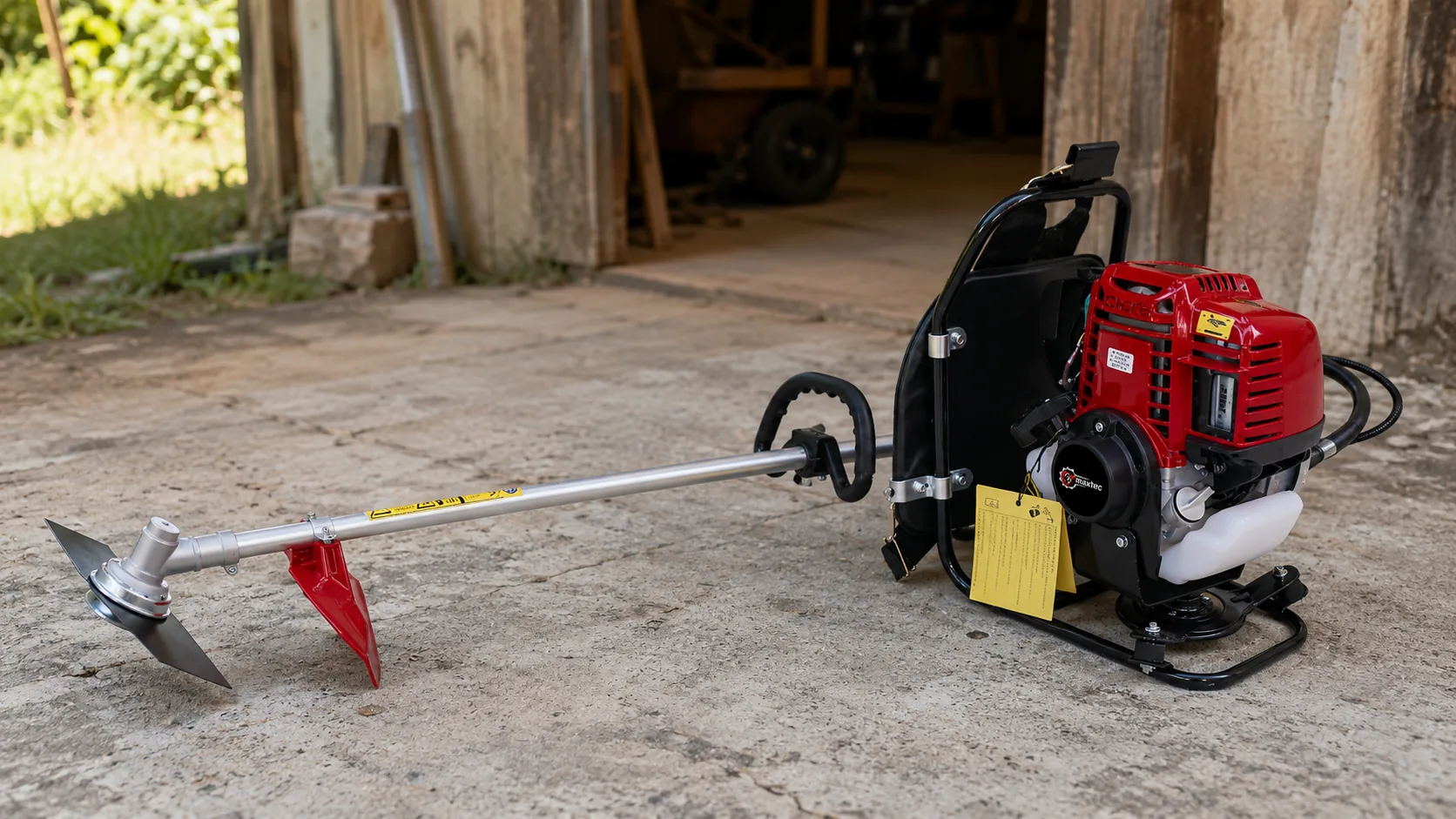
The TM-BG435 backpack brush cutter is relevant to this troubleshooting issue because it uses a 35.8cc, 4-stroke air-cooled engine. Its rated output is 1.1kW at 6500rpm. For this type of machine, engine-oil handling during storage, transportation and dealer preparation should be kept separate from the fuel-mixing procedures used for 2-stroke brush cutters.
| Model | TM-BG435 Backpack Brush Cutter |
| Engine | 35.8cc, 4-stroke, air-cooled |
| Rated Output | 1.1kW at 6500rpm |
| Relevant Procurement Point | Confirm storage orientation, oil-filling procedure and servicing instructions for the ordered configuration. |
For distributors, the practical issue is not simply whether the engine is 4-stroke. The preparation procedure must also be clear: depending on the confirmed order, engine oil may be handled before shipment, during dealer preparation or by the final user. This should follow the applicable engine instructions rather than assumptions based on another model.
| Check TM-BG435 Specifications |
Specifications are reference values. Final configuration should be confirmed according to the quotation or proforma invoice.
7. Importer and Dealer Checklist for Preventing Storage-Related Oil Complaints
A 4-stroke brush cutter oil leak during storage can become a repeated after-sales complaint if dealer preparation and carton handling are not standardized. For bulk orders, the checks below are more useful than treating every oily machine as an engine defect.
| No. | Dealer Check | Why It Matters |
| 1 | Confirm the engine type | Avoid applying 2-stroke fuel/oil procedures to a 4-stroke model. |
| 2 | Confirm shipment oil procedure | Clarify whether oil is added before shipment, by the dealer or by the final user. |
| 3 | Control storage orientation | Long-term tilting may move oil toward the ventilation or intake side. |
| 4 | Check carton orientation instructions | Warehouses and transport operators need consistent handling information. |
| 5 | Standardize pre-delivery oil checks | Prevents technicians from using the same assumed oil quantity across different engines. |
| 6 | Inspect filler caps after preparation | A loose or incorrectly threaded cap may leak when the machine is moved. |
| 7 | Keep engine instructions with dealer service information | Oil level and checking procedures can vary by engine configuration. |
| 8 | Confirm service and replacement-part compatibility | Helps dealers prepare for genuine seal, cap or engine-related repairs when they are actually required. |
| 9 | Record the configuration for repeat orders | Keeps servicing instructions consistent when distributors reorder the same model. |
8. Frequently Asked Questions
Can storing a 4-stroke brush cutter on its side cause oil leakage?
It can, depending on the engine design and the direction in which the machine is positioned. Oil may move from the crankcase toward the breather, air-cleaner area or another passage. Return the machine to its correct operating position and verify the oil level before deciding that an internal seal has failed.
Can too much engine oil make a brush cutter leak?
Yes. An excessive oil level can increase oil movement inside the crankcase and may allow lubricant to reach the ventilation system or other areas. Check the level using the procedure specified for the actual engine rather than assuming that more oil provides better lubrication.
Why is there engine oil inside the brush cutter air-filter housing?
Oil in the air-cleaner area may have migrated through the crankcase ventilation path after incorrect storage orientation or overfilling. Inspect the filter and follow the applicable engine servicing instructions before restarting the machine.
Should I replace the crankcase gasket if oil is visible near an engine joint?
Not without confirming the source. Oil can travel along the housing and collect around a joint even when it originated elsewhere. Clean the engine and watch for the highest point where fresh oil first appears.
Can I start a 4-stroke brush cutter immediately after finding leaked oil?
Confirm the machine is in its normal operating position, clean spilled oil, check the engine-oil level and inspect the air-cleaner area if oil is present there. Do not operate the engine if a large leak remains unexplained or oil is reaching hot engine components.
What should importers check when ordering 4-stroke brush cutters?
In addition to the machine configuration, confirm the engine-oil procedure, transportation orientation, dealer preparation instructions and compatible service parts. These details help separate handling-related complaints from genuine engine leakage after bulk distribution.
Confirm the Source Before Ordering Repair Parts
When a 4-stroke brush cutter leaks oil during storage, begin with the machine's position, crankcase oil level and filler area. If oil is concentrated around the air cleaner, consider the breather path before assuming a crankcase failure. Only after those checks should persistent external seepage be investigated as a possible sealing problem.
| Evaluating the TM-BG435 for wholesale supply? Review the model specifications and confirm the ordered engine configuration, servicing requirements and bulk-order details before arranging distribution. |
|