
Why Does a Chainsaw Use Too Much Bar Oil While Cutting?
A chainsaw using too much bar oil may have thin oil, a leaking cap, incorrect adjustment, or an oil-system leak. Check the source before replacing parts.
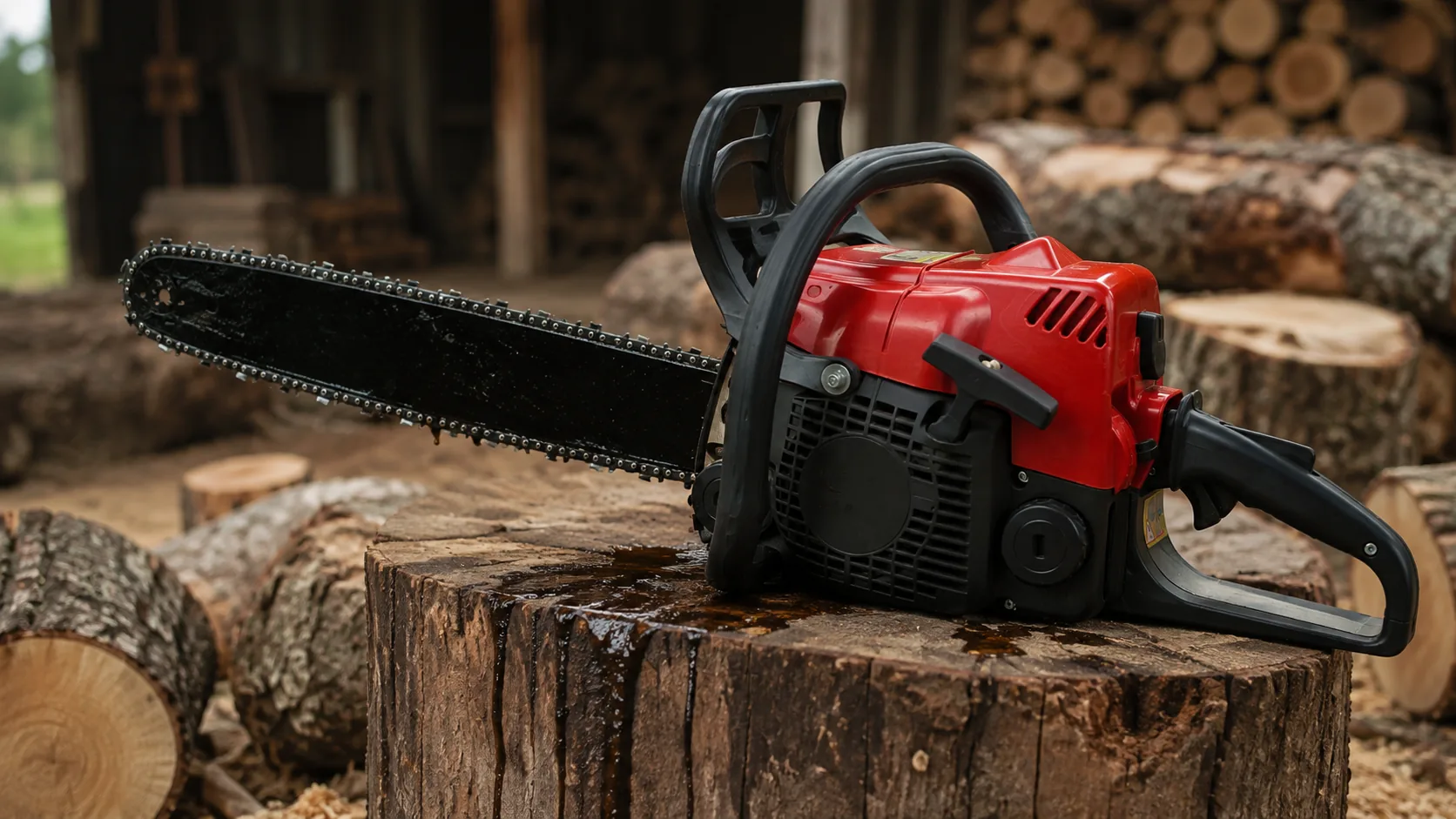
Chainsaw Using Too Much Bar Oil: Causes, Checks and Dealer Troubleshooting
A chainsaw using too much bar oil should first be checked for actual oil consumption versus oil escaping somewhere before it reaches the cutting system. If the oil tank empties unusually quickly, the most useful clues are where fresh oil appears, whether the tank cap seals correctly, what lubricant is being used, and whether the saw has an adjustable oil-flow setting.
This guide covers excessive chain-oil consumption while the chainsaw is operating. It does not cover a chainsaw that has completely stopped oiling the chain or a machine that mainly leaks bar oil while sitting unused in storage.
Quick answer: An oil tank that empties quickly does not prove that the chain is receiving excessive lubrication. First determine where the oil is going.
| 1 | Check the tank cap and saw body for external leakage. |
| 2 | Confirm oil viscosity and any documented flow adjustment. |
| 3 | Inspect the bar oil hole and mounting area before suspecting the pump. Dealers should also confirm bar, chain and lubrication-part compatibility for the supplied configuration. |
1. Define the Symptom Before Adjusting the Oiler
A falling oil level can describe two very different conditions. In one case, the lubrication system is genuinely delivering a high quantity of oil to the guide bar and chain. In the other, oil is leaking from the tank, filler area, oil line or bar-mounting region before it can perform useful lubrication.
Clean the oil tank area, clutch-side cover and lower housing before testing. Add suitable chain oil, operate the saw only as much as necessary for inspection, stop the engine, and then find where fresh oil first appears.
| What You See | What It Suggests | Next Check |
| Oil distributed along bar and chain | Oil is reaching the cutting system | Viscosity and flow setting |
| Heavy oil behind the side cover | Oil may not be entering the bar correctly | Bar hole, oil outlet and mounting surface |
| Wet filler neck or tank area | Possible cap or tank leakage | Cap seal, threads and surrounding plastic |
| Oily saw body but relatively dry chain | Oil may be escaping before reaching the bar | Oil hose or internal connection |
Stop the engine before removing the guide-bar cover or touching the cutting chain. Wear gloves when handling the bar and chain.
2. Eliminate Tank and Cap Leakage First
The oil tank cap is one of the simplest checks and should be inspected before internal lubrication parts are removed. Chainsaws constantly change angle during cutting, so a sealing problem may become obvious during work even when the saw looks dry while resting.
| 01 | Clean the filler opening. Remove oil, sawdust and wood debris so new leakage is easy to identify. |
| 02 | Check how the cap tightens. It should seat normally without cross-threading or unusual looseness. |
| 03 | Inspect the sealing area. Look for contamination, visible damage or cracks around the cap and filler neck. |
| 04 | Observe after the saw changes angle. Fresh oil beginning at the filler neck points away from an oil-pump diagnosis. |
Do not overtighten a plastic oil cap in an attempt to stop leakage. Damaged threads or a distorted sealing surface can make the problem more difficult to correct.
3. Oil Viscosity and Flow Adjustment Can Change Consumption
Chain oil has two jobs: it must move through the lubrication system, but it must also remain on the guide bar and moving chain long enough to reduce friction. Lubricant that is substantially thinner than intended may pass through the system easily and be thrown from the chain faster.
Temperature also affects viscosity. If consumption changed after switching lubricant or after moving into much hotter operating conditions, compare the oil being used with the lubricant previously used successfully.
Oil that is too thick can reduce delivery. Use lubricant suitable for guide-bar and chain lubrication according to the chainsaw and oil manufacturer's instructions.
Some chainsaws also have an adjustable oil-delivery system. Others do not. If the actual model has a documented oil-flow screw, confirm its direction and adjustment range before changing it. A setting near maximum delivery can increase consumption even when the pump is working normally.
Make only small adjustments and confirm that lubrication remains adequate afterward. Do not reduce oil flow merely to make one tank last longer, and do not turn unidentified screws around the clutch or crankcase when the model has no documented external adjustment.
4. Check Whether Oil Is Escaping at the Guide-Bar Mount
Chain oil normally moves from the saw through an oil-delivery opening and into a corresponding passage in the guide bar. If those points do not communicate correctly, oil may collect behind the side cover instead of travelling efficiently along the bar groove.
After stopping and cooling the engine and protecting it against accidental starting, remove the guide bar and inspect the lubrication path.
| Oil-delivery opening | Check that the outlet on the saw is not blocked by debris. |
| Guide-bar oil hole | Confirm the matching hole is open and correctly positioned. |
| Bar groove | Remove packed debris near the lubrication point without damaging the groove. |
| Mounting surface | Look for sawdust accumulation and confirm the bar sits correctly against the saw. |
A blocked bar oil hole does not necessarily mean the oil tank will empty more slowly. Depending on the lubrication design, the pump may continue sending oil toward the bar while much of it escapes around the mounting area.
Clean blocked passages using a suitable non-damaging tool. Do not enlarge the guide-bar oil hole or modify the bar to increase flow. After reassembly, confirm that oil is actually reaching the moving chain rather than judging lubrication only by how quickly the tank level falls.
5. Use the Oil-Line Pattern to Decide When Internal Inspection Is Needed
If the tank cap remains dry and the bar mounting area is clean, but the saw body becomes oily during operation, the oil line or another lubrication-system connection may require inspection.
A useful diagnostic pattern:
Oil tank level falls quickly + saw body becomes oily + chain remains relatively dry
This pattern differs from a lubrication system that is simply supplying a high quantity of oil to the chain. Depending on the design and service history, an oil-system hose or connection may become loose, hardened or damaged.
Do not diagnose the oil pump from tank consumption alone. Before moving toward pump disassembly, confirm:
- The oil is genuinely leaving the tank unusually quickly.
- The filler cap seals correctly.
- The lubricant suits the operating conditions.
- Any documented oil-flow adjustment is correctly set.
- The bar oil hole and delivery opening are clean and aligned.
- Oil is not escaping from a visible hose or connection.
If a variable-output system no longer responds to its adjustment, or excessive delivery continues after the external causes have been eliminated, further service inspection may be justified. Avoid prolonged test running when the actual lubrication supply to the chain is uncertain.
6. TM-CS180 Guide-Bar Configuration and Oil Consumption Checks
The TM-CS180 gasoline chain saw provides a useful example of why bar configuration should be included in lubrication diagnosis. It uses a 31.8cc two-stroke air-cooled engine and is listed with 14-inch (35cm) or 16-inch (40cm) guide-bar options with a 3/8-inch chain pitch.
| TM-CS180 Reference Item | Listed Specification | Why It Matters |
| Engine | 31.8cc, 2-stroke, air-cooled | Confirms the machine configuration being serviced. |
| Guide bar | 14 in (35cm) or 16 in (40cm) | Bar and oil-hole alignment should match the ordered setup. |
| Chain pitch | 3/8 in | Replacement chain should match the selected configuration. |
| Fuel tank | 250ml | Should not be used as a fixed ratio for judging chain-oil consumption. |
| Oil tank | 145ml | Tank-emptying time depends on operating conditions and lubrication-system behavior. |
The 250ml fuel tank and 145ml oil tank should not be interpreted as meaning both tanks must always become empty at exactly the same time. Actual consumption varies with operating conditions and the lubrication system. A more useful comparison is whether the same saw suddenly consumes considerably more chain oil than before while using the same bar, chain and similar working conditions.
| TM-CS180 procurement pointConfirm the 14-inch or 16-inch bar configuration together with the matching chain and lubrication-related replacement parts before bulk supply. |
|
Specifications may vary according to the confirmed order configuration. Replacement guide bars, chains and lubrication-related parts should be matched to the actual machine supplied.
7. Dealer Checks Before Delivery and Spare-Parts Ordering
For distributors offering more than one guide-bar configuration, lubrication checks should be part of setup rather than left entirely to after-sales troubleshooting. A correct bar and chain installation can prevent oil from accumulating behind the side cover and can also make later parts identification easier.
Before Delivering the Chainsaw
|
Before Ordering Service Parts
|
These checks are especially useful for repeat orders. A distributor that records the supplied bar, chain and lubrication configuration can respond to replacement-part requests without assuming that every chainsaw with a similar displacement uses the same components.
8. Frequently Asked Questions About Excessive Chainsaw Bar-Oil Consumption
| Q1 |
Why is my chainsaw using so much bar oil?Possible causes include external leakage, thin lubricant, a high adjustable-oiler setting, oil escaping around the bar mount, or a leak in the lubrication line. First determine where the oil is going rather than judging the pump only from tank level. |
| Q2 |
Should a chainsaw use one full tank of bar oil for every tank of fuel?Do not treat this as a fixed rule for every chainsaw. Tank capacities, operating conditions and lubrication-system design differ. For the TM-CS180, the listed capacities are 250ml for fuel and 145ml for chain oil, but those numbers do not mean both tanks must empty simultaneously. |
| Q3 |
Can thin bar oil cause excessive oil consumption?It can contribute. Lower-viscosity oil can flow more readily and may be thrown from the moving chain faster, particularly in hot conditions. Use lubricant intended for guide-bar and chain lubrication rather than substituting an unrelated low-viscosity fluid. |
| Q4 |
Can a blocked guide-bar oil hole make the oil tank empty quickly?Depending on the lubrication system, yes. Oil may continue being delivered toward the bar but escape around the mounting area when the intended passage is blocked or poorly aligned. |
| Q5 |
Does excessive chain-oil use mean the oil pump is damaged?Not necessarily. Check the tank cap, oil viscosity, documented flow adjustment, guide-bar lubrication passages and visible oil lines first. Pump diagnosis becomes more relevant after those external causes have been eliminated. |
| Q6 |
What should dealers confirm when supplying different chainsaw bar sizes?Confirm the exact guide bar, matching chain, oil-hole alignment and compatible lubrication-related replacement parts for each ordered configuration. Similar engine size alone is not enough to establish parts compatibility. |
Find Where the Bar Oil Goes Before Reducing the Flow
When a chainsaw uses too much bar oil, the important question is not simply how fast the reservoir empties. Determine whether the oil reaches the chain, escapes from the filler area, accumulates behind the guide bar or leaks elsewhere inside the saw. Only after the cap, lubricant, flow setting, guide-bar passages and visible oil lines have been checked should an internal lubrication-system fault become the main suspect.
Importers and dealers considering the TM-CS180 should also confirm the selected 14-inch or 16-inch bar configuration and the matching chain and service parts before quotation or repeat ordering.
| Ask About Available Configurations |