
Why Earth Augers Get Stuck and How Buyers Can Prevent It
Learn why an earth auger gets stuck in soil and how farmers, dealers, and importers can choose, use, and maintain gasoline augers properly.
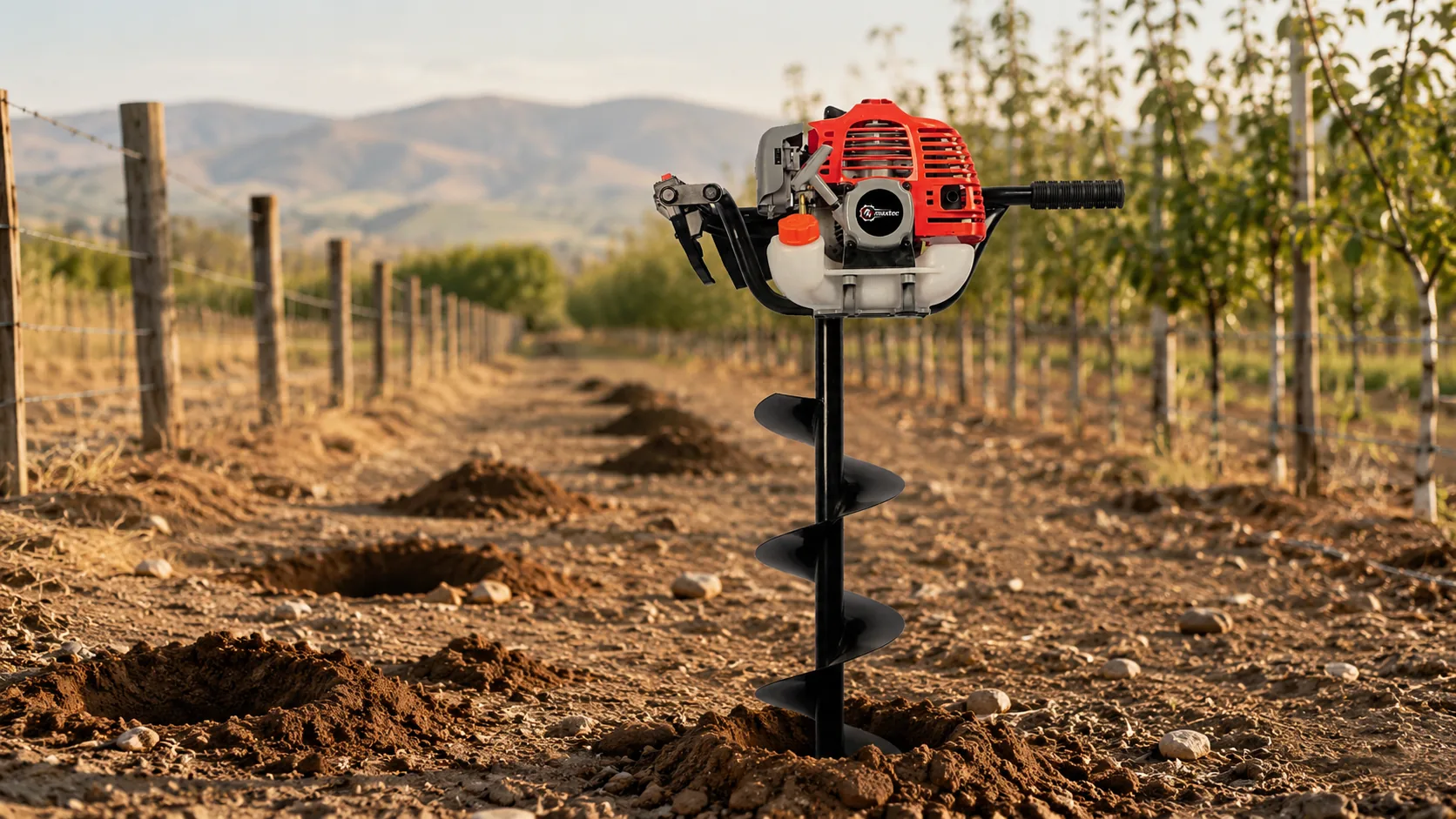
An earth auger usually gets stuck because the soil is too hard, too wet, full of roots or stones, or because the operator pushes the machine down too aggressively. For farmers, fence installers, orchard workers, and garden maintenance teams, avoiding this problem depends on both correct operation and choosing a machine that matches local soil conditions.
For importers, wholesalers, and garden machinery dealers, stuck auger bits are not only a user problem. They can also create customer complaints, spare parts demand, repair pressure, and warranty disputes. This guide explains the main causes, practical prevention methods, and product details B2B buyers should check before placing bulk orders.
Quick answer: An earth auger gets stuck when the bit meets too much resistance underground; users should drill gradually, clear soil in stages, avoid forcing the machine, and choose a gasoline earth auger that fits the local soil type, hole diameter, and working frequency.
Recommended Gasoline Earth Auger for Farm and Fence Work
For customers who need a portable drilling machine for farm planting, orchard support posts, garden construction, and fence installation, the TM-EA520A Earth Auger can be positioned as a practical gasoline-powered option for daily soil hole drilling work. Dealers should still confirm the suitable auger bit size and application according to local soil conditions.
| View Product Details |
Why Does an Earth Auger Get Stuck in the Soil?
The most common reason is underground resistance. When the auger bit meets compact clay, dry hard soil, gravel, tree roots, stones, or construction waste, the blade may stop cutting smoothly. If the operator continues pressing down, the bit can bite too deeply and become locked in the hole.
Another common reason is incorrect operating habit. Some users believe that pushing harder will make drilling faster. In reality, a gasoline earth auger works better when the bit cuts gradually. Too much downward pressure increases the load on the engine, clutch, gearbox, handle system, and bit connection.
Wet soil can also cause problems. Sticky mud may collect around the auger blade and make the bit heavier. When drilling deeper holes, soil may pack tightly around the blade if the operator does not lift the auger out regularly to clear the hole.
Soil Conditions Buyers Should Check Before Choosing an Earth Auger
Before choosing an earth auger model for wholesale or import, buyers should understand the main working environment in their market. A machine used in vegetable farms and garden soil may face lighter work, while a machine used for orchards, vineyards, plantations, or fence installation may need to drill deeper holes or work in harder ground.
Dealers should ask end users what kind of soil they usually drill. Sandy soil is easier to drill but may collapse into the hole. Clay soil needs stronger cutting and more frequent cleaning. Rocky ground requires careful operation because stones can suddenly block the auger bit. Root-filled areas are also risky because roots may twist around the bit and cause sudden locking.
| Soil Condition | Main Risk | Recommended Operation | Dealer Advice |
|---|---|---|---|
| Sandy soil | Hole collapse | Drill steadily and avoid over-widening the hole | Recommend suitable bit diameter for planting or posts |
| Clay soil | Sticky soil blocks the blade | Lift the bit often to clear soil | Explain cleaning and maintenance before sale |
| Dry compacted soil | High load on engine and gearbox | Drill in stages and avoid forcing the machine | Match model and bit size to real workload |
| Rocky or root-filled ground | Sudden bit locking | Check the ground first and stop when resistance is high | Do not promote one model as suitable for every ground type |
How Operators Can Prevent the Auger Bit from Getting Stuck
The first rule is simple: let the auger cut instead of forcing it down. Operators should hold the handles firmly, keep a stable posture, and allow the rotating bit to enter the soil gradually. If the engine starts to slow down, the user should reduce pressure, lift the auger slightly, and let loose soil come out of the hole.
For deeper holes, users should not drill the full depth in one continuous push. A better method is to drill a short section, lift the bit out, clear the soil, and then continue. This reduces resistance and helps prevent the bit from being buried too tightly.
When drilling in hard ground, operators should inspect the surface first. Visible stones, roots, or construction debris should be removed before drilling. If the ground is extremely dry and compacted, users may need to loosen the top layer manually or choose another drilling point.
Drill in Stages
Do not push the auger to full depth at once. Drill, lift, clear soil, and continue. This is especially important in clay or wet farmland.
Control Pressure
Too much downward force can make the bit bite too deeply. Stable control is safer and better for engine and gearbox life.
Check the Ground
Roots, hidden stones, and building waste can stop the bit suddenly. Users should inspect the area before drilling important holes.
What Dealers Should Explain to End Users
Many after-sales problems happen because first-time users treat an earth auger like a simple manual digging tool. Dealers should explain that a gasoline earth auger is a powered drilling machine, and it must be operated with controlled speed, stable posture, and correct drilling habits.
Users should start the machine on stable ground, hold the handles with both hands, and keep loose clothing away from the rotating bit. If the auger jams, the user should release the throttle first. Pulling the machine violently while the engine is still under load can damage the bit, clutch, connection parts, or gearbox.
Dealers should also explain that different auger bit sizes create different working loads. Smaller bits are easier to control and suitable for many planting holes. Larger bits may require stronger operators, better soil conditions, and more careful handling. Before ordering, importers should confirm compatible bit sizes according to the actual model configuration.
Important Product Details for Importers and Wholesalers
For B2B buyers, the key question is not only whether the machine can drill holes. Importers and wholesalers should check whether the product structure can support repeated use in the local market. Important details include handle design, throttle control, gearbox connection, bit compatibility, starting system, carton packing, spare parts availability, and instruction clarity.
If the target customers are small farmers and garden users, easy operation and basic maintenance access are important. If the main customers are fence installers or agricultural contractors, the machine may face longer working hours and harder soil. In that case, buyers should pay more attention to wear parts, gearbox strength, and local repair convenience.
Sales materials should also match how customers search. Many buyers may search for “post hole digger,” “farm hole drilling machine,” “gasoline earth auger,” or “earth auger for fence posts” instead of the exact model name. Product pages and dealer catalogs should connect the machine with real applications such as planting, fencing, orchard support, and garden construction.
Importer / Dealer Checklist Before Bulk Buying Earth Augers
- Confirm the common soil types in your market: sandy soil, clay soil, compacted dry soil, or rocky ground.
- Check the most popular hole diameter demand for planting, fencing, orchard posts, or garden construction.
- Confirm compatible auger bit sizes and whether replacement bits are easy to supply.
- Review handle strength, throttle control, gearbox connection, and vibration comfort for repeated use.
- Prepare common spare parts such as auger bits, starter parts, air filters, spark plugs, throttle parts, and connection components.
- Check carton packing strength for long-distance shipping and local warehouse handling.
- Ask whether product instructions are clear enough for first-time gasoline auger users.
- Consider MOQ, production stability, delivery time, and after-sales support before promoting the product widely.
How to Maintain a Gasoline Earth Auger for Better Drilling Performance
Maintenance has a direct effect on drilling performance. After use, the auger bit should be cleaned, especially after drilling in sticky mud or wet farmland. Soil left on the blade can harden and reduce cutting efficiency during the next operation.
Users should check whether the bit is bent, worn, or loose. A damaged bit may shake during drilling and make the machine harder to control. Connection points should also be checked regularly because vibration can loosen bolts or pins over time.
For the gasoline engine, users should follow the correct fuel and oil requirements according to the actual model specification. Air filter cleaning, spark plug inspection, and fuel system care are basic maintenance steps. In dusty farm environments, the air filter may need more frequent checking because dust can affect starting and running stability.
How Dealers Can Reduce After-Sales Complaints
Dealers can reduce complaints by giving realistic usage guidance before the sale. An earth auger should not be promoted as suitable for every type of ground. Performance depends on soil condition, bit size, operator skill, and maintenance habits.
A short demonstration can help customers avoid many mistakes. Show users how to start the machine, how to drill in stages, how to lift soil out of the hole, and what to do if the bit becomes stuck. This small effort can reduce returns and protect the dealer’s reputation.
For importers, spare parts planning is also important. Depending on the model and local demand, dealers may need to stock auger bits, starter parts, air filters, spark plugs, throttle components, and connection parts. This is especially important in rural markets where customers cannot easily wait for replacements.
Is a Gasoline Earth Auger Suitable for Your Local Market?
A gasoline earth auger is suitable for markets where users need repeated hole drilling but want a more affordable and portable solution than large equipment. Common target customers include small farmers, orchard owners, fence workers, nursery operators, garden maintenance teams, and rural tool shops.
Before importing, buyers should check whether local users mainly drill for planting, fencing, or construction support. They should also consider soil type, common hole diameter demand, repair ability, and acceptance of gasoline-powered garden machinery.
The right model is not always the largest or most aggressive machine. A practical earth auger should match the actual work, be easy enough for local users to operate, and have parts that dealers can support after the sale. When these points are considered before purchase, both end users and B2B buyers can avoid stuck bits, poor drilling results, and unnecessary after-sales disputes.
FAQ About Earth Augers Getting Stuck
Why does my earth auger keep getting stuck?
The most common causes are hard soil, wet clay, hidden stones, roots, wrong bit size, or too much downward pressure. Operators should drill gradually and lift the bit out regularly to clear soil.
Can an earth auger drill through rocky soil?
An earth auger can work in some mixed ground, but rocky soil increases the risk of sudden bit locking. Users should inspect the drilling area first and avoid forcing the machine when it meets strong resistance.
How do you remove a stuck auger bit from the ground?
Release the throttle first, stop applying downward force, and try to lift and rotate the machine gently. Do not pull violently while the engine is under load. If the bit is trapped by roots or stones, clear the surrounding soil manually before removing it.
What size earth auger bit is better for farm use?
The right bit size depends on the hole purpose. Planting holes, fence posts, and orchard support posts may require different diameters. Smaller bits are usually easier to control, while larger bits need more power, better soil conditions, and stronger operator control.
What should dealers check before buying gasoline earth augers in bulk?
Dealers should check soil conditions in their market, common hole diameter demand, compatible bit sizes, handle design, gearbox connection, spare parts supply, packing strength, MOQ, and after-sales support.
Is a gasoline earth auger good for fence installation?
Yes, a gasoline earth auger is commonly used for fence post holes because it is portable and faster than manual digging. However, the final performance depends on soil type, bit diameter, drilling depth, and operator experience.
Looking for Earth Augers for Wholesale or Dealer Supply?
For importers and dealers looking for stable garden machinery supply, Teamax Power can provide suitable earth auger models for farm planting, orchard support, fence installation, and garden construction markets. Choose the model according to your local soil conditions, customer usage habits, and spare parts support plan.
| View Product Details |