
How to Compare 31cc 4-Stroke Brush Cutters Before Ordering
Compare 31cc 4-stroke brush cutter models by rated output, engine version, shaft size, weight and spare-parts compatibility before ordering.
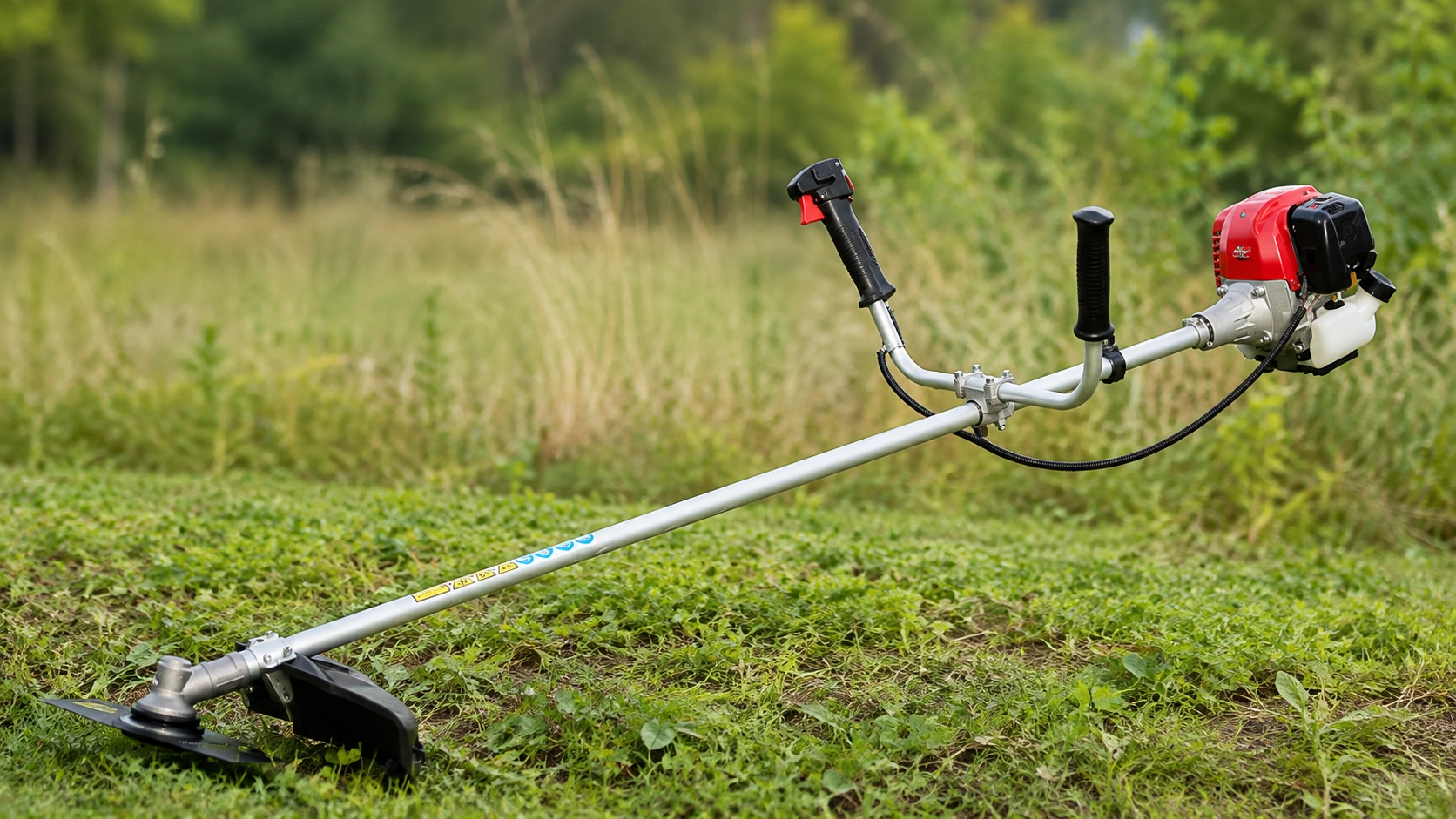
How to Compare 31cc 4-Stroke Brush Cutters Before Ordering
Two 31cc 4-stroke brush cutters can appear almost identical in a wholesale catalog and still require different purchasing decisions. Engine displacement only places the machines in a similar size category. Rated output, engine version, complete machine weight, shaft specification and future spare-parts requirements still need to be checked separately.
The TM-CG139 and TM-CG139A show why this matters. Both are listed as 31cc four-stroke, air-cooled brush cutters, yet they use different engine designations and have different rated outputs. For an importer building a dealer range, those differences are more useful than simply seeing the same “31cc” description on both models.
Start With the Specifications That Actually Differ
A useful procurement comparison separates shared specifications from the values that can affect product positioning or after-sales support. If a buyer only records displacement and fuel type, the TM-CG139 and TM-CG139A may look like the same machine. A line-by-line audit produces a different picture.
| Specification | TM-CG139 | TM-CG139A | Procurement Meaning |
| Engine | 139F | 139F-1 | Record separately for service and parts planning. |
| Displacement | 31cc | 31cc | Shared displacement does not make the models identical. |
| Rated output | 0.9kW / 7500rpm | 0.75kW / 7500rpm | Compare against the expected cutting load and market position. |
| Shaft diameter | 26mm | 26mm | Useful for range standardization, but attachment compatibility still needs confirmation. |
| Net / gross weight | 7.3kg / 8.3kg | 7.5kg / 8.5kg | Small difference, but still useful for SKU and shipping comparisons. |
| Fuel tank | 630ml | 630ml | A shared specification, not a reason to merge the two technical records. |
| Idle speed | 3000 ±200rpm | 3000 ±200rpm | Useful for service documentation, but does not remove engine-version differences. |
| Carburetor | Diaphragm | Diaphragm | Confirm actual service-part compatibility rather than assuming it. |
The practical buying question is therefore not which specification sheet has more matching numbers. It is which of the differing specifications affects the intended workload, dealer positioning or service system.
Match Rated Output to the Expected Cutting Load
The difference between 0.9kW and 0.75kW should not be converted directly into a fixed productivity claim. Vegetation density, trimmer head or blade selection, operator technique and machine setup all influence practical cutting performance.
Rated output is still one of the clearer differences between these two 31cc 4-stroke brush cutters. It can help an importer determine how each model should be positioned rather than selling both under exactly the same application description.
| Regular Grass Maintenance
For trimming grass, garden maintenance and moderate vegetation, compare the confirmed cutting attachment, machine balance and local customer expectations alongside engine output. |
Higher Cutting Demand
Where customers expect repeated work in denser vegetation, rated output becomes more relevant, but attachment suitability and the complete configuration still need to be confirmed. |
Dealers should avoid presenting displacement as proof that a machine can use every blade or handle every vegetation type. The selected cutting system needs to match the confirmed machine configuration.
Engine Code Should Be Part of the Spare-Parts Record
TM-CG139 is listed with a 139F engine, while TM-CG139A uses a 139F-1 engine. The names are similar, but an importer should not assume that all engine-related components are interchangeable simply because both engines have 31cc displacement and use a four-stroke design.
Before building an after-sales package, compatibility should be checked for the actual engine supplied with the order. Areas worth recording include:
| Service Area | What to Confirm |
| Fuel system | Carburetor components and associated service items for the confirmed engine version. |
| Starting system | Recoil starter components and matching mounting parts. |
| Air intake | Air-filter elements, covers and related components. |
| Ignition service | Ignition-related replacement parts for the specific engine code. |
| Sealing and housing | Gaskets, seals, engine covers and mounting components. |
This becomes especially important once a distributor has several similar-looking brush cutters in circulation. A workshop may need to identify the engine code before ordering a replacement component, long after the original carton has been discarded.
Use the Shared 26mm Shaft as a Standardization Clue, Not a Compatibility Guarantee
Both models list a 26mm shaft diameter. For an importer already carrying straight-shaft brush cutters, that common dimension can be useful when evaluating how many shaft-related components and accessories need to be managed across the product range.
It gives the purchasing team a common reference point when reviewing guards, cutting heads, shaft assemblies, drive components and gearbox-related parts.
What it cannot confirm by itself
It does not prove that the drive connection, gearbox interface, blade mounting arrangement or every attachment specification is identical.
Standardizing parts can reduce dealer inventory, but combining components without confirming the complete interface can create incorrect repairs, attachment problems and avoidable returns.
Decide Whether Two Similar Models Deserve Separate SKUs
A distributor does not automatically benefit from stocking both models. If the two machines will be sold at almost the same price level, to the same customer, with the same accessories and for the same grass-cutting work, carrying both can make sales training and spare-parts management more complicated.
| One Model May Be Enough When... | Two Models Can Make Sense When... |
|
|
The 0.2kg difference in listed net weight—7.3kg for TM-CG139 and 7.5kg for TM-CG139A—can also be recorded, but weight alone should not determine the choice. Harness design, handle position, attachment and overall machine balance influence how the brush cutter feels in actual operation.
31cc 4-Stroke Brush Cutter Product Comparison
For importers comparing closely related models, the following positioning keeps the decision tied to confirmed specifications rather than treating one machine as automatically superior.
TM-CG139 4-Stroke Brush CutterModel: TM-CG139 Engine: 139F, 31cc four-stroke, air-cooled Rated output: 0.9kW at 7500rpm Purchasing relevance: A reference option for buyers who want the 139F engine version and the listed 0.9kW output within a 31cc four-stroke brush cutter range. Confirm the cutting attachment and service-parts package for the final order.
|
TM-CG139A 4-Stroke Brush CutterModel: TM-CG139A Engine: 139F-1, 31cc four-stroke, air-cooled Rated output: 0.75kW at 7500rpm Purchasing relevance: Suitable for buyers evaluating the 139F-1 engine version as a separate configuration. The value of carrying it alongside TM-CG139 depends on local positioning, accessory requirements and after-sales compatibility.
|
Importer Audit Before Confirming a Bulk Order
The final quotation or proforma invoice should become the reference for the production configuration. This matters when closely related models may use different engines, accessories, branding or market-specific packaging.
If the local market does not need two nearly overlapping SKUs, choosing one confirmed configuration can simplify sales training and after-sales stock. If both models are required, their technical differences should remain visible throughout purchasing, documentation and service records.
FAQ: Comparing 31cc 4-Stroke Brush Cutters
Is every 31cc 4-stroke brush cutter basically the same?
No. Displacement can be identical while engine versions, rated output, machine weight, accessories and service requirements differ. These specifications should be checked separately before ordering.
What is the main difference between TM-CG139 and TM-CG139A?
TM-CG139 is listed with a 139F engine and 0.9kW rated output at 7500rpm. TM-CG139A is listed with a 139F-1 engine and 0.75kW at 7500rpm. Their displacement is 31cc in both cases.
Does the 0.9kW model always cut faster than the 0.75kW model?
A fixed productivity difference should not be assumed from rated output alone. Vegetation, attachment type, setup and operating technique also affect practical cutting performance.
Can parts from a 139F engine be used on a 139F-1 engine?
Compatibility should be confirmed part by part. Similar engine names and identical displacement do not prove that carburetor parts, recoil components, filters, ignition parts, seals or covers are interchangeable.
Can accessories be shared because both brush cutters use a 26mm shaft?
Possibly, depending on the confirmed configuration, but shaft diameter alone is not enough. The drive connection, gearbox interface, blade mounting arrangement and attachment specifications should also match.
Should an importer stock both TM-CG139 and TM-CG139A?
Stocking both makes more sense when their engine versions, rated outputs, accessory packages or market positions create a useful distinction. If both would serve the same customers at the same position, one SKU may be easier for dealers to manage.
| Confirm the Right 31cc Brush Cutter Configuration
For wholesale purchasing, compare the engine version, rated output, cutting accessories and spare-parts requirements before treating two 31cc 4-stroke brush cutters as interchangeable. A confirmed specification makes dealer documentation, SKU positioning and after-sales inventory easier to keep consistent. |
|