
Why Does an Earth Auger Bit Wobble While Drilling?
Earth auger bit wobbling while drilling? Check the bit connection, straightness, cutting tip, soil load and gearbox play before continuing to drill.
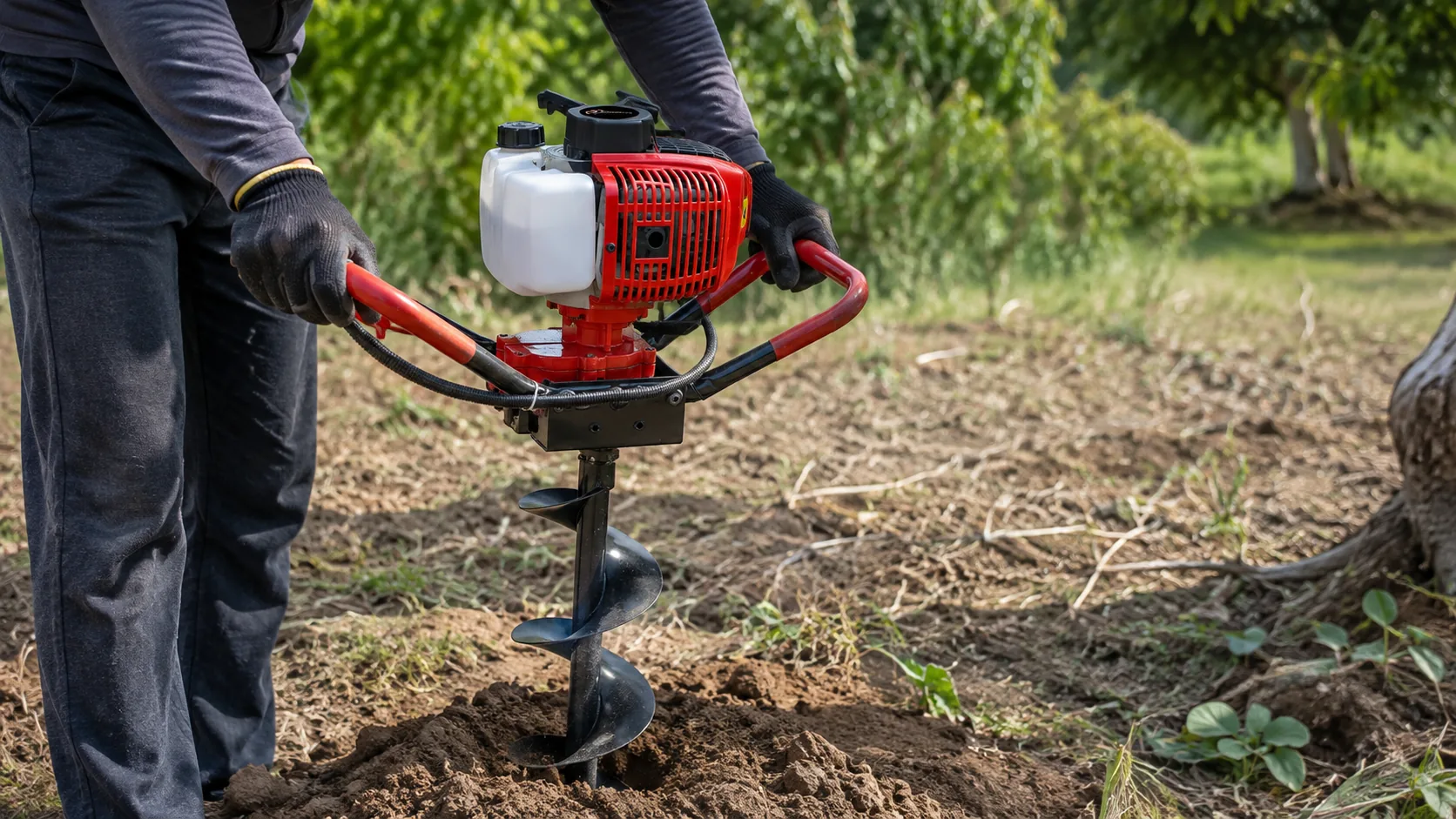
Why Does an Earth Auger Bit Wobble While Rotating? Causes and Dealer Inspection Guide
An earth auger bit wobbling while rotating should not automatically be dismissed as normal machine vibration. If the lower end of the drill visibly swings from side to side, first check whether the bit is mounted centrally, whether its retaining connection has play and whether the auger shaft itself is straight.
This troubleshooting path is specifically for an auger that is already rotating but runs noticeably off-center. It is different from crooked-hole drilling caused by operator angle, momentary kickback after hitting a root or stone, or an auger that stops turning under load. Keeping those symptoms separate prevents unnecessary gearbox or engine replacement.
| Quick answer: |
If an earth auger bit visibly traces a circle while rotating above ground, inspect the bit connection and straightness before blaming soil conditions. Confirm the retaining pin or bolt, check for side play, inspect the central shaft and cutting tip, and remove uneven soil buildup. If another correctly fitted straight bit runs normally on the same power head, the original bit or its mounting is the likely area to investigate. If several verified bits wobble in the same way, move the inspection toward the gearbox output and supporting components. |
First Confirm Whether the Wobble Exists Above Ground
Before drilling another hole, observe the auger using only the checks permitted by the machine's operating procedure. The first useful distinction is whether the drill runs off-center before it touches the soil.
| Runs centrally above ground | If shaking begins only after the cutting end enters the soil, investigate uneven cutting load, ground conditions, cutting-tip condition, soil buildup and drilling technique. |
| Wobbles above ground | Soil cannot explain a bit that is already rotating off-center without load. Inspect mounting accuracy, shaft straightness and the gearbox output connection. |
Stop the engine completely before touching the auger, retaining connection, gearbox or cutting tip. A rotating earth auger can catch clothing or move unexpectedly if engine speed changes.
Check the Bit Connection Before Inspecting the Gearbox
The first mechanical inspection point is where the auger bit connects to the gearbox output. Depending on the confirmed configuration, the bit may be retained by a pin, bolt or another mounting arrangement. The connection should locate the drill correctly without excessive sideways movement.
Connection faults worth checking
- Retaining pin not fully seated
- Loose retaining bolt
- Enlarged or worn mounting hole
- Dirt trapped between mating surfaces
- Visible side-to-side movement at the connection
- Auger not sitting squarely on the gearbox output
Do not try to correct wobble simply by overtightening an unidentified fastener. The proper retaining method should be confirmed for the selected machine and bit. If the upper end can move sideways, even a small amount of play can become much more visible at the cutting tip.
Is the Auger Bit Bent or Cutting Unevenly?
A bent central shaft is one of the clearest causes of repeatable side-to-side motion. Remove the auger with the engine stopped and inspect the shaft itself rather than judging straightness only from the spiral flights.
| Inspection point | Warning sign |
| Central shaft | Visible bow or deviation from a straight centerline |
| Center point | Tip no longer aligned with the shaft center |
| Flights | One section visibly distorted after impact or trapping |
| Cutting edges | One side damaged, loose or cutting more aggressively |
| Rotation pattern | The bit swings in the same direction during every revolution |
A bit can be bent after being trapped hard in the ground or after the machine is dropped with the auger installed. Continuing to drill with an obviously bent shaft does not straighten it. Instead, rotational wobble can increase operator effort and apply additional side loading to the mounting connection and gearbox.
The TM-EA520C is offered with optional drill lengths of 80, 100, 120 and 140cm. With a longer drill, a small misalignment near the upper end can become easier to see at the tip because the observation point is farther from the drive connection. This does not mean a longer drill is defective; it means mounting accuracy and straightness become especially important when comparing replacement bits of different lengths.
Soil Buildup, Impact and Bit Diameter Can Change the Symptom
Not every wobbling auger has a permanently bent shaft. Sticky soil, roots and unequal wear at the cutting end can create temporary imbalance or uneven cutting forces.
| Condition | What the operator may notice | What to inspect |
| Sticky clay on one side | Shaking develops gradually during drilling | Stop and clear unequal soil buildup before judging the bit |
| Root or stone impact | Wobble begins suddenly after one impact | Bit straightness, center point, flights and retaining connection |
| Uneven lower blade wear | Little wobble unloaded, stronger movement in soil | Compare both sides of the cutting end |
| Larger-diameter bit | Operator feels misalignment more strongly | Fit, straightness, cutting symmetry and output play |
Avoid striking the auger aggressively against hard surfaces to remove packed soil. That can damage the cutting end or deform the spiral flights and create the very imbalance being investigated.
A sudden shake after hitting an obstruction should also be separated from normal kickback. Kickback is a momentary reaction when the cutting end catches. Wobble means the drill continues rotating with a repeated off-center path after the obstruction is no longer in contact.
Compare Another Compatible Bit Before Blaming the Gearbox
When more than one verified compatible drill is available, substitution is a practical way to separate a bit problem from a power-head problem.
One correctly installed bit wobbles, another runs centrally: concentrate on the first bit, its cutting end or its individual mounting condition.
Several verified straight bits wobble similarly: move the inspection toward the gearbox output, output fit and supporting components.
Do not use diameter alone to decide whether two bits are suitable for this comparison. The shaft connection dimensions and retaining arrangement must also match the selected power head.
The TM-EA520C earth auger product specification lists optional bit diameters of 10, 15, 20 and 25cm. Its reference configuration uses a 52cc two-stroke engine with 1.8kW output, a 30:1 transmission ratio and a listed boring speed of 180–210rpm.
A visibly eccentric bit should be inspected rather than accepted simply because the gearbox can continue rotating at its normal operating speed.
When Should Gearbox Output Play Be Investigated?
Only move deeper into the drive system after the bit, retaining connection and cutting end have been checked. With the engine stopped, inspect the gearbox output according to the appropriate service procedure.
Excessive lateral movement at the output can allow a straight auger to rotate off-center. Possible inspection areas include the output shaft fit, bearings or supporting components, retaining hardware, gearbox housing and wear at the bit-to-output connection.
| Output appears stable with another straight bit | Do not assume the gearbox has failed. Recheck the suspect bit and its mounting. |
| Output itself moves sideways relative to the housing | Inspect where the play originates before continuing drilling. |
Do not diagnose an entire gearbox from a small amount of movement in one unidentified component. The actual location of the play should be established before replacement parts are selected.
TM-EA520C Bit Options and Why Configuration Matters
TM-EA520C Earth AugerEngine: 52cc two-stroke Output: 1.8kW Transmission ratio: 30:1 Boring speed: 180–210rpm Optional drill diameters: 10 / 15 / 20 / 25cm Optional drill lengths: 80 / 100 / 120 / 140cm Because multiple diameter and length options are listed, replacement augers should be matched to the actual ordered configuration. A dealer should not identify a service bit only as a “52cc earth auger bit.” |
|
Importer and Dealer Checklist for Replacement Earth Auger Bits
For distributors, replacement-bit planning should be tied to the actual machine and drill configuration rather than the engine displacement alone. The following checks are useful before adding augers to a bulk spare-parts order.
| 01 | Record the required drill diameter: 10, 15, 20 or 25cm where applicable to the confirmed TM-EA520C configuration. |
| 02 | Record whether the required drill length is 80, 100, 120 or 140cm. |
| 03 | Confirm the upper connection dimensions rather than using bit diameter as the fitment reference. |
| 04 | Check the retaining-pin, bolt or other locking arrangement used on the selected machine. |
| 05 | Confirm that the cutting-tip design matches the replacement requirement. |
| 06 | Check compatibility with the gearbox output instead of ordering under a generic “52cc earth auger” description. |
| 07 | Inspect supplied bits for straightness before adding them to dealer spare-parts stock. |
| 08 | Label 80cm and 140cm drills by connection, diameter and length instead of relying only on visual appearance. |
| 09 | Record the final drill-bit combination with the confirmed order configuration so repeat orders use the same fitment reference. |
Earth Auger Bit Wobble FAQ
Is some earth auger vibration normal?
Engine and drilling loads can produce vibration, but a drill tip that visibly traces a repeated circle while rotating should be inspected for mounting, straightness and output alignment.
Why does my earth auger wobble only when it enters the soil?
If the bit rotates centrally above ground but shakes under load, inspect ground conditions, unequal cutting-edge wear, a bent center point, roots, stones and uneven soil buildup before assuming the shaft is bent.
Can packed clay make an auger bit wobble?
Yes. Dense soil packed unevenly on the spiral flights can temporarily unbalance the drill. Stop the machine, clear the material safely and check whether the wobble disappears before replacing the bit.
Does hitting a stone mean the earth auger shaft is bent?
Not automatically. An impact can bend the shaft, damage the center point, loosen the connection or distort a flight. Inspect the actual bit and mounting before deciding which component is damaged.
Why does a larger earth auger bit feel like it wobbles more?
A wider bit places its cutting edges farther from the center and engages more soil. Existing misalignment or uneven cutting can therefore become more noticeable, but diameter alone should not be treated as the cause.
How can I tell whether the auger bit or gearbox is causing the wobble?
Try another correctly fitted, verified straight bit if one is available. If only one bit wobbles, inspect that drill. If several compatible straight bits show the same off-center rotation, inspect the gearbox output and the components supporting it.
Match the Earth Auger Bit to the Confirmed Machine ConfigurationFor TM-EA520C bulk orders or replacement-bit programs, confirm drill diameter, length, upper connection and retaining arrangement before finalizing the spare-parts package. If an earth auger bit wobbles while rotating, begin with mounting, soil buildup and bit straightness before moving into gearbox inspection. |
|