
Why Is a Chainsaw Pull Cord Hard to Pull or Suddenly Stuck?
Chainsaw pull cord hard to pull? Separate normal compression from recoil jams, flooding, and engine resistance before forcing the starter or replacing parts.
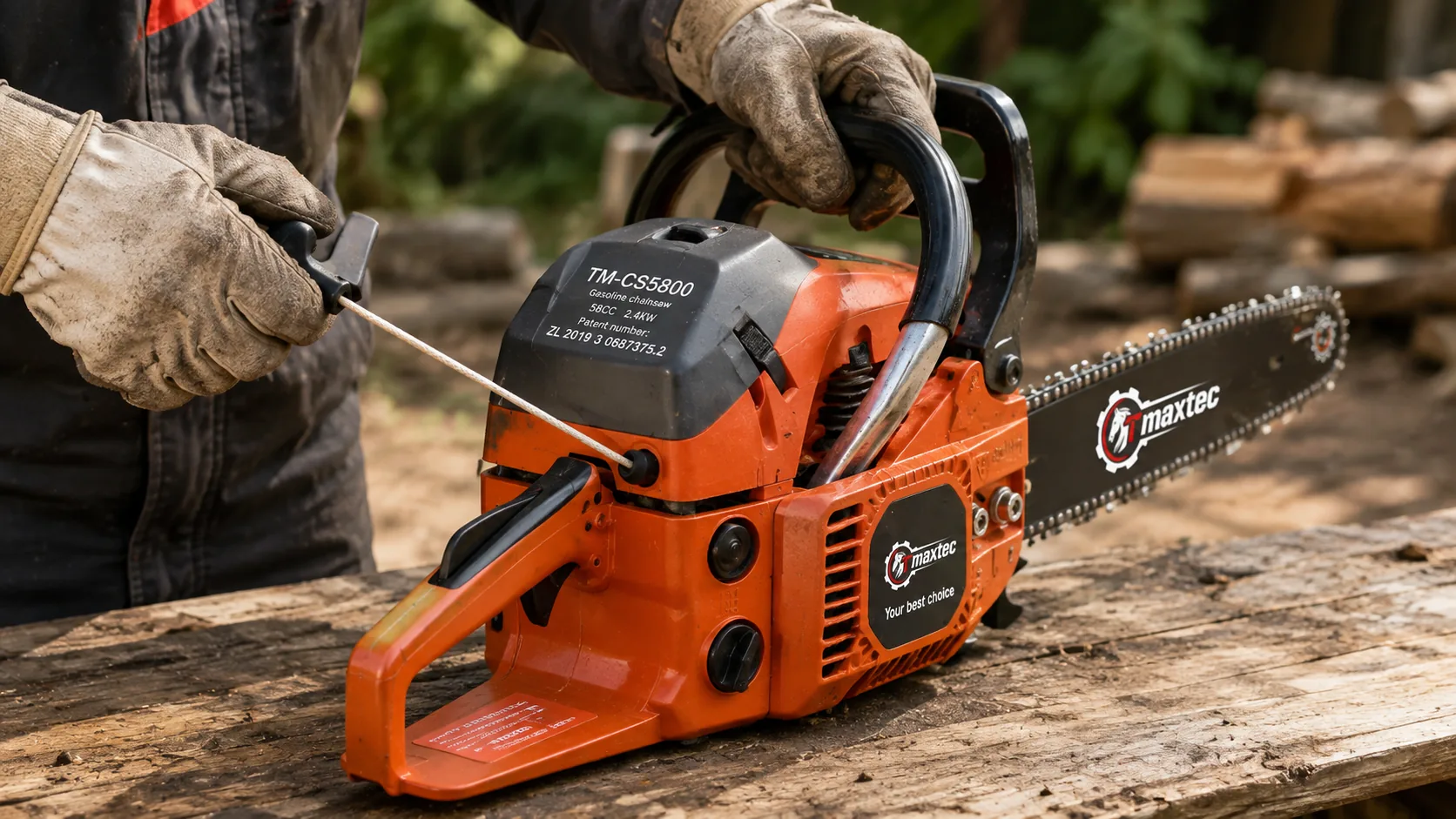
Chainsaw Pull Cord Hard to Pull: Causes, Checks and Dealer Troubleshooting Guide
A chainsaw pull cord hard to pull is not the same problem as an engine that cranks normally but refuses to start. If the starter rope suddenly becomes much heavier than before, stops sharply, or cannot complete a normal pull, the first task is to locate where the resistance is coming from.
For dealers and service technicians, the most useful diagnostic order is to separate normal cylinder compression from recoil-starter binding, excess fuel inside the cylinder and genuine internal engine resistance. Repeatedly forcing the rope before that distinction is made can damage the rope, pulley, starter pawls or related components without correcting the fault.
| Quick answer: |
A chainsaw starter should have noticeable compression resistance, but the rope should still move through repeated engine cycles. If it stops solidly, moves only a few centimeters or becomes suddenly harder after repeated starting attempts, first inspect the recoil starter and rope. Then rule out excess fuel in the cylinder. Removing the spark plug can help separate compression-related resistance from mechanical binding. If the starter remains extremely difficult to move with compression released, investigate the starter mechanism, flywheel area and internal engine condition rather than immediately replacing carburetor or ignition parts. |
First Separate Normal Compression From an Abnormal Hard Pull
A gasoline chainsaw should not feel completely free when the starter rope is pulled. As the piston rises, pressure builds inside the cylinder and the operator feels a repeating increase in resistance. Once the piston passes that part of the cycle, the rope becomes easier to move again.
The key diagnostic question is therefore not simply whether the starter feels heavy, but how the resistance feels and whether the crankshaft can continue rotating.
| More consistent with normal compression | More consistent with a fault |
|
|
The TM-CS5800 gasoline chain saw, for example, uses a 55cc engine with a listed rated output of 2.4kW at 7500rpm. A 55cc two-stroke engine will naturally produce noticeable compression resistance, but normal compression should still allow the crankshaft to rotate through the complete starting cycle.
External Checks Should Come Before Engine Disassembly
When a pull cord suddenly becomes difficult to move, begin with components that can create resistance before the engine itself is diagnosed. The recoil system is accessible, commonly exposed to sawdust and rope wear, and can produce a symptom that feels similar to excessive engine compression.
Inspection order
- Inspect the visible starter rope. Look for fraying, twisting, pinching and uneven movement through the rope guide.
- Check the recoil pulley. It should turn smoothly and return the rope consistently.
- Inspect the starter pawls and housing. Look for displaced parts, broken edges or signs of rubbing.
- Remove accessible debris. Sawdust, rope fibers, plastic fragments and loose fasteners can interfere with movement.
- Only move deeper into the engine diagnosis if these external parts operate normally.
A damaged section of rope can create surprisingly high friction when it enters the rope guide. Likewise, a pulley edge, return spring or starter pawl that has moved out of its normal position may stop the rope before the engine can rotate correctly.
This is why replacing a carburetor, ignition coil or spark plug is not a logical first response when the complaint is that the starter rope itself physically cannot move through its normal stroke.
What Does It Mean If the Rope Stops at the Same Position?
A starter that feels generally firm is different from one that reaches the same point and stops almost solidly. That repeated stopping position deserves additional attention because it can indicate interference rather than ordinary cylinder compression.
Pull the starter slowly instead of making a full starting stroke. If movement repeatedly ends at the same point, inspect the starter side before assuming the piston or crankshaft has seized.
| Possible area | What may be happening | Diagnostic direction |
| Starter pawls | Incorrect contact or damaged engagement | Inspect recoil and engagement components first |
| Flywheel area | Foreign material or interference | Look for rubbing, debris or loose material |
| Recoil housing | Pulley, rope or spring binding | Determine whether the starter mechanism itself turns freely |
| Engine | Internal resistance | Investigate after external causes have been ruled out |
If the recoil starter is removed according to the correct service procedure and the starter mechanism itself remains difficult to rotate, repair that assembly before pursuing an internal engine fault. If the starter operates freely but the engine remains unusually difficult to turn, the diagnosis moves farther toward the engine.
Flooding Can Increase Starter Resistance
A chainsaw that has been repeatedly pulled with excessive choke can become flooded. Flooding usually appears as a no-start complaint, but severe excess fuel inside the cylinder can also make the piston much harder to move.
Liquid fuel does not compress in the same way as the normal air-fuel charge. If enough liquid enters the combustion chamber, resistance can become noticeably higher during the compression stroke.
- Many unsuccessful starting pulls
- Choke left closed for too long
- Strong fuel smell
- Wet spark plug
- Fuel appearing around the exhaust area
- Starter resistance becoming worse after repeated starting attempts
When these symptoms appear, stop repeatedly forcing the starter. Follow the correct flooded-engine clearing procedure for the actual chainsaw model. If the spark plug is removed during diagnosis, disable the ignition and keep the plug opening away from the face, flames, sparks and other ignition sources because fuel may be expelled from the cylinder.
If clearing excess fuel restores normal engine movement, the harder pull was related to flooding rather than an internally seized engine. The cause of the flooding can then be diagnosed separately through the starting procedure, choke use, carburetor condition and fuel delivery.
Use Spark Plug Removal to Separate Compression From Mechanical Drag
For experienced service personnel, removing the spark plug is one of the more useful diagnostic checks because it releases cylinder compression. With the ignition safely disabled and the plug removed, the starter should normally become noticeably easier to pull.
| Starter becomes smooth and much easier | Resistance is linked to cylinder pressure or excess liquid inside the cylinder. |
| Starter is still extremely difficult | Compression is no longer the main explanation. Inspect recoil binding, flywheel interference, crankshaft resistance, bearings, piston and cylinder condition. |
This check does not by itself prove that a piston, bearing or crankshaft has failed. Internal diagnosis should follow only after the recoil starter, flooding and obvious external interference have been eliminated.
Bar, Chain and Clutch: When the Cutting System Matters
Under normal conditions, the guide bar and cutting chain should not make the starter rope dramatically harder to pull. A gasoline chainsaw uses a centrifugal clutch, so the engine should not transmit full starting rotation into the chain at normal starting and idle speeds.
The TM-CS5800 is listed with 20-inch or 22-inch guide bar options and a 0.325-inch chain pitch. Those dimensions matter for cutting-system setup and replacement-part selection, but changing from a 20-inch to a 22-inch bar does not by itself explain a pull cord that suddenly becomes almost impossible to move.
If removing the bar and chain causes a large change in starter resistance, inspect the clutch, clutch drum and related drive components. This is different from a chainsaw that already runs but the chain stops in wood. In that case, diagnosis should move toward the clutch and cutting system rather than the recoil starter.
When Should You Stop Pulling and Inspect the Engine Internally?
Internal engine inspection becomes more reasonable only after the starter mechanism, flooding and accessible interference have been checked. Continuing to pull aggressively against a mechanically restricted engine can add damage to the recoil system and the fault already inside the machine.
| ! | The engine stopped suddenly during operation and now cannot rotate normally. |
| ! | The starter remains locked even with the spark plug removed. |
| ! | Metallic scraping can be felt while the crankshaft is moved. |
| ! | Crankshaft movement feels rough rather than evenly resistant. |
| ! | Resistance appeared after overheating or lubrication-related trouble. |
| ! | The crankshaft cannot complete a full rotation. |
Possible internal sources can involve the piston, cylinder, crankshaft or bearings, but a hard pull alone cannot identify which component is responsible. Inspect the parts before deciding what must be replaced.
TM-CS5800 Reference for Dealers and Spare-Parts Planning
TM-CS5800 Gasoline Chain SawModel: TM-CS5800 Engine displacement: 55cc Rated output: 2.4kW at 7500rpm Guide bar: 20-inch / 22-inch Chain pitch: 0.325-inch Fuel tank: 550ml Oil tank: 260ml For distributor orders, recoil-starter parts and other service components should be matched to the selected TM-CS5800 configuration rather than ordered under a generic “gasoline chainsaw starting parts” category. |
|
Dealer Intake Checklist for a Hard-to-Pull Chainsaw
A customer saying that a chainsaw is “hard to start” does not identify the failure. Before preparing parts or authorizing repair work, dealers should establish exactly what the operator feels at the starter.
| Dealer question | Why it changes the diagnosis |
| Does the rope physically feel hard to move? | Separates mechanical resistance from a normal-cranking no-start complaint. |
| Does it stop at exactly the same position? | Raises concern about interference or mechanical binding. |
| Did the resistance appear after repeated choke pulls? | Makes severe flooding more relevant. |
| Does the rope retract normally? | Helps identify recoil pulley or return-spring problems. |
| Did the engine stop suddenly while cutting? | Makes internal binding more significant than ordinary starting resistance. |
| Is there grinding or scraping from the starter side? | Directs inspection toward recoil, pawl and flywheel areas. |
| Does resistance remain with the spark plug removed? | Helps distinguish compression from mechanical drag. |
| Which exact saw model and ordered configuration is involved? | Prevents incorrect recoil, bar, chain or service-part selection. |
| Which starter parts are actually damaged? | Avoids automatically replacing rope, pulley and pawls when only one component is at fault. |
For a genuine pull-cord complaint, relevant service parts may include the starter rope, recoil pulley, starter pawls or other starter components depending on what inspection confirms. They should not automatically be grouped with carburetor and ignition parts merely because all of those items can appear in broader “chainsaw starting problem” discussions.
Chainsaw Pull Cord Hard to Pull FAQ
Why is my chainsaw pull cord suddenly hard to pull?
Possible causes include recoil-starter binding, rope damage, excess fuel inside the cylinder, debris around the starter or flywheel, or internal engine resistance. First determine whether the rope still moves through normal compression cycles or stops sharply.
Is it normal for a chainsaw starter to feel heavy?
Some resistance is normal because the piston compresses the air-fuel charge. Normal compression generally produces firm, repeating resistance while still allowing the engine to rotate through complete cycles.
Can flooding make a chainsaw pull cord hard to pull?
Yes. Severe flooding can introduce enough liquid fuel into the cylinder to increase piston resistance. A strong fuel smell, wet spark plug and worsening resistance after repeated choke pulls are useful clues.
Why does removing the spark plug make the starter easier to pull?
Removing the plug releases cylinder compression. If starter movement becomes smooth after the plug is removed, compression or liquid inside the cylinder was contributing to the resistance. If it remains extremely hard to move, mechanical binding becomes more likely.
Can a chainsaw bar or chain make the pull cord difficult?
Normally not to a dramatic degree because the centrifugal clutch should not fully drive the chain at starting speed. A large change after removing the bar and chain suggests the clutch, clutch drum or related drive parts should be inspected.
Does a hard pull mean the chainsaw engine is seized?
Not necessarily. Recoil-starter faults, debris and flooding can create similar symptoms. Internal engine inspection becomes more appropriate when external causes are ruled out and the engine remains difficult or impossible to rotate, especially with the spark plug removed.
Confirm the Actual Starting Symptom Before Ordering Chainsaw PartsFor a TM-CS5800 or another gasoline chainsaw prepared for wholesale distribution, diagnose a chainsaw pull cord hard to pull as a resistance problem first. Separate normal compression, recoil-starter faults and flooding before moving to internal engine repair, and match replacement parts to the confirmed model configuration. |
|