
What Does .325 Chain Pitch Mean for Chainsaw Chain Fit?
Understand what .325 chainsaw chain pitch means and why pitch alone cannot confirm replacement chain fit for the guide bar, sprocket, gauge, and drive links.
What Does .325 Chainsaw Chain Pitch Mean for Replacement Chain Fit?
A .325 chainsaw chain pitch identifies one important dimension of the cutting system, but it does not provide enough information by itself to order a replacement chain. The new chain must also match the guide bar groove, required drive-link count, and the sprocket system fitted to the actual saw.
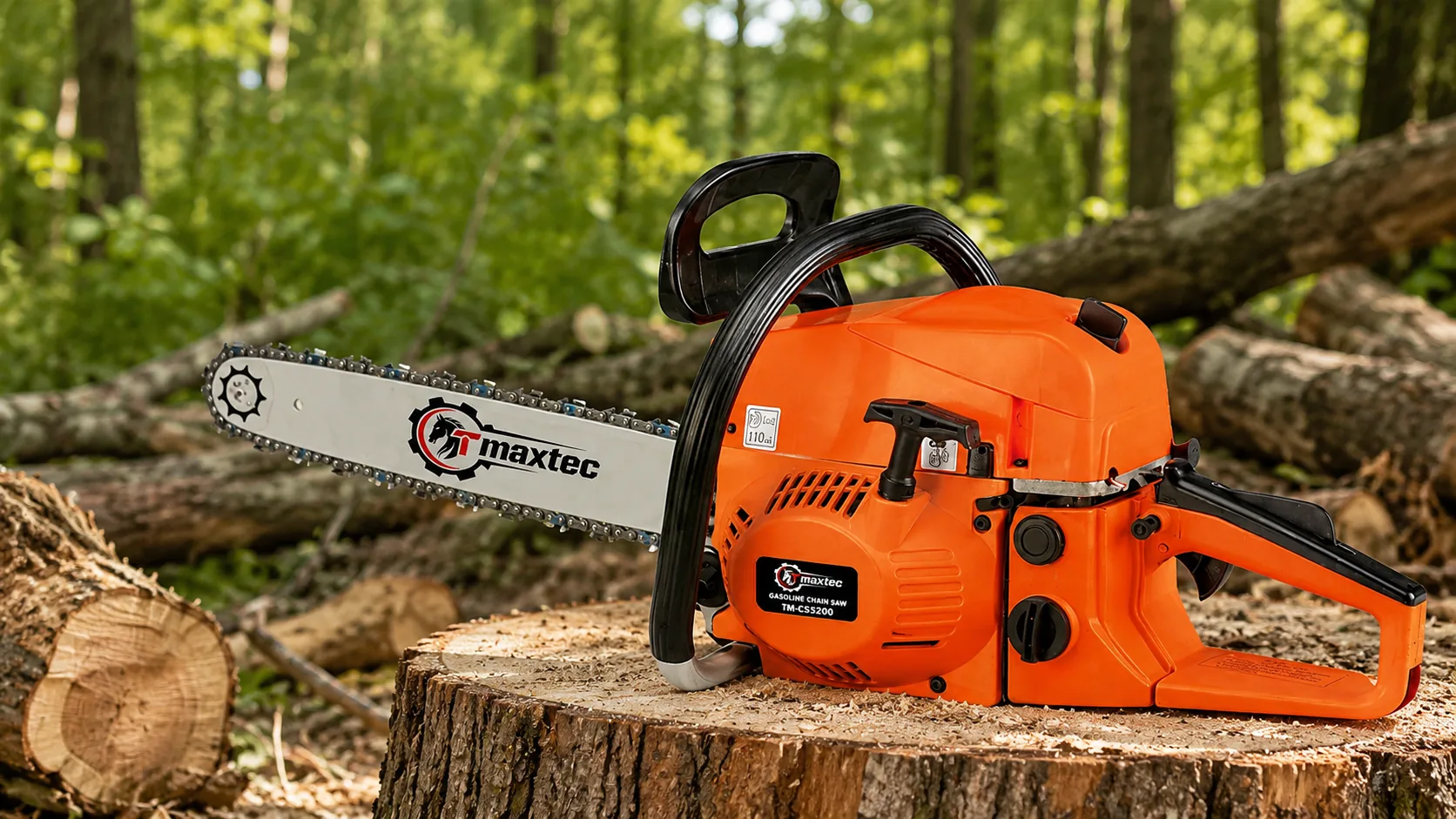
This becomes especially important when one chainsaw model is offered with different guide bar lengths. The TM-CS5200, for example, is listed with a .325 chain pitch and both 18-inch and 20-inch guide bar options. The pitch can remain unchanged while the required chain loop differs.
| Quick Answer | Quick answer: A .325 pitch tells you the chain's pitch family, but it does not confirm complete replacement-chain fit. Before ordering, confirm the pitch, gauge, drive-link count, guide bar configuration, and sprocket compatibility. For the TM-CS5200, the product specification confirms .325 pitch and 18"/20" guide bar options, but it does not list chain gauge or drive-link count. Those details should therefore be confirmed from the selected bar, original chain, bar markings, technical documentation, or the final order specification. |
What Does .325 Chain Pitch Actually Measure?
Chain pitch describes the spacing of the chain's repeating drive and cutting components. It is one of the basic dimensions used to match a saw chain with the drive sprocket and guide bar system.
A chain marked .325 therefore belongs to a different pitch family from chains marked 3/8", 3/8" low profile, or other specifications. Pitch is a compatibility dimension rather than a general description of chain size.
If a chainsaw is designed around a .325 cutting system, a different-pitch chain should not be substituted simply because it appears to sit on the guide bar. The chain, sprocket, and relevant bar components must be configured to work together.
| TM-CS5200 Detail | Listed Specification | Relevance to Chain Fit |
| Chain pitch | .325 | Identifies the required pitch family. |
| Guide bar options | 18" / 20" | Different bar lengths may require different chain loop lengths. |
| Engine displacement | 52cc | Does not identify replacement-chain size. |
| Rated output | 2.2kW at 7500rpm | Describes the power unit, not chain compatibility. |
Why Two .325 Chains May Still Not Be Interchangeable
Seeing “.325” on two chain packages does not prove that both chains will fit the same chainsaw. Pitch is only one part of the replacement-chain specification.
| PitchMust match the chain and drive sprocket pitch family. | GaugeMust correspond to the guide bar groove specification. | Drive-Link CountDetermines the chain loop length needed for the actual bar and saw configuration. | System FitThe guide bar and drive sprocket must correspond to the selected chain. |
The gauge relates to the thickness of the drive links that run in the guide bar groove. A mismatched gauge can prevent the drive links from fitting or moving correctly through that groove.
The drive-link count determines the overall chain loop length. This is why a description such as “.325 chainsaw chain” remains too broad for an accurate spare-parts order.
18-Inch and 20-Inch Bars Can Share .325 Pitch but Need Different Chains
The TM-CS5200 is available with 18-inch and 20-inch guide bar options while listing the same .325 pitch. That does not mean one chain should automatically be used for both bar lengths.
A longer guide bar generally requires a longer chain loop, which means the required drive-link count can differ. The exact count should be confirmed from the selected guide bar, original chain, bar markings, technical documentation, or confirmed order configuration.
| Description Used for Ordering | Enough? | What Is Missing? |
| “52cc chainsaw chain” | No | Pitch, gauge, drive-link count, and actual cutting-system configuration. |
| “18-inch chain” | No | Different 18-inch bars may use different pitch, gauge, and drive-link combinations. |
| “.325 chain” | No | Gauge and drive-link count still need confirmation. |
| Model + bar + pitch + gauge + drive-link count | Better | Provides a much clearer basis for chain identification and repeat orders. |
Check the Guide Bar and Original Chain Before Ordering
The guide bar is one of the most useful places to start when identifying a replacement chain. Depending on the bar, markings may provide information about pitch, gauge, and the corresponding chain configuration.
If the markings are readable, compare them with the original chain and machine specification. If they are missing, damaged, or unclear, do not guess.
- Confirm the chainsaw model. Record the complete model rather than the engine size alone.
- Confirm the selected guide bar length. For TM-CS5200, this may be 18" or 20".
- Read the bar markings if available. Check pitch, gauge, and other chain information shown on the actual guide bar.
- Inspect the original chain. Use it as a reference when chain packaging or bar markings are unclear.
- Count the drive links when needed. This can distinguish chains that share the same pitch but use different loop lengths.
- Confirm the final specification with the supplier. This is particularly important for wholesale spare-chain orders.
The Drive Sprocket Must Match the .325 Chain Pitch
The engine does not drive the saw chain directly. Rotation passes through the clutch system to the drive sprocket, which engages the chain's drive links. The sprocket therefore has to correspond to the chain pitch.
If a saw is configured for .325 chain, replacing only the chain with another pitch without checking the rest of the cutting system creates a mismatch. This is also why engine displacement should not be used as a chain identifier.
Recheck the specification if a replacement chain will not seat properly in the bar groove, cannot be tensioned within the normal adjustment range, or does not engage correctly with the sprocket.
Stop the engine, allow the machine to cool, disconnect the spark plug, and wear suitable gloves before handling the chain or working around the clutch and sprocket area.
Confirm Chain Fit Before Diagnosing a New Cutting Problem
A mismatched replacement chain can create symptoms that appear to be another chainsaw fault. If cutting behavior changes immediately after installing a new chain, confirm compatibility before assuming the engine, clutch, bar, or lubrication system has developed a problem.
| Check First | What You Are Confirming |
| Pitch | The chain belongs to the correct .325 pitch system. |
| Drive-link fit | The links correspond correctly with the guide bar groove. |
| Loop length | The drive-link count matches the bar and normal tensioning range. |
| Installation direction | The replacement chain is installed in the correct direction. |
This chain-fit check is separate from other diagnostic situations such as a correctly fitted chain becoming loose, stopping under load, or cutting slowly. Those symptoms require different troubleshooting.
TM-CS5200 Chain Configuration Reference
TM-CS5200 Gasoline Chainsaw
The TM-CS5200 gasoline chainsaw is a useful reference when explaining why pitch, bar length, and replacement-chain size should be recorded separately.
| Displacement | 52cc |
| Rated output | 2.2kW at 7500rpm |
| Guide bar options | 18" / 20" |
| Chain pitch | .325 |
| Fuel tank | 550ml |
| Oil tank | 260ml |
| Idle speed | 3300±200rpm |
| N.W. / G.W. | 6.7 / 8.7kg |
The product specification confirms .325 pitch and the two guide bar options, but it does not provide the chain gauge or drive-link count. Those values should not be inferred and should be confirmed according to the actual selected configuration.
| Compare This Model |
Dealer Checklist for Stocking .325 Replacement Chains
For distributors, spare-chain inventory should be organized around confirmed cutting-system configurations rather than broad engine categories.
| Step | Dealer Check | Required Record |
| 01 | Machine model | Record the complete chainsaw model, such as TM-CS5200. |
| 02 | Guide bar length | Separate 18-inch and 20-inch configurations. |
| 03 | Chain pitch | For the confirmed TM-CS5200 specification, record .325. |
| 04 | Chain gauge | Confirm from the actual bar, documentation, or supplier rather than guessing. |
| 05 | Drive-link count | Confirm the loop length for each selected guide bar configuration. |
| 06 | Sprocket compatibility | Keep the replacement chain matched to the pitch used by the cutting system. |
| 07 | Supplier reference | Store the confirmed supplier part reference where available. |
| 08 | Bulk spare-chain allocation | Label spare chains by the confirmed configuration rather than only “.325 for 52cc.” |
| 09 | Repeat-order control | Reorder against the established model and chain reference instead of recreating the specification later. |
.325 Chainsaw Chain Compatibility FAQ
Will any .325 chainsaw chain fit a .325 chainsaw?
No. Pitch is only one compatibility dimension. The replacement chain also needs the correct gauge, drive-link count, guide bar fit, and sprocket compatibility.
Can an 18-inch and 20-inch chainsaw use the same .325 chain?
They can use the same pitch family, but the required chain loop may differ because guide bar length can change the required drive-link count. Confirm the actual configuration rather than assuming one chain fits both.
Is guide bar length enough to order a replacement chain?
No. An “18-inch chain” or “20-inch chain” description is incomplete because bars of the same nominal length can use different pitch, gauge, and drive-link configurations.
Does a 52cc engine tell me which chainsaw chain to buy?
No. Engine displacement does not identify the cutting-system dimensions. Another 52cc chainsaw may use a different pitch, bar, gauge, or drive-link count.
What should I check if a new chain does not fit the guide bar?
Stop installation and recheck the pitch, gauge, drive-link count, guide bar compatibility, sprocket fit, and normal tensioning range. Do not force the chain onto the bar or compensate with excessive tension adjustment.
What chain information should dealers record for TM-CS5200?
Record the TM-CS5200 model, selected 18-inch or 20-inch guide bar, .325 pitch, confirmed gauge, confirmed drive-link count, and supplier reference if available. The product specification does not list the gauge or drive-link count, so those values should be confirmed rather than inferred.
| Treat .325 Pitch as the Starting Point, Not the Complete Chain Specification For TM-CS5200 wholesale orders and after-sales stock, confirm the selected guide bar together with pitch, gauge, drive-link count, and sprocket compatibility. Recording the complete configuration at the time of purchase makes future spare-chain orders much easier to manage. |
|