
Can a 43cc Brush Cutter Handle Tall Grass and Heavy Weeds?
Can a 43cc brush cutter cut tall grass and heavy weeds? Learn how engine power, blades, and machine design affect grass and weed clearing performance.
Can a 43cc Brush Cutter Handle Tall Grass and Heavy Weeds?
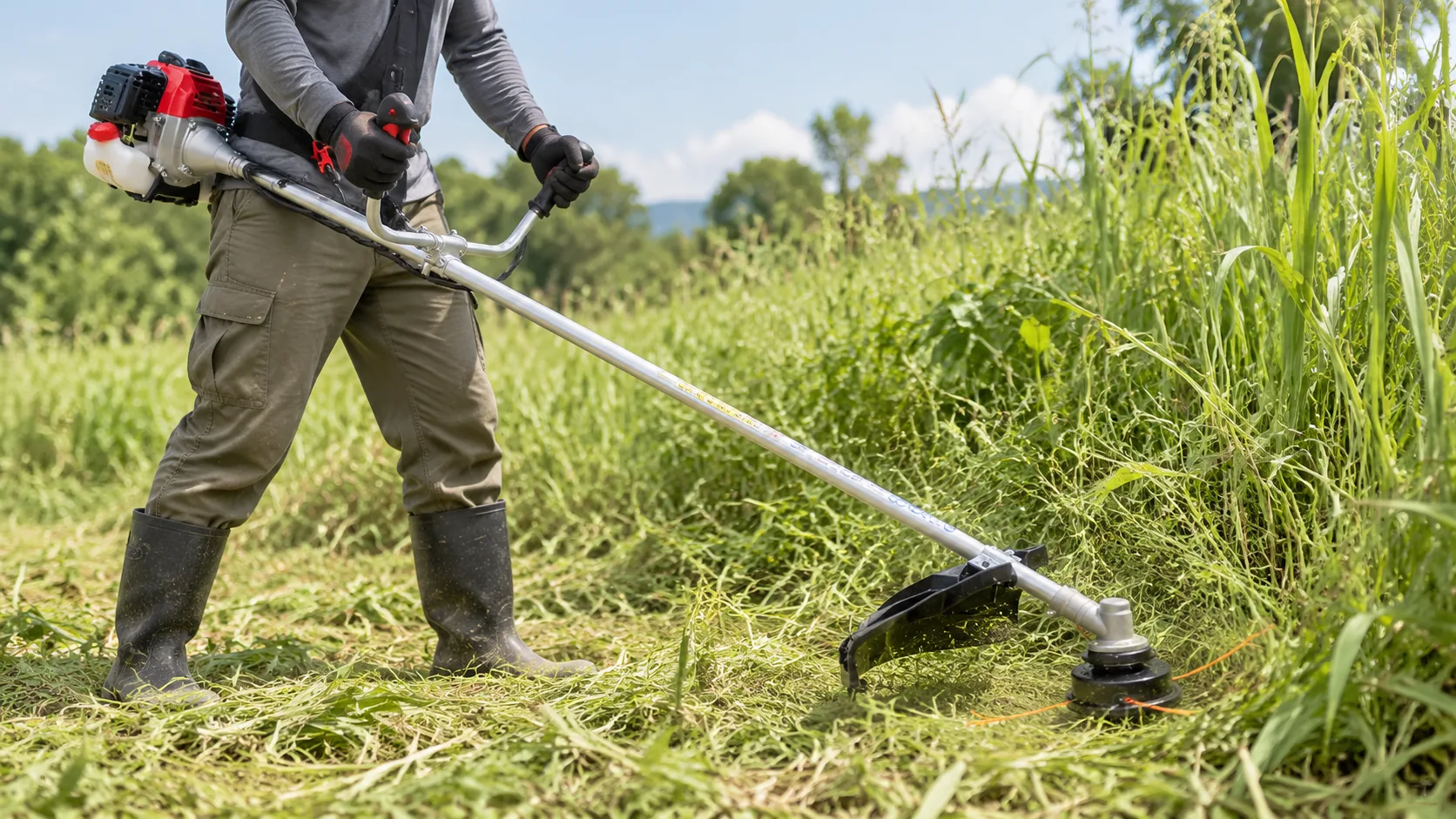
A 43cc brush cutter for tall grass and heavy weeds sits between lightweight trimming machines and larger clearing equipment. For farms, orchards, property maintenance and landscaping work, this engine class can deal with many overgrown areas, but vegetation density and the cutting attachment matter just as much as engine displacement.
The practical question is not simply whether a 43cc engine can rotate a blade through tall vegetation. Buyers should consider what happens when the machine stays under load: whether the grass wraps around the cutting head, whether the blade can enter dense stems cleanly, and whether the operator needs to slow down or make repeated passes. These conditions determine whether a 43cc machine is appropriately matched to the job.
What Can a 43cc Brush Cutter Realistically Clear?
A 43cc brush cutter is generally positioned for medium-duty vegetation clearing rather than light lawn edging alone. Typical work includes tall grass, field weeds, farm boundaries, orchard floors, overgrown garden areas, roadside vegetation and small plantation maintenance.
| Vegetation / Site | 43cc Suitability | What Matters Most |
| Tall grass | Suitable in many conditions | Blade choice, grass density and cutting passes |
| Field weeds | Suitable | Stem thickness and material hardness |
| Orchard grass | Suitable | Control around trees and uneven ground |
| Overgrown property areas | Often suitable | Work in stages where vegetation is tangled |
| Extremely heavy or woody brush | Application-dependent | Compare blade requirements and larger engine classes |
This distinction is important for wholesalers. A buyer asking for a machine to maintain orchard grass has a different load profile from a contractor repeatedly entering dense, mature brush. Both may describe the requirement simply as “heavy weeds,” so the vegetation itself needs to be clarified before model selection.
Tall Grass Is Usually More About Cutting Method Than Height Alone
Tall grass increases cutting load because a larger volume of material can contact the blade at the same time. Long stems may also fold, tangle or wrap around the cutting area, particularly when an operator pushes too deeply into a dense stand.
A 43cc machine can work effectively in these conditions when the operator keeps the cutting attachment moving and reduces the amount of vegetation taken in each pass. In heavily overgrown areas, cutting progressively is usually more practical than trying to remove the full grass height and density in one sweep.
Better Approach
|
Higher-Load Situation
|
Can a 43cc Brush Cutter Handle Heavy Weeds Without Losing Performance?
Many heavy weeds are within the working range of a 43cc brush cutter, particularly grass-type weeds, wild plants and other non-woody vegetation. The boundary becomes less clear as stems become harder, vegetation becomes tightly packed, or the work shifts from weed cutting toward brush clearing.
Instead of judging only by weed height, look at what the machine does under load. These field observations provide a better indication of whether the current setup is appropriate.
- The blade slows noticeably on contact: reduce the cutting volume per pass and inspect the blade condition.
- Vegetation repeatedly wraps around the head: the material or cutting method may not match the attachment.
- The operator must repeatedly force the machine forward: slow the work rate rather than using pressure as a substitute for cutting speed.
- Dense stems require many repeated passes: reassess the blade and whether the vegetation has moved beyond the intended application.
- The job is mainly hard woody growth: compare other machine or engine classes instead of assuming additional passes will solve the mismatch.
43cc vs 26cc–33cc Brush Cutters: Where Is the Practical Difference?
Smaller 26cc–33cc machines are commonly considered for lighter trimming, gardens and occasional maintenance. A 43cc model gives buyers another option when the workload includes regular field grass, thicker weeds or larger areas where a lightweight trimmer may spend too much time under load.
| Comparison Point | 26cc–33cc Class | 43cc Class |
| Typical work | Light grass trimming and smaller maintenance jobs | Farm grass, regular weed clearing and larger properties |
| Dense vegetation | More application-limited | Better suited to many medium-duty clearing jobs |
| Machine choice | Useful where lower machine weight is a priority | Useful where greater cutting capacity is required |
| Best question for buyers | Is most work light trimming? | Will the machine regularly enter taller or denser vegetation? |
This is why a 43cc brush cutter is often considered by users who need more vegetation-clearing capability than a small household trimmer but do not automatically require a larger machine for every job.
Blade Selection Changes How a 43cc Brush Cutter Performs
Engine displacement does not determine cutting performance by itself. A suitable cutting attachment can reduce unnecessary load and make the machine easier to control in the vegetation it was purchased to handle.
Nylon head: better matched to grass trimming and lighter vegetation where flexible line is appropriate.
Metal blade: generally more appropriate where weeds and grass are thicker and require a more direct cutting action.
Specialized blades: should be selected according to the vegetation and the confirmed machine configuration rather than assumed to fit every brush cutter.
For distributors, attachment compatibility should be confirmed before a bulk order. Buyers may ask for “a 43cc brush cutter” but expect different cutting systems depending on whether their market is focused on lawns, farm weeds, orchards or rough property clearing.
TM-CG430 43cc Gasoline Brush Cutter: Relevant Specifications
For buyers comparing a 43cc brush cutter for tall grass and weed clearing, the TM-CG430 provides a reference configuration built around a 42.7cc two-stroke engine and 28mm shaft. These details are more useful than the “43cc” label alone because they show the actual engine output and shaft specification being offered.
| Model | TM-CG430 |
| Engine Model | 1E40F-5 |
| Engine Type | 2-stroke air-cooled |
| Displacement | 42.7cc |
| Rated Power | 1.40kW / 7500rpm |
| Shaft Diameter | 28mm |
| Fuel Tank Capacity | 1200ml |
| Net Weight | 7.5kg |
|
TM-CG430 for Farm and Property Vegetation Clearing Relevant for buyers comparing a 43cc-class machine for tall grass, field weeds, orchard maintenance and landscaping applications. |
|
Importer and Dealer Checklist Before Ordering a 43cc Brush Cutter
If the target market will use the machine in tall grass and heavy weeds, purchasing checks should focus on the complete working configuration rather than engine displacement alone.
| 01 | Confirm the actual engine specification. For the TM-CG430 reference configuration, this is the 1E40F-5, 42.7cc two-stroke engine rated at 1.40kW / 7500rpm. |
| 02 | Define the vegetation. Tall grass, soft field weeds and hard woody growth should not be treated as the same application. |
| 03 | Confirm the supplied cutting attachments. The market may require a nylon head, metal blade or another confirmed compatible option. |
| 04 | Check shaft specification. The TM-CG430 reference specification lists a 28mm shaft diameter. |
| 05 | Review operator expectations. A 7.5kg net-weight machine should be evaluated according to the intended working pattern and local user preference. |
| 06 | Confirm maintenance items and common spare parts. Dealers serving farm users should plan for routine service rather than selling the power unit without after-sales preparation. |
| 07 | Check blade condition and replacement availability. A worn cutting attachment can make a suitable engine appear underpowered. |
| 08 | Confirm packing and accessory contents before shipment. The ordered configuration should match the quotation and the intended local application. |
| 09 | Keep repeat orders consistent. Engine, shaft and accessory configuration should be reconfirmed when replenishing stock so dealers do not receive a different setup under the same displacement description. |
Maintenance Points That Affect Cutting Ability Under Load
A 43cc brush cutter that performs normally when new can feel weaker if routine maintenance is neglected. Before assuming the engine is too small for the vegetation, inspect the basic items that directly influence cutting load.
- Fuel: use suitable fresh fuel according to the machine requirements; old or unsuitable fuel can contribute to unstable engine operation.
- Air filter: excessive dirt can restrict airflow and should be addressed during routine maintenance.
- Blade: dull, bent or damaged cutting parts increase the effort required to enter vegetation.
- Cutting area: remove accumulated grass and debris after use.
- Operating speed: avoid using excessive physical pressure when the correct response is to reduce cutting depth or work in smaller passes.
FAQ About 43cc Brush Cutters for Tall Grass and Heavy Weeds
Can a 43cc brush cutter cut very tall grass?
Yes, many 43cc brush cutters can handle tall grass. The important variables are grass density, stem thickness, cutting attachment and how much material is taken in each pass. Very tangled areas may need staged cutting.
Is a metal blade better for heavy weeds?
A suitable metal blade is generally more appropriate than nylon line for thicker weeds, but the exact blade should match the vegetation and be compatible with the confirmed brush cutter configuration.
Is 43cc enough for farm brush cutting?
For many farm jobs such as field-edge clearing, orchard grass, tall grass and regular weed removal, a 43cc-class machine can be suitable. If the main work involves extremely dense or hard woody brush, buyers should compare other engine and machine classes.
Why does a brush cutter slow down in dense grass?
Too much vegetation may be entering the blade at once, the cutting attachment may be worn or unsuitable, or the material may be more demanding than expected. Cutting in smaller passes and inspecting the blade are useful first checks.
What is the engine specification of the TM-CG430?
The TM-CG430 reference configuration uses a 1E40F-5 two-stroke air-cooled engine with 42.7cc displacement and rated power of 1.40kW / 7500rpm.
What should a dealer check before ordering 43cc brush cutters in bulk?
Confirm the actual engine specification, shaft diameter, included cutting attachments, target vegetation, accessory contents, maintenance parts and repeat-order configuration. These points reduce the risk of choosing a machine by displacement alone.
|
Need a 43cc Brush Cutter for Tall Grass or Farm Weed Clearing? The TM-CG430 combines a 42.7cc 1E40F-5 engine, 1.40kW rated power and 28mm shaft in a configuration intended for grass and weed-clearing applications. Compare the specification with your vegetation type, cutting attachment requirements and local dealer service needs before ordering. |
|