
Why Is My Gasoline Leaf Blower Not Blowing Strong Enough?
If your gasoline leaf blower is running but the airflow feels weak, several common problems may be responsible. This guide explains why a gas leaf blower may lose blowing power and what to check, including the air filter, fuel mixture, spark plug, blower tube, engine speed, and working conditions.
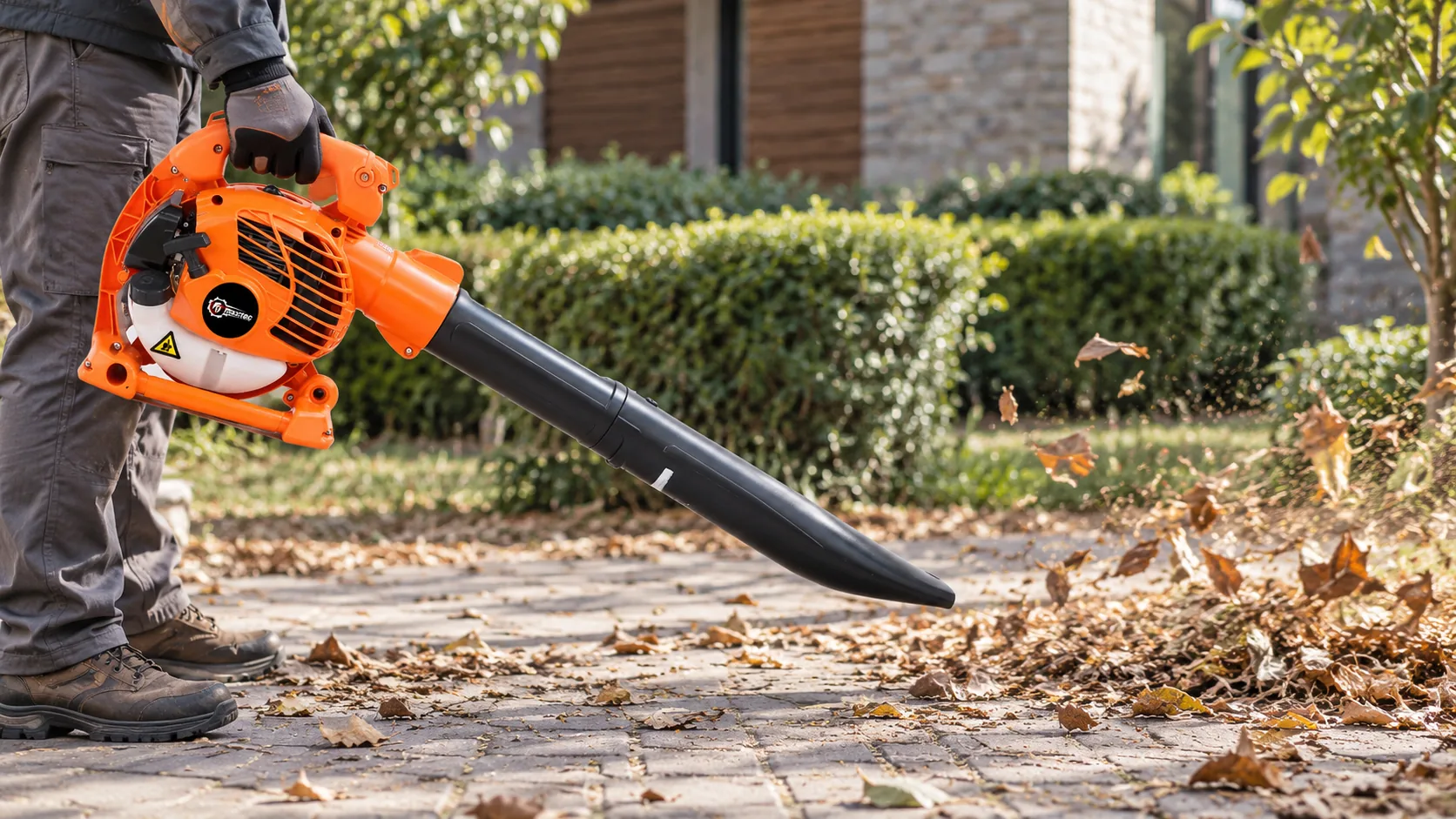
Gasoline Leaf Blower Not Blowing Strong Enough: Causes, Checks and Fixes
A gasoline leaf blower not blowing strong enough does not automatically mean the blower is too small or the engine needs replacement. If the engine still starts and runs but leaves have become difficult to move, the first job is to separate an airflow problem from an engine-output problem.
Blocked air passages, a dirty air filter, unsuitable or old fuel, spark plug condition, low engine speed and the type of debris being moved can all change how strong the blower feels. For dealers handling after-sales complaints, identifying whether the engine itself is losing RPM or whether the air path is restricted can avoid replacing unnecessary parts.
Quick answer: If a gasoline leaf blower runs normally but airflow has become weak, inspect the blower tube, nozzle and air outlet first for blockage or poor connection. If the air path is clear, check whether the engine can reach normal operating speed. A dirty air filter, unsuitable or old fuel, spark plug problems or fuel-system issues can reduce RPM and therefore reduce airflow. Wet leaves can also make a correctly operating blower appear weak. Dealers should diagnose airflow restriction and engine power separately before recommending replacement.
First Identify What “Weak Blowing” Actually Looks Like
Weak blowing performance usually appears as a change from the machine's previous behavior rather than simply an operator expecting more from the model. The distinction matters because a blower that has always struggled with heavy wet material may be facing an application mismatch, while a machine that suddenly loses airflow is more likely to need inspection.
| Observed Symptom | Likely Direction | Check First |
| Engine sounds normal but air feels weak | Air-path restriction or tube problem | Tube, nozzle, outlet and connections |
| Engine cannot reach normal speed | Engine or fuel-side problem | Air filter, fuel and spark plug |
| Only struggles with wet leaves | Working-condition limitation | Debris weight, moisture and technique |
| Needs unusually high throttle for ordinary work | Possible gradual power loss | Filter, fuel quality and plug condition |
This symptom boundary is useful for repair shops because the blower fan can only produce its expected air output when the engine supplies sufficient speed and the discharge path remains open.
Check the Blower Tube and Air Outlet Before Opening the Engine
If the engine starts easily and sounds close to normal, begin with the parts that carry air from the blower to the nozzle. Leaves, grass fragments and other debris can restrict the passage, while a loose tube can reduce how effectively the airflow is directed.
External inspection sequence
- Remove accumulated leaves or debris from the blower tube.
- Inspect the air outlet for obstruction.
- Check that tube sections are connected correctly.
- Inspect the nozzle for damage that could affect the discharge pattern.
- Reassemble the tube correctly before comparing airflow again.
If clearing and reconnecting the air path restores normal blowing force, further engine disassembly may not be necessary.
If Airflow Is Clear, Check Why the Engine Is Not Producing Enough RPM
A blower can continue running even when it is no longer producing the same usable power. If airflow becomes weaker at the same time that throttle response slows or the engine cannot reach its normal operating speed, inspect the basic combustion-related items before assuming internal engine wear.
| Air Filter | A dirty air filter can restrict the clean air entering the engine. Possible results include reduced power, slower throttle response and weaker air output. Dusty garden, farm and construction environments may require more frequent inspection. |
| Fuel | Two-stroke gasoline blowers require the correct gasoline and two-stroke oil preparation according to the manufacturer's recommendation. Old gasoline, unsuitable fuel or an incorrect mixture can contribute to poor combustion and weak acceleration. |
| Spark Plug | A dirty, worn or damaged spark plug may be associated with difficult starting, unstable running, reduced engine speed or loss of blowing performance. |
| Engine Speed | If the engine cannot reach its intended operating speed, fuel supply, carburetor adjustment, filter condition, spark plug condition or engine wear may need further inspection. |
Do not judge RPM only by how loud the blower sounds. A machine can sound busy while still failing to reach the operating condition needed for normal fan speed.
If routine external maintenance does not solve a persistent RPM problem, further carburetor, fuel-system or internal engine work is better handled according to the machine's service requirements rather than by repeatedly changing adjustments without diagnosis.
Wet Leaves Can Make a Normally Operating Blower Feel Underpowered
Before treating weak leaf movement as a machine fault, check what is being moved. Wet leaves are heavier than dry leaves and can stick to soil, paving or grass. The same blower may therefore clear dry material easily while requiring more time on wet debris.
More Suitable Conditions
|
More Demanding Conditions
|
With wet leaves, work from different angles and move the material gradually instead of expecting the same response as dry leaves. If the blower performs normally on light, dry debris but struggles only with heavier material, the issue may be application demand rather than a mechanical fault.
When Is the Blower Size Actually the Limiting Factor?
Not every complaint about weak airflow is a repair issue. Blower capacity should match the area, debris type and working time expected by the user. A compact gasoline blower may be a practical choice for home gardens, small yards, walkways, patios and lighter property maintenance, while larger professional blowers may be more appropriate for large public spaces, heavier leaves or long commercial working periods.
When comparing machines, displacement should be considered together with air volume and air speed. Engine power drives the fan, but air volume describes how much air is moved and air speed influences the ability of that airflow to act on debris.
Do not diagnose “too small” until these are true:
The air path is clear, the engine reaches normal operating condition, routine maintenance items are in acceptable condition, and the machine still cannot handle the user's normal debris and work area. Only then does comparing a different blower capacity become the logical next step.
TM-EB260A Gasoline Blower for Garden and Outdoor Cleaning
For dealers and buyers comparing a compact gasoline blower for leaf removal, garden maintenance, dust cleaning, grass clipping removal and property maintenance, the TM-EB260A provides a 25.4cc two-stroke reference configuration with specified air-volume and air-speed figures.
| Model | TM-EB260A |
| Engine Type | 2-Stroke, Air-cooled |
| Engine Displacement | 25.4cc |
| Rated Power | 0.75kW / 7500rpm |
| Air Volume | ≥0.2m³/s |
| Air Speed | ≥70m/s |
|
Why this model is relevant to the airflow question The published air volume of ≥0.2m³/s and air speed of ≥70m/s give buyers measurable airflow references rather than judging the blower only by its 25.4cc engine size. |
|
Dealer After-Sales Checklist for Weak Blower Complaints
A consistent inspection process makes it easier for distributors to decide whether a complaint can be solved through maintenance, needs parts inspection, or is actually caused by the application.
| Check | Dealer Action | Why It Matters |
| 1. Confirm the complaint | Ask whether airflow was previously stronger or has always felt insufficient. | Separates a new fault from incorrect model selection. |
| 2. Inspect the tube | Check for blockage, incorrect installation and loose connections. | Restricted discharge can reduce effective airflow. |
| 3. Check the air filter | Inspect and service according to its condition. | Restricted intake can reduce engine output. |
| 4. Verify fuel condition | Check freshness and whether the two-stroke mixture follows the applicable recommendation. | Poor combustion can prevent normal RPM. |
| 5. Inspect the spark plug | Look for dirt, wear or damage when symptoms indicate an ignition problem. | Ignition condition affects starting and engine output. |
| 6. Compare engine response | Check whether the engine accelerates and reaches its expected operating condition. | Weak fan output may originate upstream from low engine speed. |
| 7. Confirm debris condition | Ask whether the complaint occurs with dry leaves, wet leaves or heavier material. | Prevents normal workload differences from being treated as faults. |
| 8. Confirm model suitability | Compare engine size, air volume and air speed with the intended job. | A maintained machine can still be mismatched to commercial-scale work. |
| 9. Prepare service parts | Plan routine maintenance and commonly required after-sales items according to the confirmed model. | Reduces downtime for retail and distributor customers. |
FAQ: Gasoline Leaf Blower Has Weak Airflow
Why is my gasoline leaf blower running but barely blowing?
Start by checking the blower tube, nozzle and air outlet for blockage or poor connection. If the air path is clear, determine whether the engine is reaching normal operating speed. A dirty air filter, unsuitable fuel or spark plug problems may reduce engine output.
Can a dirty air filter make a leaf blower lose blowing power?
Yes. If the filter restricts the air entering the engine, combustion and throttle response may be affected. This can reduce engine speed and therefore reduce the airflow produced by the blower.
Why does my blower work on dry leaves but struggle with wet leaves?
Wet leaves carry more moisture weight and may stick to the ground. They normally require stronger airflow, different working angles and more gradual movement than dry leaves.
Can incorrect two-stroke fuel reduce blower airflow?
Incorrect, unsuitable or old fuel can affect combustion and prevent the engine from producing normal output. Two-stroke fuel preparation should follow the recommendation applicable to the machine.
Should I adjust the carburetor if my leaf blower feels weak?
Not as the first step. Check the air path, air filter, fuel and spark plug condition first. Carburetor or fuel-system inspection becomes more relevant when the engine still cannot reach normal operating speed after basic maintenance checks.
What airflow specifications does the TM-EB260A gasoline blower have?
The TM-EB260A is listed with an air volume of ≥0.2m³/s and air speed of ≥70m/s. Its reference engine specification is a 25.4cc two-stroke air-cooled engine rated at 0.75kW / 7500rpm.
Compare a Gasoline Blower by Air Output, Not Engine Size Alone
If your market needs a gasoline leaf blower for garden cleaning, leaf removal, grass clippings and outdoor property maintenance, compare the TM-EB260A's 25.4cc engine together with its ≥0.2m³/s air volume and ≥70m/s air speed. For distributor orders, the intended debris type and working area should be confirmed before selecting the final configuration.
| Check Available Specifications |