
Power Sprayer Buying Risks Dealers Should Check Before Orders
Learn what dealers should check before buying a power sprayer for farm use, from engine options and spraying pressure to maintenance and market fit.
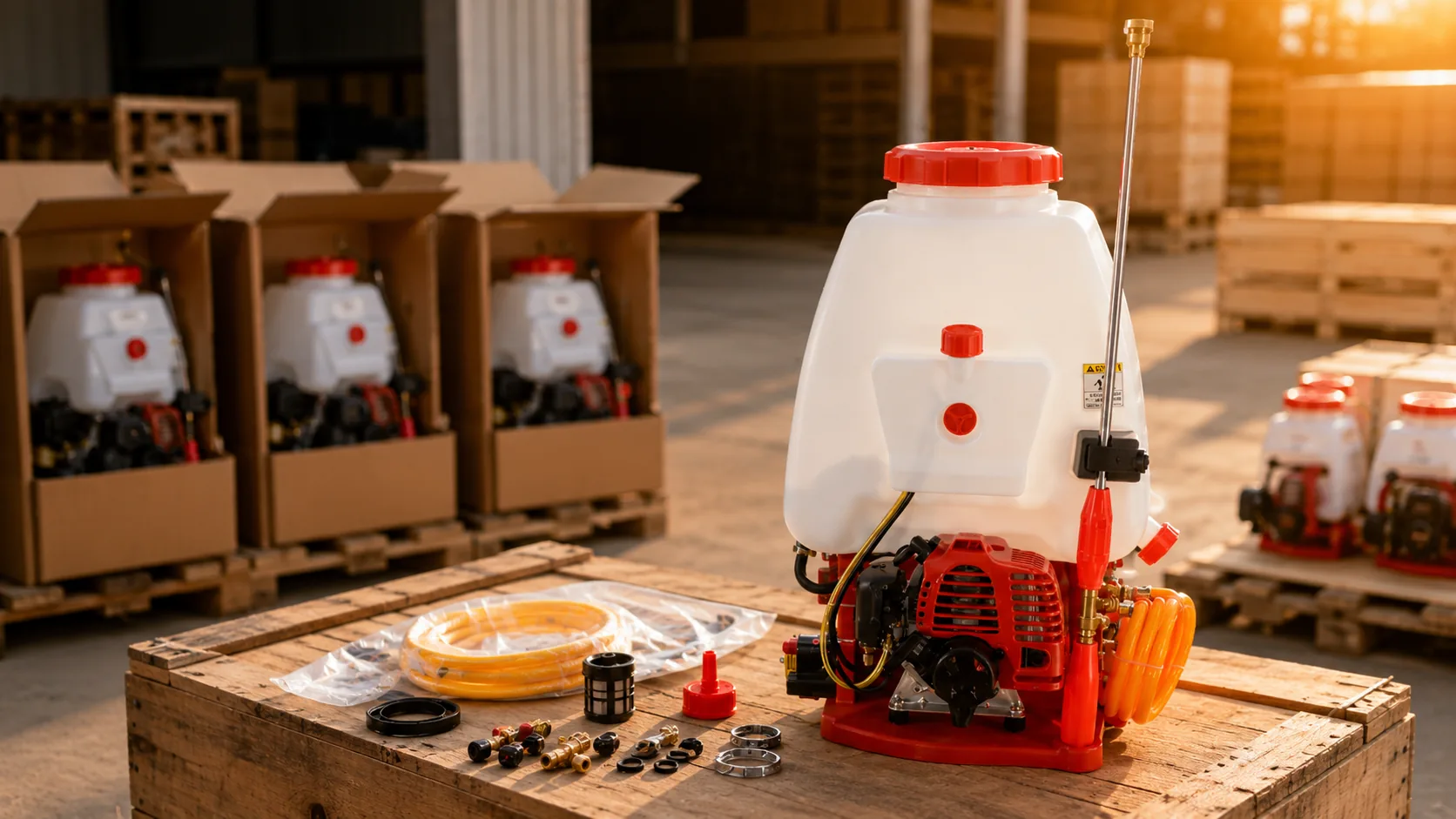
A power sprayer for farm use is not difficult to sell, but it can create after-sales pressure if the model does not match local crops, chemical use, operator habits, repair ability, and spare parts availability. For importers and dealers, the real buying risk is not only whether the sprayer works during a short test, but whether farmers can use it repeatedly in real field conditions.
Backpack power sprayers are widely used for crop protection, garden care, orchard spraying, vegetable fields, nurseries, and small farm maintenance. This guide explains what B2B buyers should check before placing a bulk order and how to reduce complaints after selling to local users.
Quick answer: Importers should choose a power sprayer based on crop type, pressure stability, engine configuration, carrying comfort, chemical compatibility, spare parts support, and local repair ability. A low price is not enough if dealers cannot supply hoses, nozzles, filters, seals, recoil starters, carburetor parts, and other common wearing parts after sale.
Recommended Power Sprayer Models for B2B Buyers
For importers who want to build a practical agricultural sprayer product line, it is useful to compare models by market positioning instead of only looking at appearance. The following models can be introduced naturally for farm tool shops, agricultural dealers, and regional distributors.
TM-P708 Power SprayerSuitable for agricultural spraying, crop protection, garden maintenance, and daily farm use where dealers need a practical backpack sprayer option for local retail channels.
|
TM-P767 Agricultural Power SprayerA practical choice for importers comparing backpack power sprayer options for farm dealers, garden tool suppliers, and crop protection equipment channels.
|
Will the Power Sprayer Match the Crops in Your Market?
The first question is not only engine size or tank capacity. The first question is what farmers in your market actually spray. Vegetable farmers, orchard workers, tea gardens, nurseries, and small grain farms may all have different spraying habits. Some users need wide coverage for field crops, while others need more controlled spraying around leaves, branches, or narrow planting rows.
If the sprayer is mainly sold to vegetable growers, stable pressure and comfortable carrying are important because users may work for long periods. For orchards, dealers should pay attention to nozzle options, hose quality, and whether the spray can reach the required height depending on the actual working setup.
Before buying in bulk, importers should ask local dealers what crops are most common, what chemicals are usually applied, and whether users prefer fast spraying or more precise spraying. A model that sells well in one country may not automatically fit another market if farm size, crop type, and user habits are different.
Application Fit for Dealers
| Vegetable Fields
Focus on pressure stability, carrying comfort, filter cleaning, and controlled spray coverage. |
Orchards & Tea Gardens
Check nozzle options, hose quality, spray reach, and operator fatigue during longer work. |
Garden Care
Prioritize easy starting, simple maintenance, lighter handling, and clear user instructions. |
Pressure Stability Matters More Than a Single Number
Spraying pressure affects coverage, working speed, chemical use, and user satisfaction. If the pressure is too weak, farmers may complain that the chemical does not spread evenly or cannot reach enough distance. If the pressure is too aggressive for delicate crops, users may waste chemicals or damage young plants.
For B2B purchasing, pressure stability is more important than one attractive specification. The sprayer should maintain usable pressure during normal operation, not only during a short factory demonstration. Buyers should also confirm the working pressure range according to the actual model configuration because different markets may require different setups.
When checking samples, test the sprayer with water for several minutes instead of only a few seconds. Watch whether the spray pattern remains stable, whether the hose connection leaks, and whether the pressure changes obviously when the engine speed changes. These details can reduce complaints after the products reach dealers and farmers.
Engine Configuration and Local Repair Ability
Engine selection is a major risk for importers. In some markets, farmers are familiar with 2-stroke engines because they already use brush cutters, mist dusters, and chainsaws. In other markets, users may prefer 4-stroke engine options because they want easier fuel habits and fewer mixing mistakes. The right choice depends on local service ability and user experience.
For dealers, the best engine is not always the most expensive one. It should be the engine that local mechanics can repair, local users can understand, and spare parts can be supplied regularly. If your market already has strong demand for TU26, GX25, GX35, or similar engine types, choosing a familiar configuration may make after-sales service easier.
Before confirming a container order, ask the supplier which engine options are available for the model, whether the same spare parts are used across other machines, and whether carburetors, recoil starters, ignition coils, filters, hoses, and seals can be supplied with the shipment.
Power Sprayer Comparison for Importers
The table below helps dealers compare power sprayer purchasing points from a practical after-sales perspective. It is useful when choosing models for different sales channels or preparing a spare parts plan before shipment.
| Buying Area | What to Check | Common Risk | Dealer Advice |
|---|---|---|---|
| Crop Application | Vegetables, orchards, tea gardens, nurseries, field crops | Wrong spray pattern or poor user fit | Match model to local crop habits before bulk order |
| Pressure | Spray distance, pressure stability, hose leakage | Weak coverage or chemical waste | Test with water for several minutes, not seconds |
| Engine | Starting, idling, local repair familiarity | Difficult repair and high warranty pressure | Choose configurations local mechanics can service |
| Spare Parts | Hoses, nozzles, filters, seals, straps, recoil parts | Slow repair and customer complaints | Ship common wearing parts together with machines |
Carrying Comfort Can Decide Repeat Sales
A backpack power sprayer is carried on the operator’s body, so comfort directly affects repeat purchase. Even if the machine sprays well, users may reject it if the frame, strap, back contact area, or balance feels uncomfortable during farm work. This is especially important in hot climates where operators may work for several hours.
Dealers should check the empty weight, filled working weight, strap design, frame shape, and whether the machine sits firmly on the back. A 25L class sprayer can become heavy after filling, so balance and support matter. If the product is sold to small farmers, women operators, or garden workers, comfort may become a stronger selling point than technical numbers.
During sample testing, fill the tank with water and let a worker carry it for real operation. Check whether the shoulder straps slip, whether the frame presses the back too hard, and whether the control position is convenient. These are the details farmers notice quickly after purchase.
Tank, Hose, and Seal Compatibility
Many after-sales problems come from chemical contact, not from the engine itself. Agricultural users may apply pesticides, fertilizers, disinfectants, herbicides, or other liquids depending on local crops. If the tank, hose, seals, or nozzle parts are not suitable for the chemical habits in the market, leaks and blockage may appear earlier than expected.
Importers should not only ask whether the sprayer can spray water. Water testing is useful, but real farm chemicals may be stronger. Buyers should confirm material suitability according to the actual liquids commonly used by local customers. If users often spray thicker liquids or powders mixed with water, filter and nozzle blockage should also be considered.
For dealers, it is useful to educate customers to clean the sprayer after each use. Leaving chemical liquid inside the tank, hose, or pump system may cause corrosion, blockage, odor, or seal damage. A simple cleaning reminder can reduce warranty pressure and improve user experience.
Importer / Dealer Checklist Before Ordering
|
|
Spare Parts Planning for Power Sprayer Dealers
For wholesale buyers, spare parts support is part of the product value. A power sprayer may need replacement parts after regular use, especially hoses, nozzles, filters, straps, recoil starters, carburetor parts, spark plugs, seals, and pump-related components. If spare parts are difficult to supply, even a good-selling model can become a problem for distributors.
Before placing a bulk order, dealers should prepare a basic spare parts list based on expected sales volume. It is better to ship common wearing parts together with the machines instead of waiting until customers start complaining. This is especially important for markets far from China, where delivery time may be long.
Importers should also check whether multiple sprayer models can share some parts. If different models use completely different spare parts, inventory becomes more complicated. A clear model plan helps dealers reduce stock pressure and train repair staff more easily.
Wholesale Positioning: Retail Model or Dealer Service Model?
Not every power sprayer should be sold to the same customer group. Some models are better for price-sensitive retail channels, while others are better for agricultural dealers who serve farmers with higher daily use. Importers should decide whether the product will be sold through farm tool shops, hardware stores, garden equipment dealers, or regional distributors.
If the target customers are small farmers, the product should be easy to explain, easy to start, and easy to repair. If the target customers are professional agricultural service teams, they may care more about pressure stability, working efficiency, and spare parts availability. If the product is for dealers, packaging, carton strength, model labeling, and parts supply also matter.
For container orders, it may be better to combine one main selling model with a second model for different customer needs. This helps distributors test the market without making the product range too complicated. However, buyers should avoid ordering too many similar models at once if local demand is not clear.
How Dealers Can Reduce After-Sales Complaints
The easiest way to reduce complaints is to sell the right model to the right user. Do not recommend a sprayer only because it looks popular or has a competitive price. Ask customers what crops they spray, how many hours they work, what chemicals they use, and whether local mechanics can service the engine.
Dealers should also keep a small stock of wearing parts and train staff to handle common issues such as difficult starting, weak pressure, nozzle blockage, hose leakage, and poor cleaning habits. Many problems can be solved quickly if the dealer has the correct spare parts and basic repair knowledge.
For importers, a stable power sprayer business depends on repeat orders, not only the first shipment. Choosing models with suitable specifications, familiar engine options, reasonable spare parts support, and clear market positioning can help distributors build a product line that farmers trust and dealers can service.
FAQ: Power Sprayer Buying Questions for Importers and Dealers
What should importers check before buying power sprayers in bulk?
Importers should check crop application, engine configuration, pressure stability, tank capacity, hose quality, seals, nozzle options, spare parts availability, carton strength, MOQ, delivery time, and whether the supplier can keep the same configuration for repeat orders.
Which power sprayer is suitable for farm use?
A suitable farm power sprayer should match local crops, working hours, chemical habits, and operator skill. For vegetable fields, stable pressure and comfortable carrying are important. For orchards, nozzle options, hose quality, and spray reach should be checked more carefully.
How can dealers reduce power sprayer after-sales complaints?
Dealers can reduce complaints by matching the model to real user needs, testing samples before selling, keeping common spare parts, training staff for basic repair, and teaching customers to clean the tank, hose, filter, and nozzle after each use.
What spare parts should power sprayer dealers stock?
Dealers should stock hoses, nozzles, filters, seals, straps, recoil starter parts, spark plugs, carburetor parts, and pump-related wearing parts. The exact list should be confirmed according to the model configuration and expected sales volume.
Why do farmers complain about weak spraying pressure?
Weak pressure may come from unsuitable model selection, blocked filters, poor nozzle condition, hose leakage, incorrect engine speed, dirty water, or poor cleaning habits. Dealers should test pressure stability and teach users basic cleaning and troubleshooting.
Should importers buy one model or several power sprayer models?
For a new market, it is usually safer to focus on one main selling model and one supporting model for different customer needs. Too many similar models can increase spare parts pressure and make dealer training more difficult.
Build a More Stable Power Sprayer Product Line
For importers and dealers looking for stable supply, Teamax Power can provide practical power sprayer models for agricultural spraying, garden care, orchard work, and farm tool distribution. Compare the models below and choose according to your market demand, after-sales ability, and spare parts plan.
| View TM-P708 Details | View TM-P767 Details |