
How to Check a Brush Cutter Sample Before a Bulk Order
Check a brush cutter sample before bulk ordering by comparing configuration, shaft, gearbox, cutting attachments, controls, parts, and packing details.
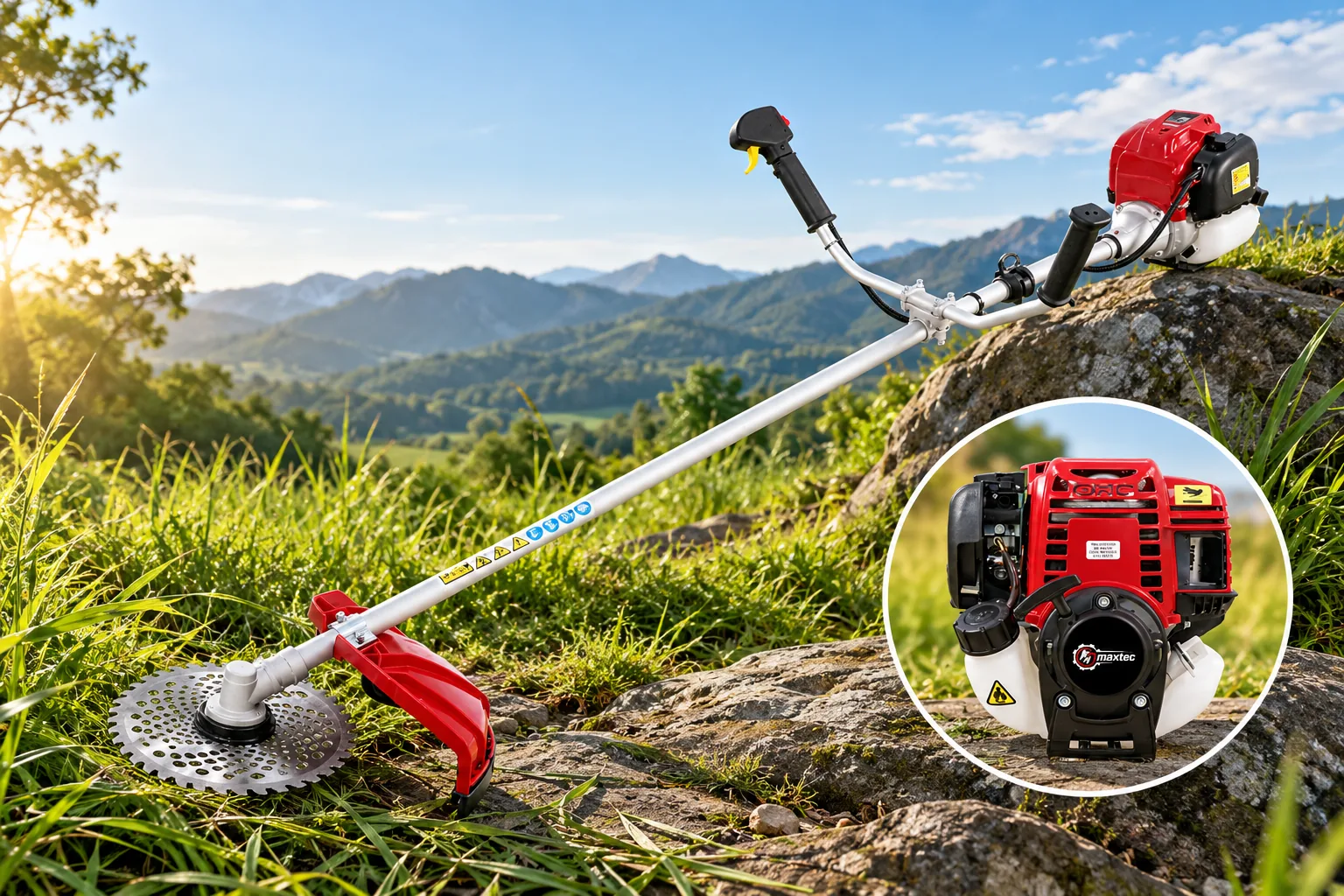
Brush Cutter Sample Inspection Before Bulk Order: Importer Approval Checklist
A brush cutter sample should confirm much more than whether the engine starts and the cutting head rotates. Before approving bulk production, importers need to document the exact machine configuration, inspect the shaft and gearbox arrangement, verify the supplied cutting attachments, test the machine in its intended type of work, and confirm what dealers will actually receive inside the package.
This matters because two gasoline brush cutters can look almost identical in photographs while using different shafts, controls, accessories, gear cases, or mounting arrangements. If the sample is approved only by appearance or engine displacement, those differences may not become obvious until replacement parts are needed or the production shipment reaches local dealers.
| Quick answer: | Do not approve a brush cutter sample simply because it starts and cuts grass. Record the exact model and configuration, then check the shaft, gearbox, cutting attachment, controls, harness, guard, included accessories, branding, packing, and any service parts that must remain compatible. Test the machine under the type of cutting work expected in your market. After approval, transfer every accepted detail and every requested change into the quotation or proforma invoice so the bulk order can be checked against a written reference. |
1. Define What the Sample Is Supposed to Prove
Starting the engine is only the first stage of sample evaluation. The machine also needs to be considered as a complete commercial product that will be assembled, demonstrated, sold, repaired, and supported after it enters the market.
Begin by confirming that the sample is the same model intended for the bulk order. Avoid recording it only as a “43cc brush cutter” or “52cc brush cutter.” Engine displacement does not identify the complete machine because the shaft system, gear case, handle, throttle control, guard, harness, cutting attachment, and other components may vary between configurations.
The sample should establish which exact configuration the buyer expects the supplier to reproduce. Any component that matters to operation, service, dealer presentation, or packaging should be identified before production rather than assumed from photographs.
2. Inspect the Shaft and Gearbox Before Focusing on Cutting Performance
The shaft deserves careful attention because it affects assembly, handling, gearbox compatibility, replacement parts, and local repair work. Check how the engine connects to the shaft and how the shaft connects to the cutting end.
The objective is not to dismantle a new sample unnecessarily. It is to document the configuration clearly enough that purchasing and service teams know what they are approving. If shaft diameter or connection specifications are important to an existing spare-parts program, confirm those values from the actual model specification rather than assuming two similar-looking machines are interchangeable.
| Inspection Area | What to Confirm | Why It Matters |
| Engine-to-shaft connection | Actual connection arrangement on the approved sample | Affects assembly and replacement compatibility |
| Shaft configuration | Configuration required for the selected model | Important when existing shafts or control assemblies are already stocked |
| Gear case | Connection and mounting arrangement | Determines fitment of service parts and cutting components |
| Cutting-end mounting | How the supplied attachment is installed and secured | Reduces later mistakes when supplying replacement heads or blades |
3. Check the Cutting Attachment, Guard, and Gearbox as One System
A brush cutter sample may be supplied with a nylon trimmer head, metal blade, or another cutting attachment according to the confirmed configuration. The cutting attachment should not be evaluated separately from the gearbox and mounting arrangement.
Check how the attachment is installed, whether the necessary fixing hardware is included, and whether the guard corresponds to the intended setup. If the planned bulk order includes more than one cutting attachment, identify each item separately in the order documentation.
Do not sell replacement blades or trimmer heads based only on a general brush cutter size or engine displacement. Fitment should be confirmed against the actual model and mounting configuration. Accessories shown in marketing photographs should not be assumed to be included unless they are confirmed in the quotation or proforma invoice.
4. Test the Sample Under the Type of Work Your Customers Will Do
A brush cutter should not be judged only by free-running engine speed. Test the approved configuration in the type of vegetation for which the distributor intends to sell it.
| Intended Use | Useful Sample Check | Watch For |
| Routine grass maintenance | Operation with the intended maintenance attachment | Poor control, unexpected vibration, loosening |
| Farm weeds or denser vegetation | Cutting behavior under the intended heavier workload | Mismatch between attachment and vegetation |
| Normal operator use | Throttle trigger, stop control, handle position and harness access | A control arrangement unsuitable for the intended users |
If performance appears poor, first check assembly, cutting attachment installation, operating conditions, fuel preparation where applicable, and operator technique before assuming an internal component is defective.
Stop the test if the machine develops abnormal vibration, loose cutting components, fuel leakage, or another condition that could make continued operation unsafe.
5. Open the Package and Inspect the Product a Dealer Will Receive
Sample approval should include the packaged product, not only the assembled machine. Importers often inspect engine operation carefully but give less attention to the items shipped beside it.
Depending on the confirmed order, the package may include the cutting attachment, guard, harness, tool kit, mixing-related accessories for applicable models, manuals, or other specified items. Not every brush cutter needs the same accessory combination. The important point is that buyer and supplier use the same definition of the finished product.
Machine Package
|
Branding and Packing
|
Color, logo, labels, manuals, carton design, and packing should be approved separately where required. They should not be treated as automatically fixed simply because they appeared on the first sample.
6. Product Reference: Compare Brush Cutter Models Before Requesting Samples
TEAMAX Brush Cutter RangeFor importers evaluating more than one gasoline brush cutter, the category range can be used to narrow the sample request according to local applications first. After selecting the relevant models, confirm the exact engine configuration, shaft arrangement, cutting attachment, accessories, branding, packing, and spare-parts requirements for each sample. |
|
7. Check Service-Part Compatibility Before Approving Several Models
This stage becomes more important when an importer plans to buy several brush cutter models. A wider catalog can cover more applications, but it can also create more spare-part references for dealers and repair teams.
Use the sample stage to identify which important components appear common and which are model-specific, but do not declare parts interchangeable based on appearance alone. Similar shafts, gear cases, control assemblies, cutting heads, or engine components may still differ in dimensions or connections.
If two brush cutters occupy almost the same market position but require substantially different service inventories, the distributor may decide that carrying both creates more after-sales complexity than commercial value. Compatibility should be confirmed with the supplier according to the actual models being ordered.
8. Create a Written Sample Approval Record Before Bulk Production
Once the sample is accepted, convert the findings into a written approval record. This becomes the reference for purchasing, production confirmation, incoming inspection, dealer support, and later repeat orders.
- Record the exact brush cutter model.
- Record the confirmed engine configuration.
- Document the shaft and handle arrangement.
- Identify the supplied cutting attachment.
- Confirm the guard and harness configuration.
- List every accessory included in the package.
- Record approved branding details where applicable.
- Record the required packing configuration.
- Link spare parts to the exact model they are intended to support.
- Document every change requested after sample testing.
- Compare the quotation or proforma invoice with the final approved sample record before production.
Photographs of important details can also help purchasing and receiving teams distinguish the approved version from similar configurations, particularly when several months pass between sample inspection and production.
Avoid relying only on phrases such as “same as sample.” The commercial documents should identify which configuration has been approved and should be updated if an attachment, accessory, branding element, or packing requirement changes later.
FAQ: Brush Cutter Sample Inspection for Importers
What should I check on a brush cutter sample before placing a bulk order?
Check the exact model, engine configuration, shaft, gearbox, cutting attachment, controls, handle, harness, guard, included accessories, branding, packing, and relevant spare-parts compatibility. Then compare the final quotation or proforma invoice with the approved sample record.
Is starting the engine enough to approve a gasoline brush cutter sample?
No. Normal starting only confirms one part of the evaluation. The importer also needs to verify the complete commercial configuration and test whether the machine, controls, and cutting attachment suit the intended application.
Should a brush cutter sample be tested under load?
It should be tested in the type of cutting work expected in the target market. A machine intended for routine grass maintenance should not be evaluated in exactly the same way as a model intended for denser weeds or heavier farm use.
Can similar-looking brush cutter gearboxes and shafts use the same spare parts?
Not necessarily. Similar appearance does not prove interchangeability. Dimensions, connections, and model-specific arrangements should be confirmed with the supplier before parts are added to a dealer spare-parts program.
Should accessories shown in the sample photograph be assumed to be included?
No. Cutting attachments, harnesses, tool kits, manuals, packing items, and other accessories should be identified in the confirmed order documents rather than assumed from product photographs.
How can an importer keep repeat brush cutter orders consistent?
Keep the approved sample record and use it together with the previous confirmed commercial specification. For the next order, check the model, configuration, accessories, branding, packing, and linked spare parts again instead of relying only on a general model name or “same as before.”
Prepare the Sample Before You Prepare the Bulk Order
A useful brush cutter sample becomes the reference for what the importer expects to receive. Compare the available models first, select samples according to real market applications, and record the approved shaft, gearbox, cutting system, controls, accessories, branding, packing, and service requirements before production is confirmed.
| Check Models for Sample Selection |