
What Brush Cutter Spare Parts Should Importers Order First?
Plan brush cutter spare parts for your first import order by checking wear items, model compatibility, dealer repairs, and parts shared across machines.
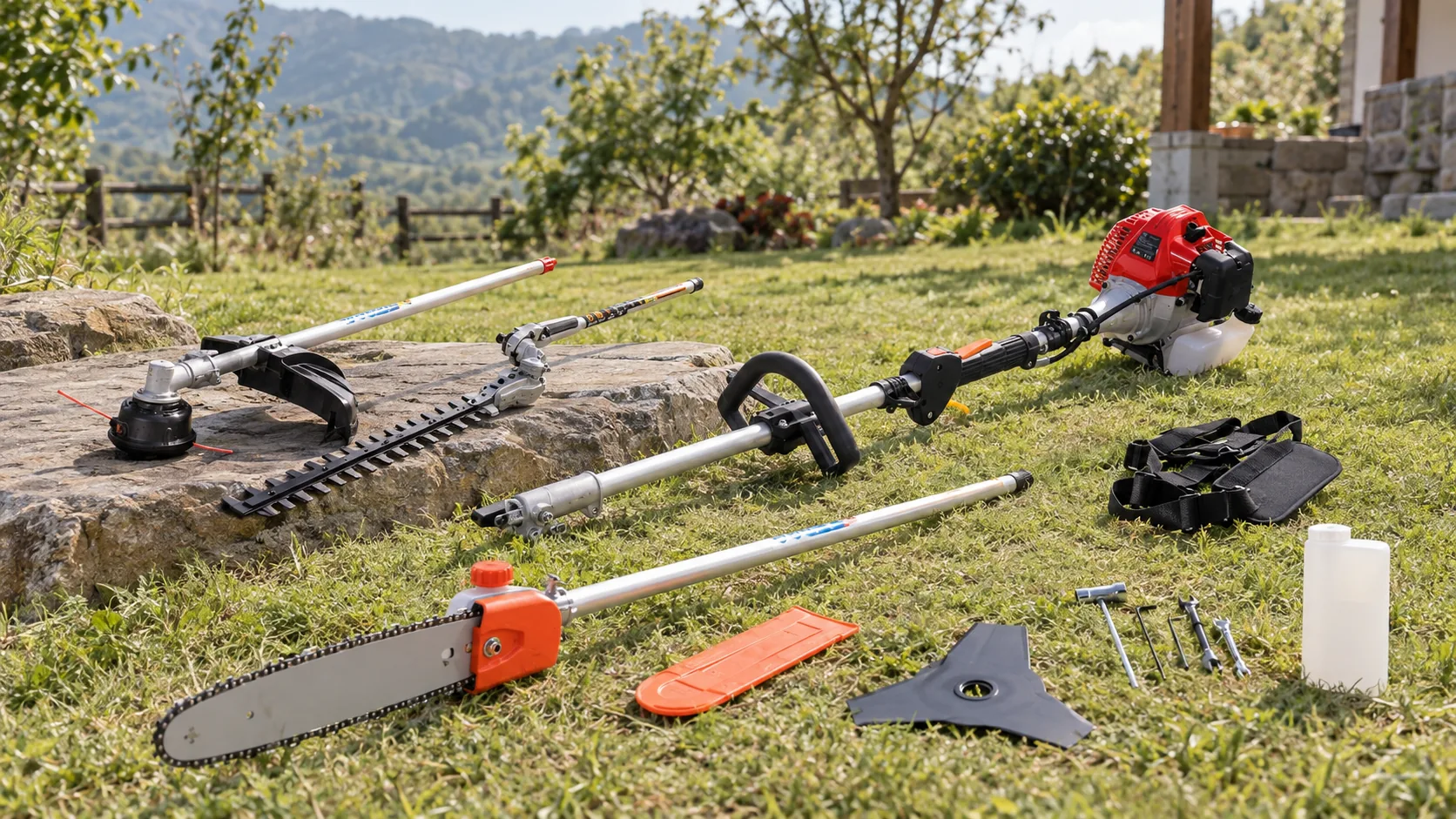
Brush Cutter Spare Parts Planning for Importers: First Shipment Stocking Guide
Brush cutter spare parts planning should begin before the first bulk shipment leaves the supplier. For importers and distributors, the objective is not to order a large quantity of every available component. It is to identify which parts will realistically be replaced in the local market, which components are specific to one configuration, and which items are genuinely shared across the selected brush cutter models.
This becomes more important when several gasoline brush cutters are imported together. Two machines may look similar or belong to the same displacement class while still using different shafts, gear cases, controls, cutting attachments, or engine components. A useful spare-parts system therefore starts with the exact machines in the purchase order rather than a generic list of “brush cutter parts.”
Finalize the brush cutter models and configurations first, then build the spare-parts order around them. Separate routine replacement items from service parts and larger assemblies, verify cutting-head, blade, shaft, gearbox, and engine-part compatibility against the exact machine, and ask the supplier which components are confirmed to be shared. The first shipment should provide sensible service coverage without creating excessive slow-moving inventory. After sales begin, use actual dealer requests to adjust the spare-parts mix for repeat orders.
Start With the Models That Will Actually Be Imported
Do not prepare a spare-parts list while the product range is still changing. First identify the brush cutter models that will actually be included in the shipment and the configuration selected for each one.
This prevents a common sourcing error: purchasing parts according to broad descriptions such as 43cc or 52cc. Displacement alone does not establish compatibility. The selected shaft, gearbox, engine configuration, control assembly, cutting attachment, and connection details may all affect which replacement component is correct.
| Before Parts Selection | Required Reference | Reason |
| Machine identity | Exact brush cutter model | Prevents parts being selected from displacement alone |
| Drive system | Shaft and gearbox configuration | Determines fitment of important assemblies |
| Cutting setup | Confirmed head, blade, mounting and related components | Avoids incompatible consumables reaching dealers |
| Engine configuration | Actual machine and engine version | Similar displacement does not guarantee common engine parts |
Separate Consumables, Service Parts, and Larger Assemblies
Not every replacement item deserves the same stocking level. Dividing spare parts by how they are used is more practical than placing every available component into one purchasing list.
| Routine Replacement
Items that may be consumed or replaced through normal cutting work, such as cutting line and certain cutting attachments depending on the confirmed setup. |
Service Parts
Components technicians may need when maintaining or repairing machines. The exact range should reflect the models and local repair capability. |
Larger Assemblies
Complete shafts, gear cases, or other assemblies that may be useful for repair coverage but do not necessarily require the same quantity as routine-use items. |
The correct balance depends on the selected machine, local working conditions, dealer capability, and how repairs are normally handled. A first-time importer should therefore avoid copying a fixed spare-parts percentage without considering the actual market.
Check Cutting Attachments, Shafts, and Gear Cases by Configuration
Three areas deserve particular attention because they can look interchangeable even when they are not: the cutting attachment, shaft system, and gear case.
Check the mounting arrangement and confirmed cutting setup before purchasing replacements. A part described generally as a “brush cutter blade” or “trimmer head” should not automatically be treated as suitable for every model.
Brush cutters may differ in shaft diameter, internal drive arrangement, connector design, handle setup, or gearbox connection. Link the actual shaft specification to the machine model in the distributor's parts system.
Fitment matters at both ends of the assembly. Confirm how the gear case connects to the shaft and how the cutting attachment is installed before deciding which version should be held as replacement stock.
Do Not Use Engine Displacement as a Parts Reference
Markets often describe gasoline brush cutters by displacement, but this is not enough for engine-parts purchasing. Two machines may both be sold as 52cc brush cutters without using identical carburetors, starters, ignition components, cylinders, clutches, or other engine parts.
Use the machine model and confirmed engine configuration as the parts reference. Similar displacement, appearance, or product-family wording should not be treated as proof that two engine components are interchangeable.
For a first shipment, a clear compatibility map may be more valuable than receiving a very long parts catalog. It tells the distributor which parts can actually support the machines being purchased.
Ask the Supplier Which Parts Are Shared Across the Order
One useful procurement question is simple: Which parts are confirmed to be common across the models in this order?
The answer can influence both parts stocking and product selection. If two brush cutters serve almost the same customer group but require substantially different service inventories, carrying both may add warehouse complexity without adding enough market coverage. If selected models share confirmed service components, supporting the range may become easier.
Reasons to Keep Both Models
|
Reason to Reconsider One Model
|
Match the Spare-Parts Range to Local Repair Ability
A spare-parts package should reflect who will actually repair the machines after sale. A market with experienced small-engine repair shops may need more individual service components than a dealer network that mainly performs basic maintenance and replaces complete assemblies.
Before adding many internal components, ask what your dealers can realistically diagnose and replace. Stocking detailed repair parts that local technicians rarely use can tie up inventory without improving after-sales support.
| Local Service Situation | Planning Direction |
| Dealers mainly perform basic maintenance | Focus on realistic replacement items and assemblies rather than a large range of small internal parts. |
| Experienced small-engine repair network | A more detailed service-parts structure may be useful depending on the confirmed models. |
| New market with little parts history | Begin with reasonable coverage and adjust quantities using actual dealer requests. |
Review the Brush Cutter Range Before Building the Parts Order
TEAMAX Brush Cutter RangeImporters can first narrow the brush cutter selection according to local applications and required configurations, then create a model-specific spare-parts reference for the machines that will actually be ordered. This is more practical than preparing one general spare-parts list before the product lineup is finalized. |
|
Control the First Parts Shipment and Build a Reorder History
New importers do not yet have local replacement data, so the first spare-parts order should aim for reasonable service coverage rather than maximum quantity. Large inventories of uncertain parts tie up capital and may become slow-moving if the selected mix does not match real service demand.
Once the brush cutters enter the market, record what dealers actually request. Over several shipments, this creates a market-specific stocking system based on real usage rather than assumptions.
| 1 | Finalize the exact brush cutter models before creating the parts order. |
| 2 | Create a separate configuration reference for each machine. |
| 3 | Separate routine replacement items from repair parts and larger assemblies. |
| 4 | Confirm cutting-head and blade fitment against the actual mounting arrangement. |
| 5 | Link shaft and gearbox specifications to the correct machine model. |
| 6 | Do not assume engine-part compatibility from displacement alone. |
| 7 | Ask which components are confirmed to be shared across the ordered models. |
| 8 | Match the parts range to repairs your local dealers can actually perform. |
| 9 | Store model-specific parts with clear machine and configuration references. |
| 10 | Record dealer requests, quantities, remaining stock, and shared-model compatibility after sales begin. |
A useful internal parts record can include the machine model, component description, applicable configuration, supplier part reference where available, models confirmed to share the component, quantity requested, remaining stock, and reason for replacement where known.
FAQ About Brush Cutter Spare Parts for Importers
Should I order brush cutter spare parts with the first bulk shipment?
Yes, but the initial stock should be based on the exact models, confirmed configurations, and realistic local repair needs. The objective is service coverage rather than ordering every available component.
Which brush cutter spare parts should an importer prioritize?
Priorities depend on the selected machines, working conditions, and dealer capability. Separate routine replacement items, technician service parts, and larger assemblies first, then decide appropriate quantities for each group.
Can one 52cc brush cutter use spare parts from another 52cc model?
Not automatically. Equal displacement does not confirm common shafts, gear cases, carburetors, starters, ignition parts, cylinders, clutches, or other components. Compatibility should be checked against the actual machine and engine configuration.
How can dealers avoid supplying the wrong trimmer head or blade?
Create a parts reference linking the cutting attachment to the exact brush cutter model and mounting arrangement. Do not identify replacement attachments only by appearance or general machine size.
Is it better to stock complete gearboxes or small gearbox parts?
That depends on local repair capability and the selected models. Dealers that mainly replace assemblies may need a different stock structure from technicians who perform more detailed repairs.
How should brush cutter spare-parts quantities be adjusted for repeat orders?
Record actual dealer requests by machine model, part, quantity, remaining stock, and shared compatibility. Use that history to increase, reduce, or replace items in later spare-parts orders instead of relying on a fixed generic formula.
| Build the Parts Plan Around the Machines, Not the Catalog
Brush cutter spare parts planning works best when model selection, configuration confirmation, sample approval, and parts compatibility are settled before the bulk order. Start with the machines your market actually needs, confirm which parts belong to each configuration, and improve stocking quantities using real dealer demand after the first shipment. |
|
:contentReference[oaicite:0]{index=0}