
Why Engine Model Codes Matter in 52cc Brush Cutter Orders
See why importers should record the exact 52cc brush cutter engine model, not displacement alone, when approving production, parts and repeat orders.
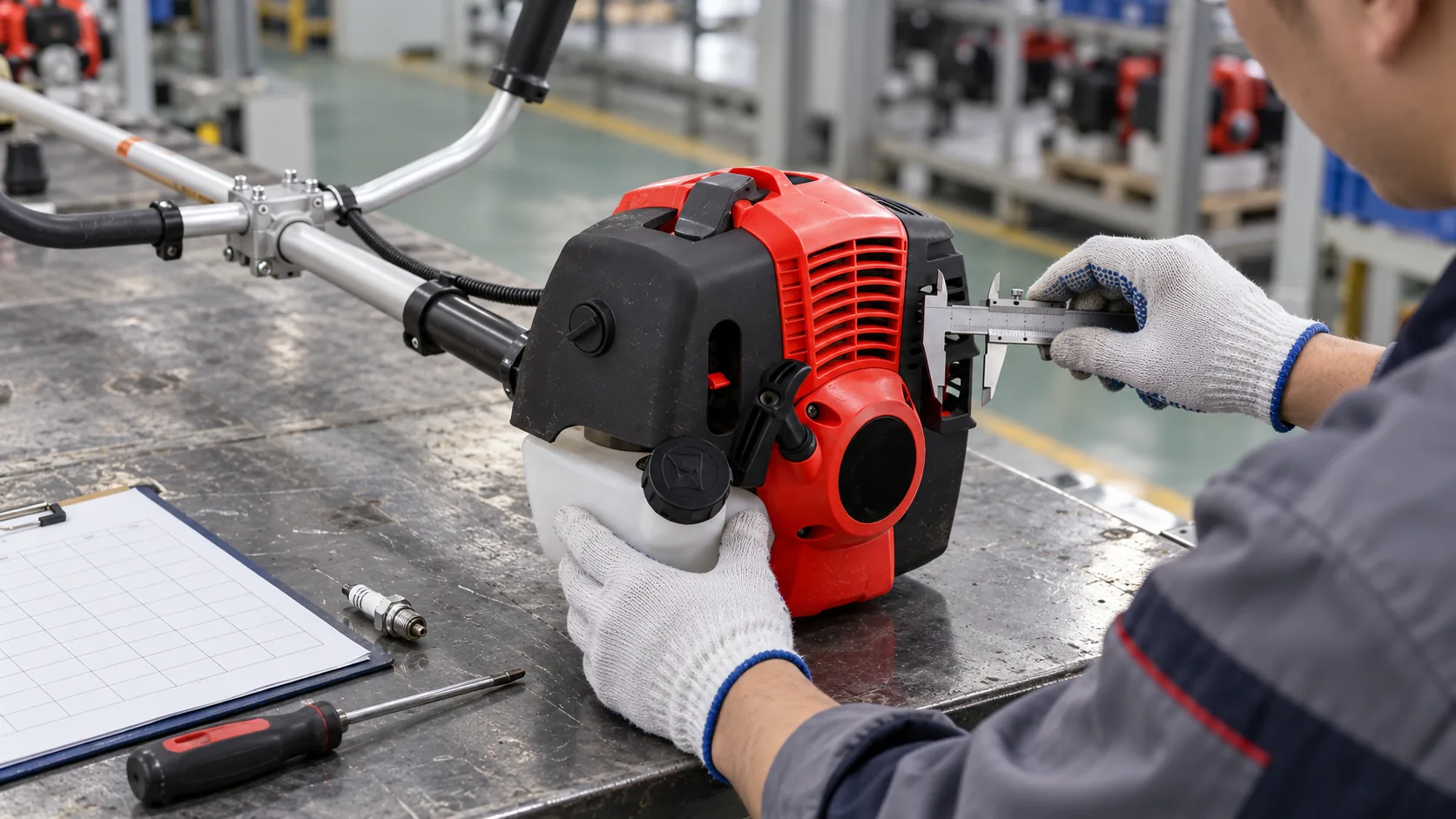
Engine Configuration & Order Traceability
How to Verify a 52cc Engine Code With a Brush Cutter Manufacturer
A 52cc description is not enough to identify the exact engine installed on a brush cutter. Machines in the same displacement category may use different engine variants, covers, starters, fuel-system components or connection details. Importers therefore need the complete engine model code—not only the commercial displacement class—on the approved specification.
For the TM-CG520TN, the published configuration identifies a 1E44F-5N two-stroke, air-cooled engine with 51.7cc displacement. Keeping this code connected to the sample, quotation, inspection record and future parts requests gives the buyer and brush cutter manufacturer a clear reference throughout the order cycle.
Quick answer: Record “TM-CG520TN + 1E44F-5N + 51.7cc” as one controlled configuration. Do not shorten the engine reference to “52cc,” because displacement describes an approximate size class rather than a unique engine version. Compare the complete code with the physical sample, quotation, product label, manual and bulk inspection record. If a later document shows a different suffix, request a written explanation from the manufacturer and confirm whether external parts, mounting details, fuel instructions or service-part compatibility have changed.
52cc Describes Engine Size, Not Complete Identity
Displacement helps purchasing teams place an engine within a general size category. It does not provide a complete production or replacement-parts reference. Several engines may be marketed as 52cc because their stated displacement is close to that category, yet they can differ in their exact model, external components, mounting arrangement or supplier configuration.
An inquiry stating only “52cc two-stroke engine” leaves these details open. The full engine code gives both parties a more precise reference, but buyers should not independently assign meanings to its letters or suffixes. Similar-looking codes do not prove that components are interchangeable.
| Recorded Detail | TM-CG520TN Reference | Purchasing Purpose |
| Finished model | TM-CG520TN | Identifies the complete brush cutter model. |
| Engine model | 1E44F-5N | Provides the specific engine-version reference. |
| Displacement | 51.7cc | Confirms the stated technical value behind the 52cc category. |
| Engine type | Two-stroke, air-cooled | Connects the model to the correct operating instructions. |
Treat the TM-CG520TN Specifications as One Configuration
The listed engine code should not be separated from the other approved specifications. The TM-CG520TN configuration combines a 1E44F-5N engine, 51.7cc displacement, rated output of 1.8kW at 6500rpm and idling speed of 3000 ±200rpm.
The product page also lists a 1:30 mixed-fuel ratio, 1200ml fuel tank and 28mm shaft diameter. These values describe the presented model, while the final quotation or proforma invoice should confirm the production configuration. Replacing the engine model but retaining the same displacement can create a different version even if the finished machines appear similar in catalog photographs.
TM-CG520TN 52cc Gasoline Brush CutterModel: TM-CG520TN A useful reference for importers who need a defined 51.7cc configuration with a 1E44F-5N engine, 28mm shaft and documented operating specifications. Confirm these connected details before approving a sample or bulk order. |
|
Why the Engine Suffix Must Stay on the Order Record
Long engine codes are sometimes shortened on inquiries, stock sheets or repeat-order forms. That may appear harmless while the displacement and output remain unchanged, but the missing suffix becomes a problem when an importer later needs to match a replacement component or reproduce an earlier shipment.
The full 1E44F-5N code identifies the version originally discussed. If a future quotation states 1E44F-5B, 1E44F-5 or another variation, the buyer has a clear reason to ask what changed. The suffix alone does not explain the difference; the brush cutter manufacturer should confirm whether it concerns the engine assembly, external components, connection points or only an internal naming convention.
Substitution decision
Do not approve or reject a different suffix from appearance alone. Request a comparison of the affected specifications and compatible parts, then record the accepted change in writing. Even when the manufacturer confirms there is no buyer-relevant physical difference, that confirmation should be documented rather than assumed.
Match the Sample Marking to the Specification Sheet
The engine code published online should be compared with the physical sample. Locate the engine label, model marking or another traceable identification point specified by the supplier. Photograph that point during sample approval and store the image with the signed or confirmed specification.
| 1 | Identify the finished machine: confirm TM-CG520TN on the sample record. |
| 2 | Capture the engine reference: photograph the accessible 1E44F-5N identification. |
| 3 | Compare the technical record: verify 51.7cc, two-stroke air-cooled type, 1.8kW at 6500rpm and 3000 ±200rpm idling speed. |
| 4 | Connect supporting documents: retain the approved labels, manual, fuel instructions and 28mm shaft specification. |
This process does not require dismantling a new engine. Start with external identification and supplier documentation. Internal inspection is appropriate only when a defined quality issue requires it and qualified personnel can perform the work safely.
Keep Output, Fuel Instructions and Parts Tied to the Engine Version
Rated output is useful for comparing reference specifications, but it is not a unique engine identifier. The TM-CG520TN’s stated 1.8kW at 6500rpm belongs with the listed 1E44F-5N configuration. A different 51.7cc engine with a similar output should not automatically be assumed to use the same starter, carburetor arrangement, covers or mounting details.
Cutting performance also depends on the shaft, gear case, cutting attachment, vegetation and operating method. The output figure should not be converted into unsupported claims about cutting speed or daily work area.
The same control applies to the published 1:30 mixed-fuel ratio. That instruction should agree across the machine label, manual and any supplied mixing container. The engine code is not used to guess a fuel ratio; it helps ensure that the instructions approved for the 1E44F-5N sample are carried into production. If the engine version changes, reconfirm the applicable instructions.
Parts identification also needs more than “starter for a 52cc brush cutter.” Engine-related parts should be referenced by the finished-machine model, full engine code and confirmed production configuration. Photographs or verified part numbers can provide additional identification when available.
Importer and Dealer Engine-Control Checklist
Use the following controls when discussing the TM-CG520TN with a brush cutter manufacturer. They cover sample approval, bulk inspection, after-sales identification and repeat ordering.
| Before Order Approval | Before Shipment and Reordering |
|
|
Bulk Inspection and Repeat-Order Controls
Bulk inspection should confirm that the engine identity agrees with the approved sample and purchasing documents. This is separate from starting and running selected machines. An engine may operate during a short test but still be a different variant from the version the importer approved.
Inspectors can compare accessible markings, product labels and selected external features with the sample record. If another engine code appears, the manufacturer should identify the difference and explain whether specifications, connection details, instructions or compatible parts are affected. A substitution should receive written approval before it is treated as part of the accepted order.
For a repeat purchase, requesting the “same 52cc brush cutter” is not precise enough. State TM-CG520TN, the previously approved 1E44F-5N engine code and the other controlled specifications. The supplier can then confirm that the same version remains available or disclose a proposed change before production.
Frequently Asked Questions
Is every 52cc brush cutter engine interchangeable?
No. Engines within the same commercial displacement class may have different model variants, starters, covers, fuel-system components, mounting arrangements or connection details. Compatibility must be confirmed against the complete engine and machine configuration.
What engine does the TM-CG520TN use?
The published specification lists a 1E44F-5N two-stroke, air-cooled engine with 51.7cc displacement. Its stated rated output is 1.8kW at 6500rpm, and the listed idling speed is 3000 ±200rpm.
Can rated output replace the engine model code on an order?
No. Similar output figures can appear on different engine variants. Rated output is a reference specification, while the complete engine code provides a more precise identity for production control and parts matching.
What should an importer do if the engine suffix changes?
Ask the brush cutter manufacturer to explain the difference in writing. Confirm whether the change affects the engine assembly, external parts, mounting points, instructions or service-part compatibility before approving the revised version.
Should spare parts be ordered using only the 52cc description?
No. Engine-related parts should be linked to TM-CG520TN, the 1E44F-5N engine code and the confirmed production configuration. Reference photographs or verified part numbers can further reduce matching errors.
Why does engine-code traceability matter when choosing a brush cutter manufacturer?
It allows samples, bulk production, operating documents, replacement parts and repeat orders to be connected to the same approved version. This is more useful to an importer than a broad promise to supply a nominally similar 52cc engine.
Confirm the TM-CG520TN Engine ConfigurationWhen evaluating this model with a brush cutter manufacturer, keep the complete 1E44F-5N engine code attached to the 51.7cc specification, approved sample and order documents. This creates a clearer basis for bulk inspection, after-sales parts identification and repeat production. |
|