
How Should a Brush Cutter Supplier Control Similar 52cc Models?
See how importers can assess a brush cutter supplier’s model control for similar 52cc machines, covering engine codes, shaft data, labels and order records.
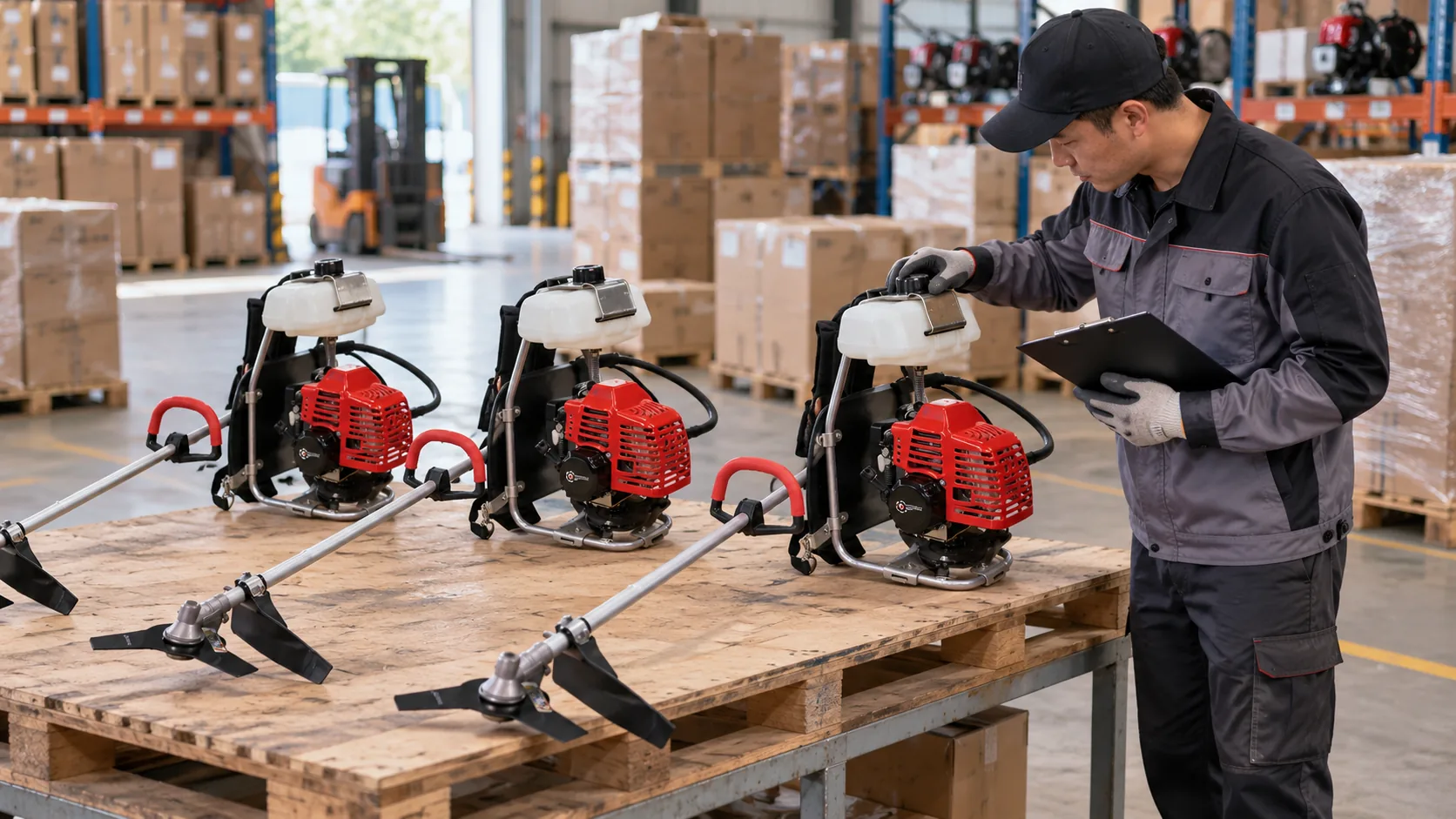
How Should Importers Control Similar 52cc Models From a Brush Cutter Supplier?
If a brush cutter supplier offers several 52cc machines, importers should check whether every model is managed as a separate configuration instead of being grouped under one generic “52cc brush cutter” description. The approved sample, quotation or PI, engine identity, shaft specification, machine label, packing reference and spare-parts records should all point to the same machine.
This becomes especially important when similar-displacement models use different shafts, controls, carrying systems, accessories or service components. Two machines may both be sold commercially as 52cc brush cutters without being interchangeable in purchasing, warehousing or after-sales service.
01“52cc Brush Cutter” Is Not a Precise Model Identity
Engine displacement is useful for placing a machine within a product family, but it is too broad to serve as the only purchasing reference. A supplier can offer several machines around the same displacement class while using different shafts, handles, carrying arrangements, controls or cutting-side components.
If quotations, warehouse records and spare-parts requests use only “52cc brush cutter,” the approved configuration can gradually become unclear. The problem often appears later, when a similar-looking machine is quoted for a repeat order or when dealers request replacement components.
The model code should therefore remain the primary identifier. Engine information, shaft dimensions, accessories and other approved order details should sit underneath that model reference.
02Use the Approved Sample as the Master Reference
Before discussing bulk production, record the exact model designation of the sample that passed inspection. This provides a fixed reference when quotations are revised or when several visually similar models are discussed at the same time.
| Record | What It Should Confirm | Risk If Missing |
| Approved sample | Exact machine physically tested | A similar model may replace it later |
| Quotation / PI | Model, engine and agreed configuration | Commercial records become too generic |
| Machine label | Identification of the physical unit | Receiving staff cannot confirm model easily |
| Packing reference | Correct carton-to-product relationship | Similar cartons can be mixed in storage |
| Spare-parts record | Parts linked to the approved machine | Visually similar components may be ordered incorrectly |
A brush cutter supplier with clear model control should be able to connect all of these records to the same machine without relying on memory or a broad displacement description.
03Engine Code, Displacement and Shaft Data Should Travel Together
The TM-BG520TB brush cutter provides a useful example. It is listed with a 1E44F-5 two-stroke engine and 51.7cc displacement. Its published configuration also specifies a 26mm shaft diameter and 1350mm working shaft length.
| Model | TM-BG520TB |
| Engine model | 1E44F-5, two-stroke |
| Actual displacement | 51.7cc |
| Shaft diameter | 26mm |
| Working shaft length | 1350mm |
| Listed mixed-fuel ratio | 1:30 |
Each value performs a different identification function. The displacement describes the engine-size class, the engine code helps trace the listed engine configuration, and the shaft dimensions help distinguish machines that may look almost identical in product photographs.
These figures should not automatically be applied to another 52cc machine. If a supplier proposes a configuration change, the importer can compare it against the recorded TM-BG520TB reference instead of relying only on appearance.
04Prevent Similar Models From Becoming a Packing and Documentation Problem
Model control should continue after the machine specification has been approved. The outer carton, product label, manual and any warehouse identification sticker should all refer to the correct product.
This is particularly important when several similar gasoline brush cutters are produced for the same importer. A warehouse should not need to open every carton simply to determine whether it contains the TM-BG520TB or another machine in the same displacement class.
External Identification
|
Internal Order Control
|
Even when a buyer uses its own brand name, keeping an internal supplier model or purchasing code in the commercial records makes future parts inquiries and repeat orders easier to trace.
05Keep Fuel Instructions Attached to the Correct Model
The TM-BG520TB specification lists a 1:30 mixed-fuel ratio. That value should remain attached to the confirmed TM-BG520TB documentation instead of being copied automatically to every two-stroke machine in a distributor's range.
When several gasoline models are prepared at the same time, manuals, mixing instructions, carton artwork and dealer information can easily be reused from an earlier product. Similar engine displacement does not provide enough evidence to do this safely.
Before printing: compare the fuel instruction, engine identification and other operating information against the approved specification for the exact model. If the confirmed engine or configuration changes, review the associated documents again before shipment.
06Link Spare Parts to the Machine Model, Not Only to “52cc”
Service planning becomes less precise when replacement components are identified only by displacement. A dealer asking for “52cc brush cutter parts” may receive a component that belongs to another machine in the supplier's range.
Similar appearance does not prove compatibility, particularly for parts connected to the shaft, clutch, controls, engine mounting or cutting system.
| Parts Request Method | Identification Quality | Recommended Action |
| “52cc brush cutter part” | Too broad | Ask for the exact machine model first |
| Machine model + part description | Better | Confirm component reference and fit |
| Machine model + confirmed part code | Most traceable | Maintain the relationship in dealer records |
Where a component genuinely fits several models, the supplier can record that relationship explicitly. This allows an importer to consolidate shared inventory while keeping model-specific components separate.
07Control Changes Between Sample Approval and Production
The most important point in brush cutter supplier model control is often the period after the sample has been accepted but before mass production begins.
A change may look minor from a production perspective but still affect dealer training, replacement-parts planning, warehouse identification or previously prepared marketing material. Changes to the engine version, shaft assembly, controls, accessories or visible model identification should therefore be reviewed against the approved reference.
- Identify exactly what changed.
- Compare the replacement with the approved sample specification.
- Check whether fit, operation or service parts are affected.
- Review labels, manuals and packing records if necessary.
- Record the accepted change before releasing mass production.
This does not require every possible component to remain unchanged indefinitely. B2B machinery can be supplied in different configurations according to the confirmed order. The important point is that changes are documented before production instead of being discovered after shipment.
08TM-BG520TB as a Model-Control Reference
Engine model: 1E44F-5 two-stroke engine
Displacement: 51.7cc
Shaft diameter: 26mm
Working shaft length: 1350mm
Listed mixed-fuel ratio: 1:30
For importers carrying several similar gasoline brush cutters, these values make the TM-BG520TB easier to distinguish during sample approval, quotation review, production inspection and later spare-parts identification.
| Review TM-BG520TB Details |
Importer / Dealer Model-Control Checklist
Before Sample Approval
|
Before Shipment
|
At destination, selected units can then be checked against these reference points instead of repeating the entire sample test on every carton. This gives purchasing, warehouse and after-sales teams a common way to identify the machine.
Frequently Asked Questions
Why should importers not order a brush cutter using only “52cc”?
Because several machines can share a similar displacement while using different engines, shafts, controls, accessories or service components. The exact model provides a more reliable purchasing reference.
What engine does the TM-BG520TB use?
The TM-BG520TB is listed with a 1E44F-5 two-stroke engine and 51.7cc displacement.
What shaft specification is listed for the TM-BG520TB?
Its published configuration lists a 26mm shaft diameter and a 1350mm working shaft length. These values should be verified for the exact order configuration rather than transferred automatically to other 52cc models.
What fuel ratio is listed for the TM-BG520TB?
The listed mixed-fuel ratio is 1:30. Importers should keep that instruction linked to the approved TM-BG520TB documentation rather than assuming every two-stroke model uses the same ratio.
Can spare parts be ordered simply as “52cc brush cutter parts”?
That description may be too broad. Start with the exact machine model and then confirm the relevant component or service-part reference. Similar displacement or appearance does not prove compatibility.
What should a brush cutter supplier keep consistent for repeat orders?
The supplier should keep the confirmed model identity and key configuration records traceable across quotation, production, labels, packing and spare-parts documentation. Any approved change should be recorded before the repeat order is produced.
|
Keep Similar 52cc Models Clearly Separated A useful brush cutter supplier should make similar machines easier to distinguish, not harder. For the TM-BG520TB, keeping the model number, 1E44F-5 engine, 51.7cc displacement, 26mm shaft, 1350mm working length and model-specific documentation together gives importers a clearer reference from sample approval through repeat orders. |
|