
Can a Brush Cutter Supplier Keep Repeat Orders Consistent?
See how importers can judge whether a brush cutter supplier can keep engine, shaft, accessories and order records consistent across repeat purchases.
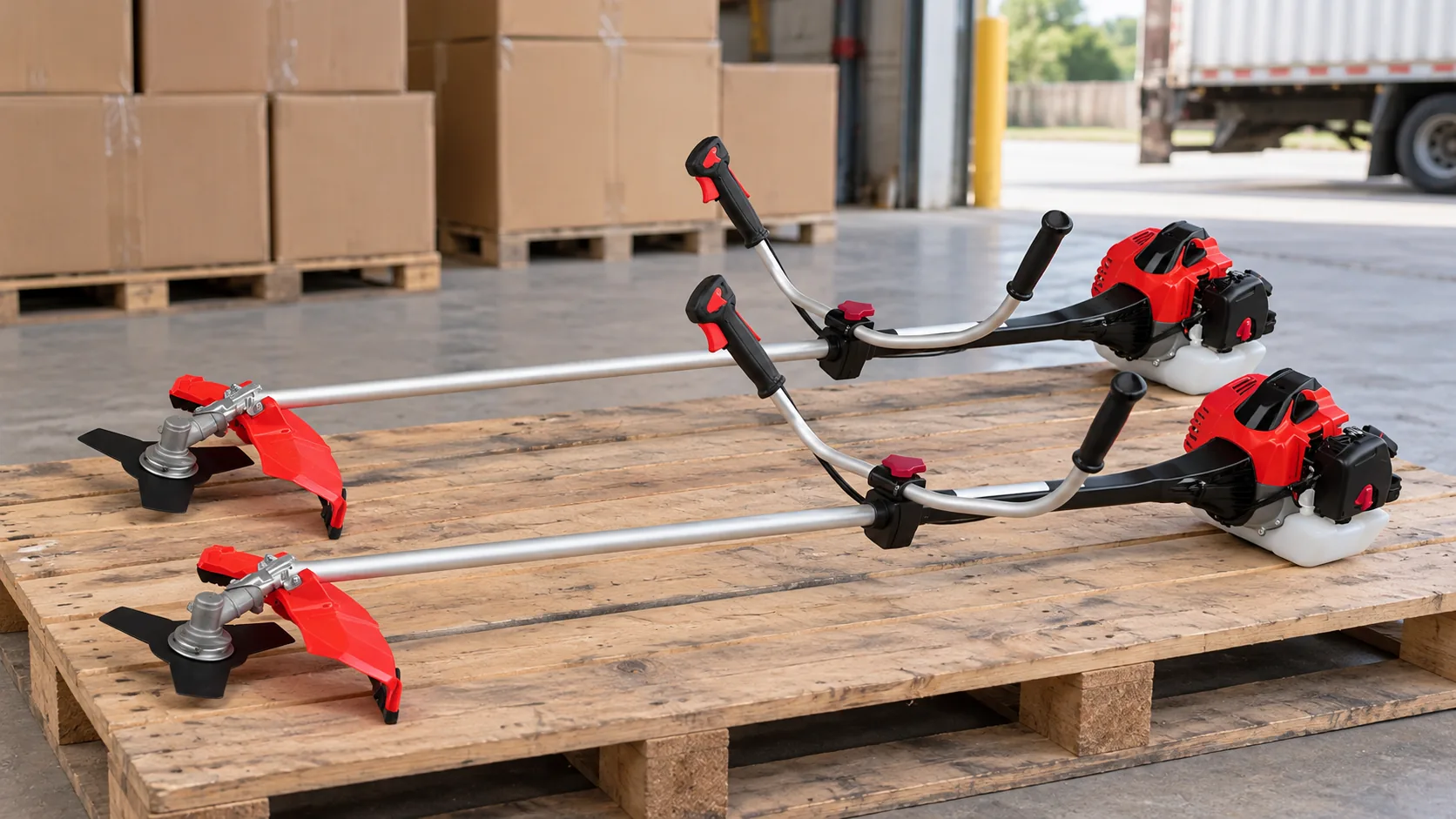
IMPORTER PROCUREMENT GUIDE / REPEAT ORDERS
Can a Brush Cutter Supplier Keep Repeat Orders Consistent?
A brush cutter supplier should be able to reproduce an approved configuration when an importer places a second or third order months later. A familiar model name is not enough: the engine, shaft, controls, cutting accessories and service-part references need to match the version the dealer already has in the market, unless a change has been agreed.
As a distributor adds more models, undocumented component changes become harder to manage. This guide explains how to connect a repeat order to the last accepted shipment, assess proposed revisions and prevent incompatible parts from reaching the dealer network.
Quick answer: Compare the proposed repeat order with the configuration actually shipped and accepted previously. Start with the previous PI, approved specifications and component references, then review the engine identification, complete shaft assembly, controls and accessory package. Ask the supplier to disclose substitutions before production and explain their effect on installation, spare parts and dealer documentation. Acceptable revisions can be recorded separately; undocumented changes should be resolved before shipment. Final inspection then checks whether production followed that agreement, rather than becoming the first opportunity to discover a different version.
1. Give the Brush Cutter Supplier a Defined Repeat-Order Reference
The initial sample usually receives careful attention. Specifications are discussed, accessories are selected and photographs are approved. After the first shipment performs normally, the next order may be reduced to “same as last time.” That phrase does not tell production which version to build.
Retrieve the previous PI, accepted specification, product photographs and relevant component records before requesting the next quotation. Use the configuration that was actually shipped and accepted as the reference, particularly if it differed from an earlier sample.
| Reference record | What it establishes | What still needs checking |
| Previous PI and order specification | The agreed machine and commercial package. | Any accepted changes made before the previous shipment. |
| Approved photographs | Visible engine area, handles, controls, connections and packing. | Internal specifications that photographs cannot establish. |
| Component and service-part references | The parts associated with the accepted configuration. | Compatibility of any proposed replacement component. |
| Brush cutter supplier repeat-order confirmation | The new order’s connection to the previous version. | Explicit approval of differences before production. |
Keep a small, useful set of reference photographs. An image can reveal a different throttle housing or gearbox shape, but it cannot prove that an internal engine component is unchanged.
2. Compare Engine Identity and the Complete Shaft Assembly
Descriptions such as “same 43cc” or “same 52cc brush cutter” preserve only one part of the specification. Reconfirm the engine model or identification used on the accepted machine. A proposed replacement needs review for rated output, carburetor configuration, starting components, mounting arrangement and engine-related spare parts.
|
ENGINE REVIEW Compare identification and the agreed configuration. A different engine may be acceptable, but its effect on mounting, servicing and stocked parts needs to be understood before approval. |
SHAFT REVIEW Record more than outer tube diameter. Include working length, internal drive shaft, engine-side connection and gearbox fit, according to the confirmed model. |
A revised shaft or gearbox may work correctly on the new machine while failing to match replacement stock held for the previous shipment. Check compatibility across the assembly rather than accepting a component because it looks similar.
3. Review Controls and Accessories as Separate Order Details
Handle type, throttle control, switch, cable routing and harness changes can affect dealer assembly and demonstrations. Compare the control area with the approved version and establish whether a revised throttle assembly requires different cables, switches or installation instructions.
The accessory package needs its own confirmation even when the core machine is unchanged. Depending on the order, the blade, trimmer head, harness, tool kit or guard may differ. Write the selected combination into the quotation or PI, especially where different markets receive different standard sets.
Dealer consequence: Existing instruction sheets and assembly videos may no longer match a revised control layout. Review those materials alongside the machine specification before accepting a visible change.
4. Separate Artwork Approval From Technical Revision Approval
A new color, brand label, carton design or printed manual does not necessarily change how the machine operates. An engine, shaft, gearbox, carburetor, clutch, cutting attachment or control substitution may affect operation or servicing. These approvals need distinct records.
Component revisions can reflect sourcing or availability changes. The useful supplier response identifies what changed and its consequences, giving the importer a decision before production begins.
Choose a response based on the parts impact
- Keep the earlier configuration when continuity with existing stock is the purchasing priority.
- Accept the revision and add the required parts when the new configuration is suitable and its service requirements are understood.
- Manage both versions separately when earlier machines remain in the market and their replacement parts differ.
Review ignition parts, recoil assemblies, carburetor-related components, clutch parts, shafts, gearboxes and controls where relevant. Give an accepted technical revision its own internal reference so warehouse and service staff can distinguish shipments, even if the public product name stays the same.
5. Use the Product Range to Identify the Correct Repeat Model
A broad range can contain machines with similar displacement or application descriptions. Use the catalog to identify the intended product, then reconnect that selection to the previous order’s exact specification. A category listing alone does not establish production-version continuity.
PRODUCT RANGE REFERENCE
Teamax Brush Cutter Range
Model reference: Select the exact model recorded on the previous accepted PI; this guide concerns the category rather than one individual model.
Useful for importers expanding a dealer assortment or locating a repeat-order product among similar brush cutters. The purchasing priority is the connection between the selected model, its approved configuration and the service parts already held in stock.
| Browse the Brush Cutter Range |
6. Complete the Importer Checklist Before Shipment Approval
Discuss known substitutions during quotation confirmation. Final inspection should verify the agreed version. Discovering a change only after production can leave the buyer choosing between shipment delay and accepting a configuration without enough compatibility information.
Compare selected production units with the approved repeat-order reference. Focus on identifiable features; the comparison does not require dismantling every machine. Repeated unexpected differences need investigation before shipment approval.
| Stage | Importer / dealer check | Record to retain |
| 01 | Identify the last accepted shipment and exact model. | Previous PI and accepted specification. |
| 02 | Reconfirm engine identification and agreed engine configuration. | Engine reference and any approved differences. |
| 03 | Compare shaft length, tube, drive components and connections. | Assembly specification and compatibility confirmation. |
| 04 | Review handles, throttle, switch and cable routing. | Approved control references and photographs. |
| 05 | Confirm cutting attachments, guard, harness and tool kit. | Itemized accessory package in the new PI. |
| 06 | Separate OEM artwork changes from mechanical revisions. | Distinct artwork and technical approvals. |
| 07 | Assess whether revisions affect existing spare-parts stock. | Parts compatibility record for each accepted version. |
| 08 | Match labels, packing contents and dealer instructions to the order. | Approved packing and documentation references. |
| 09 | Compare selected production units and resolve unexpected differences. | Inspection findings and resolution records. |
| 10 | Assign an internal identity to an accepted technical revision. | Shipment revision reference for warehouse and service staff. |
7. Questions About Brush Cutter Supplier Repeat Orders
Is the same model name enough to confirm an unchanged brush cutter?
No. A commercial name may remain unchanged while the engine, shaft, controls or accessory source changes. Compare the proposed configuration with the last accepted shipment.
What should a brush cutter supplier provide for a repeat order?
An identifiable connection to the previous approved configuration, details of meaningful revisions and confirmation of the selected accessory package. Relevant changes also need an explanation of their effect on parts, installation and documentation.
Does a component revision mean the new machine should be rejected?
Not automatically. Evaluate the specific change against the purchasing requirement and existing service stock. A disclosed, approved revision can be managed; an unexplained substitution needs clarification before acceptance.
Can photographs prove spare-parts compatibility?
Photographs help identify visible differences, but they cannot establish internal dimensions or connections. Compatibility needs to be checked against the selected model, component references and confirmed production configuration.
When should substitutions be discussed?
During quotation and specification confirmation, before production. Final inspection verifies the agreement and should not be the first disclosure of a known replacement engine, shaft or accessory.
How can dealers manage two versions with the same public name?
Use separate internal revision references linked to the relevant shipments and parts records. This helps warehouse and service staff select the correct replacement without relying on the broad product description.
8. Prepare the Next Order Around the Accepted Configuration
A first sample shows what a supplier can produce once. Repeat orders reveal whether that configuration can be controlled over time. A brush cutter supplier repeat-order review should connect the new shipment to the accepted engine, shaft, controls, accessory package and service-part records.
When discussing your next purchase, provide the previous PI and reference photographs. Ask which configuration will be supplied and whether any proposed revisions affect the machines or spare parts already in your dealer network.
| Find Your Repeat-Order Model |