
How Should a Brush Cutter Manufacturer Verify Cutting Width?
See how a brush cutter manufacturer should define and verify cutting width, align sample and production checks, and avoid misleading width comparisons.
TECHNICAL PROCUREMENT / WHEELED BRUSH CUTTERS
How Should a Brush Cutter Manufacturer Verify Cutting Width?
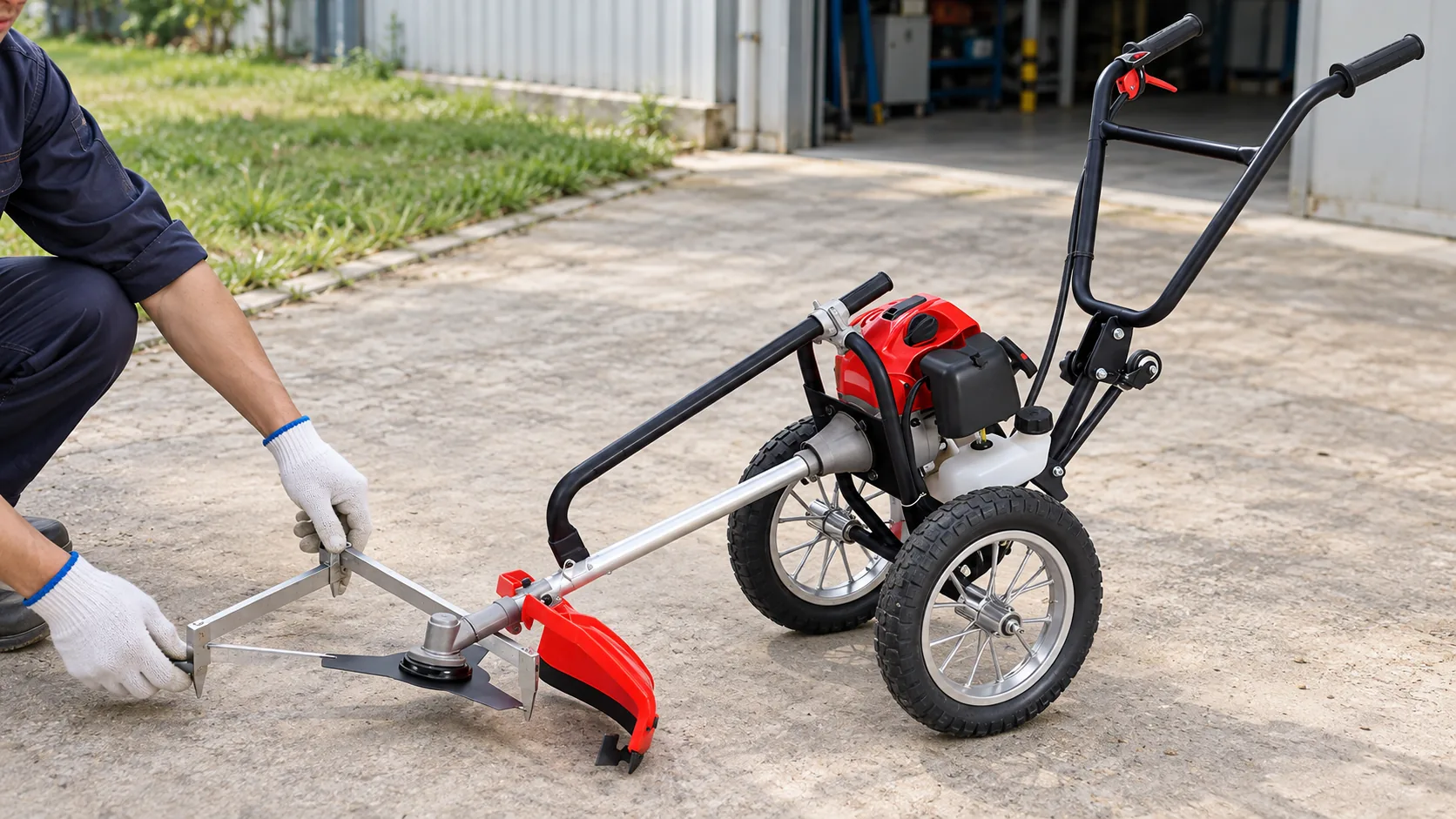
A brush cutter manufacturer should explain what a stated cutting width measures and how that definition is applied during production. On a wheeled machine, a catalog figure such as 700 mm is meaningful only when it is linked to a defined cutting configuration.
For importers comparing quotations, the purchasing risk is a mismatch between the catalog number, the approved sample and the machine eventually shipped. Establish the reference setup and measurement method before using cutting width to compare suppliers.
| Quick answer: |
|
Ask the manufacturer to identify the cutting configuration behind the stated width, define the dimension being checked and demonstrate the method on the approved sample. Apply that same reference to selected completed production units. For the TM-WBC520A, the listed 700 mm cutting width should remain tied to the confirmed working setup. Overall machine width and actual vegetation cleared in a field pass are different measurements. Agree on inspection acceptance before production, investigate assembly differences before changing specifications and review the width claim whenever working components are substituted. |
What the TM-WBC520A’s 700 mm Specification Describes
Cutting width describes the working span associated with the cutting system. It provides a reference for intended coverage, but it does not establish a fixed field productivity rate.
The TM-WBC520A hand push brush cutter lists a 700 mm cutting width, a 1E44F-5 two-stroke engine, 51.7cc displacement, 1.80 kW rated output and 18.0 kg net weight. These values describe different aspects of the same reference configuration. Another machine marketed as “52cc” does not automatically have the same working span or handling characteristics.
MODEL REFERENCE
TM-WBC520A Hand Push Brush Cutter
A relevant model for importers evaluating a wheeled grass-cutting machine with a listed 700 mm working span. The procurement priority is to identify the exact cutting setup supporting that figure and reproduce it from sample approval through shipment.
| LISTED CUTTING WIDTH
700 mm |
ENGINE / DISPLACEMENT
1E44F-5 / 51.7cc |
| RATED OUTPUT
1.80 kW |
NET WEIGHT
18.0 kg |
| Check TM-WBC520A Specifications |
Compare width, engine specification and weight separately. Width helps describe coverage; weight affects transport and handling; engine identification describes the power unit. None of these figures alone proves a particular cutting speed in every type of vegetation.
Separate Cutting Span, Machine Width and Field Coverage
Wheel spacing, frame width and handle width are physical machine dimensions. Measuring the outermost points of the product does not necessarily verify its cutting width. The factory needs a repeatable way to identify the working span of the confirmed cutting configuration.
| Measurement | What it describes | Purchasing limitation |
| Nominal cutting width | The stated working span for a defined cutting setup. | Requires a configuration reference and measurement definition. |
| Overall machine width | A physical dimension of the machine, depending on the points measured. | Cannot be substituted for cutting width. |
| Field-pass coverage | The vegetation actually cleared during a particular pass. | Varies with terrain, density, operating path and overlap. |
An operator may overlap passes to avoid leaving uncut strips. A nominal 700 mm width therefore does not mean every movement clears exactly 700 mm under every field condition.
Dealer materials should preserve this distinction. Do not convert the width directly into hectares per hour or similar output claims unless performance has been verified under defined conditions.
Lock the Brush Cutter Manufacturer’s Cutting-Width Method at Sample Approval
Start by identifying the cutting components and arrangement used for the quoted width. Where alternative setups are available, do not assume they all produce the same working span. Two suppliers may quote similar numbers using different attachments or definitions.
Use the accepted sample to establish one measurement reference. The objective is practical consistency: the person inspecting production should check the same dimension, on the same setup, as the person who approved the sample.
Record four points together
- Model: TM-WBC520A and the applicable order reference.
- Setup: The confirmed cutting components and their assembled arrangement.
- Definition: The dimension used to represent the listed 700 mm width.
- Verification: The agreed measurement method, supported by useful sample photographs.
Discuss the acceptance method before mass production. If a numerical tolerance or additional production measurement is required, agree on it explicitly. The listed 700 mm value alone does not establish an inspection tolerance.
Inspect the Assembly Before Investigating a Width Difference
When a production unit appears different from the sample, first confirm the installed working components and their mounting position. An alternative component or an assembly error may explain the discrepancy even though the model name is unchanged.
Selected completed machines should then be measured using the approved definition. Component inspection alone does not establish that the final cutting assembly matches the accepted setup.
| 01 | Confirm identity. Match the model and cutting setup to the order and approved sample. |
| 02 | Check assembly. Look for incorrect working components, mounting differences or an abnormal installed position. |
| 03 | Repeat the agreed measurement. Use the sample method instead of substituting a different physical dimension. |
| 04 | Resolve the cause. Establish why the result differs before changing the product specification. |
Inspection condition: Stop the engine and wait until all rotating parts are fully stationary before any adjustment or inspection near the cutting system.
Review the Width Claim When Components or Documents Change
An OEM accessory change or factory substitution can alter the working configuration. Recheck whether the earlier cutting-width figure still applies before carrying it into the revised quotation. The same model number and 1E44F-5 engine do not establish that the cutting setup is unchanged.
For a repeat TM-WBC520A order, reconnect the 700 mm reference to the previously approved setup and record accepted changes in the quotation or proforma invoice. If the working components change, review the specification before production.
Once confirmed, maintain one approved specification record for the quotation, technical sheet, OEM manual, carton information and online description wherever cutting width is published. Updating only one document can leave dealers with conflicting figures for the same machine.
Importer Checklist: From Quotation to Production Release
Use this checklist to keep the cutting-width claim connected to a verifiable configuration. Where several factories are being compared, apply the same internal comparison definition to their quotations.
Before Ordering
|
Before Shipment
|
Cutting-Width Questions Buyers Commonly Ask
What should a brush cutter manufacturer explain about cutting width?
Which cutting configuration supports the figure, what dimension is being measured and how the same definition is checked on production machines. A catalog value alone does not provide those details.
Is the TM-WBC520A’s 700 mm cutting width its overall machine width?
The listed figure is a cutting-width specification. Overall machine dimensions describe a different measurement and should not be used as proof of the working span.
Will every field pass clear exactly 700 mm?
No. Actual coverage depends on vegetation, terrain, operating path, overlap and how the cutting system is used. Nominal width is a configuration reference rather than a guarantee for each pass.
What tolerance should be used during inspection?
No inspection tolerance is established by the information provided here. Agree on the definition, measurement method and required acceptance criteria with the manufacturer before mass production.
Should a different cutting component trigger a specification review?
Yes. Confirm whether the revised setup affects working span before retaining the previous width in the quotation or dealer materials, including on repeat orders.
Can cutting width be used to calculate hectares per hour?
Width alone is insufficient. A productivity claim needs verified performance under defined working conditions; it cannot be established from nominal span or engine displacement alone.
NEXT PROCUREMENT STEP
Make the Width Claim Part of the Approved Order
A brush cutter manufacturer’s cutting-width control becomes useful when the same setup and definition remain identifiable from quotation through bulk inspection. For the TM-WBC520A, keep the listed 700 mm reference attached to the confirmed cutting configuration.
When discussing an order, ask which working setup supports the stated width, how it will be checked and whether any requested changes require a revised specification.
| Review This Model for Your Order |