
Brush Cutter Lead Time: Avoid Missing Your Selling Season
Plan brush cutter lead time around dealer availability. Work backward through production, shipment and local preparation to avoid missing your selling season.
SEASONAL PURCHASING / IMPORTER PLANNING GUIDE
Brush Cutter Lead Time: Avoid Missing Your Selling Season
A shipment can leave the factory on schedule and still arrive too late to sell. The importer has paid for stock, dealers have bought another brand, and machines intended for the busy period remain in the warehouse after demand slows.
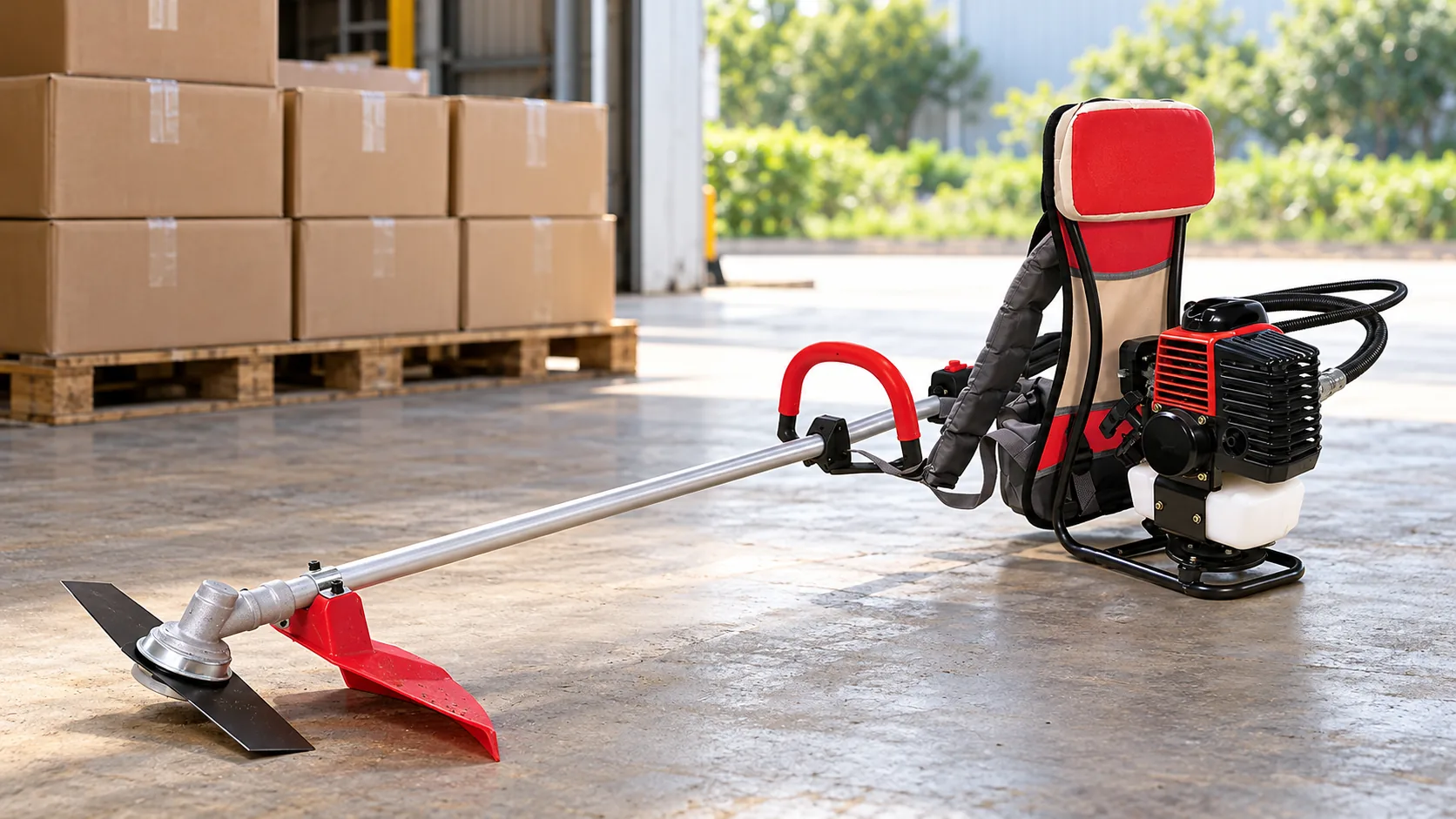
That is the commercial risk behind brush cutter lead time. Factory completion covers only part of the route to a sale. For a knapsack model such as the TM-BG520H, work backward from the date dealers need usable stock, allowing for approvals, transport, destination processing and local preparation.
| Quick answer: |
|
Plan from sale-ready dealer stock, rather than the factory completion date. Confirm what starts and ends the supplier’s quoted lead time, then add order approvals, origin arrangements, main transport, destination release and dealer preparation. For the TM-BG520H, settle the supplied configuration and packaging approvals before treating the schedule as fixed. Every allowance needs an order-specific source, and estimated transport dates must remain estimates. Track milestones early enough to revise allocations, assess complete-unit partial shipments or update customer commitments before the selling window closes. |
Start with the Date Dealers Can Supply Customers
“Needed before the season” is too vague for a purchase plan. Set the date each dealer needs stock available for customer collection or dispatch. Contractors may buy equipment before scheduled work begins, so this deadline can precede the expected increase in vegetation cutting.
Use local dealer forecasts when supplying several regions. Historical sales, customer reservations and planned maintenance contracts help establish the required availability window; one national date may not suit every branch.
Hard customer commitmentAn agreed equipment delivery date for a contractor requires a clear response if the schedule slips. Identify the quantity and customer obligation it protects. |
Internal sales targetA promotional launch may allow more flexibility. Record who can move it and when that decision must be made. |
Define “available” carefully. A container at the port, or stock inside a destination warehouse, may still require release, receiving checks, preparation and onward transport. The date that protects the sale is the date the dealer can supply the agreed product.
Attach the TM-BG520H Configuration to the Schedule
Do not reserve dealer demand against a model name while leaving the package undecided. Confirm the cutting attachment, accessories, instructions and separately ordered service items before treating the production plan as settled.
MODEL PLANNING REFERENCE
TM-BG520H Knapsack Brush Cutter
| Listed engine reference | GX35 |
| Engine description | Four-stroke, air-cooled |
| Displacement | 35.8cc |
| Rated output | 1.1kW at 6500rpm |
Procurement focus: assess this knapsack model against the package your dealers intend to sell, keeping the confirmed engine configuration, supplied components and packaging approvals with the quotation and order schedule.
| Check the TM-BG520H Package |
For private-label supply, list every artwork and packaging item that needs approval. The product page offers kraft cartons or customized color boxes, but this does not establish a schedule for a particular design, quantity or approval process. The supplied Gasoline Grass Cutter product reference identifies the listed offer; obtain an order-specific schedule separately.
Ask which decisions must be complete before production proceeds and which activities can run in parallel. A dependency list is more useful than assuming every activity starts automatically when the deposit arrives.
Define Both Ends of the Quoted Brush Cutter Lead Time
A quotation giving a number of days needs a start condition and an end condition. Does the period begin when the deposit is received, the final specification is approved or all order requirements are complete? Does it end at assembly completion, inspection release or readiness for collection?
An assembled machine can still be waiting for packaging or inspection. Cargo ready for collection can still be waiting for transport arrangements. Neither condition automatically establishes a dealer delivery date.
Request a written schedule with four clear definitions
- Start: the exact payment, specification and approval conditions that activate the schedule.
- Finish: the planned readiness milestone and what remains after it.
- Day count: calendar days or working days, including the effect of holidays.
- Handover: who arranges collection, provides readiness information and meets the forwarder’s information deadline under the agreed sale terms.
Keep estimated departure and arrival dates visibly marked as estimates. Convert readiness into a dealer availability forecast only after accounting for the remaining transport and preparation stages.
Build the Order Window Backward from Sale-Ready Stock
Use route-specific information from the supplier, forwarder and destination team, together with your own receiving and distribution requirements. Each allowance needs a reason and an accountable source.
Planning example only: the following allowances are not a TM-BG520H production commitment, freight quotation or shipping-route forecast.
| Work backward through these stages | Example allowance |
| Local receiving, dealer preparation and distribution | 7 days |
| Destination release and inland movement to the warehouse | 10 days |
| Main transport leg | 30 days |
| Origin collection and departure arrangements | 7 days |
| Order-specific production and release | 45 days |
| Final specification and artwork approval | 7 days |
| Additional contingency | 14 days |
| Total planning window | 120 days |
Under these assumptions, final approvals must begin approximately 120 days before dealer availability. Ordering only 45 days before that deadline would leave no allowance for the other stages.
Some work can overlap: transport booking may be prepared while production continues. Count only time that adds to the critical sequence, and check that destination activities are not already included in the transport estimate. Review the plan whenever the route, packaging, quantity or receiving location changes. A longer allowance is useful only when its basis is sound.
Control Late Changes and Track Milestones with Dates
Revised carton artwork may require another approval. A different accessory package may alter carton contents or packing information. Set a final approval deadline for configuration, packaging and quantities, and retain the approved versions with the purchase order.
After that deadline, obtain written confirmation of the effect on price, readiness and transport arrangements before instructing a revision. Do not accept substitutes solely because they are available sooner: a changed machine requires review of specifications, instructions and dealer commitments. Treat quantity increases similarly; additional units may need a later release to protect already committed stock.
| Update to request | What it must establish |
| Unresolved approvals | The outstanding decision, its owner and required completion date. |
| Production and inspection | How progress relates to ordered quantity, approved configuration and release timing. |
| Readiness for collection | Which complete packages are released and when handover can occur. |
| Milestone at risk | The cause, revised forecast and decisions needed to protect the remaining window. |
“Production is ongoing” gives little basis for managing a launch. Photographs can support an update, but a finished sample does not prove a batch is ready. Agree when risks must be reported and set a decision point before dealer delivery becomes impossible. If the remaining plan no longer fits, update sales commitments promptly.
Use Partial Shipments Only When They Deliver Saleable Packages
A partial release helps only if the first shipment contains complete machines that dealers can supply. Powerheads arriving without required components or instructions may occupy warehouse space without protecting a sale.
Confirm the number of complete units, the contents of each shipment and the effects on packing, documents, freight and receiving work. Allocate scarce stock centrally using a stated rule, such as confirmed customer orders or time-sensitive contracts, so several salespeople do not promise the same machines.
Compare faster transport’s additional cost with the contribution from orders it can realistically protect, including remaining delay risk. A faster main transport leg offers little help when an unresolved production approval is the actual constraint.
Protect destination preparation time
Confirm what arrives assembled, what dealers must complete and which manufacturer instructions apply before first operation. For the supplied four-stroke configuration, provide the applicable fuel and engine lubrication instructions.
Allow time for receiving discrepancies and staff preparation. Arrange demonstrations with appropriate equipment, qualified personnel and approved procedures. Keep machines awaiting correction separate from dispatch-cleared stock; physical presence is not the same as sale-ready availability.
Apply an Importer and Dealer Checklist, Then Review the Actual Timeline
Use the following checks to connect supplier readiness with dealer availability. Assign an owner to each item so unresolved work remains visible.
Before the Order Is Scheduled
|
Before Stock Is Promised to Dealers
|
After delivery, compare planned and actual dates for buyer approvals, supplier readiness, collection, departure, destination processing and local preparation. Record where time was gained or lost so the next order uses better inputs.
Review timing alongside dealer sales and allocation. Early delivery in the wrong quantities can still create excess stock; late delivery may eventually sell while missing the most valuable commitments. The previous order should inform the next plan without becoming an unquestioned template.
Brush Cutter Lead Time: Importer Questions
Does brush cutter lead time include delivery to my dealers?
Only if that scope is explicitly agreed. A supplier’s period may end at assembly, inspection release or collection readiness. Establish its endpoints and add the remaining transport, destination and preparation stages.
How early should I order TM-BG520H stock for the season?
Work backward from the required sale-ready date using order-specific supplier, forwarder and local inputs. The 120-day example illustrates the calculation; it is not a production or delivery promise for this model.
Can customized color boxes affect the schedule?
They may introduce artwork and packaging approvals. Identify the required decisions and their deadlines with the supplier. Availability of a packaging option does not establish its lead time for a particular order.
Will a partial shipment solve a late-order problem?
It can help when complete saleable packages arrive in time for customers who still intend to buy. Check quantities, contents, freight, documents and receiving work before approving the split.
What should a useful supplier progress update contain?
Outstanding approvals, progress against the ordered quantity and configuration, inspection timing, expected release and collection readiness. If a milestone is at risk, request the cause and revised forecast early enough to make a decision.
Give the Supplier a Dealer Deadline to Plan Around
For TM-BG520H enquiries, provide the required dealer availability date, proposed quantity, destination and branding requirements. Request an order-specific readiness schedule with its dependencies, then coordinate transport and preparation around it. Managing brush cutter lead time this way helps protect seasonal sales before committed funds become stock arriving after the opportunity has passed.
| Ask About Available Configurations |