
Brush Cutter Cost per Hectare: Is a Lower Price Really Cheaper?
Calculate brush cutter cost per hectare before bulk buying. Compare labor, fuel, rework and downtime to assess the TM-CG435 for your dealer market.
IMPORTER FIELD NOTES / OPERATING COST
Brush Cutter Cost per Hectare: Is a Lower Price Really Cheaper?
A cheaper brush cutter can become the more expensive machine when it takes longer to finish the same job. For an importer, the problem often appears after the first shipment: dealers struggle to explain the product’s value, customers question daily running costs, and repeat orders depend on another discount.
Brush cutter cost per hectare connects purchase price with the area cleared to an agreed standard, the labor required and the costs incurred during that work. For distributors supplying farms and maintenance contractors, it provides a more useful purchasing basis than a catalog horsepower figure alone.
Quick answer: Compare the total cost of completing the same accepted job, rather than purchase price or fuel use alone. First define the vegetation, required finish, supplied attachment and measured area. Then record total job time, fuel consumed, consumables, maintenance and a stated ownership allocation. For the TM-CG435, published engine specifications identify the offered configuration but do not establish cost per hectare. Importers can reduce purchasing risk by testing representative work locally, separating measured results from assumptions and giving dealers a calculation they can update for local wages and fuel prices.
1. Find Out Which Cost the Customer Is Rejecting
When a customer says a brush cutter is “too expensive,” ask which cost they mean. It may be the purchase price. It may also be a worker spending most of the day on a job expected to finish before lunch, or the expense of repeat passes because the first cut does not meet the required finish.
These are different purchasing problems. A lower factory price reduces the initial payment; it does not automatically reduce the time needed for each job. A higher-priced machine also needs evidence to justify its premium.
| Customer concern | Evidence to collect | Purchasing implication |
| “The price is too high.” | Initial budget and expected annual use. | A premium may be difficult to recover with occasional use. |
| “The work takes too long.” | Total job hours and accepted area. | Compare delivered work rate and labor cost. |
| “We keep cutting it again.” | Required finish and time spent on repeat work. | Count completed work after the finish is accepted. |
| “Repairs interrupt our jobs.” | Service records, parts waiting time and replacement arrangements. | Assess repair expense and lost productive time separately. |
For a contractor paid by area, slow completion can consume the margin on a fixed-price job. For a farm using its own workers, the same delay can postpone other tasks. Collect reasons behind rejected quotations and disappointing repeat sales, using completed jobs and service records where available rather than relying entirely on sales impressions.
2. Evaluate the TM-CG435 as a Defined Package
The question for the TM-CG435 is specific: can the confirmed configuration complete your customers’ recurring work at an acceptable cost? Its published engine information provides a starting point for evaluation, but it does not establish fuel consumption per hectare or field completion time.
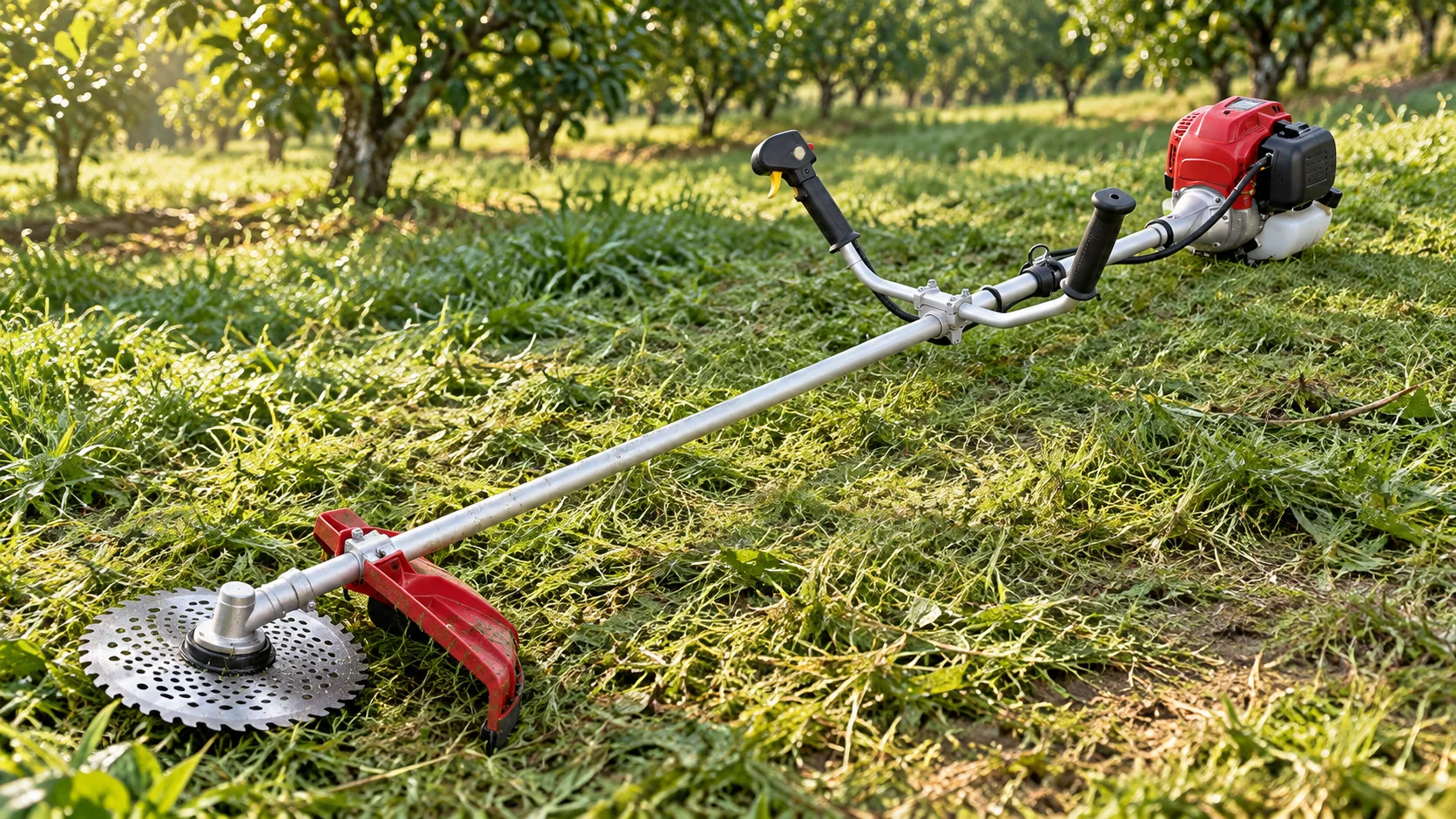
TM-CG435 Gasoline Brush Cutter
The product page lists a GX35 engine model, four-stroke air-cooled engine, 35.8cc displacement and rated output of 1.1kW at 6500rpm. Use these published details to identify the offered engine configuration, then confirm the complete package with the supplier.
Relevant purchasing use: assessing a proposed dealer package for recurring grass maintenance or another clearly defined task. Keep the supplied cutting attachment and approved operating instructions with the trial record so the evaluated offer can be reproduced.
| Review TM-CG435 Specifications |
Define the work as carefully as the machine. Routine grass maintenance, dense established weeds and cutting around closely spaced obstacles impose different demands. Record vegetation, surface conditions, access restrictions and the required finish.
A trial using one attachment must not become a performance promise for a different dealer package. Likewise, results from open, regularly maintained ground should not be presented as evidence for every neglected plot.
3. Calculate Brush Cutter Cost per Hectare from Accepted Work
Start with a measured area and an agreed completion standard. Decide whether the job includes trimming around obstacles, collecting cut material or only cutting vegetation. Apply the same boundary to both machines.
Use accepted area as the denominator: the area that meets the agreed finish after any necessary repeat work. Counting a first pass while ignoring a required second pass overstates the delivered output.
Effective work rate
Accepted area cleared ÷ total job hours
Cost per hectare
Total cost assigned to the defined job ÷ accepted hectares completed
Record both engine running time and total job time. Running time helps explain fuel use; total job time shows the labor required. Include refueling, attachment servicing and interruptions consistently, and record planned breaks separately so machine-related delays remain visible.
One hectare equals 10,000 square metres. For smaller plots, retain the original measured area and convert the unit without rounding the plot upward. A short demonstration can reveal obvious suitability problems, but it cannot establish full-day capacity across changing ground, fatigue and interruptions.
Keep each cost component traceable
- Labor: use the relevant local employment cost, including applicable allowances. If the defined task requires several workers, include their time consistently.
- Fuel: measure actual consumption rather than estimating it from tank capacity. Follow the manufacturer’s shutdown, cooling, refueling and fuel-preparation instructions; use a measurement procedure that avoids unsafe handling of a hot machine.
- Consumables and maintenance: use repeated-job observations or a stated allocation based on the approved maintenance schedule and local parts and labor costs. Label estimates separately from observed expenditure.
- Ownership: state how acquisition cost is allocated over expected productive use, including residual value where relevant. Apply the same method to both machines and identify assumed working life as an assumption, rather than a proven durability result.
Keep the detail behind the total so dealers can update the calculation when local wages, gasoline prices or utilization change.
4. Compare Total Job Cost, Even When Fuel Use Is Higher
The following hypothetical comparison shows why fuel alone can mislead a purchasing team. Both machines complete the same one-hectare job to the same accepted standard. Labor costs US$4 per hour, and gasoline costs US$1.20 per litre. Maintenance and ownership allocations have been estimated separately for each machine.
Illustration only: these figures are not TM-CG435 test results, supplier prices or claims about either engine technology.
| Cost item for one hectare | Machine A | Machine B |
| Total job time | 5 hours | 4 hours |
| Measured gasoline used | 2.5 litres | 2.8 litres |
| Labor cost | US$20.00 | US$16.00 |
| Gasoline cost | US$3.00 | US$3.36 |
| Consumables and maintenance allocation | US$2.00 | US$2.00 |
| Ownership allocation | US$1.50 | US$2.50 |
| Total cost per hectare | US$26.50 | US$23.86 |
Machine B uses more gasoline for the job and carries a higher ownership allocation, yet its total cost is US$2.64 lower per hectare because the labor saving outweighs those increases.
That result can reverse if the time advantage disappears on another job or acquisition and service costs exceed the estimates. For the TM-CG435, replace every illustrative value with a local trial result or a clearly identified assumption. Dealers should adapt the calculation to their market rather than repeat an unsupported savings percentage.
5. Remove Trial Differences That Could Distort the Order Decision
Allocate comparable plots and record vegetation density, moisture, slope and obstacles before testing. Several representative sections are more useful than an easy strip for one machine and a difficult corner for another.
Allow qualified operators appropriate familiarization, and rotate them where practical. A person who knows one machine well may initially handle another less efficiently. Maintain the manufacturer’s operating method and protective measures throughout the evaluation.
Compare approved setups, then investigate inconsistent results
Each machine needs an approved attachment suitable for the task. A fair comparison does not require fitting the same accessory to incompatible machines; it requires documenting the approved configurations actually supplied.
Inspect preparation, attachment condition and running condition before using a sample to represent a model. Repair a defective sample first and retain its fault record as a separate supplier-quality issue. Repeat the comparison sufficiently to assess consistency, and investigate changes between plots before averaging them into one figure.
Averages can conceal market fit. If one machine performs well on maintained grass but poorly on a different recurring task, preserve that distinction in the dealer’s recommendation.
6. Account for Downtime and Annual Utilization Separately
A short trial cannot establish long-term repair frequency. For an unfamiliar model, keep durability and downtime assumptions marked as unverified until fleet records or an appropriately designed evaluation support them. Starting and cutting well during a demonstration does not establish a low lifetime repair cost.
For an existing fleet, separate the workshop expense from the consequences of being unable to work. A modest repair invoice can accompany several days waiting for a component. Rental equipment, rescheduling or additional labor may affect the customer’s actual job cost.
Avoid double counting. If replacement-machine hire is included, explain how any remaining delay is treated. If an ownership allocation already includes a maintenance reserve, do not add the same expense again.
Utilization changes the purchasing case. Frequent work spreads acquisition cost across more productive output; occasional maintenance may not justify the same premium. Ask how much work the customer expects, how often it occurs and what happens if the machine is unavailable.
7. Use This Importer and Dealer Checklist Before Expanding the Order
Agree on the buying threshold before reviewing results. It might be a target job cost at local wages while maintaining an acceptable finish, or competitive performance on a defined maintenance contract. Keep unresolved costs visible until they are settled.
BRUSH CUTTER COST PER HECTARE / ORDER REVIEW
- Identify the package: record the TM-CG435 configuration, supplied attachment and approved instructions.
- Define the customer’s job: describe vegetation, terrain, obstacles and required finish.
- Measure accepted area: include required repeat work before declaring the plot complete.
- Keep both time records: distinguish engine running time, total job time and planned breaks.
- Measure fuel safely: record actual consumption and follow the specified preparation and refueling procedures.
- Use local labor costs: include the workers and applicable allowances required by the agreed task.
- Label cost assumptions: state the basis for consumables, maintenance, ownership and residual value.
- Review trial fairness: compare representative plots, qualified operators and serviceable machines.
- Assess service exposure: separate repair expense, parts waiting time and replacement arrangements without duplicating allowances.
- Approve the dealer explanation: specify where the result applies and avoid universal fuel-saving or four-stroke savings claims.
A useful dealer explanation identifies the task evaluated, the supplied configuration and the inputs behind the calculation. This gives customers a basis for comparing their own conditions and gives importers a clearer reason to approve, revise or postpone a bulk order.
8. Questions Dealers Hear About Brush Cutter Operating Cost
How do you calculate brush cutter cost per hectare?
Divide the total cost assigned to a defined job by the accepted hectares completed. State whether the total includes labor, fuel, consumables, maintenance and ownership. Use the same job boundary and allocation method for each machine.
Does lower hourly fuel consumption mean a cheaper job?
Not necessarily. A machine may consume less fuel per hour but need more hours to complete the accepted area. Compare total job fuel and labor alongside other allocated costs.
Can the TM-CG435 specifications establish its field operating cost?
The listed GX35 engine model, four-stroke air-cooled design, 35.8cc displacement and 1.1kW output at 6500rpm describe the offered engine configuration. They do not establish field completion time or fuel consumption per hectare. Those require representative operating evidence.
Should time spent cutting the same patch twice be included?
Yes, when the second pass is necessary to meet the agreed finish. Include its time and associated costs, and count the area once as completed work.
Is a short demonstration enough to justify a large order?
It can reveal obvious suitability issues, but it does not establish full-day capacity, long-term repair frequency or performance across every ground condition. Use representative comparisons and keep unverified assumptions visible.
When might a lower purchase price remain the better choice?
For occasional use, a higher acquisition cost may be spread over too little work to recover its premium. Evaluate expected utilization, acceptable finish, operating cost and service access together.
Base the Next Order on the Work Your Customers Need to Finish
For buyers considering the TM-CG435, confirm the offered package and arrange a representative evaluation. A documented brush cutter cost per hectare gives importers evidence for the first bulk order and gives dealers a practical explanation of value for the next sale.
| Check the Model for Your Field Evaluation |