
Brush Cutter Fuel Consumption Too High: Causes and Checks
Brush cutter fuel consumption too high? Learn how to check fuel mix, air filter, carburetor, leaks, cutting load and dealer inspection points.
Brush Cutter Troubleshooting & Procurement Guide
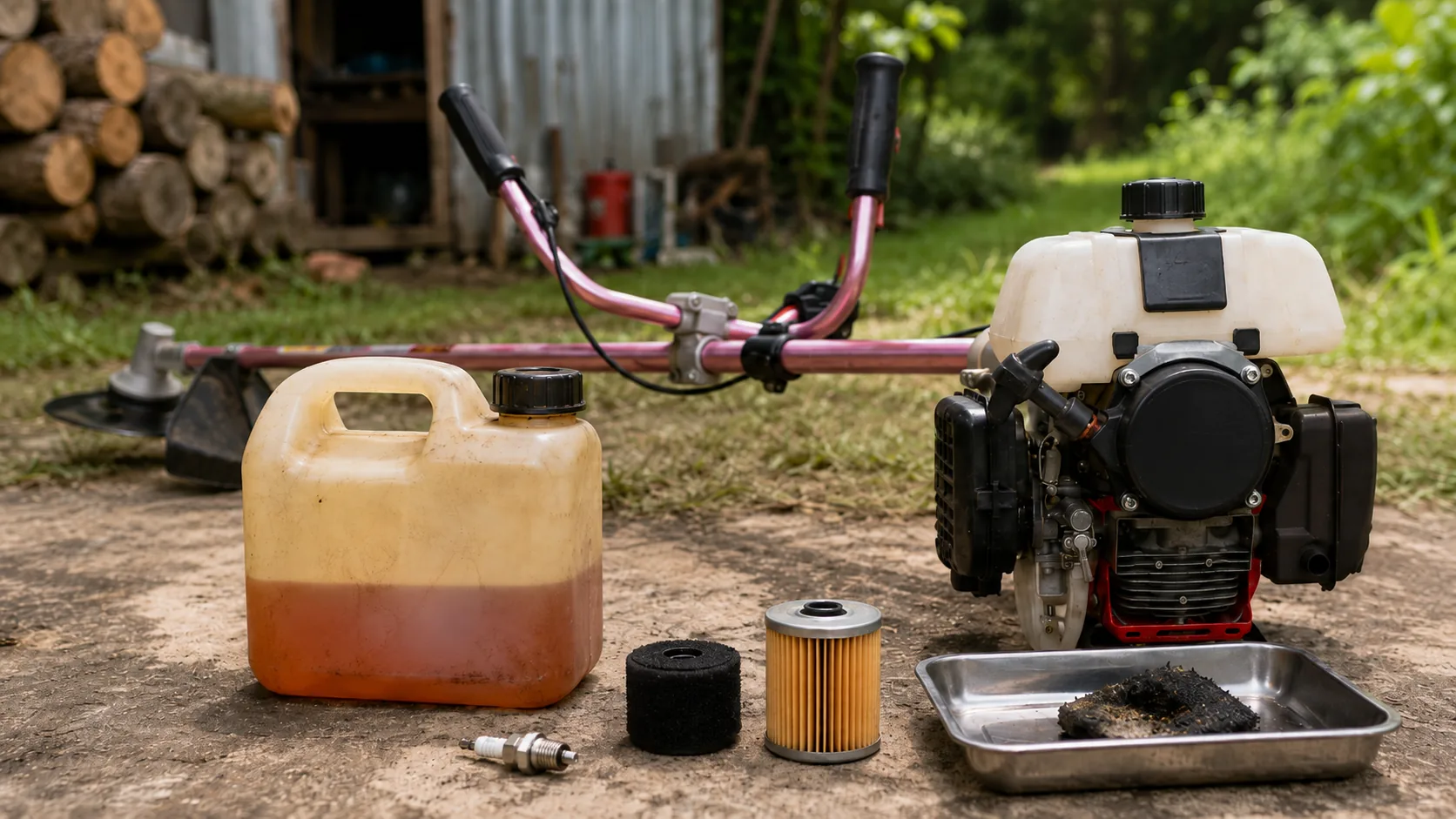
A brush cutter that suddenly consumes more fuel may have a fuel-mixture problem, restricted air filter, external leak, rich carburetor setting or an unsuitable cutting setup. This guide explains how operators, dealers and importers can identify the real cause before replacing engine components.
High fuel use should not be judged only by tank runtime. First check for fuel leakage, confirm the correct gasoline-to-oil ratio, inspect the air filter and spark plug, and make sure the cutting blade or nylon head is not placing unnecessary load on the engine. A controlled test should compare fuel used, operating time and the amount of vegetation cleared.
Fuel consumption should not be judged only by how quickly the tank becomes empty. Engine output, fuel-tank capacity, cutting attachment, vegetation density, operating speed and operator technique all influence how long a brush cutter runs between refills.
For distributors, the more useful question is not simply which machine runs longest on one tank. The better measurement is whether the brush cutter completes the target workload without excessive engine strain, repeated cutting passes or avoidable fuel loss.
Referenced Teamax Models
TM-CG400 40cc Gasoline Brush CutterA 40.7cc model rated at 1.45 kW with a listed 1200 ml fuel tank, suitable for routine farm maintenance and grass-clearing work.
|
|
TM-CG411 41cc Gasoline Brush CutterA 40.2cc model rated at 1.40 kW with a listed 1000 ml tank for grass trimming, weed control and general maintenance applications.
|
|
TM-CG630TB 63cc Gasoline Brush CutterA higher-output 63cc model rated at 2.4 kW with a listed 1200 ml tank for heavier weeds, dense vegetation and demanding field-clearing work.
|
When Is Brush Cutter Fuel Consumption Actually Too High?
The first step is to determine whether fuel use has genuinely increased. Comparing two different brush cutter models only by tank runtime can be misleading because their tank capacities, rated outputs and intended workloads may be different.
A more reliable comparison records the fuel used and the work completed under similar operating conditions.
| 01 | Amount of fuel added before the test begins. |
| 02 | Actual cutting time, excluding long idle periods. |
| 03 | Approximate area cleared during the test. |
| 04 | Type and density of vegetation being cut. |
| 05 | Blade or nylon head installed on the machine. |
| 06 | Number of stops and restarts during operation. |
Test the same machine under similar conditions. When it previously cleared a measured area with a known quantity of fuel but now requires substantially more, the cause is likely related to maintenance, fuel preparation, component condition or operating technique.
Fuel used per operating hour can help dealers compare several sample machines. However, fuel used per completed work area may be more commercially relevant because a higher-output brush cutter can consume more fuel per hour while completing heavy clearing work faster.
Check for Fuel Leakage Before Adjusting the Engine
An external fuel leak can appear to be excessive engine consumption even when combustion is normal. Stop the engine, allow it to cool and inspect the machine in a ventilated area away from flames, sparks and hot surfaces.
Tank and CapInspect the fuel-tank cap, cap seal, tank seams and venting condition. |
Fuel Delivery PartsCheck the fuel hoses, connection points, primer bulb and carburetor inlet area. |
Engine AreaLook for wet residue underneath the engine or around the carburetor assembly. |
Packaging InspectionCheck for wet spots or fuel odor inside the carton after storage or transportation. |
Cracked fuel lines may leak only when the machine vibrates or when the tank is full. A damaged cap seal or blocked vent can also affect fuel flow and create inconsistent running symptoms.
Safety note: Do not continue operating a brush cutter with visible fuel leakage. Replace the damaged hose, seal, cap, primer bulb or other fuel-system component before conducting further testing.
Confirm the Fuel and Oil Mixture
An incorrect two-stroke fuel mixture can cause smoke, spark-plug deposits, poor acceleration and abnormal fuel consumption. Adding excessive oil does not provide unlimited engine protection. It may contribute to carbon deposits, exhaust restriction and spark-plug fouling.
Prepare the mixture in a clean, identified fuel container rather than adding gasoline and oil separately into the brush cutter tank. Measure both liquids accurately and shake the container before refueling.
Model Specification Reminder
The specifications for the referenced Teamax models list a 1:30 mixed-fuel ratio. Operators and dealers should still confirm the ratio printed on the actual model label, manual and market-specific documentation before preparing fuel.
Avoid estimating oil quantity by eye or using an unmarked bottle. During dealer demonstrations, use one clearly identified fuel batch for every comparison machine. This removes inconsistent fuel preparation as a testing variable.
Can a Dirty Air Filter Increase Fuel Consumption?
A restricted air filter reduces the amount of air entering the engine. The brush cutter may lose power, accelerate poorly and require more throttle or repeated cutting passes to complete the same work.
Remove the filter according to the operating instructions and inspect the following points:
- Heavy dust or fine soil contamination
- Grass particles around the filter surface
- Fuel saturation or oil contamination
- Torn, distorted or damaged filter material
- Gaps around the filter sealing surface
- Incorrect installation inside the filter housing
Clean reusable filters only by the approved method. A filter that is damaged, heavily contaminated or saturated with fuel should normally be replaced. Make sure a cleaned filter is completely dry before reinstalling it.
Machines used in dry fields, dusty farms and roadside vegetation may require more frequent filter inspection than machines used on maintained lawns.
Is the Carburetor Supplying Too Much Fuel?
A carburetor adjusted too rich supplies more fuel relative to the available air. Possible symptoms include heavy exhaust smoke, a wet or dark spark plug, sluggish acceleration, uneven running and fuel use that remains high after the air filter has been serviced.
Carburetor performance can also be influenced by altitude, climate, fuel characteristics and two-stroke oil. Fine adjustment should be completed by a trained technician using the specified procedure.
Before Turning Any Carburetor Adjustment Screw
- Confirm that the air filter is clean.
- Use fresh fuel mixed at the correct ratio.
- Check the spark-plug condition.
- Inspect fuel lines and connections for leakage.
- Warm the engine according to the operating instructions.
- Confirm that the cutting attachment is installed correctly.
Randomly turning high-speed or low-speed screws can create an excessively lean mixture. A lean setting may increase engine temperature and damage internal components. Dealers should use suitable speed-measuring equipment rather than adjusting machines by sound alone.
Check Whether the Cutting Setup Is Overloading the Engine
Not every fuel-consumption problem originates inside the engine. A brush cutter fitted with the wrong attachment or used with inefficient technique may remain under heavy load for too long.
| Cutting Condition | Effect on Fuel Use | Recommended Check |
|---|---|---|
| Dull or bent blade | Requires repeated passes and prolonged full throttle | Sharpen or replace the blade |
| Excessively long nylon line | Increases rotational resistance | Use the specified line length and diameter |
| Grass around the gear head | Adds friction and reduces cutting speed | Stop the engine and remove wrapped material |
| Wrong attachment for vegetation | Causes bogging and inefficient clearing | Match the blade or head to the application |
| Cutting against soil, stones or fencing | Damages the attachment and wastes engine power | Adjust the cutting height and working angle |
| Forcing the full cutting width into dense weeds | Keeps the engine continuously overloaded | Clear vegetation in manageable sections |
A sharp, suitable cutting attachment allows the engine to maintain working speed with fewer repeated passes. During comparison testing, use the same blade or an equivalent cutting head on every machine.
Why Brush Cutter Models Have Different Tank Runtime
Engine displacement is only one part of the comparison. Rated power, fuel-tank capacity, vegetation type, attachment selection and completed workload must also be considered.
| Model | Engine | Rated Output | Listed Tank | Application Focus |
|---|---|---|---|---|
| TM-CG400 | 40.7cc | 1.45 kW | 1200 ml | Farm maintenance and routine clearing |
| TM-CG411 | 40.2cc | 1.40 kW | 1000 ml | Grass trimming and weed control |
| TM-CG630TB | 63cc | 2.4 kW | 1200 ml | Dense weeds and heavier field clearing |
The TM-CG400 and TM-CG411 are in a similar displacement range, but their listed tank capacities differ. The TM-CG630TB has a larger engine and higher rated output, so it should not be compared directly with a smaller model without considering the vegetation density and work completed.
How Dealers Can Run a Controlled Fuel Test
A repeatable fuel-consumption test can help distributors identify an abnormal unit before delivery. Select several machines from the same production batch and confirm that they use equivalent cutting attachments, clean air filters and fuel from the same prepared batch.
- Fuel added before the test
- Fuel remaining after the test
- Total running time
- Approximate work area completed
- Cold-start and hot-start performance
- Idle stability and acceleration response
- Visible smoke level
- Overheating or unusual engine-temperature symptoms
- Spark-plug appearance after cooling
One unusual result may indicate a problem with a specific machine. Similar results across the sample batch may reflect normal model characteristics, attachment choice or test conditions.
Where possible, use the same operator for every comparison. Cutting angle, working speed and the number of repeated passes can significantly affect the result.
Importer and Dealer Procurement Checklist
Fuel-efficiency claims should not be evaluated from catalog figures alone. Before confirming a bulk order, importers should verify whether the machine configuration matches local fuel availability, vegetation conditions, operator habits and after-sales capability.
Fuel and Engine
|
Components and Quality
|
Spare Parts
|
Commercial Supply
|
Dusty agricultural markets may require more frequent air-filter replacement. High-altitude regions may require local carburetor evaluation. Markets with dense weeds or woody vegetation may perform better with a higher-output model instead of a smaller machine operated continuously under excessive load.
Dealers should also provide clear fuel-mixing instructions. Many after-sales complaints begin with inaccurate measuring bottles, old mixed fuel or oil quantities estimated without proper measurement.
Maintenance That Helps Keep Fuel Use Stable
A practical maintenance schedule should cover the air filter, fuel lines, tank cap, spark plug, cooling passages and cutting attachment.
After dusty work: Remove loose debris from the filter cover and engine air intake.
Before the next job: Inspect the blade, nylon head and gear-head area for damage or wrapped vegetation.
During regular servicing: Check the fuel hoses, tank-cap seal, spark plug and cooling fins.
Before long-term storage: Follow the model-specific storage procedure instead of leaving old mixed fuel inside the tank and carburetor.
Consistent maintenance makes fuel-use comparisons more reliable and reduces the risk that a simple filter, spark-plug or fuel-line problem is mistaken for major engine damage.
When the Brush Cutter Should Be Sent for Service
Professional inspection is recommended when fuel consumption remains unusually high after checking the fuel mixture, air filter, cutting system and external fuel lines.
Stop Operation and Arrange Service When the Machine Has:
- Persistent fuel leakage
- Severe smoke after correct fuel preparation
- Repeated spark-plug fouling
- Unstable engine speed
- Poor acceleration after basic maintenance
- Overheating during normal operation
- Abnormal knocking or metallic noise
- Carburetor settings that cannot be stabilized
A structured inspection is safer and more economical than repeatedly changing carburetor settings or replacing unrelated components. Dealers should document the operating conditions and symptoms so the supplier can determine whether the problem involves use, maintenance, transport damage or component consistency.
Frequently Asked Questions
How can I tell whether my brush cutter is using too much fuel?
Measure the fuel added, actual cutting time and work area completed under similar conditions. Tank runtime alone is not reliable because tank capacity, engine output and vegetation density can vary.
Can a dirty air filter cause high brush cutter fuel consumption?
Yes. A restricted filter reduces airflow, weakens engine performance and can force the operator to use more throttle or make repeated cutting passes. Inspect and service the filter before adjusting the carburetor.
Does adding more two-stroke oil reduce fuel consumption?
No. Excessive oil can cause smoke, plug fouling, carbon deposits and exhaust restriction. Always use the fuel ratio specified on the machine label and operating manual.
Why does a larger brush cutter use more fuel than a smaller model?
A larger engine normally produces more power and may be intended for heavier vegetation. Compare the amount of work completed, not only hourly fuel use or tank runtime.
What spare parts should brush cutter dealers keep in stock?
Useful fast-moving parts include air filters, fuel filters, fuel hoses, primer bulbs, spark plugs, tank caps, gaskets and common carburetor service parts.
How can importers reduce fuel-related after-sales complaints?
Test several machines from the same batch, provide accurate fuel-mixing instructions, stock basic fuel-system parts and select engine output according to local vegetation and operator habits.
|
Model Selection for Importers and Dealers Compare Brush Cutter Output, Tank Capacity and Target ApplicationTeamax Power offers brush cutter models for routine grass maintenance, general farm clearing and heavier vegetation. Compare the three referenced models according to your market’s vegetation type, preferred engine size, spare-parts requirements and expected workload.
|