
Brush Cutter Hard to Start When Hot: Causes and Repair Checks
Brush cutter hard to start when hot? Check choke use, fuel flow, spark plug, carburetor, cooling and dealer test steps before replacing parts.
|
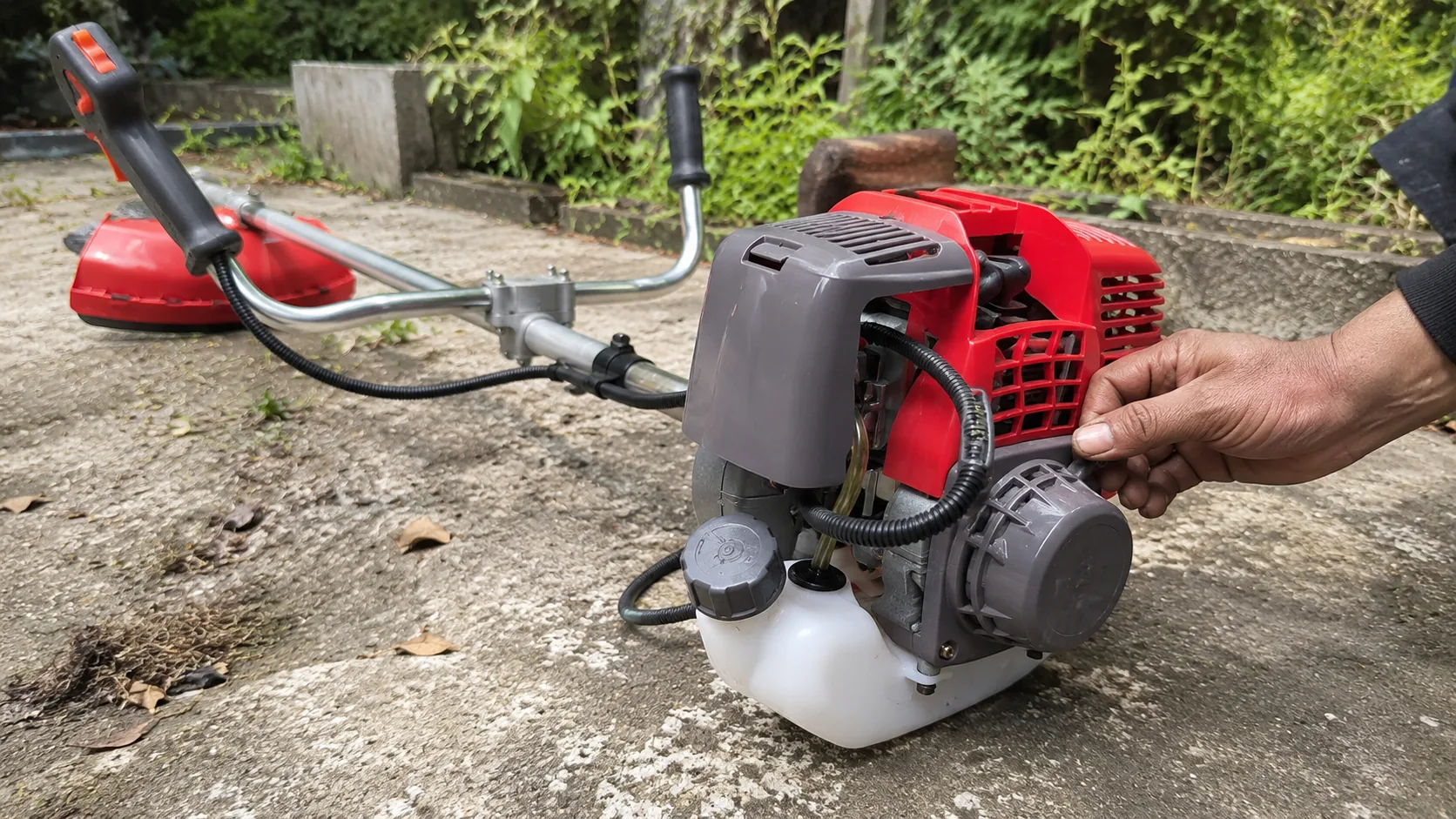
Two-Stroke Engine Diagnosis A brush cutter that starts normally from cold but refuses to restart after working may be flooded, overheated or losing fuel flow or ignition as temperature rises. This guide helps operators, dealers and importers diagnose the fault in the correct order before replacing the carburetor or ignition system. |
| Quick Answer |
Do not immediately replace the carburetor. First confirm the correct warm-start procedure, stop using full choke, check for flooding, allow the machine to cool in the shade and inspect the tank vent, spark plug, cooling passages and ignition system. The most important clue is whether the problem appears only after the engine becomes hot. |
Hot-start complaints are common because a warm two-stroke engine needs a different starting approach from a cold engine. Repeated choking, unnecessary primer operation and continued starter pulling can quickly turn a simple starting mistake into a flooded-engine problem.
If cold starting is also difficult, the cause may not be temperature alone. Fuel quality, compression, air-filter restriction, carburetor condition and general maintenance should then be included in the diagnosis.
Fast Symptom Check Before Disassembly
| Observed Symptom | Likely Area | First Check |
| Strong fuel smell and wet plug | Engine flooding | Open choke and clear excess fuel |
| Restarts only after cooling | Vapor lock or heat-related ignition | Cooling system, fuel routing and spark |
| Loses power before stopping | Restricted tank ventilation or fuel flow | Tank cap, vent and fuel filter |
| Stops suddenly with no fuel symptoms | Ignition coil or electrical connection | Compare spark when cold and hot |
| Cold and hot starting both difficult | Fuel, compression or carburetor condition | Full basic maintenance inspection |
1. Use the Correct Warm-Start Procedure
A warm engine normally requires less fuel enrichment than a cold engine. Using full choke repeatedly can send excessive fuel into the cylinder and make restarting more difficult.
Warm-start settings vary between brush cutter designs. Some machines restart with the choke fully open, while others require a half-choke or high-idle position. Dealers should provide model-specific instructions rather than assuming one method applies to every machine.
Recommended Sequence
|
1
|
Place the brush cutter securely on clear, level ground. |
|
2
|
Make sure the blade or nylon head cannot touch any object. |
|
3
|
Set the stop switch to the operating position. |
|
4
|
Use the warm-start choke position specified for that model. |
|
5
|
Pull the starter firmly without extending the rope completely. |
|
6
|
Return the choke to the run position immediately after the engine fires. |
Common operating mistake: Continuing to pull the starter with full choke after the warm engine has already fired can flood the cylinder within a few attempts.
2. Check Whether Repeated Choking Has Flooded the Engine
A flooded engine contains more fuel than the cylinder can ignite efficiently. Typical signs include a strong fuel smell, a wet spark plug or an engine that fires briefly and stops immediately.
|
Sign 01 Fuel OdorA strong gasoline smell around the muffler or spark-plug area often indicates excessive fuel. |
Sign 02 Wet Spark PlugFuel on the electrode suggests flooding or an ignition system that is not burning the supplied mixture. |
Sign 03 Brief IgnitionThe engine fires once or twice but cannot continue running because the mixture is too rich. |
When flooding is suspected:
- Move the choke to the open or run position.
- Keep the machine away from spilled fuel.
- Use the throttle position recommended by the manufacturer.
- Pull the starter several times to clear excessive fuel.
- Remove and inspect the spark plug if restarting still fails.
- Allow the wet plug and combustion chamber time to dry.
Do not repeatedly press the primer bulb unless the fuel circuit is empty. The primer moves fuel through the carburetor system; it is not a universal solution for every starting problem.
3. Consider Vapor Lock and Excessive Engine Heat
Vapor lock can occur when fuel becomes hot enough to form vapor inside the fuel hose or carburetor circuit. The vapor interrupts the continuous flow of liquid fuel, causing the engine to stop or refuse to restart until it cools.
The risk is higher during hot weather, prolonged cutting under heavy load or when the brush cutter is placed in direct sunlight immediately after shutdown.
Heat Inspection Points
| • Cooling-air intake blocked by grass or dust | • Cylinder fins covered with oily debris |
| • Fuel hose routed near a hot engine part | • Dry vegetation around the muffler |
| • Fuel tank filled beyond the recommended level | • Machine left in direct sunlight after use |
Move the machine into a shaded, ventilated area and allow it to cool naturally. Do not pour cold water onto the cylinder, carburetor or engine housing.
If the brush cutter restarts after cooling but the same problem returns during every working session, a technician should inspect fuel routing, cooling airflow, carburetor condition and heat-related ignition performance.
4. Inspect the Fuel Tank Vent and Fuel Delivery System
The fuel tank requires controlled ventilation as fuel leaves the tank. When the vent is restricted, abnormal pressure can interrupt fuel delivery to the carburetor.
Typical sequence of a blocked tank vent:
The engine starts normally when cold, gradually loses power, stops after several minutes, refuses to restart immediately and then operates again after pressure is released or the machine cools.
A technician may carefully check whether releasing tank pressure improves restarting after the engine has cooled sufficiently. If it does, the cap vent or tank ventilation component requires cleaning or replacement.
Important: Never continue operating the brush cutter with a loose fuel cap. This creates a serious fuel-leak and fire risk.
5. Read the Spark Plug Before Replacing Parts
A worn, contaminated or incorrectly gapped spark plug may work during a cold start but become unreliable after the engine reaches operating temperature.
| Spark Plug Condition | Possible Meaning | Dealer Action |
|---|---|---|
| Wet with fuel | Flooding or ignition failure | Dry the plug and verify spark |
| Dry after repeated pulls | Fuel may not be reaching the cylinder | Inspect fuel filter, hose, vent and carburetor |
| Heavy black deposits | Rich mixture, excessive oil or restricted air filter | Check mixture ratio and airflow |
| Burned or rounded electrode | Wear, heat exposure or incorrect plug type | Replace with the specified plug |
| Cracked ceramic insulation | Unsafe or unreliable ignition | Replace before further testing |
Use the spark-plug type and electrode gap specified for the actual engine. A plug that fits the thread is not automatically suitable in heat range, reach or electrode design.
6. Test Whether the Ignition System Loses Spark When Hot
An ignition coil, plug cap or electrical connection may operate correctly while cold and become unreliable as engine temperature rises. Suspect this when the machine stops suddenly, shows no obvious fuel problem and restarts only after cooling.
Repair technicians should compare ignition performance during a cold test and immediately after the fault appears. Testing must use suitable equipment and proper grounding because careless spark testing near fuel is hazardous.
Electrical Inspection Points
- Stop-switch wiring and connectors
- Ignition-coil mounting and connections
- Spark-plug cap fit and internal contact
- Wire insulation near hot engine components
- Ignition-coil air gap
- Loose terminals or vibration damage
Replacing the carburetor will not correct a heat-related loss of ignition. Dealers should identify whether the failure is caused by fuel delivery or spark before ordering expensive components.
Carburetor Design and Model-Specific Hot-Start Checks
Carburetor design affects how fuel is controlled as the brush cutter changes position, temperature and load. A diaphragm carburetor and a floating-type carburetor should not automatically receive the same inspection or adjustment procedure.
|
||
|
Diaphragm Carburetor TM-CG143R 43cc Gasoline Brush CutterInspection should focus on diaphragm flexibility, metering components, primer operation, fuel-line sealing and carburetor gasket condition.
|
||
|
Higher-Output Agricultural Model TM-CG541R 54cc Gasoline Brush CutterThis diaphragm-carburetor model should be tested under realistic agricultural load and destination-market temperature conditions before bulk approval.
|
A hardened diaphragm, worn needle valve, leaking gasket or incorrect adjustment can make warm starting inconsistent. However, adjustment screws should not be changed before checking the starting method, fuel quality, air filter, spark plug and fuel-line sealing.
An excessively rich setting may flood a hot engine. An excessively lean setting can increase engine temperature and risk internal damage. Fine adjustment should therefore use the correct procedure and suitable engine-speed measuring equipment.
Fuel Quality and Cooling Checks
Fresh Mixed FuelOld fuel, contamination or an inaccurate oil ratio can change combustion after the engine warms up. The referenced Teamax product pages list a 1:30 mixed-fuel ratio. Importers should confirm the actual label, manual and production specification before printing local instructions. |
Unrestricted Cooling AirDust, grass and oily deposits around the engine can increase operating temperature and worsen hot-start problems. Inspect the starter housing, cylinder fins, muffler area, engine-cover vents, air filter and clutch-housing area. |
Do not remove the air filter or engine cover permanently to increase airflow. These parts protect the engine and direct cooling air through the intended route.
Dealer Hot-Start Test Before Delivery
A cold-start inspection alone may not reveal a brush cutter that becomes difficult to restart after working. Include a controlled hot-start test during sample approval, pre-delivery inspection and production-batch checks.
| Step | Inspection Procedure | Record |
|---|---|---|
| 1 | Check fuel mixture, air filter and spark plug | Condition before test |
| 2 | Start the engine from cold and allow proper warm-up | Cold-start pull count |
| 3 | Operate under realistic cutting load | Load duration and vegetation |
| 4 | Stop after reaching normal operating temperature | Engine behavior at shutdown |
| 5 | Wait two to five minutes and restart correctly | Hot-start pull count |
| 6 | Repeat after a longer cutting cycle | Repeatability of the fault |
| 7 | Compare multiple units from the same batch | Unit-to-unit consistency |
Machines should also be tested under temperatures similar to the destination market. A sample that restarts correctly in a cool warehouse may behave differently during commercial use in a hot agricultural region.
Importer and Dealer Checklist
Quality Approval
|
Market Suitability
|
Supply and Packaging
|
After-Sales Preparation
|
Spare Parts Planning for Hot-Start Complaints
Commercial brush cutter markets need more than complete machines. Importers should prepare service parts for the most likely fuel, ignition and maintenance problems.
| Spare-Part Group | Recommended Stock | Reason |
|---|---|---|
| Ignition | Spark plugs, plug caps and ignition coils | Covers heat-related spark loss and plug fouling |
| Fuel Delivery | Fuel filters, hoses, primer bulbs and tank vents | Supports diagnosis of restricted flow and air leaks |
| Carburetor | Repair kits, gaskets, diaphragms and metering parts | Useful for hardened or leaking internal components |
| Routine Service | Air filters and starter ropes | Reduces repeat complaints from poor maintenance |
Component compatibility must be confirmed for each model and production batch. Similar-looking carburetors, ignition coils, tank caps and diaphragms are not automatically interchangeable.
When Professional Repair Is Required
Stop Repeated Starting Attempts When the Machine:
- Has no spark after reaching operating temperature
- Leaks fuel from the tank, hose or carburetor
- Produces abnormal knocking or metallic noise
- Overheats repeatedly during normal cutting
- Has damaged wiring or spark-plug insulation
- Requires carburetor adjustment after every session
- Restarts only after completely cooling
- Shows low compression
- Continues flooding despite the correct procedure
A reliable diagnosis should follow a fixed order: confirm the starting method, inspect fuel quality and ventilation, check the spark plug, test ignition while hot and only then evaluate the carburetor and compression. This prevents unnecessary replacement of expensive parts.
Frequently Asked Questions
Why does my brush cutter start cold but not restart when hot?
The most common causes are an incorrect warm-start procedure, engine flooding, vapor lock, restricted tank ventilation or ignition components that fail as temperature rises.
Should I use full choke when restarting a warm brush cutter?
Usually not. A warm engine needs less fuel enrichment. Follow the actual model instructions because some machines use the run position while others specify half choke or a high-idle setting.
How do I know whether the engine is flooded?
A strong fuel smell, wet spark plug and an engine that fires briefly but will not continue running are common signs. Move the choke to the run position and allow excess fuel to clear.
Can a blocked fuel tank vent stop a brush cutter from restarting?
Yes. A restricted vent can interrupt fuel flow as pressure changes inside the tank. The machine may lose power, stop and restart only after cooling or pressure release.
Can an ignition coil fail only when the engine is hot?
Yes. Some ignition coils and electrical connections work when cold but lose reliable spark after heating. Technicians should compare spark performance before and after the fault appears.
What should importers test before approving a brush cutter order?
Importers should test cold starting, hot restarting, fuel sealing, idle stability, acceleration under load, cooling performance and consistency across several machines from the same batch.
|
Brush Cutter Model Comparison Compare Carburetor Designs and Market Applications Before Bulk PurchaseTeamax Power provides brush cutter models with different engine sizes and carburetor configurations for farm maintenance, grass clearing and agricultural field work. Importers can compare the TM-RBC411, TM-CG143R and TM-CG541R according to local climate, service capability and expected workload.
|