
Earth Auger Bit Stops Turning Under Load: What to Check
Earth auger bit stops turning under load? Check the clutch, gearbox, drive shaft, drilling bit and soil conditions before replacing major parts.
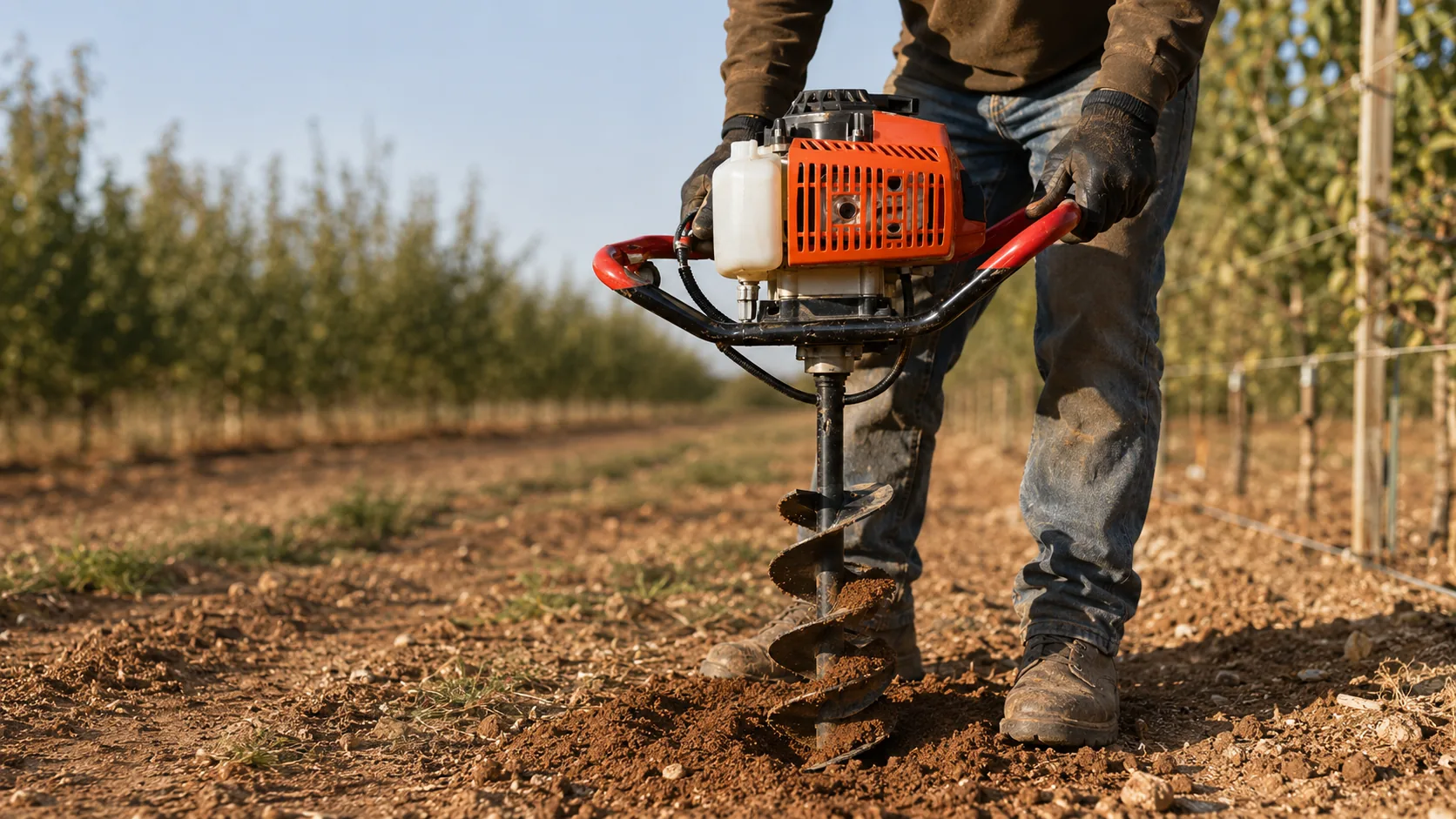
An earth auger that rotates above the ground but stops after entering the soil usually has a power-transfer, drilling-bit or application problem. Identifying the exact symptom helps operators avoid unnecessary repairs and allows dealers to prepare the correct spare parts.
If the engine remains fast but the bit stops, inspect the centrifugal clutch, drive connection and gearbox. If the engine and bit slow down together, check fuel delivery, airflow, ignition, drilling-bit condition and whether the soil resistance exceeds the machine’s practical working capacity.
Start with the Exact Symptom
Start the earth auger safely above the ground and observe how it operates. The bit should engage as engine speed increases. Next, drill only a short distance into suitable soil and watch what happens when resistance begins.
The relationship between engine speed and bit speed is the most useful first clue. It separates engine-performance problems from faults in the clutch, gearbox or drilling attachment.
|
Transmission Clue
Engine stays fast, bit stops
Likely clutch slippage, a worn drive connection, damaged gears or loose mounting hardware. |
Engine Clue
Engine and bit slow together
Likely restricted fuel or air supply, ignition trouble, excessive bit resistance or unsuitable soil conditions. |
01Engine Runs Fast but the Bit Does Not Turn
When the engine continues revving but the output shaft stops, inspect the centrifugal clutch first. This clutch transfers engine power to the gearbox after the engine reaches engagement speed.
A worn clutch may still rotate an unloaded bit because very little torque is required. Once the bit enters the ground, the clutch can no longer transmit sufficient force and begins to slip.
Common clutch faults
- Worn or glazed clutch-shoe surfaces
- Broken or weakened clutch springs
- Oil or grease contamination inside the clutch drum
- Heat damage caused by prolonged slipping
- An incorrectly fitted or loose clutch assembly
Allow the engine to cool and disconnect the spark plug before removing the clutch. Look for cracks, discoloration, polished surfaces and excessive wear. Replacement parts should be matched by the exact model and clutch design, not by engine displacement alone.
02Inspect the Gearbox and Drive Connection
If the clutch operates correctly, follow the power path toward the drilling bit. Depending on the machine, this system may include a clutch drum, input shaft, reduction gears, bearings, output shaft, connecting pin and bit-mounting hardware.
Remove the bit and inspect the output connection for a bent or missing locking pin, rounded shaft edges, worn splines, loose hardware, connector cracks, lubricant leakage or nearby metal particles.
| Observed symptom | Likely inspection area | Dealer action |
|---|---|---|
| High engine speed with no rotation | Clutch shoes, springs and drum | Stop testing and inspect for slipping or heat damage |
| Intermittent rotation with knocking | Locking pin, splines and output shaft | Check for partial engagement and rounded connections |
| Grinding noise or metal particles | Internal gears, bearings and gearbox housing | Do not continue drilling until the gearbox is checked |
| Works in soft soil only | Bit condition, diameter and soil resistance | Retest with a serviceable bit in ordinary soil |
|
Model Reference
EA520C
|
TM-EA520C Earth Auger
A gasoline earth auger configuration that importers can review when discussing gearbox construction, output connection and replacement-part requirements.
|
03Engine Loses Speed as Drilling Begins
If engine speed and bit speed fall together, the clutch may not be the main problem. The engine may run smoothly without resistance but fail to produce sufficient power under drilling load.
Check routine service items before changing carburetor settings:
| 1 | Use fresh fuel and confirm the correct fuel-to-oil mixture. |
| 2 | Inspect the fuel filter and fuel line for restrictions or deterioration. |
| 3 | Clean or replace a blocked air filter. |
| 4 | Check the spark plug condition and electrode gap. |
| 5 | Inspect the muffler and exhaust outlet for carbon buildup. |
Carburetor adjustment should follow the specification for the actual engine. An excessively lean setting may cause overheating, while an overly rich setting reduces power and can create smoke and carbon deposits.
Buyers can evaluate this configuration for farm planting, orchard work and fence installation according to local soil conditions, drilling diameter and expected daily workload.
| View This Model |
04Check Whether the Bit Is Overloading the Machine
Not every loss of rotation is caused by the powerhead. A blunt, bent or unsuitable drilling bit can overload a correctly operating earth auger.
Inspect the cutting edges, pilot point and flights for wear, packed soil or impact damage. A worn cutting edge scrapes the ground instead of cutting it, increasing the load on both the clutch and gearbox.
Bit diameter also changes the torque requirement. A wider bit demands more power, especially in dry compacted soil, clay and ground containing roots. Importers should confirm the permitted bit range rather than assuming every available diameter is suitable for continuous use.
Confirm the availability of replacement cutting edges, pilot points, extension shafts and locking pins. These low-cost items often determine whether an end user can keep the machine working after normal wear.
05Compacted Clay, Roots and Stones Change the Load
An auger that works normally in prepared soil may stop in hard clay or root-filled ground. This does not automatically mean the machine is defective. The application may exceed the selected combination of powerhead, bit diameter and cutting condition.
Operators should clear surface debris, hold the machine securely and apply steady pressure. Forcing the bit downward can make it bite too deeply, overload the clutch or trap the flights. In difficult ground, drill in shorter stages and lift the bit periodically to remove loose soil.
If the bit hits a large stone or thick root, stop the engine before freeing it. Using engine power to twist a severely jammed bit can bend the shaft, damage the gearbox or cause sudden movement when the obstruction releases.
For markets where buyers frequently work in compacted agricultural ground, this model can be compared with other configurations. Suitability should be confirmed using the required hole diameter, soil type, operator arrangement and actual specification.
| Compare This Model |
Separate a Machine Fault from an Application Problem
A controlled test provides better information than immediately dismantling the machine. Test the powerhead with a known serviceable bit in ordinary soil, then repeat the test using the customer’s original bit.
| Test result | Diagnostic direction |
|---|---|
| Fault appears with only one bit | Inspect bit wear, excessive diameter, deformation and mounting damage. |
| Same fault with several suitable bits | Inspect the clutch, output connection and gearbox. |
| Engine loses speed in every test | Service the fuel, air, ignition and exhaust systems before replacing transmission parts. |
| Problem occurs only in hard ground | Review drilling technique, bit diameter and the machine’s application range. |
Spare Parts Planning for Earth Auger Importers
The machine price alone does not determine after-sales cost. Importers should establish which service parts are model-specific and whether selected components can be shared across several earth auger models.
|
Power Transfer
Clutch and Drive
Clutch shoes, springs, drums, input shafts and connecting hardware. |
Gear Reduction
Gearbox Parts
Gear assemblies, bearings, oil seals, output shafts and locking pins. |
Routine Service
Engine Parts
Fuel filters, air filters, recoil starter parts, spark plugs and fuel lines. |
Before placing a bulk order, request an exploded-parts diagram or parts list. Confirm how the engine type, gearbox version and model number must be identified when ordering replacements.
Importers should also verify whether different models use the same bit connection. Standardizing selected components may simplify inventory, but compatibility should never be assumed from appearance alone.
Importer and Dealer Inspection Checklist
|
Machine and quality checks
|
Commercial and after-sales checks
|
What Dealers Should Test Before Delivery
A short pre-delivery inspection can prevent many early complaints. Confirm that the bit is secured, the gearbox has no visible leakage, the throttle returns correctly and all handles and fasteners are tight.
Run the engine and verify that the bit does not rotate excessively at idle. Test clutch engagement at higher speed while keeping the bit away from people and loose objects. If facilities permit, conduct a brief drilling test in suitable soil.
After testing, inspect the mounting pin and gearbox area again. Early loosening, abnormal heat, severe vibration or grinding noise should be investigated before delivery.
Frequently Asked Questions
Why does my earth auger spin above the ground but stop in the soil?
The clutch may be slipping, the drive connection may be worn or the bit may be creating more resistance than the machine can transmit. Compare engine speed with bit speed to determine whether the fault is in the engine or power-transfer system.
How can I tell whether the earth auger clutch is slipping?
A common sign is that the engine continues running at high speed while the bit slows or stops under resistance. Heat, a glazed clutch surface and discoloration around the clutch drum provide further evidence.
Can a worn auger bit make the machine stop under load?
Yes. Worn cutting edges or a damaged pilot point increase drilling resistance. Testing the powerhead with a known serviceable bit is a practical way to separate bit wear from a machine fault.
Is a larger earth auger bit suitable for every powerhead?
No. Larger diameters require more torque, particularly in clay or compacted soil. Importers should confirm the recommended bit range and intended application for each powerhead configuration.
What earth auger spare parts should importers stock?
Useful stock commonly includes clutch shoes, springs, clutch drums, locking pins, bearings, seals, output shafts, recoil parts, filters and spark plugs. The exact list should be confirmed against the chosen model and gearbox version.
How can dealers reduce earth auger after-sales complaints?
Match bit size and powerhead configuration to local soil, conduct a pre-delivery test, explain correct drilling technique and keep frequently needed wear parts available.
|
Bulk Earth Auger Supply
Compare models according to soil, bit size and after-sales requirements
Teamax Power can help importers and dealers review suitable earth auger configurations and discuss replacement parts for different market needs.
|
When an earth auger bit stops under load, diagnose the system in a fixed order: drilling conditions, bit condition, mounting connection, clutch, gearbox and engine performance. This sequence is usually faster and more reliable than replacing the largest component first.