
Backpack Brush Cutter Flexible Shaft Keeps Breaking: Checks
A brush cutter flexible shaft may break from poor lubrication, sharp bending or overload. Learn what to inspect before installing another replacement shaft.
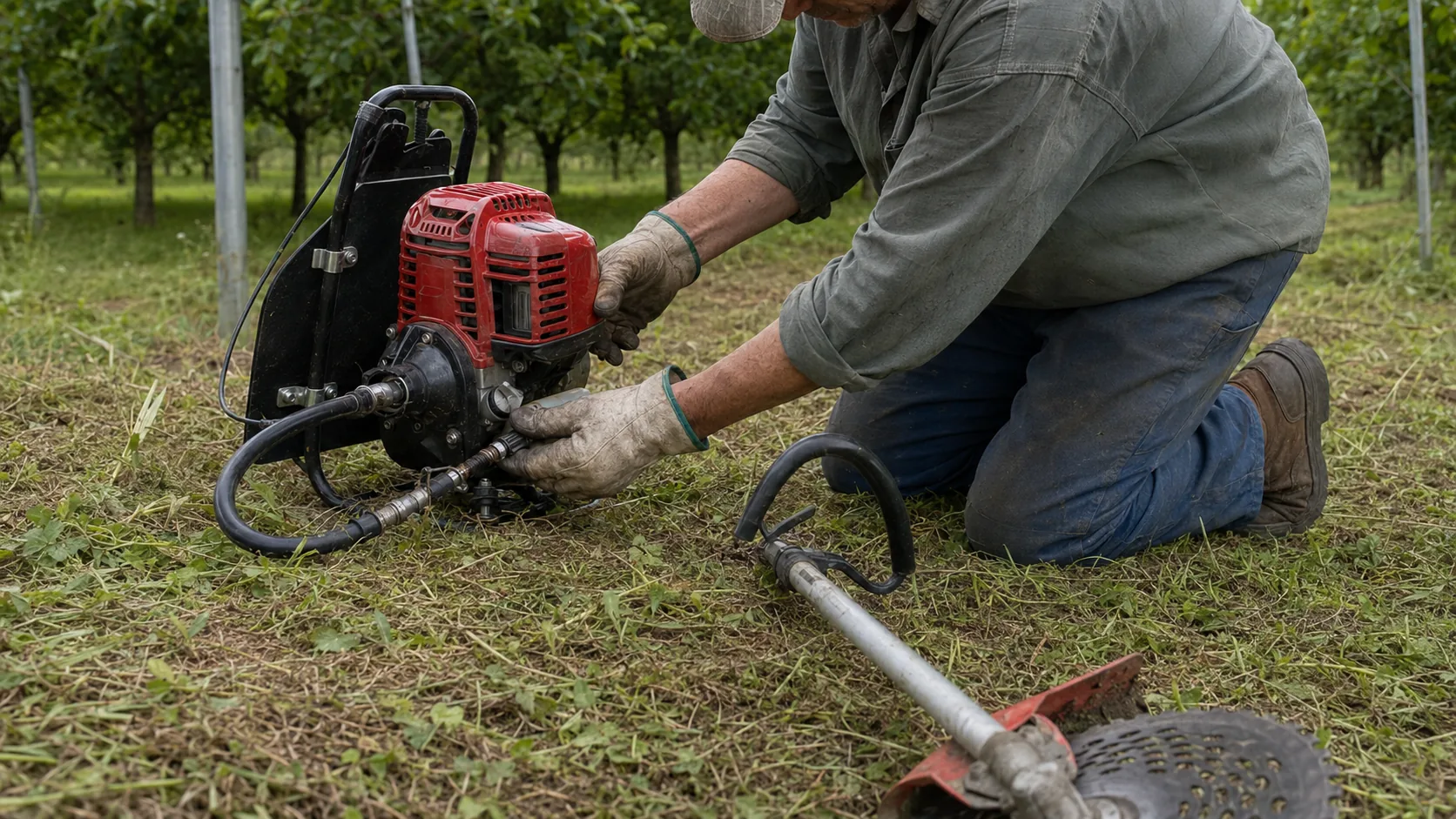
Backpack Brush Cutter Repair Guide
A flexible drive shaft that repeatedly breaks is rarely an isolated spare-parts problem. The real cause may be insufficient lubrication, a damaged casing, incorrect shaft routing, worn connectors, gearbox resistance or an unsuitable cutting attachment.
Replacing only the broken inner shaft may return the machine to service temporarily, but it will not prevent another failure if the surrounding drive components remain damaged. Before installing a replacement, dealers and repair technicians should examine the complete power path from the clutch connection to the cutting attachment.
The exact break location is particularly useful. A failure near the engine, in the middle of the casing or close to the cutting end can point toward different mechanical causes and help avoid unnecessary parts replacement.
A backpack brush cutter flexible shaft commonly breaks because of inadequate lubrication, an excessively tight bend, internal casing damage, incomplete connector engagement, cutting-end resistance or repeated impact loads. Inspect the casing, both connectors, gearbox, attachment and shaft routing before fitting another inner shaft.
How the Flexible Drive System Works
A conventional side-mounted brush cutter normally transfers engine power through a rigid drive shaft inside a straight tube. On a backpack model, the engine is carried on the operator’s back while the cutting assembly is held by hand. The drive system therefore needs to transmit high-speed rotation while allowing the operator to change position.
A typical flexible drive assembly includes:
| ● Inner rotating shaft or cable | ● Outer protective casing |
| ● Engine-side drive connector | ● Cutting-side connector |
| ● Liners, bushings or supports | ● Specified shaft lubricant |
This assembly can tolerate normal movement and broad curves. It should not be folded sharply, twisted around the operator, trapped beneath a harness strap or used when its support components are damaged.
What the Break Location Can Tell You
Do not discard the failed shaft before inspecting it. Measure or mark the break location relative to the engine and cutting end. The pattern is not conclusive by itself, but it provides an efficient starting point for diagnosis.
| Break Location | Likely Areas to Inspect | Dealer Action |
|---|---|---|
| Near the engine | Clutch connector, alignment, engine mounting and casing fitting | Check full engagement and excessive backpack-frame movement |
| Middle or fixed curve | Lubrication, crushed casing, tight routing and liner wear | Inspect the casing internally instead of replacing only the cable |
| Near the cutting end | Gearbox, blade, trimmer head and cutting-side connector | Confirm that the cutting assembly rotates freely without engine power |
Workshop advice: Ask customers to return both the inner shaft and outer casing after a repeated failure. Examining only the cable may hide a crushed liner, permanent bend or damaged end fitting.
Insufficient Lubrication and Internal Friction
The inner shaft rotates rapidly against the liner inside the stationary outer casing. When lubrication is missing, unsuitable or unevenly distributed, friction creates heat and progressively damages the rotating cable.
Typical warning signs include:
- The outer casing becomes unusually hot during operation.
- A rubbing, scraping or squealing sound comes from the shaft.
- The cutting attachment accelerates slowly or loses speed.
- The removed shaft looks dry, darkened or heat-discolored.
- Metal particles or abrasive contamination appear inside the casing.
Use the lubricant specified for the exact brush cutter configuration. Too little provides inadequate protection, but excessive filling may increase drag or force lubricant into connectors where it should not enter. The servicing interval should reflect operating hours, temperature, dust exposure and the manufacturer’s maintenance instructions.
Tight Bends and Damaged Outer Casings
A flexible shaft is not designed to operate through an unlimited bending angle. A tight curve forces the rotating cable against one side of the liner, concentrating friction and fatigue in a small section. The resulting resistance can reduce cutting-head speed before the shaft finally breaks.
|
During Use Route the shaft in one smooth curve. Keep it clear of straps, frame edges and the operator’s body. |
During Storage Do not fold the assembly tightly to fit a small carton, cabinet or vehicle compartment. |
During Repair Replace a casing with crushed sections, permanent bends, heat damage or a collapsed liner. |
After removing the inner cable, inspect the casing for flattened areas, torn end fittings, rough internal sections and contamination. A correct replacement shaft should pass through the casing without severe resistance. If it repeatedly binds at the same point, the casing or liner is probably no longer serviceable.
Worn or Incompatible Shaft Connections
Both ends of the shaft must engage fully with their mating drive components. Partial insertion reduces the contact area and allows the shaft end to hammer, round off or twist under load.
- Check both drive ends for rounding, cracking and uneven wear.
- Verify the complete shaft length and connector shape.
- Confirm that spacers, retainers and casing fittings are present.
- Inspect mating connectors rather than assuming the cable alone is worn.
- Make sure the casing is seated and tightened in the correct position.
Replacement shafts with a similar diameter are not automatically interchangeable. Small differences in length, end profile or connector depth can prevent complete engagement. Spare parts should therefore be ordered according to the full model and configuration, not only by measuring the visible cable.
Gearbox Resistance and Cutting Attachment Load
The shaft may be the component that breaks even when the actual overload begins in the cutting-end gearbox. With the engine stopped and the spark plug disconnected, remove wrapped grass, wire and debris according to the maintenance procedure. Check for rough rotation, abnormal looseness and signs of damaged gears or bearings.
Possible cutting-end causes include:
- Insufficient or unsuitable gearbox lubricant
- Damaged gears, bearings or seals
- Grass, rope or wire wrapped around the output shaft
- A bent, damaged or poorly balanced blade
- Incorrect assembly following a previous repair
Do not connect a new flexible shaft to a cutting assembly that cannot rotate smoothly and then try to force it with engine power. This can destroy the replacement immediately.
An attachment may fit the mounting hardware but still be unsuitable for the machine. Oversized blades, heavy aftermarket attachments and trimmer heads carrying excessive line increase the load on the clutch, shaft and gearbox. Importers should confirm the permitted attachment type, blade diameter, rotational speed, mounting hardware and guard compatibility.
Model Reference
TM-BG435 Backpack Brush Cutter
The TM-BG435 is intended for farm grass cutting, agricultural land maintenance and garden work. Buyers should confirm the flexible-shaft maintenance procedure, cutting attachment configuration and compatible replacement parts before placing a bulk order.
| View TM-BG435 Details |
Operating Habits That Create Shock Loads
Flexible shafts handle continuous rotation more effectively than repeated sudden impacts. Striking stones, fence posts, tree trunks or hidden construction debris can stop the blade abruptly while the engine continues transmitting power. Repeated impacts can damage the internal strands and deform both shaft ends.
Operators should inspect heavily overgrown areas before cutting and remove visible wire, rope, stones and solid objects. Dense vegetation should be cleared progressively. If the blade becomes jammed, release the throttle and stop the engine before removing the obstruction. Repeated acceleration against a stationary blade can overload the complete drive system.
Backpack Mounting and Harness Adjustment
An engine that moves excessively on the backpack frame changes the working angle at the engine-side connector. This can place alternating loads on the shaft each time the operator walks or changes direction.
- Confirm that the engine is securely mounted to the frame.
- Inspect anti-vibration mounts for damage or missing parts.
- Tighten the casing connector according to the correct procedure.
- Adjust shoulder straps to limit excessive bouncing.
- Check that the shaft follows a broad curve when the machine is worn.
- Repeat the setup for operators of different heights.
Dealer Procedure for Repeated Shaft Complaints
Dealers should avoid classifying every repeated failure as a defective spare part. A short service record helps distinguish an incompatible component from incorrect use, poor maintenance or a fault elsewhere in the drive system.
| Inspection Item | Information to Record |
|---|---|
| Failure history | Operating hours before failure and number of previous replacements |
| Break pattern | Exact location, shaft-end condition and signs of heat or twisting |
| Machine setup | Attachment type, shaft routing, harness adjustment and storage method |
| Mechanical condition | Casing damage, connector wear, gearbox resistance and clutch condition |
| Maintenance | Lubricant used, servicing interval and recent blade-jamming incidents |
After repair, test the machine without cutting load and listen for rubbing, clicking or inconsistent engagement. A controlled cutting test with an approved attachment should follow only after the unloaded system operates normally.
Spare Parts Planning for Importers
Stocking only the inner flexible cable limits a dealer’s ability to complete a reliable repair. Importers serving markets with intensive farm use should consider the flexible drive assembly as a service system.
Recommended after-sales stock
| ✓ Inner flexible shafts | ✓ Complete outer casings |
| ✓ Engine-side connectors | ✓ Cutting-side connectors |
| ✓ Clutch components | ✓ Gearboxes, gears and bearings |
| ✓ Bearings and seals | ✓ Approved blades and trimmer heads |
| ✓ Specified lubricants | ✓ Model-specific service diagrams |
Ask the supplier for an exploded-parts diagram covering the exact ordered version. Different backpack brush cutters may use shafts that appear similar but have different lengths, end shapes or casing connections.
Importer and Dealer Procurement Checklist
Confirm these points before a bulk order
- Quality consistency: Verify that replacement shafts match the production-machine configuration.
- Complete accessories: Confirm the supplied blade, trimmer head, guard and mounting hardware.
- Spare-parts support: Order casings, connectors and gearbox parts together with inner shafts.
- Maintenance guidance: Obtain the correct lubricant type and service interval.
- Packaging: Make sure long flexible assemblies are not folded into damaging bends.
- Market conditions: Consider dust, temperature, vegetation density and typical daily operating hours.
- Repair convenience: Request exploded diagrams and clear part-number references.
- MOQ and supply: Confirm minimum quantities and replenishment lead times for service parts.
- User training: Prepare instructions covering shaft routing, lubrication and blade-jamming procedures.
- Repeat-order consistency: Confirm whether connectors or shaft dimensions will change between production batches.
Frequently Asked Questions
Why does a backpack brush cutter shaft keep breaking?
Repeated failures usually indicate friction, sharp bending, a damaged casing, worn connectors, gearbox resistance or excessive attachment load. Inspecting only the inner cable may miss the actual cause.
Can I replace only the inner flexible shaft?
Yes, but only when the casing, internal liner, connectors and cutting assembly are in serviceable condition. A new cable installed inside a crushed or worn casing may fail again quickly.
How can I tell whether the flexible shaft needs lubrication?
Unusual casing heat, rubbing noises, reduced cutting speed, a dry or darkened cable and metal particles are common warning signs. Follow the lubricant specification and interval for the exact model.
Can an oversized brush cutter blade break the shaft?
Yes. An oversized, heavy or unbalanced attachment increases rotational resistance and shock loading. Use only approved blade dimensions, trimmer-line sizes and mounting hardware.
What spare parts should backpack brush cutter dealers stock?
Useful stock includes inner shafts, outer casings, both connector types, clutch parts, gearbox components, bearings, seals, approved attachments and the specified lubricant.
Are flexible shafts interchangeable between backpack brush cutter models?
Not necessarily. Shaft length, end shape, connector dimensions and casing design can differ. Order replacements using the complete model and configuration rather than cable diameter alone.
Planning Backpack Brush Cutter Stock for Your Market?
For importers, agricultural machinery dealers and regional distributors, Teamax Power can discuss suitable brush cutter configurations, compatible cutting attachments and after-sales spare-parts planning for local operating conditions.
| Contact Us for Wholesale Details |