
Brush Cutter Pull Cord Hard to Pull: What to Check First
Diagnose a brush cutter pull cord hard to pull by checking the cutting head, shaft, recoil starter, flooding, clutch drag, and engine resistance.
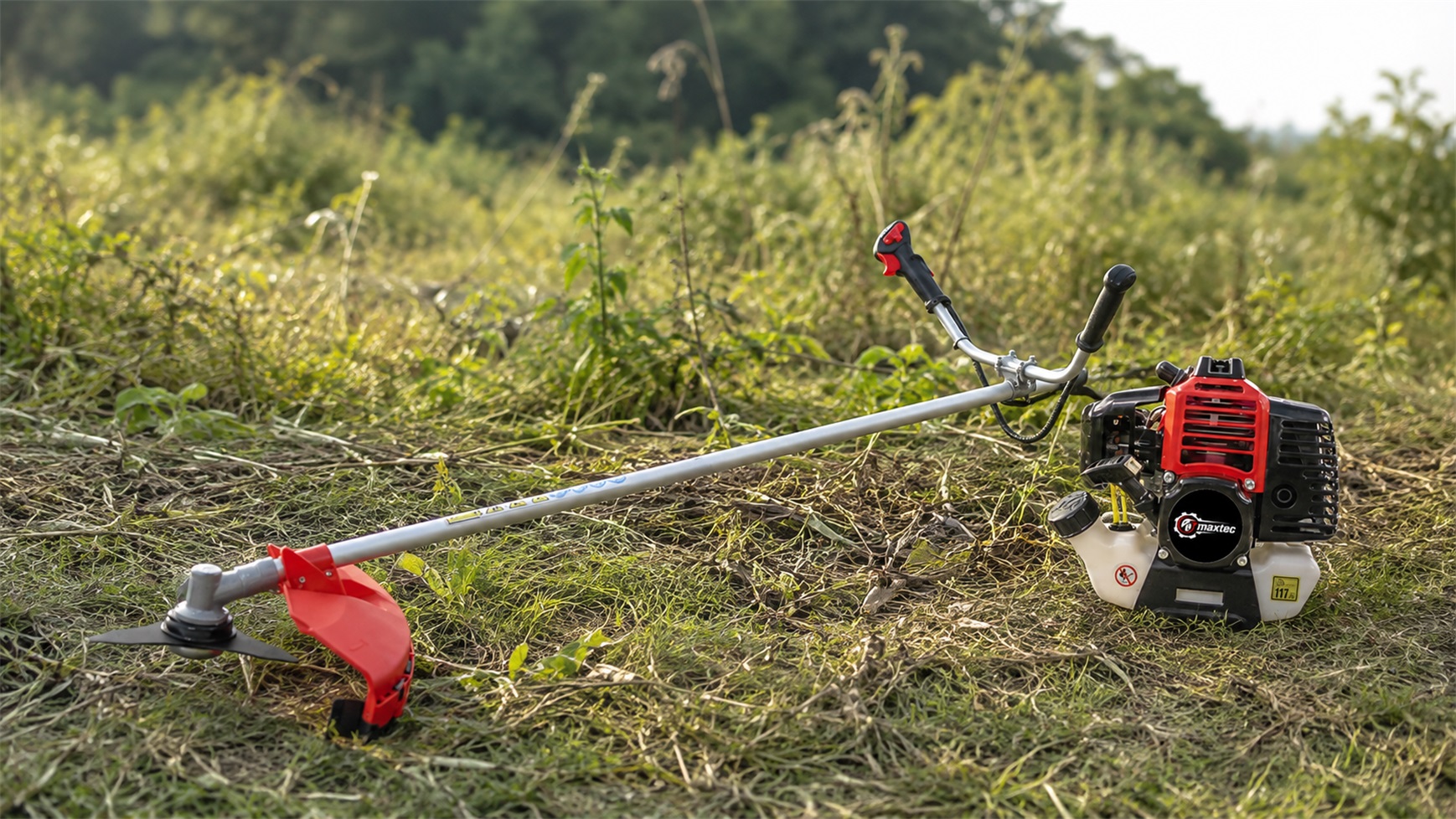
Field Service Troubleshooting Guide
Brush Cutter Pull Cord Hard to Pull: Causes, Checks and Repair Priorities
A brush cutter pull cord that suddenly becomes hard to pull is usually being restricted by the cutting attachment, drive shaft, recoil starter, clutch, excess fuel in the cylinder, or internal engine resistance. Stop pulling harder until the source of the resistance is identified. Excessive force can break the rope, crack the starter pulley, or turn a minor mechanical restriction into a larger repair.
This guide covers a starter rope that moves only a short distance, feels unusually heavy, catches at part of the pull, or locks completely. It does not cover a rope that pulls normally while the engine simply refuses to start.
The most useful diagnostic method is to isolate one section at a time. Begin at the cutting head, then separate shaft resistance from engine resistance, test the recoil starter, remove the spark plug to check for flooding, and inspect the clutch before assuming that the piston or cylinder has seized.
| Quick Answer |
Quick answer: First disconnect the spark plug cap and remove grass, wire, vines, or twine wrapped behind the blade or trimmer head. Check whether the attachment was installed incorrectly, then rotate it slowly by hand. If the restriction remains, separate the shaft assembly where the model permits, inspect the recoil starter, and remove the spark plug to rule out fuel flooding. A rope that becomes easy with the plug removed points toward excess fuel or cylinder pressure. A rope that remains locked after the attachment, shaft, starter, flooding, and clutch have been ruled out may require internal engine inspection. |
Start at the Cutting Head, Not the Cylinder
Long grass, wire, plastic twine, vines, and fibrous weeds can wind tightly around the output shaft behind the blade or trimmer head. The obstruction may stop the gearbox and drive shaft from rotating freely. Depending on the clutch and shaft design, that resistance can sometimes be transmitted back to the engine and felt through the starter rope.
Switch off the engine, disconnect the spark plug cap, and wait for the gearbox, muffler, and engine to cool. Wear gloves before working near a blade or line-cutting knife.
| Inspection position | What to look for | Possible consequence |
| Behind the blade or trimmer head | Grass, wire, vines, fishing line, or plastic twine wrapped around the shaft | Attachment cannot rotate freely |
| Blade washer and flange | Incorrect order, uneven seating, or contact with the gearbox housing | Binding after tightening |
| Retaining nut and adapter | Overtightening, wrong thread, or an adapter from another model | Compression against fixed parts |
| Trimmer head housing | Cracked housing, trapped line, or internal spool damage | Uneven or locked rotation |
| Shaft-locking hole | Locking pin left inserted after attachment replacement | Complete mechanical lock |
After removing debris, rotate the attachment slowly by hand in the normal operating direction. Some gearbox resistance is expected, but it should not stop abruptly, scrape heavily, or require excessive force. Do not start the engine while the cutting attachment is partly disassembled.
Check Whether the Attachment Was Installed Incorrectly
A hard pull cord that appears immediately after a blade or trimmer-head change often points to the mounting arrangement rather than the engine. An incorrect washer can position the blade too close to the gearbox guard, while an unsuitable adapter may bind as the head is tightened.
Attachment-related evidence
- The pull cord became hard immediately after replacing the blade or head.
- The attachment is difficult to rotate by hand.
- Scraping marks appear on the gearbox guard or mounting flange.
- The blade sits unevenly after tightening.
- The shaft-locking pin was not removed.
- An adapter, washer, or retaining nut from another machine was used.
Remove the cutting attachment and test the starter rope again. If the rope becomes easier to pull, the restriction is likely in the attachment mounting, gearbox, or shaft. Reinstall all required washers, guards, and fasteners before operation, and confirm compatibility by gearbox thread, shaft size, mounting arrangement, and model.
Separate Shaft Resistance From Engine Resistance
The next step is to determine whether the engine is hard to turn by itself or only when it is connected to the shaft assembly. On machines that permit safe separation of the engine and shaft tube, a technician can compare the starter resistance before and after disconnecting the shaft.
This check should only be carried out with the spark plug cap removed and according to the service arrangement of the actual brush cutter. Do not force connectors apart or disassemble a shaft system that is not designed for routine separation.
| Rope becomes easier after shaft removal | Rope remains hard after shaft removal |
|
Inspect:
|
Continue with:
|
A dry drive shaft may develop increasing friction after extended use. A bent inner shaft often rotates through part of a turn and then binds at a specific position, creating uneven resistance rather than a consistently heavy pull.
Inspect the Recoil Starter Before Assuming Engine Seizure
The recoil starter contains the rope, pulley, return spring, engagement pawls, and housing. A fault in any of these parts can make the pull cord feel locked even when the crankshaft and cylinder are still able to turn normally.
| 1 | Remove the starter cover after disconnecting the spark plug cap. |
| 2 | Check whether the rope is crossed, trapped, or frayed inside the pulley. |
| 3 | Inspect the pulley for cracks, distortion, or contact with the housing. |
| 4 | Confirm that the return spring remains correctly seated. |
| 5 | Check whether the starter pawls extend and retract without sticking. |
| 6 | Pull the rope gently with the starter assembly removed and confirm smooth rewinding. |
Replacing only the rope will not correct a cracked pulley, displaced spring, trapped cord, or jammed pawl. When dealer technicians do not have suitable spring tools or recoil-starter experience, replacing the complete starter assembly may be safer than opening the spring housing.
Service caution: The recoil spring is under tension and can unwind suddenly. Wear eye protection and avoid opening the spring section unless the repair procedure and tools are available.
Remove the Spark Plug to Rule Out Cylinder Flooding
A 2-stroke engine can flood when the choke remains closed for too many pulls, the carburetor supplies excess fuel, or the machine is transported or stored in a position that allows fuel to enter the intake.
Liquid fuel does not compress like the normal fuel-air mixture. In a severe flooded condition, the rope may stop suddenly or become much heavier than usual.
- Move the ignition switch to the off position.
- Disconnect the spark plug cap.
- Remove the spark plug with the engine cool.
- Check whether the plug is heavily wet with fuel.
- Direct the plug opening away from people and combustible materials.
- Pull the starter slowly several times to clear excess fuel.
- Allow the plug and cylinder area to dry before reassembly.
If the rope becomes easy to pull with the spark plug removed, excess fuel or unusually high cylinder pressure may have caused the restriction. The next step is to identify why flooding occurred rather than repeating the same starting sequence.
Possible causes include prolonged choking, a carburetor inlet needle that does not seal correctly, a damaged metering diaphragm, or fuel entering the engine during transport. Do not perform this test near flames, smoking, heaters, sparks, or electrical equipment that may ignite petrol vapour.
Compare Normal Compression With a Mechanical Lock
A healthy small engine should create noticeable compression resistance. The rope normally feels heavier at one point in each engine revolution and easier after the piston passes the compression point. That smooth, repeating pulse is different from a mechanical lock.
| Normal compression feel | Abnormal mechanical resistance |
|
|
Do not repeatedly force the rope through a hard stop. A broken starter handle or rope may be the first visible failure, but the original restriction can remain inside the shaft, clutch, starter, or engine.
Inspect the Clutch and Review Lubrication History
The centrifugal clutch should normally disengage at low engine speed. If a clutch spring breaks, a shoe moves out of position, or the clutch drum bearing seizes, the engine may remain mechanically connected to the drive shaft. This can make the attachment move while the starter is pulled and add substantial resistance.
Clutch inspection becomes more relevant when the blade or trimmer head rotates strongly during starting, the machine previously had a blade-spinning-at-idle complaint, resistance changes after shaft removal, metallic noise comes from the clutch housing, or the clutch drum does not rotate freely when separated from the engine.
Some slight attachment movement can occur from vibration or light residual drag. Strong rotation, continuous engagement, locking, or scraping requires inspection. Clutch shoes, drums, and springs rotate at high speed and should not be modified or fitted with unconfirmed parts.
Before concluding that the engine has seized, ask:
- Was the fuel mixture measured or estimated?
- Was straight petrol added accidentally?
- Did the engine stop after becoming unusually hot?
- Did power or exhaust sound change before shutdown?
- Was old mixed fuel left in the machine?
- Did the starter become tight immediately after heavy cutting?
Using an incorrect fuel mixture does not normally lock the pull cord immediately, but repeated operation with insufficient lubrication can increase piston and cylinder wear. Do not pour oil into the cylinder and force the crankshaft to move without first identifying the source of the resistance.
TM-CG330 Model Reference for Shaft and Starter Checks
|
Product and Service Reference TM-CG330 Gasoline Brush CutterThe TM-CG330 uses a 32.6cc 1E36F two-stroke air-cooled engine, a 26mm shaft, and a rated output of 0.90 kW at 6,500 rpm. The specified mixed-fuel ratio is 1:30. These details make the cutting attachment, shaft connector, clutch housing, drive shaft, gearbox, and recoil starter important inspection points when abnormal starter resistance appears. |
Engine: 32.6cc 1E36F Shaft: 26mm Output: 0.90 kW at 6,500 rpm Fuel ratio: 1:30
|
Importer and Dealer Service-Parts Checklist
| No. | Bulk-order or service item | Why it matters |
| 1 | Recoil starter mounting dimensions | Similar housings may use different mounting positions. |
| 2 | Starter rope, pulley, spring, and complete assembly availability | Allows dealers to choose component or assembly replacement. |
| 3 | Clutch and clutch drum compatibility | Diameter, spring design, and shaft connection may differ. |
| 4 | Inner drive-shaft type and length | Incorrect shafts may bind or fail to engage. |
| 5 | Gearbox connection for the 26mm shaft | Confirms correct tube, clamp, and shaft fit. |
| 6 | Blade and trimmer-head mounting hardware | Prevents binding from incorrect washers, nuts, or adapters. |
| 7 | Correct 1:30 fuel-mixing instructions | Reduces lubrication errors and dealer disputes. |
| 8 | Exploded parts information | Helps technicians identify parts before dismantling. |
| 9 | Pre-delivery attachment rotation check | Finds incorrect mounting before the machine reaches the customer. |
| 10 | Repeat-order configuration control | Avoids mixing incompatible starter, clutch, shaft, or gearbox parts. |
Specifications should be confirmed in the quotation or proforma invoice. Parts that look similar can differ in thread direction, clutch diameter, shaft connector, starter-pawl design, or gearbox mounting.
Frequently Asked Questions
Why is my brush cutter pull cord suddenly hard to pull?
Common causes include vegetation wrapped around the cutting head, incorrect attachment installation, a dry or bent drive shaft, a jammed recoil starter, excess fuel inside the cylinder, clutch drag, or internal engine resistance.
Can a wrongly installed blade make the pull cord hard?
Yes. Incorrect washers, an unsuitable adapter, an overtightened retaining nut, or a shaft-locking pin left in place can prevent the gearbox and shaft from rotating normally.
Why does the pull cord become easy after removing the spark plug?
This usually indicates excess fuel in the cylinder or unusually high cylinder pressure. Check for prolonged choking, carburetor leakage, transport position, and a heavily wet spark plug.
How can I tell normal compression from engine seizure?
Normal compression feels smooth and repeats at the same point in each revolution. A mechanical lock feels abrupt, rough, inconsistent, or completely immovable and may be accompanied by scraping or metallic noise.
Should I replace the starter rope first?
Not unless the rope itself is damaged. A new rope will not solve a cracked pulley, displaced return spring, jammed pawl, cutting-head restriction, shaft problem, clutch drag, or flooded cylinder.
When is internal engine inspection necessary?
Internal inspection is more reasonable after the attachment, gearbox, shaft, recoil starter, cylinder flooding, and clutch have been ruled out. Possible internal causes include piston scoring, bearing damage, foreign material, loose parts, carbon accumulation, or damage following overheating and insufficient lubrication.
|
Wholesale Service Preparation Confirm Starter, Clutch, Shaft and Gearbox CompatibilityWhen a brush cutter pull cord is hard to pull, begin with external restrictions and isolate each section before suspecting engine seizure. For distributor orders, confirming compatible recoil starters, clutch components, inner shafts, mounting hardware, and gearbox parts gives dealers a practical repair path without replacing the complete machine. |
|