
Why Is a 2-Stroke Brush Cutter Hard to Start When Cold?
A 2-stroke brush cutter hard to start when cold may have a choke, fuel mix, spark plug, fuel delivery, or diaphragm problem. Check it safely.
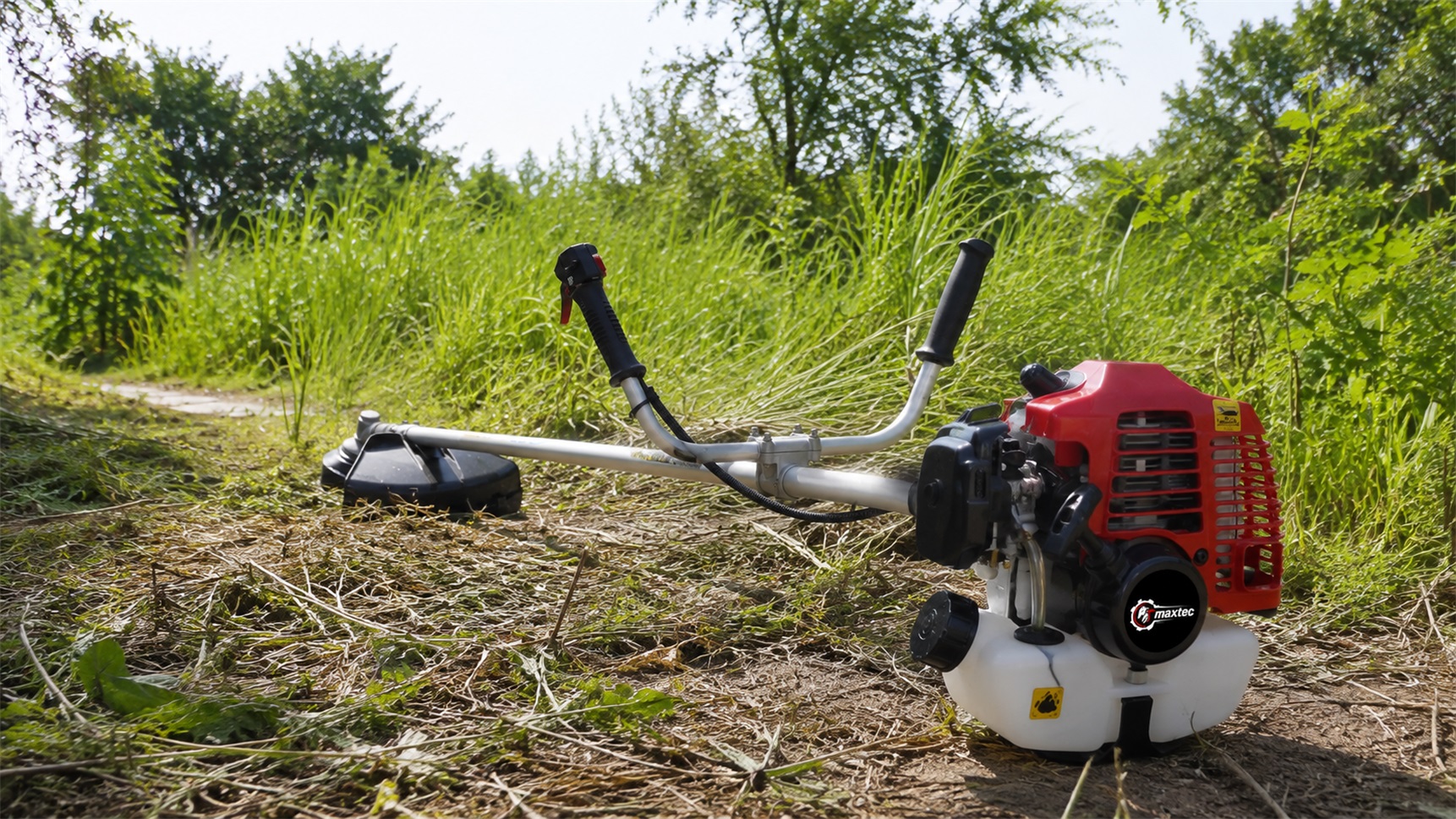
2-Stroke Brush Cutter Hard to Start When Cold: Checks and Fixes
A 2-stroke brush cutter that becomes difficult to start after sitting overnight usually has a starting-sequence, fuel-delivery, air-flow, or ignition problem. The useful clues are not only how many pulls the engine needs, but also whether it briefly fires, whether the spark plug becomes wet, and whether changing the choke position affects the result.
This guide focuses on a machine that is difficult to start when the engine is completely cold. It does not cover a brush cutter that starts normally in the morning but cannot restart after becoming hot. Hot-restart complaints require a different inspection of ignition behavior, vapor formation, carburetor condition, and engine temperature.
For dealers and importers, cold-start performance also affects customer training, warranty discussions, spare-parts preparation, and pre-delivery inspection. Replacing a carburetor before checking the choke sequence, fuel ratio, filter, fuel lines, and spark plug often increases service cost without solving the original problem.
1. Confirm the Symptom Boundary Before Replacing Parts
Leave the machine switched off until the engine is completely cool. During the first starting attempt, record how many pulls are required, whether the engine attempts to fire, and what happens when the choke is moved toward the running position.
A genuine cold-start complaint may appear as no response after repeated pulling, one brief firing event followed by an immediate stop, heavy smoke before the engine starts, or a spark plug that becomes wet quickly. Some machines start only after the operator repeatedly opens and closes the choke, which may indicate an incorrect procedure or inconsistent fuel supply.
The diagnosis should be widened when the same machine is also difficult to restart when warm, loses speed during cutting, stalls under throttle, or stops after several minutes. Those additional symptoms may involve carburetor adjustment, exhaust restriction, ignition failure, or engine condition rather than a cold-start issue alone.
2. Use the Engine Response as Diagnostic Evidence
| Observed cold-start behavior | Likely direction | First inspection | Avoid doing first |
| Engine fires once, then immediately stops | Choke may remain fully closed too long | Move the choke toward the running position after the first firing attempt | Do not continue pulling repeatedly with full choke |
| Spark plug is wet after several pulls | Fuel reaches the cylinder but is not igniting correctly | Check for flooding, plug contamination, gap issues, or weak spark | Do not add more choke or more fuel |
| Spark plug remains dry | Fuel may not be reaching the combustion chamber | Inspect the tank vent, fuel filter, fuel lines, and carburetor inlet | Do not assume the ignition coil is the cause |
| Engine starts after many pulls and produces heavy smoke | Mixture may be too rich or contain excessive oil | Confirm the measured fuel ratio and inspect the air filter | Do not estimate the oil quantity by eye |
| Starting becomes worse after storage | Old fuel, deposits, or a stiff carburetor diaphragm may be involved | Replace uncertain fuel and complete external fuel checks | Do not turn carburetor screws randomly |
3. Follow a Controlled Cold-Start Sequence
A cold 2-stroke engine normally needs a richer fuel-air mixture during its first few rotations. The choke provides this richer mixture, but it should not remain fully closed after the engine has already attempted to fire.
| 1 | Place the brush cutter on stable ground with the cutting attachment clear of people, vegetation, and loose objects. |
| 2 | Confirm that the stop switch is in the operating position. |
| 3 | Move the choke to the marked cold-start position. |
| 4 | Pull the starter until the engine briefly fires or clearly attempts to start. |
| 5 | Move the choke toward the running position before pulling again. |
| 6 | Allow a short warm-up period before applying full throttle or cutting load. |
Control positions differ between models. Operators should follow the actual switch and choke markings rather than assuming every brush cutter uses the same lever direction. Unclear markings can create repeat complaints even when the engine itself is working normally.
4. Check Fuel Quality and External Fuel Delivery
Petrol stored for an uncertain period may lose the volatility needed for easy cold ignition. Water, dirt, or separated material in the fuel container can make the starting behavior even less consistent. Drain questionable fuel and prepare a small fresh batch using suitable 2-stroke engine oil and the ratio specified for the machine.
Do not measure the oil by eye or mix it directly inside the brush cutter tank. Excess oil can contribute to smoke, carbon deposits, plug fouling, and difficult ignition. Insufficient oil reduces lubrication and can damage the engine.
External checks before carburetor removal
- Loosen the fuel cap briefly outdoors to see whether a blocked vent is restricting fuel flow.
- Inspect fuel lines for cracks, hardening, flattening, leakage, or loose connections.
- Watch for air bubbles that repeatedly return after fuel has moved through the line.
- Check whether tubing touches hot components or sharp edges.
- Inspect the in-tank fuel filter safely after the tank has been drained and the engine has cooled.
A cracked suction line may draw air instead of fuel. The engine can eventually start after many pulls because each pull moves only a small quantity toward the carburetor. Do not use wire, compressed air, or sharp tools inside a tank containing petrol vapour.
5. Inspect Air Flow and Read the Spark Plug
A heavily contaminated air filter reduces incoming air. With the choke closed, this can make the starting mixture excessively rich. Remove the cover and inspect the element according to its material. Foam, paper, and mesh filters do not use the same cleaning method.
Grass dust, fine soil, and oil residue often collect quickly when the machine operates close to dry ground. Do not run the engine permanently without the filter, because airborne material can enter the intake and accelerate internal wear. Also confirm that the choke plate moves fully when the external lever is operated.
| Wet spark plug | Dry spark plug |
| Fuel is reaching the cylinder but may not be burning. Check excessive choking, repeated pulling after the engine fires, plug contamination, unsuitable gap, or weak ignition. | Fuel may not be reaching the cylinder. Inspect the tank vent, fuel filter, lines, connections, and carburetor inlet before replacing ignition parts. |
After a flooded start, allow excess fuel to clear before reinstalling a dry plug and retrying with the choke open. Replace the plug according to the applicable specification. A plug with the wrong thread length or heat range may physically fit but still be unsuitable for the engine.
6. Escalate to the Carburetor and Starter Only After External Checks
Handheld 2-stroke brush cutters commonly use diaphragm carburetors so fuel can be metered while the machine works at different angles. After long storage, old fuel may leave deposits or cause diaphragm material to become stiff. The engine may then require excessive pulling before fuel is delivered consistently.
Possible signs include a dry spark plug despite fuel in the tank, gradually worsening cold starts after storage, or easier starting after fuel has been manually moved through the system. These observations do not prove that the carburetor must be replaced. Internal inspection should follow the starting-procedure, fuel, filter, vent, line, air-filter, and spark-plug checks.
Do not turn mixture screws randomly. Changing the settings can create poor acceleration, overheating, excessive smoke, or another starting problem without clearing restricted passages or correcting a hardened diaphragm. Record the original position and use the specification for the actual carburetor.
The starter system also needs to rotate the engine fast enough to draw fuel and create ignition. Inspect a rope that feels slow, binds, fails to retract, or engages inconsistently. Check the pulley, starter pawls, and whether the cutting attachment moves unexpectedly while pulling.
Low compression should not be the first conclusion. It becomes more relevant when starting has become progressively worse, the starter feels noticeably lighter than before, and fuel and ignition checks have produced no clear result.
7. Model Reference: TM-CG260 Cold-Start Configuration
TM-CG260 2-Stroke Gasoline Brush CutterModel-specific details are useful when preparing fuel instructions, cold-start procedures, service parts, and dealer troubleshooting materials. |
|||||||||
For this model, the stated 1:30 ratio should be followed unless the confirmed order specification or supplied manual states otherwise. The TM-CG260 is relevant to buyers who need a compact 2-stroke brush cutter with clearly documented fuel-mixing and carburetor information for dealer training and after-sales preparation.
|
8. Importer and Dealer Cold-Start Checklist
Before Ordering
|
Before Dealer Delivery
|
Specifications may vary depending on the confirmed order. Spare-parts compatibility should therefore be checked against the selected model and configuration, not only by engine displacement or external appearance.
Frequently Asked Questions
01Why does my 2-stroke brush cutter start only after many pulls?
Common causes include an incorrect choke sequence, old fuel, restricted fuel delivery, a contaminated spark plug, or a carburetor diaphragm that meters fuel poorly when cold. Start with the external checks before opening the carburetor.
02Should the choke stay closed until the engine runs?
Usually not. Once the engine briefly fires or attempts to start, the choke should normally be moved toward the running position. Continuing to pull with full choke can flood the cylinder.
03What does a wet spark plug mean during cold starting?
It normally means fuel is reaching the cylinder but is not burning correctly. Excessive choking, repeated pulling, weak ignition, an unsuitable plug gap, or plug contamination should be checked.
04Can a blocked fuel-cap vent cause hard cold starting?
Yes. A restricted vent can interfere with normal fuel flow. Loosen the cap briefly in a safe outdoor area and retry the starting procedure. Do not operate permanently with the cap loose.
05When should the diaphragm carburetor be inspected?
Inspect it after confirming the starting procedure, fresh fuel, correct mixing ratio, tank vent, fuel filter, external lines, air filter, and spark plug. Internal inspection is more reasonable when the plug remains dry and cold starting worsens after storage.
06What should importers check to reduce cold-start complaints?
Confirm the engine configuration, fuel ratio, choke markings, spark-plug specification, starter operation, operator instructions, and compatible service parts during sample approval and quotation.
Confirm the Cold-Start Configuration Before Bulk OrderingA cold 2-stroke brush cutter should not require endless pulling. Correct choke operation, a measured fuel mixture, unrestricted fuel delivery, and a suitable spark plug should be confirmed before carburetor settings or internal parts are changed. For wholesale orders, review the model configuration and service-parts compatibility so dealers can resolve cold-start complaints without unnecessary replacement. |
|