
Why Does a Gasoline Water Pump Vibrate During Operation?
Find why a gasoline water pump vibrates excessively by checking its base, hose strain, engine mounts, suction conditions, and pump-side damage.
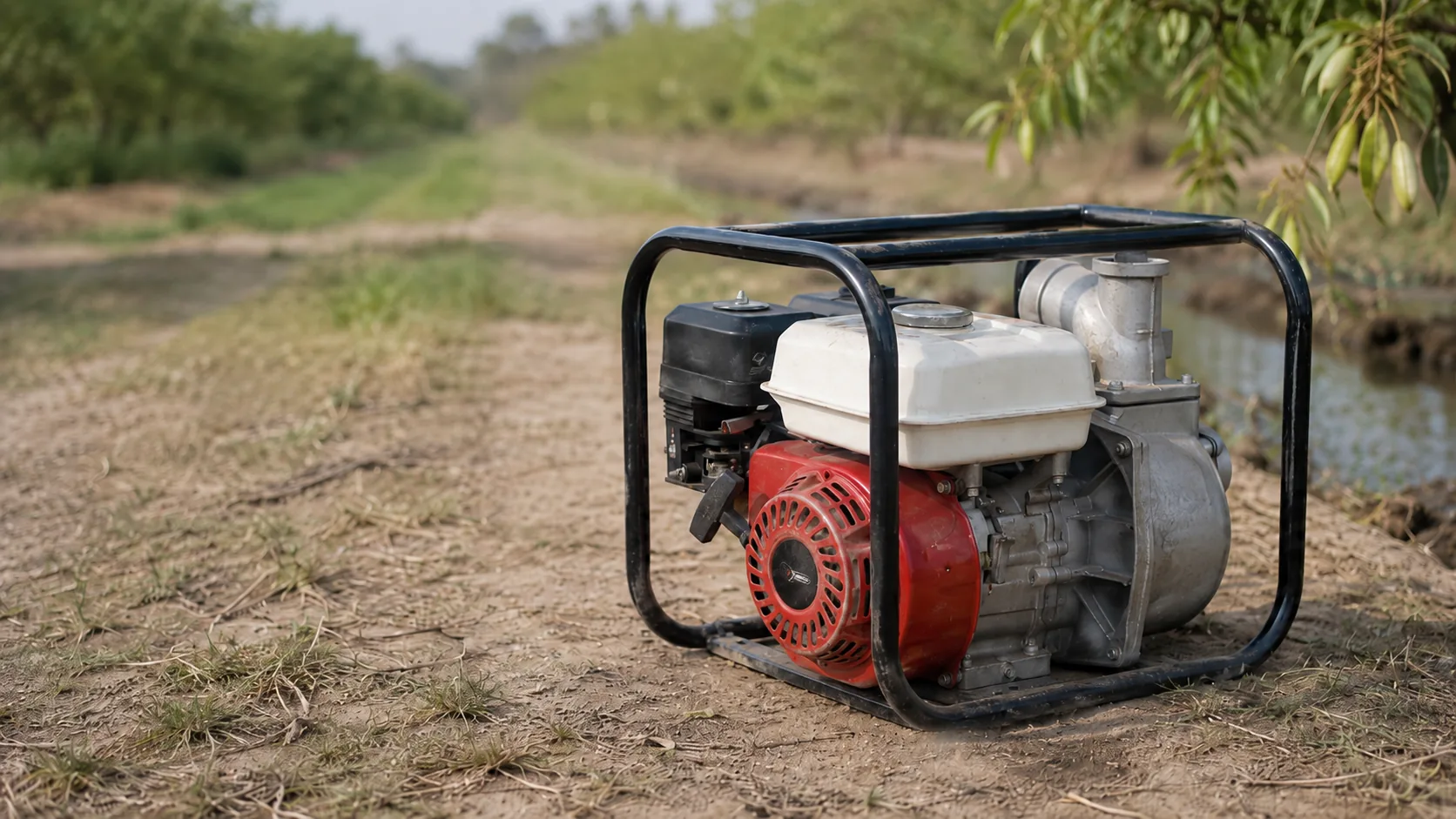
Gasoline Water Pump Vibrates Excessively: Causes and Dealer Checks
Some vibration is normal for a single-cylinder gasoline water pump, but strong shaking, frame movement or a new metallic vibration indicates that the operating conditions or a component has changed. The most useful first question is whether the vibration begins before water enters the pump or only after the suction line fills and discharge pressure develops.
This guide covers a pump that still transfers water but shakes excessively, moves across the ground or sends vibration into the connected hoses. It does not address an engine that runs normally while the pump produces no water.
For importers, dealers and service workshops, separating engine-side vibration from pump-side vibration prevents unnecessary carburetor adjustment and helps identify whether the real cause is the mounting frame, hose installation, suction conditions, debris or impeller damage.
| Quick answer: Diagnose the vibration according to when it starts. | ||
| Before Water Flow Inspect the ground, frame, engine mounting bolts, guards and engine running stability. | After Water Flow Starts Check hose strain, suction air leaks, poor priming, restricted water supply, debris and the impeller. | Dealer Priority Test the machine on firm ground with short, supported hoses before opening the pump chamber. |
Identify Exactly When the Vibration Begins
Observe the sequence of the symptom before removing the pump casing. Place the pump on stable ground, connect the hoses correctly and note whether it vibrates immediately after starting, only at higher engine speed or only after water begins moving.
Record whether the vibration appears:
- Immediately after the engine starts.
- Only when engine speed increases.
- After the suction line fills with water.
- When the discharge hose becomes pressurized.
- Intermittently as the source water level changes.
- After the pump strikes or draws in debris.
| Vibration Timing | Likely Inspection Area | Useful Confirmation |
| Before water enters the casing | Base, engine, frame or mounting hardware | Check whether the engine or frame moves independently |
| Only after pumping begins | Hoses, suction line, pump chamber or impeller | Repeat the test with a shorter, supported hose arrangement |
| After debris or a metallic impact | Impeller and internal pump casing | Listen for repeated scraping, clicking or gravel-like noise |
| Only at the customer’s installation | Hose weight, alignment or suction conditions | Compare with a controlled clean-water test |
Stop the engine if the machine begins jumping, produces grinding noise, leaks fuel or water near the engine, or moves far enough to place tension on the hose connections.
Stabilize the Base and Remove External Movement
A portable water pump can look mechanically unbalanced when it is standing on soft soil, loose gravel or an uneven concrete edge. A small rocking point beneath one corner becomes much more noticeable as engine speed rises.
- Stop and cool the engine. Do not reposition the pump while it is operating.
- Move it to firm, level ground. Remove loose stones, branches and soft soil beneath the frame.
- Press each frame corner by hand. The machine should not rock between contact points.
- Support the complete frame. In muddy irrigation areas, use a stable platform that carries both the engine and pump side.
Check Whether the Hoses Are Pulling the Pump Sideways
Large suction and discharge hoses become heavy after filling with water. Their weight should be supported by the ground or a separate structure rather than hanging from the inlet and outlet connections.
The TM-WP80A 3-inch gasoline water pump uses an 80 mm inlet and outlet arrangement. A filled hose of this size can create significant sideways or downward force if it hangs into a ditch, crosses a sharp edge or connects to rigid pipework that is out of alignment.
Installation Problems to Find
|
Corrective Arrangement
|
Do not use the pump casing or coupling as the anchor for the complete hose system. Excessive hose strain can loosen fittings, damage seals and transfer vibration into otherwise stable equipment.
Inspect the Frame, Mounting Bolts and External Guards
Transportation, repeated starting and operation on uneven ground can loosen mounting hardware. With the engine stopped, inspect the bolts that connect the engine, pump body and protective frame.
Pay particular attention to:
- Engine-to-base mounting bolts.
- Pump-casing mounting points.
- Frame joints and carrying handles.
- Rubber feet or vibration pads, where fitted.
- Muffler guards, covers and external shields.
Polished marks around a bolt head, gaps between mounting surfaces or enlarged holes indicate that parts have been moving. A loose guard can produce a loud metallic rattle that sounds like internal pump damage, so check cooled covers for independent movement before opening the pump chamber.
Fasteners should be tightened according to the correct assembly requirement. Excessive tightening can damage threads, distort brackets or crack a mounting point. If a frame weld is cracked or a mounting hole has enlarged, tightening the existing bolt may not provide a lasting repair.
Separate Engine Vibration From Pump-Side Vibration
The TM-WP80A product information lists a 212 cc TM-170F engine with a reference output of 7.0 HP at 3,600 rpm. A single-cylinder gasoline engine naturally creates a regular vibration pattern, but that pattern should remain reasonably consistent when engine speed is stable.
| Engine-Side Indicators | Pump-Side Indicators |
| Uneven engine speed Misfiring or irregular exhaust sound Abnormal exhaust smoke Loose muffler or engine cover Engine movement relative to the frame Vibration before water flow begins |
Stable engine sound during the symptom Pump casing shaking after priming Suction or discharge hose pulsing Gravel-like noise from the pump body Vibration changing with water level Reduced flow combined with new vibration |
Do not adjust the carburetor to correct vibration that clearly originates from a loose frame, unsupported hose or pump chamber. Engine adjustment is relevant only when the engine itself cannot maintain stable operation.
Inspect the Suction Line for Air and Flow Restriction
Air entering the suction side can cause unstable flow, irregular noise and vibration inside the pump casing. The pump may continue discharging water, but the flow can surge or contain visible air bubbles.
Inspect the complete suction arrangement:
- Hose couplings and sealing washers.
- Clamps and threaded adapters.
- Cracks or soft sections in the suction hose.
- The priming-plug seal.
- Suction strainer condition and position.
- Hose collapse while the pump is operating.
A suction connection can draw air without leaking water outward, so a dry visual inspection is not always enough. Confirm that the clamps are seated correctly and that the hose remains round under suction.
The product page gives a reference suction value of 7 m and a maximum lift height of 26 m. These figures are not a target for every installation. Actual operation depends on vertical height, hose length, sealing quality, water level and the number of bends.
Investigate Gravel-Like Noise, Debris and Impeller Damage
An irregular rattling or gravel-like sound can occur when water does not enter the impeller smoothly. Possible causes include air leakage, excessive suction height, a blocked strainer, a collapsed hose lining, a low water source or operation with insufficient water in the casing.
Do not continue running the pump dry while waiting for the vibration to disappear. A centrifugal pump normally requires correct priming before operation. Stop the engine and allow the equipment to cool before removing the priming plug or releasing pressure from the hoses.
For irrigation, garden watering, water transfer or drainage, leaves, fibres and small stones may enter if the suction strainer is missing, damaged or poorly positioned. Material lodged on one side of the impeller creates an uneven rotating load and may cause clicking, scraping or sudden shaking.
| Internal Symptom | Possible Condition | Service Priority |
| Irregular gravel-like noise | Air, restricted suction or insufficient water | Correct priming and suction conditions first |
| Repeated clicking or scraping | Stone, fibre or hard debris in the casing | Stop and inspect the pump chamber |
| Sudden vibration after impact | Bent, cracked or damaged impeller | Inspect the impeller, shaft connection and casing |
| New vibration with reduced flow | Debris loading or impeller damage | Do not continue high-speed operation |
Before opening the chamber, stop the engine, disconnect the spark-plug cap, drain or close the hoses and release remaining pressure safely. Do not reach through a pump opening while the engine can still start.
Impeller removal should follow the service procedure for the actual pump configuration. Do not strike the impeller, pry against a sealing surface or select a replacement part only because it fits an 80 mm port pump. The impeller, mechanical seal, shaft connection and casing must match the selected model.
Recheck the Pump Under Controlled Conditions
After correcting the base, hose support and visible loose parts, test the pump using clean water and the simplest practical hose arrangement.
| 1 | Observe vibration before the suction line fills. |
| 2 | Compare frame movement at low and normal operating speed. |
| 3 | Watch the suction hose as water enters the casing. |
| 4 | Check whether discharge pressurization moves the machine. |
| 5 | Listen separately to the engine, pump casing and external guards. |
A pump that remains stable during the controlled test but vibrates when reconnected to the customer’s full hose system probably has an installation, hose-support or suction-line problem. Strong vibration that remains with short, supported hoses requires closer mechanical inspection.
TM-WP80A Application and Procurement Reference
| TM-WP80A 3-inch gasoline water pump |
Reference configuration: 80 mm inlet and outlet, 212 cc TM-170F engine and listed output of 7.0 HP at 3,600 rpm. Reference hydraulic figures: 7 m suction value and 26 m maximum lift height, depending on installation conditions. Relevant applications: Irrigation, garden watering, water transfer and drainage where hose support, correct priming and suction sealing can be maintained.
|
The listed figures should be treated as reference specifications rather than guaranteed results for every hose layout or water source. Importers should confirm the final engine, coupling, hose accessory, packaging and spare-parts configuration in the quotation or proforma invoice.
Importer and Dealer Inspection Checklist
| 01 | Confirm the engine and pump mounting bolts after transportation. |
| 02 | Inspect frame joints, rubber feet, handles and external guards. |
| 03 | Check the inlet and outlet coupling fit before delivery. |
| 04 | Verify sealing washers, clamps and priming-plug condition. |
| 05 | Confirm that the suction strainer matches the hose and intended water source. |
| 06 | Demonstrate independent support for filled 3-inch hoses. |
| 07 | Test the pump with clean water before connecting the customer’s full installation. |
| 08 | Record whether vibration begins before or after water flow. |
| 09 | Prepare the correct impeller and mechanical-seal spare-part references. |
| 10 | Confirm repeat-order coupling, accessory, packaging and labeling consistency. |
Frequently Asked Questions
Why does my gasoline water pump shake before it starts pumping water?
Vibration before water flow is more likely to involve an unstable base, loose engine or frame hardware, an external guard, uneven engine operation or movement between the engine and frame.
Why does the pump vibrate only after the discharge hose fills?
A filled hose may pull on the pump, while discharge pressure can expose poor hose alignment. Suction air, restricted water supply, debris and uneven impeller loading are also more relevant when vibration begins only during pumping.
Can an air leak cause a water pump to vibrate?
Yes. Air entering through a coupling, washer, clamp, cracked hose or priming-plug seal can create unstable flow and irregular noise. The connection may draw air without visibly leaking water outward.
What causes a gravel-like sound inside a gasoline water pump?
Possible causes include poor priming, a blocked strainer, excessive suction height, a restricted hose, air leakage, insufficient source water or debris inside the pump chamber.
Should I adjust the carburetor when a water pump vibrates?
Not unless the engine itself runs unevenly, misfires or cannot maintain speed. Carburetor adjustment will not correct hose strain, loose mounting bolts, an unstable base, suction leakage or debris in the pump chamber.
When should a vibrating pump be stopped immediately?
Stop it if the machine jumps, moves far enough to pull the hoses, develops grinding or repeated scraping, leaks near the engine, or begins vibrating suddenly after drawing in debris or suffering an impact.
Confirm the Correct 3-Inch Pump ConfigurationA gasoline water pump that vibrates excessively should be evaluated according to symptom timing, hose installation and suction conditions before engine adjustment or parts replacement. For wholesale orders, confirm the TM-WP80A engine, couplings, accessories, packaging and service parts according to the intended irrigation or water-transfer setup. |
|
Source article: :contentReference[oaicite:0]{index=0}