
Why Does a Petrol Lawn Mower Engine Surge While Running?
A petrol lawn mower engine may surge from unstable fuel or airflow, carburetor restriction, or governor response. Check simple causes before adjusting.
Petrol Lawn Mower Troubleshooting
Petrol Lawn Mower Engine Surging: Causes, Checks and Dealer Troubleshooting
A petrol lawn mower engine surging repeatedly speeds up and slows down while the engine continues to run. In many cases, the first places to look are fuel condition, airflow, fuel delivery and visible engine-speed control linkages rather than immediately opening the carburetor or changing governor settings.
This guide focuses only on a mower that keeps running while the engine speed “hunts” up and down. It does not cover a mower that starts normally and then stops completely. For importers, dealers and service workshops, separating those two complaints prevents unnecessary carburetor replacement and makes returned-machine diagnosis more consistent.
1. Confirm Whether the Engine Is Truly Surging
Listen to the engine before replacing parts. True surging normally produces a repeating cycle: engine speed rises, falls, rises again and continues doing so even though the operator is not moving a control.
A short reduction in engine speed as the blade enters dense, tall or wet grass is different. Cutting resistance temporarily increases load, and the engine-speed control system responds by changing throttle position. A mower should therefore be tested both without heavy cutting load and during normal mowing.
| What You Observe | What It Suggests | Next Check |
| Engine hunts while mower is standing or crossing short grass | Engine, fuel or speed-control issue | Fuel, air filter, fuel path and linkages |
| Speed changes only in heavy grass | Cutting load may be excessive | Cutting height, walking speed and deck condition |
| Engine starts and then stops completely | Different failure pattern | Use a separate stalling diagnosis |
This symptom boundary is useful for dealer returns. “Engine speed changes” and “engine stops” may sound similar in a customer message, but they do not lead to the same inspection sequence.
2. Eliminate Fuel and Airflow Problems Before Carburetor Work
Questionable petrol is one of the least expensive causes to eliminate. If the mower has been stored for weeks or months, or the age and condition of the fuel are unknown, remove suspect fuel safely and refill with fuel suitable for the actual engine specification.
Pay attention to when the surging first appeared. A symptom that begins immediately after refueling, after extended storage, after the tank was nearly empty, or after dirt or water may have entered a fuel container deserves fuel-system attention before any adjustment is changed.
| Fuel | Replace fuel that is old, contaminated, smells abnormal or has been stored under questionable conditions. |
| Air Filter | Inspect for heavy dust, grass debris or oil contamination. Clean or replace it according to the actual filter type. |
| Fuel Hose | Look for visible kinks, deterioration, loose connections or leakage. |
| Fuel Delivery | If surging appears only after several minutes, consider whether fuel delivery becomes restricted as the engine continues running. |
If checking whether opening the fuel cap changes the symptom, stop the engine first and work away from hot engine and exhaust parts. The purpose is only to see whether fuel delivery may be becoming restricted, not to operate the mower unsafely with an open fuel system.
Do not remove the air filter and continue using the mower simply because the engine sound changes. Running without proper filtration can allow abrasive dust into the engine.
3. Check Whether Tall Grass Is Creating the Speed Fluctuation
A mower that sounds unstable only during difficult cutting should not automatically be treated as a carburetor fault. Blade load changes with grass height, density, moisture, deck buildup, cutting height and the speed at which the operator pushes the mower forward.
Practical load test
Run the mower first over short grass or another low-load condition. Then test it in the area where the complaint occurs. If the engine is smooth without load but repeatedly drops and recovers in dense grass, raise the cutting height, reduce walking speed and check for packed grass beneath the deck before opening the carburetor.
Always stop the engine, wait for the rotating parts to stop and disconnect the spark-plug lead before placing hands or tools near the underside of the deck.
This comparison is especially important on hand-push mowers because the operator directly controls forward speed. Entering dense material too quickly can increase cutting load even though the engine itself has not developed a new fuel-system problem.
4. When Carburetor Restriction Becomes More Likely
If the petrol is fresh, airflow is normal and the accessible fuel supply path shows no obvious problem, carburetor fuel metering becomes a more relevant inspection point.
Dirt, fuel residue or deposits inside small carburetor passages can disturb the amount of fuel entering the engine. The engine speed may fall, the speed-control system responds by opening the throttle, the engine accelerates, and then the cycle repeats. That repeated correction can create the familiar hunting sound.
Cleaning does not automatically mean replacement. Confirm whether the installed carburetor can be serviced and whether the correct parts are available for the actual engine. Avoid forcing wire through precision fuel passages because changing the opening can alter fuel metering.
For dealer workshops, descriptions such as “surges cold,” “surges only when hot,” “hunts at no load” or “speed cycles only during cutting” are more useful than writing only “carburetor problem” on a return sheet.
5. Inspect Governor Linkages Without Changing Their Setting
The governor system helps the engine respond when operating load changes. Depending on the engine design, springs, rods and other visible linkages connect the speed-control mechanism to the throttle.
With the engine stopped, look for debris, detached springs, rubbing linkages, visible damage or parts that may have been reinstalled incorrectly after previous carburetor service.
| Safe External Inspection | Avoid During Diagnosis |
| Remove grass and dirt that interfere with visible linkage movement. | Do not bend a governor rod to change engine speed. |
| Confirm springs remain connected at their intended points. | Do not stretch a governor spring experimentally. |
| Check whether a linkage rubs against another part. | Do not move the spring to a different hole without the correct procedure. |
| Pay attention to incorrect reassembly after carburetor removal. | Do not use excessive engine speed as a substitute for repair. |
Incorrect governor adjustment can change maximum engine speed and create a new problem. If the linkages move freely and are assembled correctly but speed still cycles, return the diagnosis to fuel metering, intake sealing and the internal speed-control system rather than making unsupported adjustments.
6. TM410P: Use the Mower Configuration to Reproduce the Complaint Correctly
|
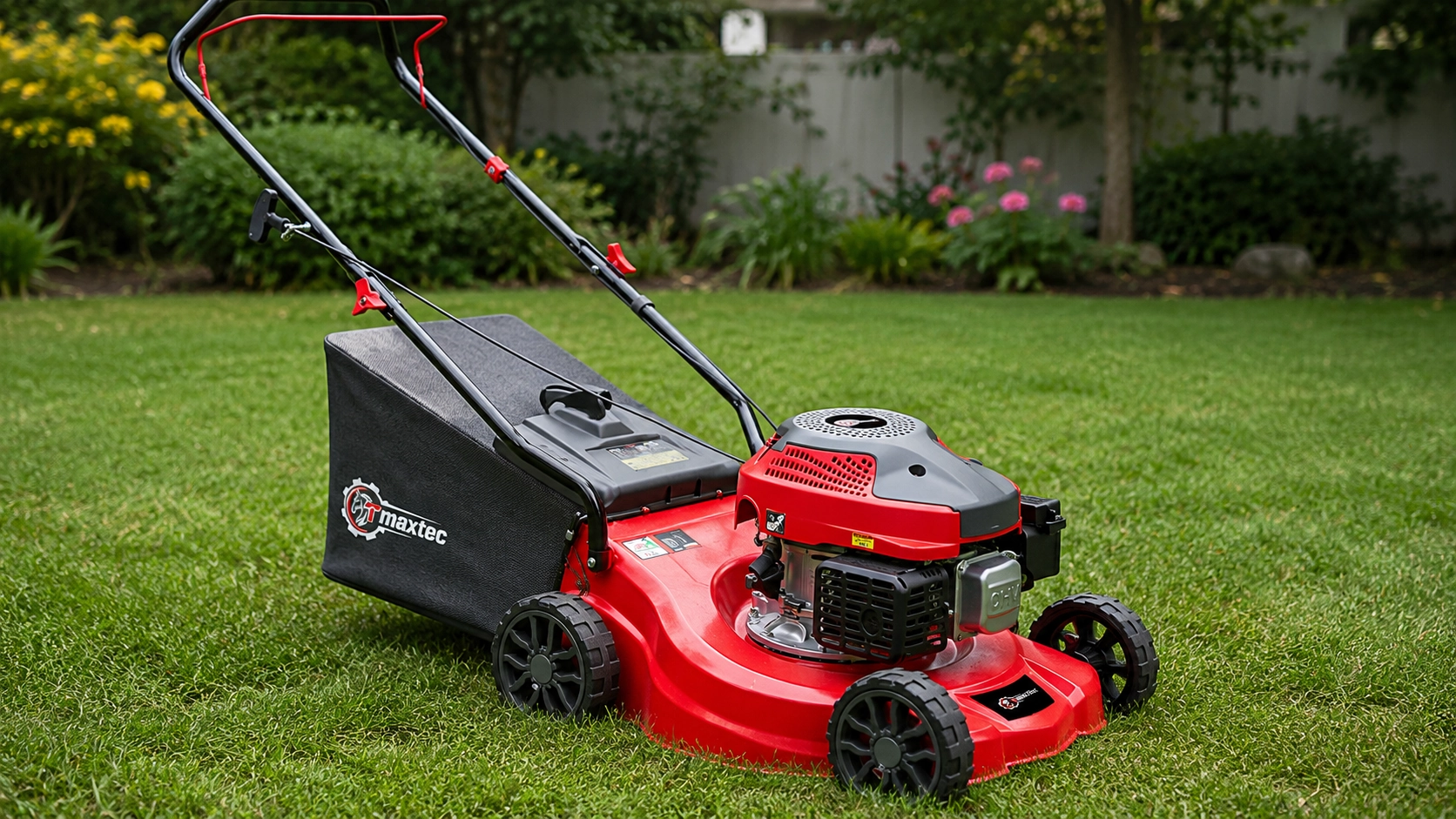
Recommended Reference Model TM410P Hand-Push Petrol Lawn Mower This model is useful for this troubleshooting topic because its hand-push layout, adjustable cutting height and 410mm deck make it possible to distinguish true engine surging from a speed change caused by excessive cutting load. |
Engine: TM130V, 130cc, 4-stroke OHV Cutting width: 410mm / 17-inch Cutting height: 30-75mm, five positions Drive type: Hand-push Discharge: Rear discharge Grass bag: 35L fabric bag
|
If a TM410P runs smoothly over short grass but begins cycling in speed when pushed quickly into dense growth at the lowest cutting position, first raise the cutting height and make another pass. Because the mower is hand-push rather than self-propelled, walking pace directly changes how quickly material enters the 410mm deck.
If the engine still surges while standing or under light cutting conditions, the mower configuration is less likely to be the cause and the fuel, carburetor, intake and governor inspection path becomes more relevant.
7. Spark Plug and Deeper Engine Checks Come After the Basics
The spark plug can provide useful evidence when fuel and airflow checks do not explain the repeated speed fluctuation. Remove it after the engine has cooled and inspect for excessive deposits, physical damage or an incorrect gap according to the actual engine service specification.
If a correctly specified, serviceable plug does not change the symptom, continuing to replace ignition parts without evidence is unlikely to improve diagnosis. Return attention to carburetor fuel metering, intake sealing, governor operation and the mechanical condition of the installed engine.
Professional carburetor or engine inspection becomes reasonable when fresh fuel, air-filter service, visible fuel-path checks and external linkage inspection have all been completed and the engine still hunts at no load.
8. Importer and Dealer Checklist for a Surging Lawn Mower
For wholesale and after-sales work, the goal is to identify the operating condition before deciding which spare parts should be quoted. The checklist below helps separate field-use issues from engine-service issues.
| Before Workshop Disassembly | Before Ordering Spare Parts |
|
1. Reproduce whether the engine surges at no load or only during cutting. 2. Replace questionable petrol before making adjustments. 3. Inspect the air filter for dust, grass and oil contamination. 4. Check accessible hoses, connections and visible fuel-delivery restrictions. 5. Confirm governor linkages move freely and are not obstructed. |
6. Confirm the installed engine model before quoting a carburetor. 7. Match governor springs and linkages to the confirmed engine configuration. 8. Confirm the correct air filter and spark plug service specification. 9. Keep repeat-order engine configuration consistent with service-parts stock. 10. Record whether the return occurs cold, hot, unloaded or during mowing. |
For TM410P distribution, replacement-part compatibility should be checked against the actual production configuration. The listed mower uses a TM130V 130cc four-stroke OHV engine with a 410mm cutting deck, but carburetors, filters, governor parts and other engine components should still be confirmed before quotation or shipment.
FAQ About Petrol Lawn Mower Engine Surging
Why does my petrol lawn mower keep revving up and down?
Repeated revving up and down can be caused by unstable fuel delivery, airflow restriction, carburetor fuel metering or engine-speed control problems. First determine whether the engine surges without cutting load before opening the carburetor.
Can old petrol make a lawn mower engine surge?
Yes. Fuel that has deteriorated during storage or become contaminated can contribute to poor and uneven running. Replacing questionable fuel before changing carburetor settings is a useful first diagnostic step.
Why does my mower surge only in tall grass?
If the engine is stable without load but fluctuates in dense grass, excessive cutting resistance may be contributing. Raise the cutting height, slow the walking pace and inspect the underside of the deck for packed material before treating the mower as a carburetor fault.
Does a dirty carburetor cause lawn mower hunting?
Deposits or dirt in small carburetor passages can disturb fuel metering and contribute to repeated speed changes. Carburetor inspection becomes more relevant after fresh fuel, airflow and external fuel-delivery checks have been completed.
Should I adjust the governor to stop a mower from surging?
Do not change governor spring locations or bend linkages simply to see whether the symptom disappears. First inspect for debris, disconnected springs, rubbing parts or incorrect reassembly. Incorrect adjustment can change engine speed beyond the intended operating condition.
What parts should TM410P dealers confirm before ordering replacements?
Confirm the actual TM130V engine configuration before ordering carburetors, governor parts, air filters or related service components. The mower is listed with a 130cc four-stroke OHV engine, 410mm cutting width, five cutting-height positions from 30 to 75mm, rear discharge and a 35L fabric grass bag.
|
Review the TM410P Configuration for Wholesale or Service Parts If you are comparing petrol lawn mower models or preparing after-sales stock, confirm the engine and mower configuration before ordering carburetors, filters, governor components or other replacement parts. |
|