
Why Does a Gasoline Chainsaw Cut Slowly Even With a Sharp Chain?
A gasoline chainsaw cuts slowly for several reasons, from chain condition to cutting setup. Learn what to check before replacing parts or changing machines.
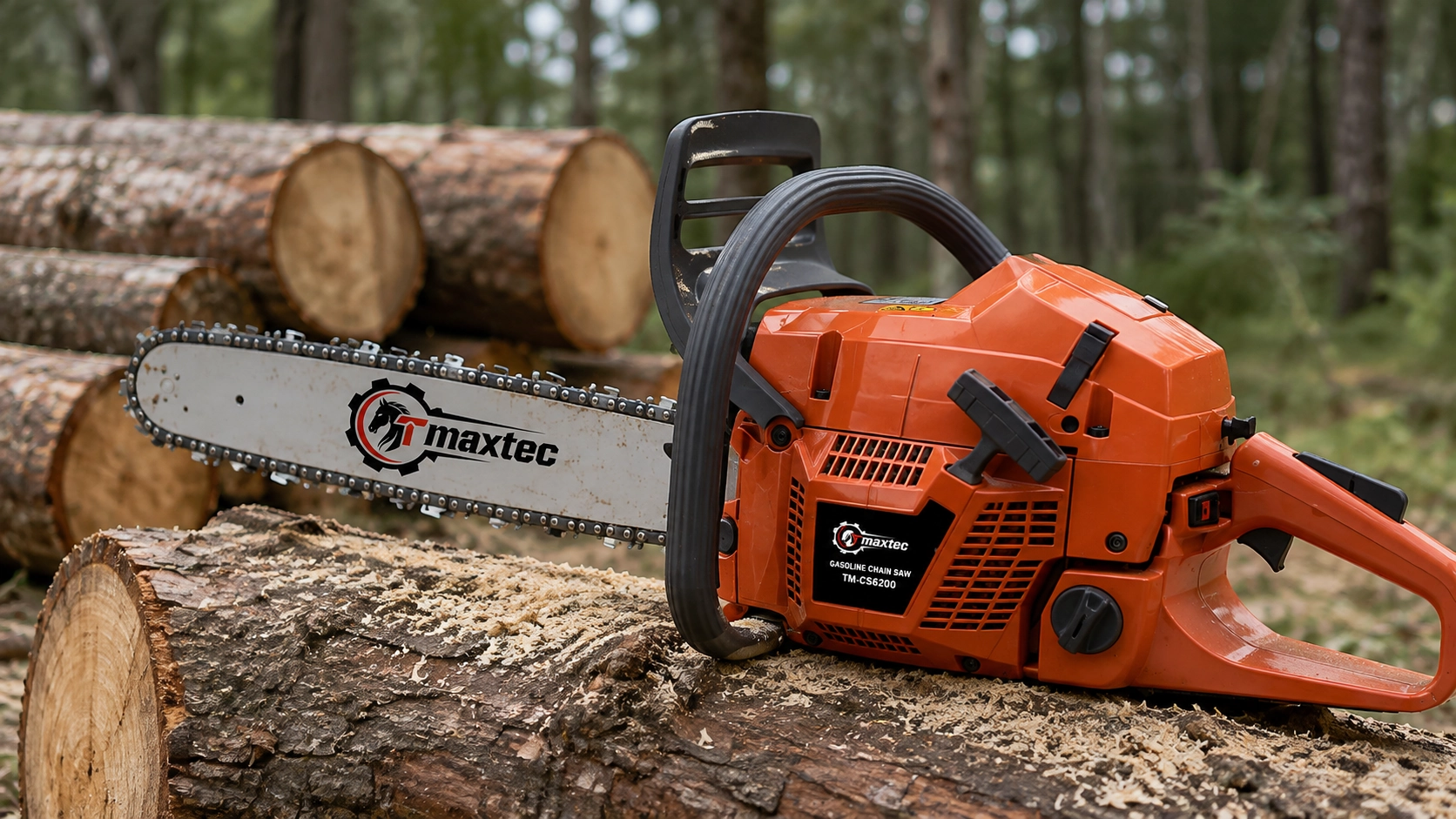
Gasoline Chainsaw Cuts Slowly but Engine Runs Normally: What to Check
A gasoline chainsaw that cuts slowly does not automatically have an engine problem. When the engine starts normally, accelerates, and continues running, reduced cutting speed often comes from the cutting attachment, guide bar condition, chain adjustment, lubrication, operating method, or the suitability of the machine for the wood being cut.
This troubleshooting guide is specifically for a saw that still cuts wood but takes noticeably longer than expected. It does not cover a chain that stops completely, a chain that moves at idle, or an engine that stalls as soon as the chain enters wood. Those symptoms need different diagnostic paths.
Quick answer: If a gasoline chainsaw runs normally but cuts slowly, inspect the chain and guide bar before adjusting the carburetor or replacing engine parts. Confirm cutter condition, chain tension, installation direction, bar-groove cleanliness, rail wear, and chain lubrication. Then observe whether the engine maintains working speed once the cutters enter wood. Excessive operator pressure, hard or large timber, and an unsuitable machine configuration can also reduce cutting speed. For dealers, separating cutting-attachment wear from genuine under-load engine weakness prevents unnecessary engine repairs and gives a clearer basis for spare-parts support.
1. Define the Slow-Cutting Symptom Before Inspecting the Engine
The useful starting point is not simply that the owner says the chainsaw “has no power.” Confirm what actually happens during a cut. A saw that reaches normal speed but advances slowly through timber is different from one whose engine speed collapses immediately under load.
| Observed Condition | First Area to Investigate | Diagnostic Meaning |
| Engine sounds normal but cut progresses slowly | Chain, bar and cutting technique | Do not begin with carburetor adjustment |
| Engine rpm falls heavily only after entering wood | Fuel, airflow, ignition and cutting resistance | Possible under-load performance issue |
| Chain stops completely | Separate drive or clutch diagnosis | Outside this slow-cutting symptom |
| Engine stalls whenever cutting begins | Separate engine-under-load diagnosis | Do not treat it as ordinary slow cutting |
This symptom boundary is especially useful for repair shops and distributors because several different customer complaints can arrive under the same description of “slow chainsaw.”
2. Inspect the Chain as a Cutting Component, Not Just a Moving Part
A chain can rotate normally and still remove wood inefficiently. Check the cutter teeth before assuming that engine output has decreased. Look for dull cutting edges, damaged teeth, and noticeable differences in cutter wear around the loop.
Fine wood dust can be one sign that the cutters are no longer biting effectively, although this guide does not treat sawdust production as a separate fault by itself. The more important question here is whether poor cutter condition is explaining the slower cutting rate.
Cutting attachment checks
- Inspect cutter sharpness and visible tooth damage.
- Compare cutters for uneven wear around the chain.
- Confirm the chain is fitted in the correct cutting direction.
- Check tension according to the machine and cutting attachment requirements.
- Replace or service worn cutting components when adjustment alone cannot restore correct operation.
An excessively loose chain does not remain as stable on the bar during cutting. An excessively tight chain creates additional resistance. Either condition can make a normally running gasoline chainsaw feel weak in the cut.
3. Check the Guide Bar for Resistance and Uneven Wear
The guide bar should be inspected together with the chain. Packed sawdust in the groove, worn rails, or damage around the nose area can interfere with smooth chain travel and increase the load required to keep the cutting system moving.
| Inspection Point | What to Look For | Possible Effect |
| Bar groove | Packed debris or contamination | Higher chain resistance |
| Bar rails | Uneven or excessive wear | Poor chain support and alignment |
| Nose area | Visible damage or abnormal movement | Restricted chain travel |
| Oil passages | Blocked lubrication holes | More friction during extended cutting |
For workshop diagnosis, this is also a useful point to compare the installed bar and chain with the confirmed machine configuration rather than assuming any physically fitting replacement is automatically appropriate.
4. Separate Cutting Technique from Genuine Loss of Performance
More downward force does not necessarily produce a faster cut. Aggressively pushing the guide bar into timber can increase resistance and prevent the cutters from working efficiently. The operator should allow the cutting teeth to engage the wood rather than trying to force the complete bar through it.
More Suitable Practice
|
Practices That Increase Resistance
|
For dealers serving farmers, firewood users, landscaping crews, and general property-maintenance customers, checking operating method can prevent unnecessary carburetor adjustment or engine disassembly.
5. Observe Engine Speed Under Cutting Load
After the chain, bar, and cutting method have been checked, observe how the engine responds when the cutters actually enter wood. This is the point where a cutting-system problem can be separated from a possible engine performance problem.
- Confirm free-running behavior. The engine should be evaluated for whether it accelerates and runs normally before entering the cut.
- Watch the transition into wood. Note whether rpm remains reasonably stable or drops sharply as resistance increases.
- Check airflow. A restricted air filter can affect combustion and working performance.
- Check fuel supply condition. Insufficient fuel delivery can become more noticeable when the engine needs more output.
- Inspect the spark plug as appropriate. Plug condition can help identify combustion-related problems before deeper repair work.
A chainsaw that maintains engine speed but still progresses poorly through wood points attention back toward the cutting attachment, cutting conditions, and machine-to-application match. A saw whose engine speed drops heavily under load requires further engine-side inspection.
6. Confirm Lubrication and Match the Chainsaw to the Cutting Job
Insufficient chain lubrication increases friction between the chain and guide bar. Before extended cutting, confirm that the oil reservoir contains suitable chain lubricant, that oil can reach the guide bar area, and that the bar groove and lubrication holes are not obstructed.
Slow cutting can also appear when the expected workload is beyond the practical range of the selected machine or cutting configuration. Wood hardness, log diameter, cutter condition, operator technique, and the confirmed chainsaw setup all influence how quickly a cut can be completed.
7. TM-CS365 for General Gasoline Chainsaw Procurement
TM-CS365 Gasoline Chain SawModel: TM-CS365 The TM-CS365 gasoline chain saw is a gasoline-powered model for wood-cutting applications. For importers reviewing this model, cutting performance should be evaluated together with the confirmed chain and guide bar configuration rather than from engine size alone. |
Relevant for:
|
For wholesale orders, the final specification and available configuration should be confirmed against actual order requirements. This is particularly important when the target market uses different timber sizes, replacement-chain preferences, or service practices.
8. Importer and Dealer Checklist for Slow-Cutting Complaints
For distributors, a slow-cutting complaint is usually more useful when converted into a repeatable inspection process. The checklist below helps determine whether the customer needs cutting-attachment maintenance, operating guidance, engine inspection, or different model selection.
| 1 | Confirm the symptom boundary: the chainsaw should still run and cut rather than stop completely. |
| 2 | Inspect cutter condition for dull, damaged, or unevenly worn teeth. |
| 3 | Verify chain installation and tension before changing engine settings. |
| 4 | Inspect the guide bar groove, rails, nose area and oil passages for resistance or wear. |
| 5 | Confirm chain lubrication before long cutting sessions. |
| 6 | Observe engine behavior under load rather than judging performance only while free running. |
| 7 | Check the air filter, fuel supply and spark plug when there is genuine engine-speed loss during cutting. |
| 8 | Record typical wood diameter and hardness when selecting chainsaws for a wholesale market. |
| 9 | Stock appropriate service components such as compatible chains, guide bars, and routine maintenance parts according to the confirmed models supplied. |
| 10 | Keep repeat-order specifications consistent so replacement cutting components and dealer service procedures remain easier to manage. |
FAQ: Gasoline Chainsaw Cutting Slowly
Why does my gasoline chainsaw cut slowly even though the engine sounds normal?
Start with the cutting attachment. A dull or damaged chain, incorrect tension, guide-bar wear, debris in the bar groove, poor lubrication, or excessive operator pressure can reduce cutting speed while the engine continues to sound normal.
Should I adjust the carburetor when a chainsaw starts cutting slowly?
Not as the first step. Confirm cutter condition, chain tension, bar condition, lubrication, and cutting technique first. Engine-side checks become more relevant when the engine clearly loses working speed under cutting load.
Can incorrect chain tension make a chainsaw cut more slowly?
Yes. A chain that is too loose may not remain properly supported on the bar, while excessive tension increases friction. The chain should be adjusted according to the correct setup for the machine and cutting attachment.
Can insufficient chain oil reduce cutting speed?
Insufficient lubrication increases friction between the chain and guide bar and can increase cutting resistance. Check the chain-oil supply, guide-bar oil passages, and bar groove before extended operation.
How can a dealer tell whether slow cutting is a chain problem or an engine problem?
Inspect the chain and guide bar first, then compare engine behavior without load and during an actual cut. If engine speed remains stable while cutting progress is poor, the cutting attachment or application is more suspect. A heavy rpm drop under load justifies further fuel, airflow, ignition, and engine checks.
What should importers check when selecting a gasoline chainsaw for faster cutting?
Avoid judging a model from engine displacement alone. Consider the typical wood diameter and hardness in the target market, expected working frequency, confirmed guide bar and chain configuration, replacement-part availability, and how the machine will be serviced after sale.
Evaluating a Gasoline Chainsaw for Your Wholesale Range?When a gasoline chainsaw cuts slowly, separate cutting-attachment condition, lubrication, operator technique, under-load engine behavior, and application fit before treating the complaint as an engine failure. For distributors considering the TM-CS365, confirm the required configuration against the wood-cutting applications in your market. |
|