
Why Does a Mini Tiller Engine Run but the Tines Won’t Turn?
Mini tiller tines not turning while the engine runs? Check jammed tines, mounting hardware and the drive path before replacing internal parts or assemblies.
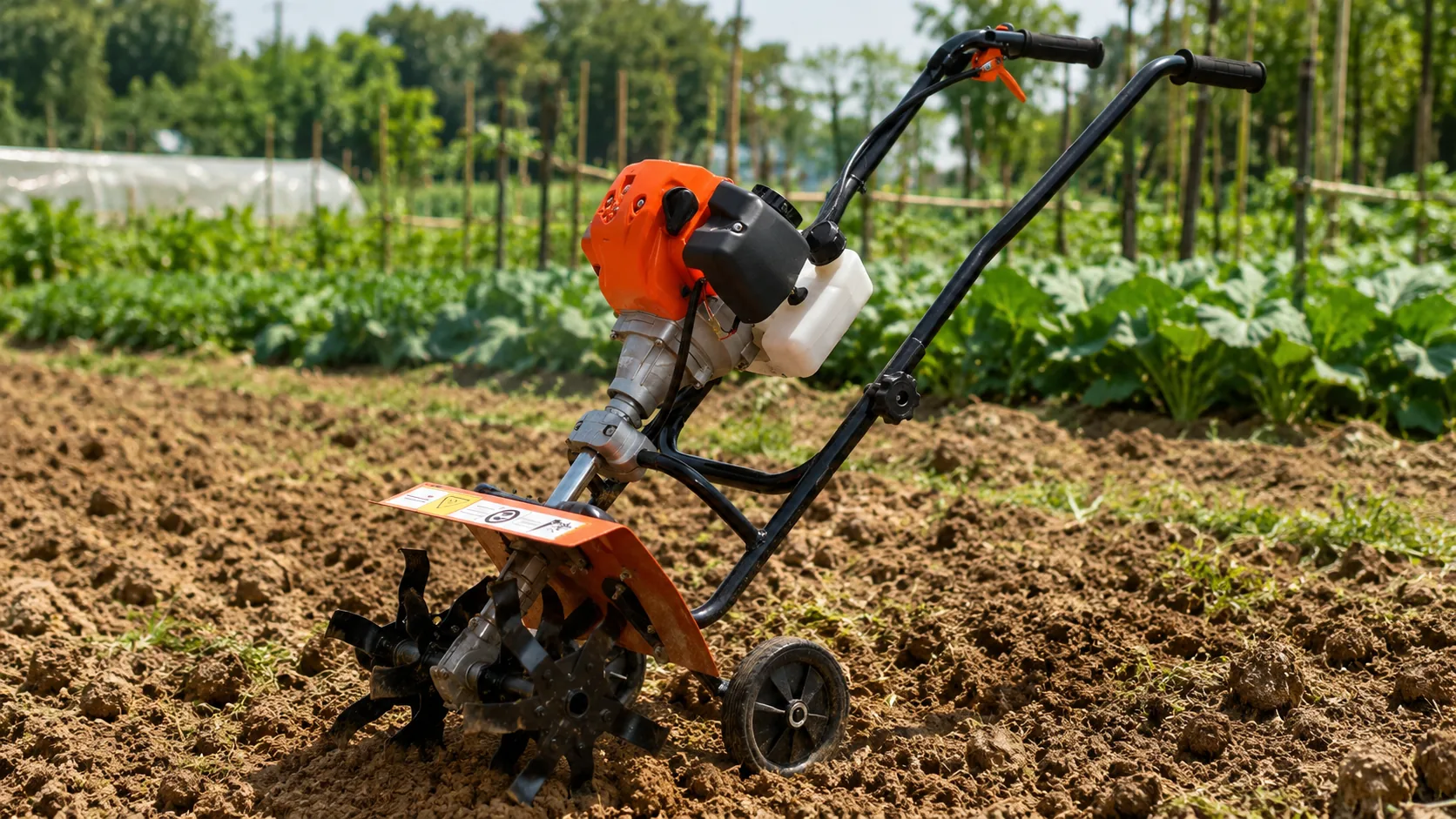
Mini Tiller Engine Runs but Tines Won’t Turn: Drive and Shaft Checks
If a mini tiller engine runs but the tines won’t turn, do not immediately assume the gearbox has failed. Start at the tine assembly itself. Roots, wire, fibrous weeds, packed soil, missing retaining hardware, or an incomplete connection between the tines and drive shaft can stop rotation even while the engine continues to operate normally.
This guide is limited to a tiller whose engine starts and runs while the tine assembly remains stationary or fails to engage. It does not cover tines that rotate but do not cultivate deeply enough, a tiller bouncing on hard ground, or a machine that continually pulls to one side.
Diagnostic Priority
Quick answer: Stop the engine and inspect the complete tine assembly before opening the drive housing. Remove any tightly wrapped roots, grass, string, wire, or packed debris, then confirm that the tines are properly secured to the shaft with the correct retaining hardware. If the assembly is clear and connected, check whether the engine reaches normal working speed and inspect accessible drive connections. Internal clutch, shaft, gear, bearing, or coupling problems become more likely only after these external checks pass.
1. Stop the Machine Before Testing the Tine Assembly
A jammed rotary assembly can release suddenly. Shut off the engine before reaching near the blades, shaft, or drive housing. Allow hot parts to cool and disconnect the spark-plug lead if the inspection requires working close to the rotating mechanism.
Do not attempt to:
- pull weeds, roots, wire, or string from the tines while the engine is running;
- force a jammed tine assembly with the throttle;
- reach between blades while the drive may still be engaged;
- assume the transmission has failed before checking the external rotating parts.
The first diagnostic question is simple: is the tine shaft mechanically free to move, or is something around the rotating assembly physically preventing it from turning?
2. Check for a Physical Jam Around the Tine Shaft
Mini tillers work directly in weeds, loose soil, crop residue, roots, and other fibrous material. Debris does not always pass between the blades. It can wind tightly around the center shaft and lock the complete tine assembly.
| Inspection Area | What to Look For | Why It Matters |
| Both sides of the tine set | Roots, weeds, plastic string | Material can bind the rotating assembly |
| Center shaft area | Compressed grass or tightly wound debris | The outer blades may appear clear while the shaft remains locked |
| Between adjacent blades | Packed soil and fibrous material | Can restrict tine movement |
| Protective cover or exposed shaft | Wire, string, hidden obstruction | Can stop rotation suddenly |
Loose soil around a tiller is normal. A tightly compressed mass around the shaft is not. Remove any obstruction only after the engine is safely stopped.
After cleaning, rotate the tine assembly by hand only if the machine design and operating instructions permit it. The purpose is simply to confirm whether the obvious blockage has been cleared, not to force the internal drive mechanism.
3. Confirm the Tines Are Still Connected to the Drive Shaft
A clear tine assembly can still remain stationary if the final connection between the rotating shaft and tine set is incomplete. Depending on the tiller design, the assembly may use retaining pins, bolts, sleeves, fasteners, or other mechanical connections.
Check the Connection
|
Pay Extra Attention After
|
A tiller can appear to have a transmission fault when the engine and shaft are functioning but the final connection to the tine assembly is incomplete.
Do not replace missing hardware with random bolts or pins. A part may physically fit the hole but still fail to retain the rotating assembly correctly. Match the fastener to the selected tiller model and actual configuration.
4. Separate “Tines Never Turn” From “Tines Stop in Soil”
This distinction prevents two different problems from being diagnosed as one. A tine assembly that never rotates points toward engagement or drive transmission. Tines that rotate freely above ground but stop once they enter soil suggest a different set of checks.
| Symptom | Diagnostic Direction | Priority |
| Tines remain completely stationary | Check engagement, tine-to-shaft connection, and drive path | Current article |
| Tines turn in air but stop in soil | Check excessive load, soil resistance, slipping components, and application setup | Separate diagnosis |
| Tines rotate but do not dig deeply | Check soil condition, operating method, and working setup | Outside this fault |
For the problem discussed here, the key point is to establish whether any rotation is reaching the tine shaft before investigating soil depth, digging technique, or working resistance.
5. Confirm That the Engine Reaches Normal Working Speed
An engine that starts is not necessarily reaching the speed required for normal tine engagement. If the engine remains at unusually low rpm, hesitates heavily, or cannot accelerate normally when the throttle is increased, the fault may be partly on the engine side.
- Check throttle cable movement. Confirm the cable moves through its intended travel.
- Check the throttle lever or trigger. Incomplete movement can prevent the engine from reaching normal working speed.
- Inspect the air filter. A heavily restricted filter can affect acceleration.
- Confirm fuel condition. Poor fuel condition can cause hesitation or weak running.
- Inspect the spark plug condition. Do this before assuming the drive mechanism is entirely responsible.
Do not begin by adjusting the carburetor or dismantling the engine. First determine whether the engine accelerates normally and whether the lack of tine rotation remains even when the engine reaches normal working speed.
TM-WG520B Reference Specifications
| Engine | 1E44F-5 |
| Engine type | 2-stroke, air-cooled |
| Displacement | 52cc |
| Rated output | 1.8 kW at 6500 rpm |
| Working width | 30 cm |
| Working depth | 10–15 cm |
These figures are useful when diagnosing a mini tiller with tines not turning because the correct question is whether the 52cc engine is actually reaching working speed and transferring rotation, not whether more engine displacement is automatically required.
6. Follow the External Drive Path Before Opening the Gearbox
If the engine accelerates normally, the tine area is clear, and the tine mounting is correct, inspect the accessible drive path between the engine and output shaft. What can be checked externally depends on the machine structure.
| 1 | Clear the tine assembly. Confirm that roots, grass, wire, string, or soil are not locking the shaft. |
| 2 | Verify tine-to-shaft hardware. Check pins, bolts, sleeves, mounting holes, and seating. |
| 3 | Confirm normal engine acceleration. Rule out a low-speed engine problem before blaming the transmission. |
| 4 | Inspect accessible drive connections. Look for displaced housings, loose fasteners, shafts, or couplings where visible. |
| 5 | Only then consider internal parts. Avoid dismantling the gearbox, clutch, or sealed transmission without evidence pointing inward. |
This inspection order is especially useful for dealers receiving a machine back with the complaint “the engine runs but the blades do not move.” It separates installation and maintenance issues from genuine internal drive faults.
7. When Internal Drive Wear Becomes More Likely
If the engine behaves normally and all external tine and shaft connections are secure, an internal drive component may need inspection. Depending on the tiller design, this can involve the clutch, drive shaft, gears, bearings, or couplings.
Signs That Justify Deeper Inspection
- Engine speed rises without corresponding tine movement.
- Grinding or rattling is heard from the drive housing.
- The tine shaft has excessive free play.
- Rotation reaches one part of the drive path but not the output shaft.
- Metal debris or abnormal internal movement is found during professional inspection.
None of these signs proves that one specific gear or clutch is defective. Internal components should be inspected according to the actual model rather than replaced based only on the final symptom.
If the tines suddenly stop after striking roots, stones, buried debris, or another obstruction, stop using the machine and inspect the connection before continuing. Continued operation while a component is slipping, jammed, or partly disconnected can increase repair scope.
8. TM-WG520B Tine Assembly and Dealer Inspection Points
TM-WG520B Mini TillerModel: TM-WG520B The TM-WG520B mini tiller uses a 52cc, 2-stroke air-cooled 1E44F-5 engine with a rated output of 1.8 kW at 6500 rpm. Its listed working width is 30 cm and working depth is 10–15 cm. For a compact 30 cm tine assembly, inspect the complete rotating area rather than only the most visible outer blade. Debris wrapped close to the center shaft can restrict the entire assembly. |
Listed net weight: 10.0 kg Correct tine installation and drive-part matching are more useful than forcing the machine when rotation is abnormal.
|
9. Dealer Pre-Delivery and Spare-Parts Checklist
Some drive complaints can be prevented before the machine reaches the end user, especially when mini tillers are packed with components partly disassembled. Dealers and importers can use the following check before delivery or shipment.
Before Delivery
|
For After-Sales Support
|
FAQ: Mini Tiller Tines Not Turning
Why does my mini tiller engine run but the tines do not turn?
Start by checking for roots, grass, wire, string, packed soil, missing retaining hardware, or an incomplete connection between the tine assembly and shaft. If those checks pass and the engine accelerates normally, move farther along the drive path.
Does stationary tiller tines always mean the gearbox is broken?
No. External obstruction, missing retaining hardware, incorrect tine installation, or a loose shaft connection can produce the same symptom. Gearbox or internal-drive inspection should come later.
What if the tines turn above ground but stop when they enter soil?
That is a different fault pattern. It can involve excessive soil resistance, overloading, slipping drive components, or machine-to-application mismatch rather than complete loss of tine engagement.
Can low engine speed prevent tiller tine engagement?
Depending on the drive design, abnormal engine speed can affect how the rotating system engages. Check throttle travel, air filter condition, fuel condition, and spark plug condition before opening the transmission.
Can I use a retaining pin from another 52cc mini tiller?
Do not assume compatibility based only on engine displacement. Tine shafts, mounting holes, sleeves, retaining hardware, and other drive components should be matched to the actual model and confirmed configuration.
When should a mini tiller with non-rotating tines be sent for repair?
Professional inspection is appropriate when the engine runs normally, accessible connections are secure, no external blockage remains, and there is still no drive at the output shaft. Abnormal grinding, rattling, excessive shaft play, or repeated loss of engagement also justify deeper inspection.
Confirm the Correct TM-WG520B Tine and Drive ConfigurationFor a mini tiller engine that runs while the tines remain stationary, external tine, shaft, throttle, and drive checks should come before internal transmission replacement. Importers and dealers sourcing the TM-WG520B can confirm the required tine assembly, drive-related spare parts, and final machine configuration before quotation so replacement parts match the supplied model. |
|