
Electric Pruning Shears Won’t Open After Power-On: What to Check
Electric pruning shears won’t open after power-on? Check battery seating, safety controls, blade jams and pivot blockage before opening the drive housing.
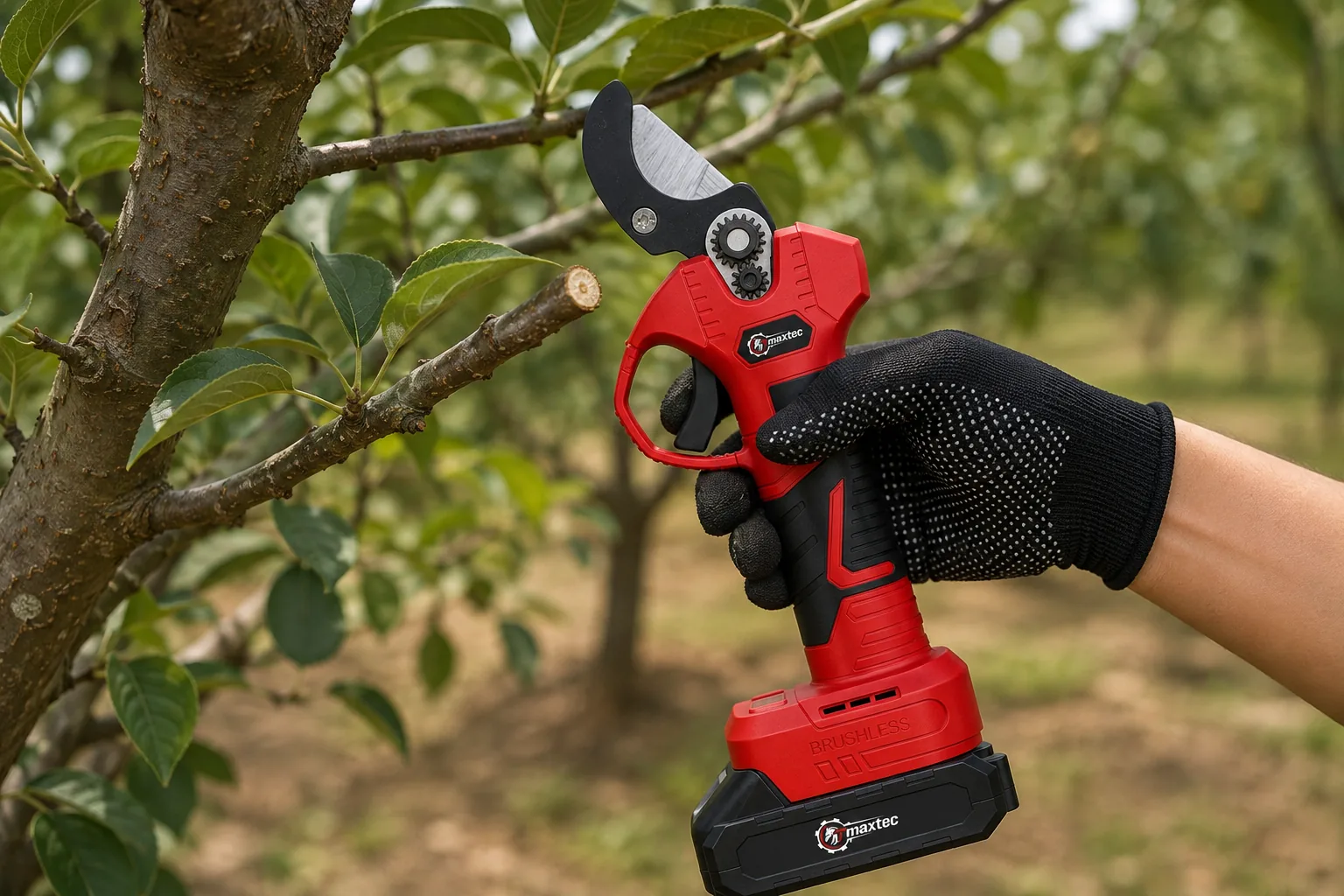
Electric Pruning Shears Won’t Open After Power-On: Blade and Startup Checks
If your electric pruning shears won’t open after power-on and the blades remain closed, first determine whether the tool is actually powered and has entered its normal operating mode. A closed blade can result from an incomplete battery connection or startup sequence just as easily as from a mechanical problem.
If power is present but the cutting head still stays closed, inspect the blade area for dried sap, bark, wood fibers, or abnormal pivot resistance before assuming that the motor, gearbox, sensor, or electronic control system has failed. This guide does not cover pruning shears that open normally but stop halfway through a branch.
| Quick answer: | Separate a power/startup problem from a closed-blade jam before opening the tool. Confirm the battery is seated, charged, and making clean contact; then use the correct startup or safety sequence for the actual model. If the machine powers on but the blade remains closed, remove the battery and inspect for dried sap, bark strips, wood fibers, or abnormal resistance around the blade and pivot. Internal drive inspection should come only after the cutting head is clear and the tool still cannot open normally. |
1. First Decide Whether the Shears Are Powered or Simply Not Starting
A blade that remains closed does not automatically mean the cutting mechanism is jammed. Begin with the battery and basic electrical state before touching the cutting head.
| Check | What to Confirm | Diagnostic Meaning |
| Battery seating | Battery is fully inserted and does not feel loose | Rules out an incomplete power connection |
| Battery contacts | No visible dirt, moisture, or damage | Helps separate contact issues from blade faults |
| Battery charge | Sufficient charge is available | Low or absent power may prevent startup |
| Startup response | Indicator, sound, or other response provided by the model | Shows whether the tool has actually switched on |
If the pruning shear shows no response at all, treat the complaint first as a battery, connection, switch, or electrical problem rather than a blade-opening problem.
TM-SH4504Li reference: the model uses a 21V DC lithium-ion battery system, a brushless motor, and a rated power of 300W. These specifications are useful for confirming the supplied configuration, but they do not by themselves identify why a closed blade is not opening.
2. Confirm the Startup and Safety Sequence Before Inspecting Parts
Cordless pruning shears may require a startup, trigger, or safety action before the blade moves into its working position. The exact sequence varies by model, so do not copy the trigger pattern from another brand or pruning shear.
- Switch the tool off and restart it according to the supplied instructions.
- Confirm that any safety control is in the operating position.
- Use the trigger only according to the actual model procedure.
- Watch or listen for the normal startup response.
- Stop repeatedly pulling the trigger if the tool does not respond as expected.
Some electric pruning shears intentionally remain closed during storage. Depending on the design, the blade may not open until the required startup action has been completed.
For TM-SH4504Li orders, the correct operating sequence should be confirmed from the instructions supplied with the actual machine rather than assumed from another pruning-shear model.
3. Remove the Battery and Inspect the Closed Cutting Head
If the tool powers on but the blade does not open, the next priority is the cutting head. Fruit-tree pruning leaves sap, bark fragments, and fine wood fibers around closely fitted blade surfaces. Once this residue dries, it can add enough resistance to prevent normal opening.
Disconnect the battery before touching the blade area.
Do not place fingers between closed blades and do not attempt to force the cutting head open while power is connected.
| Inspection Position | What May Be Trapped or Deposited |
| Inside blade faces | Sticky sap or compacted residue |
| Moving blade against fixed cutting surface | Bark strips or crushed wood fibers |
| Blade pivot | Dried sap, dirt, or contamination |
| Area behind the cutting edge | Fine bark or branch fibers hidden by the closed blade |
A thin layer of dried residue can look minor while still creating substantial drag in a closely fitted pruning head. Clean visible contamination without prying against the cutting edge.
4. Use the Fault History to Separate Sap Buildup From a Fresh Jam
How the fault appeared is one of the most useful clues. A tool that operated normally, completed a cut, closed, and then refused to reopen should be checked differently from a machine that was stored for several weeks and will not open at the next startup.
Stopped Opening Immediately After a Cut
|
Would Not Open After Storage
|
Because the blades are already closed, trapped branch material may be difficult to see from the outside. Inspect both sides of the head under good lighting before moving toward internal drive components.
5. Inspect the Pivot Without Randomly Changing Its Adjustment
The moving blade rotates around a pivot. Dirt, incorrect adjustment, wear, or mechanical distortion in this area can stop the blade from opening smoothly even when the battery and motor system are functional.
With the battery removed, look for:
- excessive dirt or dried sap around the pivot;
- a visibly loose pivot or blade fastener;
- a fastener that appears displaced;
- unusual sideways movement of the blade;
- scraping marks where blade surfaces contact;
- a bent, chipped, or otherwise damaged cutting component.
Do not automatically loosen or tighten the pivot. Too much play can disturb blade alignment, while excessive tightening may increase resistance. The correct adjustment depends on the actual cutting-head design.
6. Check Whether the Previous Cut Overloaded the Cutting Head
The TM-SH4504Li lithium battery pruning shears are specified with a 0–40 mm cutting diameter and an SK5 blade. That range is useful for application matching, but diameter alone does not determine cutting resistance.
A hard, dry, knotted, or irregular branch can load the cutting head more heavily than a fresh branch of similar diameter. If the blade stayed closed immediately after a difficult cut near the upper working range, inspect the cutting mechanism before repeatedly activating the trigger.
| Branch Condition | Why Resistance May Increase |
| Hard or dry wood | May resist cutting more than fresh material of similar diameter |
| Knotted branch | Local density and grain direction can increase blade load |
| Fibrous green shoot | Bark or fibers may remain trapped after closure |
| Branch near maximum cutting range | Leaves less margin for difficult material or irregular branch shape |
Repeated trigger operation against a mechanically blocked blade can place additional load on the drive system. If the head will not release without force, stop external troubleshooting and move to controlled service inspection.
7. Do Not Force the Closed Blades Open
Avoid inserting screwdrivers, pliers, wedges, or similar tools between the blades. Increasing leverage may damage parts that were not originally defective.
| Forced Opening Can Cause | Possible Consequence |
| Damage to the cutting edge | Reduced cutting quality or blade replacement |
| Bent moving blade | Incorrect blade travel or alignment |
| Disturbed pivot alignment | Additional friction or uneven contact |
| Sudden blade release | Serious hand-injury risk |
If visible debris cannot be cleared without prying the blades apart, the safer next step is professional inspection rather than applying more mechanical force.
8. Suspect the Internal Drive Only After External Causes Are Eliminated
Internal components belong later in the diagnostic sequence. Before opening the tool, confirm that the battery and startup system work and that no visible obstruction remains around the cutting head.
Move to internal inspection only after confirming:
Battery connected and charged → tool powers on → correct startup procedure used → no trapped bark or wood fiber → visible sap removed → pivot and blades show no obvious external obstruction.
If the motor can be heard but the blade remains completely closed, or the mechanism repeatedly tries to move without opening the cutting head, a deeper drive or control problem may need inspection.
Depending on the actual pruning-shear design, professional diagnosis may involve the gear mechanism, motor drive connection, position sensing, switch system, or electronic control components. The symptom alone does not prove that any one of these parts has failed.
TM-SH4504Li Product Reference
Model: TM-SH4504Li
Power system: 21V DC lithium-ion battery
Motor: Brushless
Rated power: 300W
Cutting diameter: 0–40 mm
Blade: SK5
For dealers and importers, this model is relevant when confirming battery configuration, replacement blade assemblies, and after-sales parts for orchard and pruning applications. Final replaceable components should be matched to the selected order specification.
| Check Specifications |
9. Dealer After-Sales Checklist for a Pruning Shear That Won’t Open
Dealers should separate “blade will not open” from “blade stops during a cut” before sending parts or recommending disassembly. One clear symptom question can prevent the wrong repair path.
| 01 | Ask whether the blade fails before cutting or stops only inside a branch. |
| 02 | Confirm the battery is fully seated and sufficiently charged. |
| 03 | Inspect battery contacts for dirt, moisture, or visible damage. |
| 04 | Confirm the correct startup and safety-control procedure for the supplied model. |
| 05 | Remove the battery before checking the closed cutting head. |
| 06 | Check both sides of the blades for bark, fibers, dried sap, and crushed wood. |
| 07 | Inspect the pivot for contamination, abnormal play, scraping, or visible displacement. |
| 08 | Ask whether the fault appeared immediately after a difficult cut or after storage. |
| 09 | Do not advise the customer to force the blades apart with hand tools. |
| 10 | Match replacement blade assemblies, batteries, and other service parts to the confirmed model configuration. |
| 11 | Escalate to internal inspection when power is normal but no external cause explains the closed blade. |
FAQ: Electric Pruning Shears Won’t Open
Why do my electric pruning shears stay closed after I switch them on?
First check battery seating, charge, contacts, and the correct startup or safety sequence. If the tool is definitely powered, remove the battery and inspect the closed cutting head for sap, bark, or wood fibers.
Can dried tree sap stop pruning shears from opening?
Yes. Dried sap around closely fitted blade surfaces or the pivot can increase mechanical resistance. A tool that worked normally before storage may therefore need cutting-head inspection before motor or gearbox diagnosis.
What if a pruning shear closed after a branch cut and will not reopen?
Inspect for a thin bark strip, wood fiber, or crushed branch material trapped between the moving and fixed blade surfaces. Remove the battery before checking or clearing the head.
Should I loosen the blade pivot if the shears will not open?
Not automatically. Incorrect pivot adjustment can create excessive play or additional friction. Inspect for contamination, displacement, scraping, or visible damage first and follow the adjustment method for the actual model.
Can I pry closed pruning shears open with a screwdriver?
No. Prying can damage the cutting edge, bend the blade, disturb pivot alignment, and create an injury risk if the mechanism suddenly releases.
When should a dealer suspect the motor or gearbox?
Internal drive inspection becomes more reasonable after battery power, startup controls, trapped debris, sap buildup, and visible pivot problems have been ruled out. A motor sound without blade movement can justify deeper professional inspection, but it does not identify one failed part by itself.
Is the TM-SH4504Li suitable for branches up to 40 mm?
The TM-SH4504Li is specified with a 0–40 mm cutting diameter and an SK5 blade. Actual cutting resistance also depends on branch hardness, dryness, knots, shape, and condition, so difficult material near the upper range should not be forced through the cutting head.
Need the Correct TM-SH4504Li Configuration for Wholesale Supply?When electric pruning shears won’t open after power-on, diagnose the operating state and closed cutting head before assuming an internal drive failure. For TM-SH4504Li orders, buyers can confirm the battery configuration, blade assembly, and relevant replacement parts according to the selected specification. |
|