
Why Does a Gasoline Water Pump Lose Pressure While Running?
If a gasoline water pump loses pressure while running, check the suction strainer, hose leaks, lift height and engine speed before opening the pump.
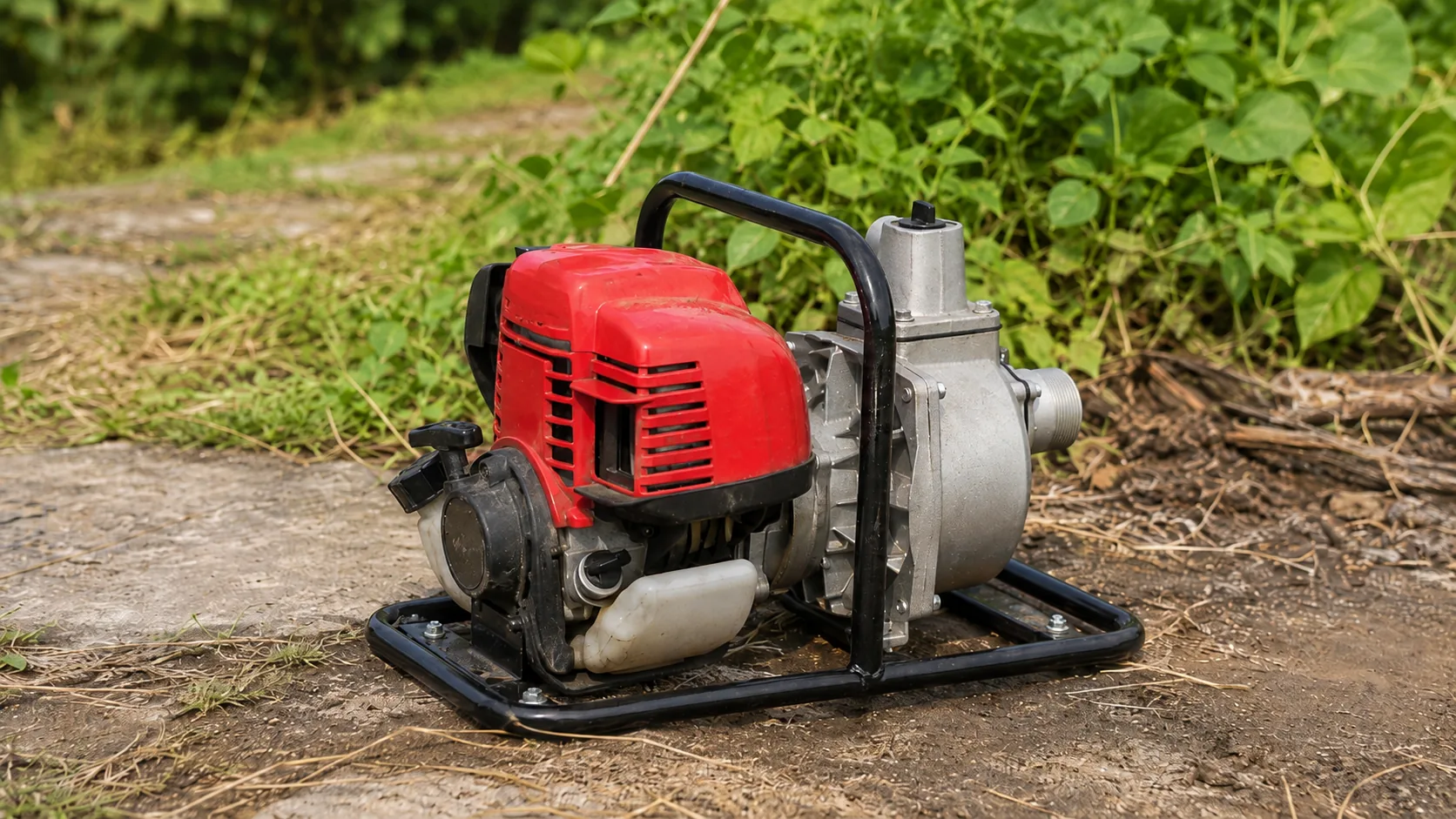
Why Does a Gasoline Water Pump Lose Pressure While Running? Troubleshooting Guide
If a gasoline water pump loses pressure after starting with normal water flow, check the suction side before assuming the pump body or impeller is damaged. A strainer collecting debris, air entering through a suction connection, a hose collapsing under vacuum, or a falling source-water level can all reduce output while the engine continues running normally.
This troubleshooting guide is specifically for a pump that successfully begins moving water and then becomes weak, intermittent, or noticeably slower during operation. It does not cover a gasoline water pump that cannot draw water from the beginning, which requires a separate priming and no-flow diagnosis. For dealers and importers, keeping these two complaints separate helps prevent unnecessary pump disassembly and incorrect warranty diagnosis.
| Quick answer: | Start with the water source and suction system. Check whether the strainer is becoming blocked, whether it remains fully underwater, and whether any suction coupling, gasket, clamp, or hose can admit air. Then compare the actual suction height and hose arrangement with the pump's intended installation. If pressure falls while engine speed remains stable, hydraulic and hose conditions deserve priority. Internal impeller inspection should come only after these external causes have been eliminated. |
1. Use the Pressure-Drop Pattern to Choose the First Check
The way the water output changes can narrow the inspection considerably. A gradual reduction after several minutes usually suggests that something is changing during operation rather than that the pump suddenly suffered an internal mechanical failure.
| Observed condition | More useful first checks | What it may indicate |
| Flow gradually weakens after several minutes | Strainer, water level, suction hose shape | Debris accumulation, falling source level, hose collapse |
| Pressure drops suddenly | Hose position, exposed strainer, loose coupling | Air entry or a sudden change in the suction installation |
| Water weakens but engine sound stays stable | Suction and discharge system | Hydraulic restriction rather than an obvious engine problem |
| Flow and engine speed fall together | Throttle and engine operating condition | The problem may not be limited to the pump system |
A pump drawing from a pond or irrigation ditch may start strongly while the strainer is clean, then lose useful output as grass, leaves, sediment, or plastic accumulates around the inlet. A pump draining a small pit can show a similar symptom when the water level falls far enough for the suction end to begin drawing air.
Safety point: do not open the pump casing, disconnect hoses, or touch the engine and muffler while the unit is running or still hot.
2. Check the Strainer and Water Level Before the Pump Body
For pumps working from ponds, farm tanks, temporary irrigation channels, drainage pits, or other open water sources, the inlet strainer should be one of the first inspection points. Honda troubleshooting guidance identifies a clogged suction strainer among the common causes of reduced pump output.
Do not judge the strainer only by looking at the surface facing upward. Mud, roots, leaves, grass, and other material may collect underneath or around the sides while water is still passing through the remaining open area. The pump can therefore continue discharging water while producing noticeably less useful flow.
| Suitable inlet position
Keep the suction end completely underwater while leaving enough clearance from mud, loose sediment, vegetation, and other material that can be pulled against the strainer. |
Problematic inlet position
Do not leave the strainer partly exposed as the source level falls, but also do not push it directly into the bottom mud simply to keep it submerged. |
If the water source is dropping quickly, reposition the suction end or move the pump closer to the remaining water. Internal impeller inspection should come later if cleaning and repositioning the external inlet do not restore normal flow.
3. Find Suction-Side Air Leaks and Hose Restrictions
A suction-side leak can be difficult to identify because it may not drip water. The inlet line is operating under negative pressure, so a loose coupling, damaged washer, cracked fitting, or small hose defect can allow air to enter instead of producing an obvious external water leak. Honda recommends securing suction connections and checking sealing washers when diagnosing poor pumping performance.
- Inspect the pump inlet connection. Check the coupling and threaded connection for movement or poor seating.
- Check sealing washers and gaskets. A damaged sealing component should be replaced rather than compensated for by excessive tightening.
- Inspect hose clamps. Confirm that they are correctly positioned and securing the actual sealing area.
- Examine the complete suction hose. Look for punctures, splits, rubbed areas, or damage near fittings.
- Watch the hose shape under suction. A soft hose can appear normal before starting and flatten inward once vacuum develops.
Not every hose that fits the inlet diameter is suitable for suction service. Honda troubleshooting information identifies collapsed, punctured, or damaged suction hoses as possible causes of poor performance. Gorman-Rupp also notes that an internal hose lining can collapse and restrict flow even when the exterior does not immediately show the fault.
Sharp bends deserve attention as well. A hose routed over a tank edge or around other equipment can kink as it moves, warms, or experiences stronger suction. If the hose diameter visibly changes as engine speed increases, stop the machine and check whether the hose construction is suitable for the application.
4. Compare Suction Height and Discharge Resistance With the Installation
Pump specifications should not be read as a promise that the same flow will be available under every installation condition. Vertical suction height, hose length, hose diameter, fittings, airtightness, water condition, discharge elevation, and bends all affect what the operator sees at the outlet.
Honda recommends placing portable pumps close to the water and using the shortest practical suction hose because excessive suction head and hose length reduce output. The same principle matters when troubleshooting a gas water pump with low pressure: changing the installation can change the result even when the pump itself has not changed.
| Installation factor | Lower-risk arrangement | Condition that can reduce useful flow |
| Pump position | Relatively close to the water source | Pump positioned unnecessarily high above the source |
| Suction hose | Shortest practical route with suitable suction construction | Long, soft, kinked, leaking, or restrictive hose |
| Discharge route | Direct route with reasonable elevation and bends | Long uphill run, multiple tight bends, kinked section, or restricted passage |
| Troubleshooting approach | Compare with the previous working arrangement | Assuming a mechanical fault immediately after changing hoses or elevation |
A pump transferring water into a nearby tank may therefore behave differently from the same unit pushing water uphill through a long irrigation hose. If the complaint started only after changing the hose layout, compare the new installation with the previous arrangement before opening the pump casing.
5. Separate Engine-Speed Problems From Internal Pump Problems
Watch the engine at the same time as the discharge. If the water pump pressure drops while running but engine speed remains stable, return to the strainer, suction hose, airtightness, water level, and installation checks. If the engine also slows noticeably or becomes uneven, the diagnosis should include engine operating condition and throttle position.
Manufacturer troubleshooting information includes insufficient engine speed or reduced engine output among possible causes of weak discharge. This does not mean governor or carburetor adjustment should be the first response. Changing engine settings before confirming the actual cause can create a second problem while leaving the original suction restriction unresolved.
Internal pump inspection becomes more relevant only after the strainer is clear, the suction end stays underwater, connections are airtight, the hose is not collapsing, installation height is reasonable, and the engine maintains normal speed. Generac troubleshooting material lists impeller obstruction, impeller wear, and mechanical-seal issues among possible internal causes of weak discharge.
Allow the engine and pump to cool and relieve any pressure before opening the casing. Weak flow alone is not enough evidence to diagnose a worn impeller because several external faults can produce almost the same field complaint.
6. TM-WP40C Reference for Compact Irrigation and Water Transfer
MODEL REFERENCE
TM-WP40C Gasoline Water PumpThe TM-WP40C gasoline water pump is listed with a 1.5-inch water outlet, 35.8cc four-stroke air-cooled engine, and rated engine power of 1.1kW at 6500RPM. The product page gives a reference maximum lift height of 30m and suction of 8m. |
|
|
Why this model is relevant to this troubleshooting topic: compact pumps used around irrigation canals, farm tanks, garden watering, and drainage pits are often moved between installations. Suction height, hose construction, connector sealing, strainer position, and discharge routing can therefore change from one job to another and create apparent “low pressure” complaints. The published 8m suction and 30m maximum lift figures are reference values. They should not be interpreted as meaning the pump maintains identical flow at every height or hose arrangement up to those limits. Final configuration should be confirmed according to the quotation or proforma invoice.
|
For field irrigation, placing the pump several metres above a canal merely because the published suction value appears sufficient can result in lower practical flow than positioning the same unit closer to the water. Installation conditions should be reviewed before the pump is treated as mechanically defective.
7. Importer and Dealer Checklist for Low-Pressure Complaints
For wholesale supply, the specification sheet is only part of the application review. Dealers are more likely to diagnose complaints correctly when the expected hose, water source, working height, and installation conditions are understood before delivery.
| 01 | Confirm the intended water source: irrigation canal, farm tank, shallow pond, drainage pit, or another application. |
| 02 | Confirm the suction hose diameter and construction rather than assuming any flexible hose that fits the inlet is suitable. |
| 03 | Review connectors, clamps, gaskets, and sealing washers as part of the supplied or recommended configuration. |
| 04 | Match the strainer to the working environment and explain that it should remain submerged without sitting directly in sediment. |
| 05 | Ask for the typical vertical suction height rather than evaluating the application only from the published maximum figure. |
| 06 | Check the expected discharge distance and elevation where customers use long irrigation or transfer hoses. |
| 07 | Separate “will not pump” from “loses pressure after starting.” These complaints require different troubleshooting sequences. |
| 08 | Record whether engine speed changes when flow drops so after-sales staff can separate engine-related symptoms from hydraulic restrictions. |
| 09 | Keep appropriate sealing and service parts available according to the confirmed pump configuration and local after-sales plan. |
| 10 | Maintain repeat-order consistency by confirming accessories and configuration against the quotation or proforma invoice rather than relying only on a general model name. |
For dealer troubleshooting, the most efficient inspection order is usually strainer and water level → suction connections → suction hose condition → installation height → discharge resistance → engine speed → internal pump components.
FAQ: Gasoline Water Pump Loses Pressure
Why does my gasoline water pump start strong and then become weak?
Check for conditions that change during operation: debris collecting on the suction strainer, a falling water level, air entering a suction fitting, or a hose beginning to collapse under vacuum. If the engine remains at a stable speed, these checks normally deserve priority over internal pump disassembly.
Can a suction hose air leak occur without leaking water?
Yes. Because the inlet side operates under suction, a poor seal can draw air inward instead of visibly leaking water outward. Inspect the inlet connector, clamps, threaded fittings, gaskets, sealing washers, and hose condition.
Can a water pump suction hose collapse while the pump is running?
A hose that is too soft for suction service can deform inward when vacuum increases. Internal hose damage can also restrict flow without being obvious from the outside. Check the hose under actual suction conditions from a safe position.
Does an 8m suction specification mean the pump gives full flow at 8m?
No. The TM-WP40C lists suction of 8m as a reference specification, but practical performance also depends on hose length, diameter, fittings, airtightness, vertical height, water conditions, and the discharge arrangement.
Can a long discharge hose make a gasoline water pump appear to have low pressure?
Yes. A long hose, increased elevation, tight bends, kinks, or a restricted passage can increase resistance and reduce useful flow at the discharge end. Compare the hose arrangement with a known working installation before diagnosing pump damage.
When should the impeller be inspected for a low-pressure complaint?
Inspect internal pump components after confirming that the strainer is clear, the suction end stays underwater, connections are airtight, the hose does not collapse, installation height is reasonable, discharge routing is not excessively restrictive, and engine speed remains normal.
Confirm the Pump Configuration Against the Real Application
When a gasoline water pump loses pressure, the complaint is often easier to resolve when the installation is examined before internal parts. For importers and dealers evaluating the TM-WP40C for irrigation, tank transfer, garden watering, drainage, or similar applications, confirm the expected suction height, hose construction, connectors, strainer, and discharge arrangement together with the pump specification.
| Need a compact 1.5-inch gasoline water pump for your wholesale market? Review the TM-WP40C reference specifications and confirm the final configuration according to your intended application and order requirements. |
|