
Why Does a Brush Cutter Die at Idle but Run With Throttle?
A brush cutter dies at idle when low-speed fuel delivery or idle settings are unstable. Check the choke, filter, fuel lines and idle speed first.
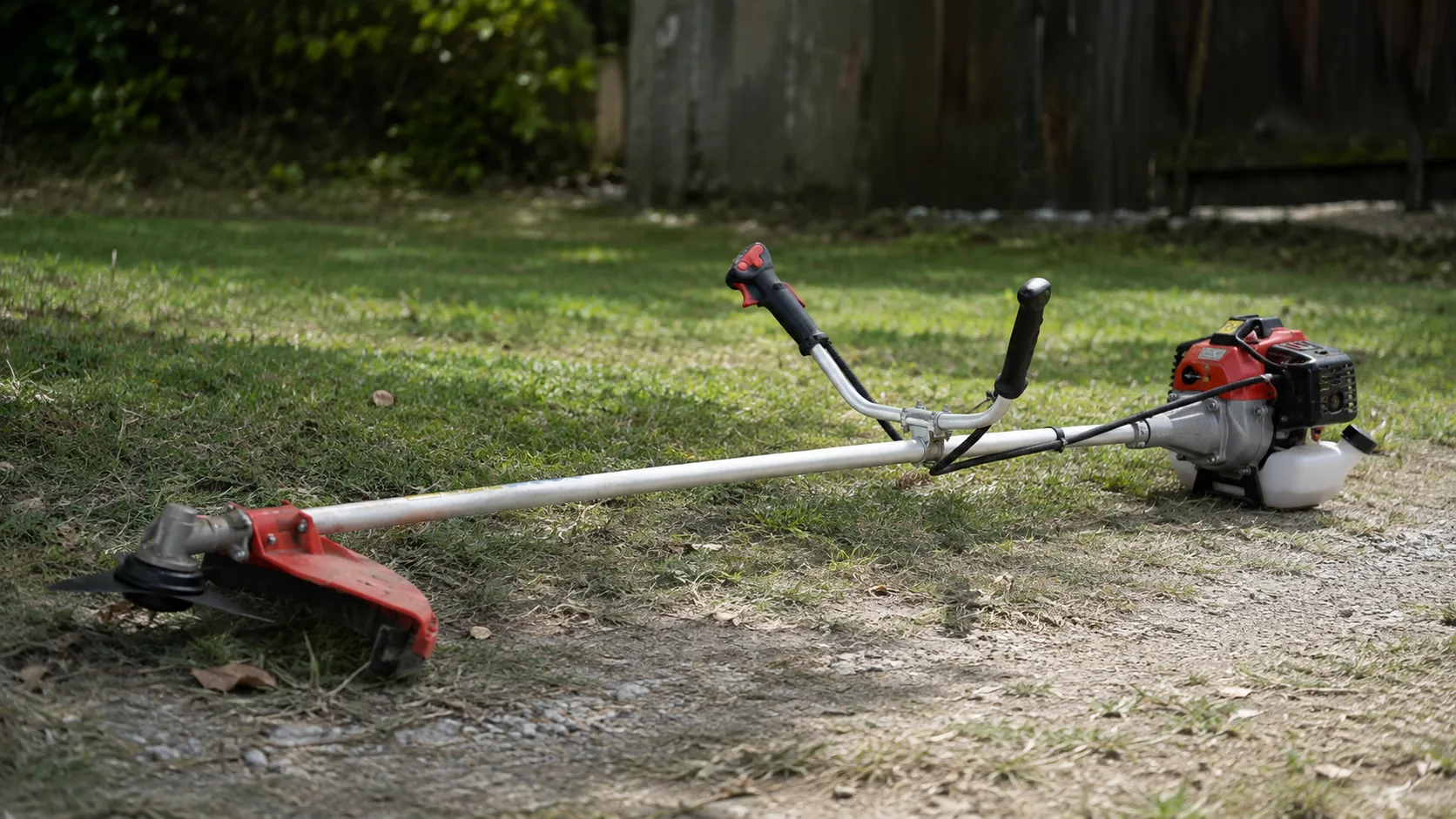
Why Does a Brush Cutter Die at Idle but Run With Throttle?
A brush cutter that dies at idle but runs with throttle usually has a low-speed running problem rather than a cutting-load problem. If the engine accelerates and continues running while the trigger is held, but stops as soon as engine speed returns to idle, begin with the choke position, air filter, fuel condition and external fuel supply before changing carburetor settings.
This symptom needs to be separated from a brush cutter that idles normally but bogs down when the throttle is opened. The diagnostic direction is different: here, the important question is what prevents the engine from continuing to run after the throttle plate returns to its low-speed position.
1. Confirm That the Engine Is Actually Dying at Idle
Run the brush cutter in a safe open area with the cutting attachment clear of people and objects. After starting, briefly increase engine speed and then release the throttle trigger completely. What happens during the next few seconds determines which diagnostic path makes sense.
| Observed behavior | Likely diagnostic direction | What not to assume |
| Engine slows normally, then stops after throttle release | Low-speed fuel, airflow, idle or sealing issue | Do not treat it as a cutting-load problem |
| Engine dies while throttle is being opened | Acceleration or broader fuel-delivery diagnosis | Do not focus only on idle |
| Engine stays running, but blade or head keeps rotating | Idle speed or clutch-related safety check | Do not accept excessive idle speed as the repair |
The cutting attachment should remain stationary at correct idle. Manufacturer guidance for professional brush cutters follows the same principle: idle must remain below the speed at which the clutch engages and the attachment begins to turn.
This distinction prevents a common troubleshooting mistake. Raising idle speed may temporarily stop the engine from stalling, but it can hide the original low-speed problem while creating a separate operating hazard.
2. Complete the External Checks Before Adjusting the Carburetor
The fastest checks are also the least invasive. A choke that has not fully returned, a dirty filter or questionable fuel can all disturb idle combustion without requiring carburetor disassembly.
Confirm that the choke control has moved completely to its normal run position after starting. Do not judge only by the external lever. If movement feels stiff, incomplete or inconsistent, inspect the linkage before altering fuel adjustments. Reapplying choke every time the engine begins to stop can also make the original symptom harder to identify.
With the engine switched off and cool, inspect the filter for heavy dust, grass particles, oil contamination or deterioration. Restricted airflow can make low-speed operation unstable.
Clean or replace the serviceable element according to the machine's maintenance procedure, reinstall the cover correctly and retest. Avoid prolonged operation without the filter, especially in dusty grass-cutting conditions.
For a two-stroke brush cutter, establish a known fuel condition before making mechanical adjustments. Confirm that the petrol is fresh, the specified two-stroke oil was used, the mixture was measured rather than estimated, and the storage container has not introduced water, dirt or deteriorated fuel.
3. Inspect the Fuel Filter and Fuel Lines for Low-Speed Supply Problems
A fuel-system problem does not need to create a complete blockage before engine behavior changes. Aging tubing, a loose connection, debris around the in-tank filter or inconsistent fuel pickup can contribute to unstable running as engine speed returns toward idle.
With the engine stopped and away from ignition sources, inspect accessible fuel lines for cracks, hardening, loose joints, sharp bends or leakage. Check the in-tank fuel filter according to the service arrangement used on the actual machine.
| Fuel-system observation | Why it deserves attention |
| Hardened or cracked tubing | May disturb fuel delivery or allow leakage depending on the location of the damage. |
| Dirty in-tank filter | Can restrict consistent supply and complicate carburetor diagnosis. |
| Idle changes when machine is tilted | Fuel pickup position and line routing become more relevant. |
| Visible petrol leakage | Stop using the machine until the leak has been identified and repaired. |
Position-dependent behavior is especially useful evidence. If idle becomes noticeably worse only when the brush cutter is tilted in one direction, inspect the pickup system before assuming that the low-speed carburetor setting is the only cause.
4. Compare Idle Behavior With the TM-CG330 Specification
The TM-CG330 is a useful reference for this fault because its published specification separates idle operation clearly from rated working speed. It uses a 1E36F two-stroke air-cooled engine with 32.6cc displacement, while the specified mixed-fuel ratio is 1:30.
| TM-CG330 specification | Published value | Relevance to this symptom |
| Engine | 1E36F, two-stroke, air-cooled | Fuel mixture, intake and low-speed carburetion must be evaluated as a two-stroke system. |
| Displacement | 32.6cc | Replacement parts still need to match the actual configuration, not displacement alone. |
| Mixed-fuel ratio | 1:30 | Use the ratio specified for the model rather than copying another machine's mixture. |
| Fuel tank | 900 ml | Useful when checking the machine's confirmed order configuration and fuel-system service parts. |
| Idling speed | 3000 ±200 rpm | Provides a reference when deciding whether idle is genuinely too low. |
| Rated output | 0.90 kW at 6500 rpm | Shows why normal running at working speed does not prove that the low-speed circuit is functioning correctly. |
A small idle correction may be appropriate when the carburetor and fuel system are otherwise functioning correctly. It should not become the default response whenever the engine stalls. If the machine can only remain running after idle is increased enough to make the blade or trimmer head rotate, the underlying fault has not been properly resolved.
Adjustment limit: If accurate engine speed cannot be confirmed, or a supposedly necessary idle adjustment causes the cutting attachment to move, stop increasing the setting and continue the diagnosis.
5. When the Carburetor Low-Speed Circuit or an Air Leak Becomes More Likely
After choke operation, airflow, fuel condition and external fuel delivery have been checked, the carburetor becomes a more reasonable diagnostic target. The engine does not use exactly the same throttle opening at idle as it does while accelerating, so a restriction or incorrect setting affecting low-speed operation can allow the engine to run with the throttle open but stop when it closes.
- Confirm the existing idle setting. Determine whether it is actually below the intended operating range before making a correction.
- Consider the low-speed fuel path. Depending on the carburetor fitted, restricted passages, metering components or adjustment settings may affect idle operation.
- Inspect the intake side. Loose mounting hardware, deteriorated intake components or sealing problems may introduce unwanted air.
- Watch for unpredictable adjustment response. If engine speed rises and falls unexpectedly or screw adjustments produce little consistent response, an air leak or internal carburetor issue deserves closer inspection.
- Use the correct service parts. Diaphragms, gaskets and replacement carburetors must match the carburetor actually fitted to the machine.
Avoid repeatedly turning mixture screws to compensate for an unidentified leak. Carburetor adjustment cannot reliably correct a mechanical sealing problem.
Disassembly also introduces new variables, including incorrect gasket placement, damaged diaphragms and contamination of small passages. If routine external checks do not reveal the cause, carburetor cleaning and adjustment should follow the service procedure for the fitted configuration.
6. TM-CG330 Reference for Dealers and Brush Cutter Buyers
|
TM-CG330 32.6cc Gasoline Brush Cutter Model: TM-CG330 This model is relevant to low-speed troubleshooting because its published specifications include both a 3000 ±200 rpm idle speed and 0.90 kW rated output at 6500 rpm. For dealers, that makes it easier to distinguish an idle complaint from a machine that loses power only during cutting. Procurement point: The product page does not specify one fixed carburetor model. Replacement carburetors, diaphragms and repair kits should therefore be confirmed against the actual production configuration rather than selected only because the engine is 32.6cc. |
|
7. Importer and Dealer Idle-Problem Checklist
Idle performance is worth checking during pre-delivery inspection because customers often describe several different faults with the same complaint: “the engine keeps stopping.” A short controlled test helps distinguish a true low-speed problem from acceleration, clutch or fuel-pickup faults.
| No. | Dealer / importer inspection point | Acceptance question |
| 1 | Cold-start and choke operation | Does the choke return completely to the normal run position? |
| 2 | Throttle response | Does the engine accelerate without stopping during throttle opening? |
| 3 | Return to idle | Does the engine continue running after the trigger is fully released? |
| 4 | Attachment behavior | Does the blade or trimmer head stop rotating at idle? |
| 5 | Fuel specification | Does the supplied instruction match the confirmed two-stroke fuel ratio for this model? |
| 6 | Fuel-line and filter condition | Are lines correctly routed, secure and free from leakage or visible damage? |
| 7 | Air-filter installation | Is the correct filter fitted and properly seated before shipment? |
| 8 | Carburetor configuration | Are carburetor and service-part references tied to the actual production configuration? |
| 9 | Spare-parts preparation | Are fuel filters, fuel lines and relevant carburetor service parts identifiable for after-sales work? |
| 10 | Repeat-order consistency | Will any carburetor or engine-service configuration change be documented before the next bulk order? |
For the TM-CG330, the published 3000 ±200 rpm idle specification provides a useful reference, but safe attachment behavior and the confirmed machine configuration still determine whether an adjustment or replacement part is appropriate.
Frequently Asked Questions
Why does my brush cutter die when I release the throttle?
The engine may not be maintaining combustion at its low-speed setting. Check choke position, air-filter restriction, fuel condition, fuel filter and fuel lines first. If those areas are normal, inspect idle adjustment, the carburetor low-speed circuit and the intake system for unwanted air entry.
Can I increase the idle speed to stop the brush cutter from stalling?
A small correction may be appropriate when idle is genuinely below the specified range, but increasing it should not be used to conceal poor low-speed combustion. If the blade or trimmer head begins to rotate at idle, stop increasing the setting and investigate the underlying problem.
Can a dirty air filter make a brush cutter stall at idle?
Yes. Restricted airflow can alter combustion and make low-speed running unstable. Inspect and service the filter before adjusting the carburetor because correcting the airflow restriction may remove the need for further adjustment.
Does running well at full throttle mean the carburetor is good?
Not necessarily. A two-stroke engine operates under different throttle conditions at idle and at higher speed. A problem affecting low-speed metering can therefore appear only after the throttle closes.
What is the correct idle speed for the TM-CG330?
The published TM-CG330 specification lists an idling speed of 3000 ±200 rpm. The machine also needs to return to idle without the cutting attachment continuing to rotate.
Can I order a replacement carburetor using only the 32.6cc engine size?
That is not sufficient for a procurement decision. The TM-CG330 page does not specify one fixed carburetor model, so importers and repair dealers should confirm the carburetor, mounting arrangement and actual production configuration before ordering complete carburetors, diaphragms or repair kits.
|
Review the TM-CG330 Configuration for Wholesale Orders A brush cutter that dies at idle but runs with throttle should be checked from the low-speed side first. For bulk purchasing, confirm the engine specification, 1:30 fuel requirement, idle reference, fuel-system parts and actual carburetor configuration before finalizing replacement-parts support or repeat-order specifications. |
|