
Why Does a Gasoline Chainsaw Run but the Chain Won’t Move?
A gasoline chainsaw chain won’t move if the brake, tension, bar, sprocket or clutch blocks drive. Check these parts safely before replacing components.
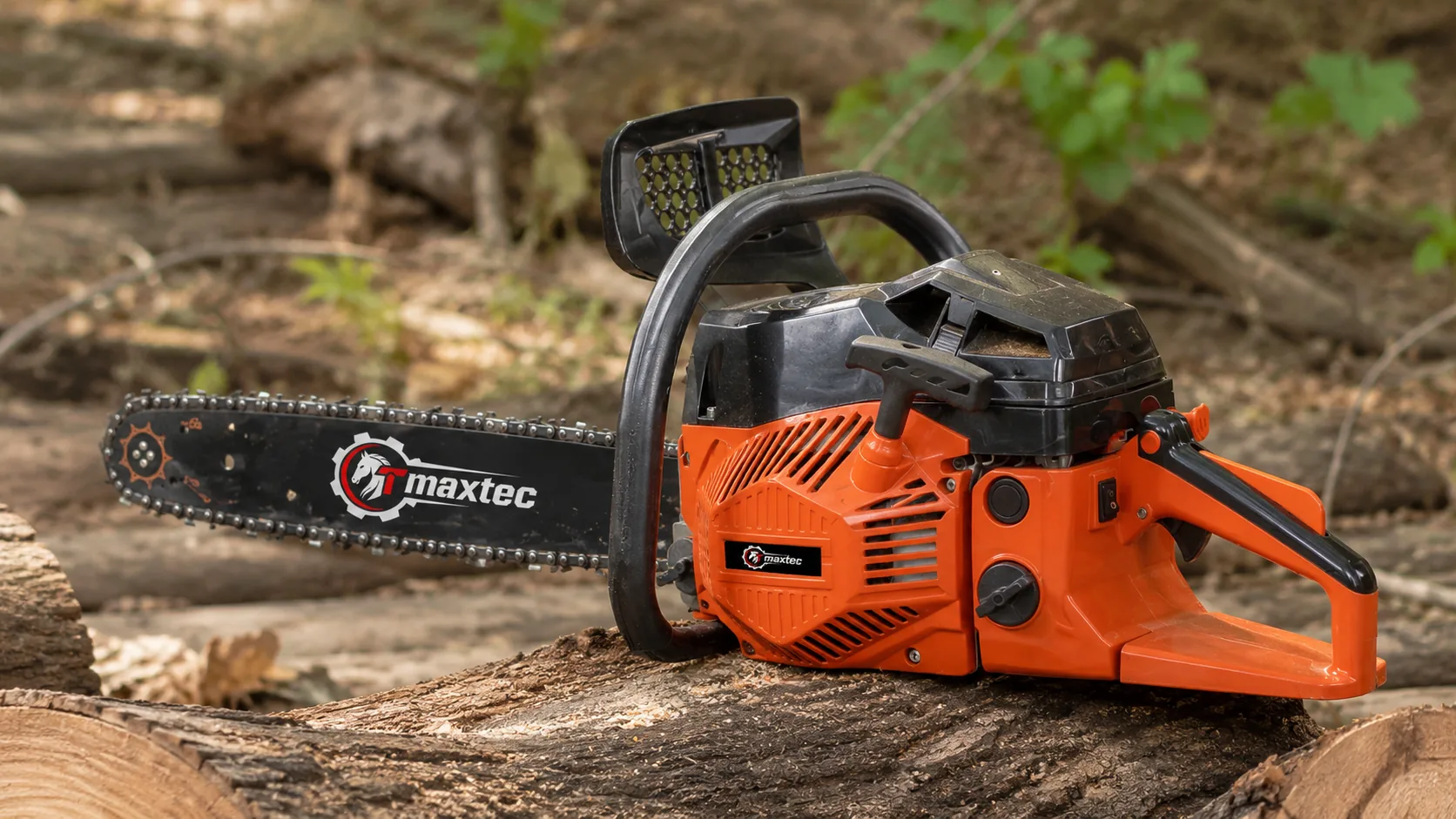
Gasoline Chainsaw Engine Runs but Chain Won’t Move: Dealer Troubleshooting Guide
If a gasoline chainsaw engine runs but the chain won’t move, check the chain brake before looking at the clutch or carburetor. When the engine starts and accelerates normally while the chain remains stationary, the fault is often somewhere between the brake, chain, guide bar and drive system rather than inside the engine itself.
This guide is specifically for a saw whose engine continues running while the chain does not rotate. It does not cover a chain that moves at idle, repeatedly comes loose, becomes hot and tight, receives no bar oil, or stops only when the chain enters wood. Those symptoms require different checks.
| Quick answer: | Start with the chain brake. If it is fully released, switch the engine off and confirm that the chain can move manually along the guide bar. A chain that still cannot move may be jammed by debris, adjusted too tightly, binding in the bar groove, or mismatched with the guide bar and drive sprocket. Only after the complete cutting system turns freely should you inspect the drive sprocket and clutch. For dealers, checking bar length, chain pitch and actual ordered configuration before supplying replacement parts reduces avoidable compatibility complaints. |
Separate a Locked Cutting System From a Drive Failure
Before removing covers or internal drive parts, determine whether the chain itself is mechanically free to travel. This single check helps separate brake, tension and guide-bar problems from clutch or sprocket faults.
| Observed condition | Priority check | Diagnostic meaning |
| Chain cannot be moved by hand with brake released | Chain tension, debris, guide bar and component fit | Resolve the mechanical restriction before checking the clutch |
| Chain moves freely by hand but not under throttle | Drive sprocket and clutch | Power may not be reaching the cutting system |
| Chain turns without load but stops in wood | Different engine-power or cutting-system diagnosis | Do not treat it as a completely stationary-chain fault |
Do not repeatedly accelerate the engine while the chain remains locked. If the brake is partly engaged or the cutting system is mechanically jammed, repeated high-speed operation can add heat and wear without identifying the cause.
Check the Chain Brake Before Removing the Bar or Clutch Cover
The front hand guard operates the chain-brake system on a typical gasoline chainsaw. When the brake is engaged, it is intended to stop chain rotation even though the engine may still start and accelerate. An accidentally activated brake is therefore one of the first possibilities to eliminate.
Engine off first: Switch the chainsaw off before checking the cutting system. Move the front hand guard according to the operating instructions for the actual saw and confirm that it reaches the fully released position.
Do not force a hand guard that feels jammed or unusually difficult to move. After the brake is released, use suitable gloves and check whether the chain can move manually along the guide bar.
If the chain moves normally after the brake is released, brake position may have caused the complaint. If the chain is still locked, continue with the bar-and-chain system instead of assuming the clutch has failed.
Remove Mechanical Resistance From the Chain and Guide Bar
A chainsaw chain can remain stationary even when the engine and clutch are capable of producing power. Packed debris, excessive tension or damage inside the guide-bar path can physically prevent the chain from travelling.
|
Debris and jamming After the engine has stopped and cooled sufficiently, clear sawdust, chips, dirt and oily debris from the drive-sprocket area, bar mounting point and guide-bar groove. If the chain stopped while cutting, also confirm that it is not still pinched in timber. |
Excessive chain tension With the brake released and engine stopped, the chain should remain seated against the guide bar while still being movable by a gloved hand. If it is extremely difficult or impossible to pull, the tension may be excessive. |
Excessive tension is particularly worth checking after installing a new chain, replacing the guide bar, retensioning a hot chain, tightening the tensioner before the bar is correctly positioned, or reassembling the clutch cover.
Do not solve excessive tension by loosening the chain until it hangs heavily below the bar. Excessive slack creates a separate derailment and operating problem. Adjust tension according to the actual chainsaw instructions, then confirm free manual movement before restarting.
Audit the Guide Bar, Chain and Sprocket as One Matched System
If the chain tension appears reasonable but movement is still restricted, remove the guide bar and chain only when the saw is fully stopped and safe to service. Inspect the bar groove for packed material, bent rails, burrs, nose damage and resistance at the nose sprocket if the selected guide bar uses one.
Replacement chains should not be selected only because their overall length appears to fit. Chain pitch, drive-link dimensions, guide-bar specification and drive sprocket have to work together as a complete cutting system.
| Compatibility point | What to confirm | If incorrect |
| Chain pitch | Matches the installed drive sprocket and bar setup | Chain may bind or fail to engage correctly |
| Drive links | Seat fully inside the guide-bar groove | Movement can become stiff or impossible |
| Guide bar | Matches the installed cutting-system configuration | Correct-looking parts may still be incompatible |
| Chain orientation | Chain is installed in the correct direction and seats normally | Cutting-system setup is incorrect before the saw is even started |
If the fault appeared immediately after replacing the chain or bar, compare the new parts with the removed components and the confirmed specification before opening the clutch assembly.
Move to the Drive Sprocket and Clutch Only After the Chain Turns Freely
Once the chain brake, tension, guide bar and component compatibility have been ruled out, attention can move toward the drive system. The engine transfers power to the chain through the clutch and drive sprocket. If this system does not transmit rotation, the engine may sound normal while the chain remains stationary.
Inspect the areas where the chain drive links contact the sprocket. Look for obvious wear, damage or abnormal movement. A worn or damaged sprocket can interfere with proper chain engagement.
The centrifugal clutch is a later-stage check. If the engine reaches normal speed but the sprocket still does not drive the chain after all external resistance has been eliminated, clutch wear, damage or contamination may need inspection.
Useful observations include normal engine acceleration with no sprocket rotation, unusual heat or a burning smell around the clutch area, inconsistent sprocket movement, or visible damage after disassembly. These symptoms justify inspection but do not prove that one particular clutch component has failed.
Clutch removal can involve high spring force, model-specific tools and model-specific thread directions. If the correct service procedure is unclear, forcing the assembly apart can create additional damage.
TM-CS5808 Cutting-System Configuration Reference
The TM-CS5808 illustrates why chainsaw parts should be quoted by confirmed configuration rather than displacement alone. Its product information lists more than one guide-bar and chain-pitch option.
TM-CS5808 Gasoline Chainsaw
Model: TM-CS5808
| Displacement | 58cc reference configuration; 45cc, 52cc and 62cc options are also listed |
| Rated output | 2.4 kW |
| Guide bar | 20 inch or 22 inch |
| Chain pitch | .325 inch or 3/8 inch depending on configuration |
| Fuel tank | 550 ml |
| Oil tank | 260 ml |
| Idle speed | 3300 ±200 rpm |
A .325-inch chain and a 3/8-inch chain are not automatically interchangeable on every TM-CS5808. Dealers should confirm the guide bar, drive sprocket and selected chain configuration before quoting replacement parts.
| Compare This Model |
The listed 58cc displacement and 2.4 kW rated output should not lead directly to carburetor adjustment when the cutting system is mechanically unable to rotate. Engine-power diagnosis becomes more relevant when the chain turns normally without load but stops only after entering wood.
Dealer Checklist After Installing a New Bar or Chain
A short pre-delivery inspection can catch setup problems before they become customer complaints. For wholesale chainsaw programs, it also helps keep spare-chain, guide-bar and sprocket references tied to the correct production specification.
| Before delivery | Parts and repeat-order control |
|
|
For TM-CS5808 orders, specifications may vary by the selected configuration. The guide bar, chain and sprocket combination should therefore be confirmed before quotation, packing or after-sales parts supply.
Frequently Asked Questions
Why does my chainsaw engine run but the chain not move?
The chain brake may still be engaged, or the chain may be mechanically locked by excessive tension, debris, a guide-bar problem or an incompatible cutting-system component. If the chain moves freely by hand with the engine stopped and brake released, the drive sprocket and clutch become more relevant.
Can the chainsaw engine still rev with the chain brake on?
The engine can continue running even though the brake prevents the chain from rotating. That is why brake position should be checked before internal drive components are removed.
Can an overtight chainsaw chain stop moving completely?
Yes. If the chain is adjusted so tightly that it cannot travel freely around the guide bar, the cutting system can become difficult or impossible to rotate. Correct the tension according to the actual saw instructions and confirm manual movement before restarting.
How do I know if the chainsaw clutch needs inspection?
Clutch inspection becomes more appropriate after the chain brake, chain tension, guide bar and cutting-system compatibility have been ruled out. If the chain turns freely by hand but the drive sprocket does not transmit rotation while the engine accelerates normally, the clutch or sprocket deserves closer inspection.
Can I fit either .325-inch or 3/8-inch chain to the TM-CS5808?
Not automatically. The TM-CS5808 lists both .325-inch and 3/8-inch configurations, but the chain has to match the guide bar, drive sprocket and actual ordered setup. Confirm the complete cutting-system specification before fitting or stocking replacement chains.
Should I adjust the carburetor if the chainsaw chain will not move?
Not as the first response when the engine already starts and accelerates normally. First establish whether the chain, guide bar, brake and drive system can rotate freely. Carburetor or engine-power checks belong to a different diagnosis when the chain moves normally without load but loses rotation during cutting.
Confirm the TM-CS5808 Cutting-System Configuration Before Ordering Parts
When a gasoline chainsaw engine runs but the chain won’t move, diagnose from the outside inward: release the brake, remove mechanical restrictions, correct chain tension, inspect the guide bar and confirm chain-to-sprocket compatibility before moving to the clutch. For wholesale TM-CS5808 orders, confirm the 20-inch or 22-inch bar and .325-inch or 3/8-inch pitch configuration before stocking chains, bars or drive-system parts.
| View Product Details |