
Why Does a Mini Tiller Stall When the Tines Enter the Soil?
A mini tiller stalls when tilling if soil load, jammed tines or restricted fuel and airflow pull engine speed down. Check these causes in order.
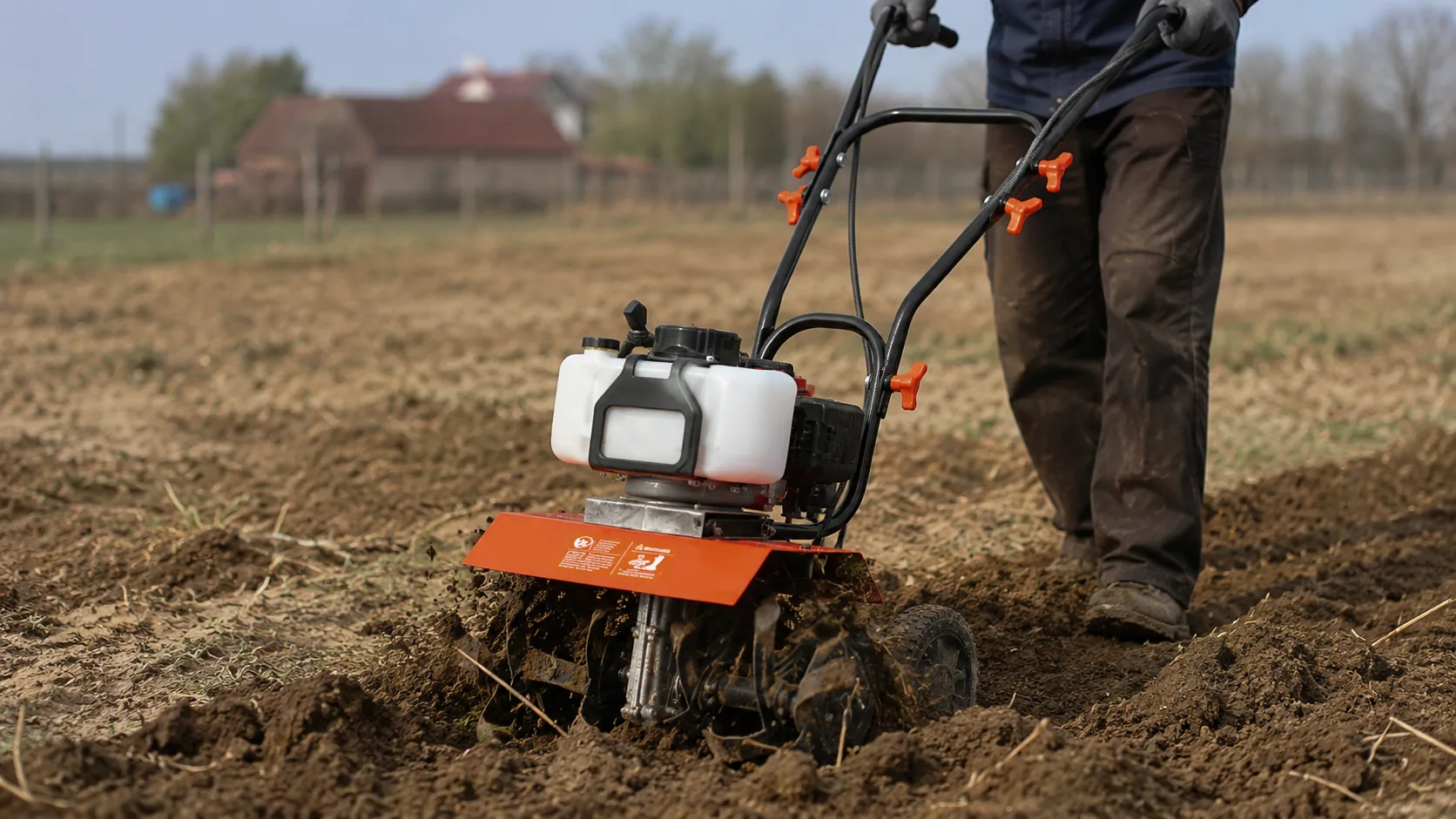
Mini Tiller Loses RPM or Stalls When Tines Enter Soil: What to Check
If a mini tiller stalls when the tines enter soil but the engine runs normally with the tines clear of the ground, first reduce the tilling load and inspect the tine area for roots, weeds, string or trapped stones. If the engine still cannot maintain RPM during a moderate pass through loose soil, move to fuel condition, fuel delivery and airflow before changing carburetor settings or opening the transmission.
This symptom is different from a tiller whose engine continues running while the tines stop rotating. It is also different from a machine that keeps running but bounces across hard soil without reaching the required depth. Here, the defining symptom is that engine speed itself falls sharply when the tines begin working.
Quick answer:
| 1 | Make a shallow pass and determine whether excessive soil resistance is causing the RPM drop. |
| 2 | Stop the engine and clear wrapped vegetation, roots, stones and other mechanical resistance around the tine assembly. |
| 3 | If it also loses power in loose soil, establish fresh fuel, unrestricted airflow and normal ignition before investigating the carburetor, clutch or transmission. |
Is the RPM Drop Normal Load or a Real Fault?
Some reduction in engine speed is expected when rotating tines move from free air into soil. The engine suddenly has to overcome resistance from the soil, roots and the tine assembly. The useful question is how severe the RPM drop becomes and under what working conditions it occurs.
| What happens | What it suggests | Next action |
| RPM falls slightly but stabilizes | Normal increase in working load may be occurring | Continue with an appropriate depth and pace |
| Engine almost immediately drops to very low RPM | Load is excessive or engine power under load is insufficient | Reduce depth and test again |
| Engine runs only while tines are lifted | Working resistance is exposing a load-related problem | Compare performance in loose soil |
| Engine stalls during a shallow pass in cultivated soil | Soil load alone is a less convincing explanation | Check fuel, airflow, ignition and mechanical drag |
Test in a relatively clear area rather than against a buried stone, large root or compacted vehicle track. If the tiller holds speed during a shallow pass but stalls only when forced deeply into hard ground, correct the working method before treating the machine as an engine fault.
Reduce Tilling Depth Before Diagnosing the Engine
Trying to reach full working depth in a single pass can impose a large load on a lightweight cultivator, particularly in dry clay, compacted ground or previously untilled soil.
TM-WG520A load reference
The TM-WG520A is listed with a 30 cm working width and a reference working depth of 10–15 cm. That depth should not be interpreted as a requirement to reach 10–15 cm immediately in every soil condition. Actual penetration depends on soil hardness, moisture, roots and operating technique.
On compacted soil, begin with a shallow pass and allow the tines to loosen the surface before gradually increasing depth. Avoid pressing aggressively downward on the handles in an attempt to make the machine penetrate faster.
A 30 cm tine set working its full width in hard soil creates more resistance than a partial or previously loosened pass. If reducing the bite immediately restores stable RPM, workload should remain high on the diagnostic list.
Stop and Inspect the Tines for Roots, Weeds and Stones
Wrapped vegetation can increase resistance without locking the tine shaft completely. The engine may therefore lose RPM and eventually stall even though the operator can still see some tine movement.
Switch off the engine and wait until the tines have completely stopped before approaching the rotating assembly.
- Inspect between individual tine blades.
- Check both sides of the tine shaft.
- Inspect retaining areas close to the gearbox.
- Look underneath the tine guard.
- Remove grass, vines, roots, string and trapped stones before restarting.
Do not repeatedly open the throttle to force an obstruction through the machine. If the tines are completely locked while the engine continues to run, that moves the diagnosis toward the tine-drive system rather than the engine-load symptom covered here.
Compare Performance in Loose Soil Before Opening the Carburetor
Soil condition is one of the most useful diagnostic tools for this complaint. After clearing the tine assembly, test the machine in previously cultivated or otherwise loose ground.
|
Runs normally in loose soil If the engine maintains speed during light cultivation but stalls in dry clay, root-filled ground or when forced to maximum depth, reduce the load per pass. The engine may not have a fundamental running fault. |
Still stalls in loose soil If RPM drops sharply even during a shallow pass in already loosened ground, continue with fuel, airflow, ignition and abnormal mechanical resistance. |
Fuel, Airflow and Ignition Checks for a Mini Tiller That Loses Power Under Load
A small two-stroke engine may start, idle and run with little resistance even when fuel delivery or combustion is not completely normal. The weakness can become much more obvious when the tines begin breaking soil.
- Establish known fresh fuel. Confirm that the fuel is fresh and correctly prepared for the actual two-stroke engine. Look for obvious water, dirt or deterioration before changing mixture adjustments.
- Inspect fuel delivery. Check accessible fuel hoses for cracks, loose connections and sharp bends, and inspect the in-tank fuel filter if it is serviceable on the selected configuration.
- Inspect the air filter. Tilling can create fine airborne dust. Heavy dry dust, oily contamination, damaged material or an incorrectly seated filter can restrict airflow when the engine needs more power.
- Check the spark plug. After fuel and airflow have been established, inspect for excessive deposits, damaged insulation, abnormal electrode wear or an incorrect plug type for the actual engine.
- Consider exhaust restriction. Where the engine configuration includes serviceable exhaust or spark-arresting components, inspect them according to the applicable maintenance procedure before opening the carburetor.
Diagnostic order matters: Do not assume the engine is receiving enough fuel simply because it runs with the tines lifted. Load increases the demand on the engine, which is exactly when a marginal fuel, airflow or combustion problem may become visible.
When Abnormal Tine or Transmission Drag Becomes More Likely
If the engine-service checks are normal but the machine still stalls whenever the tine system is loaded, determine whether the drive assembly itself has developed abnormal resistance.
| Inspection point | What to look for |
| Tine components | Bent parts contacting guards, nearby tines or stationary components |
| Retaining hardware | Damage, incorrect fit or components interfering with rotation |
| Tine shaft | Unusual resistance after vegetation and soil have been cleared |
| Gearbox | Abnormal noise or noticeably increased resistance |
| Drive system | Resistance that remains even when the tine assembly is clean and unloaded |
Do not conclude that the gearbox has failed solely because the engine stalls. Internal clutch or transmission inspection should follow external obstruction checks and basic engine-service checks, not replace them.
TM-WG520A: Why Machine Size and Operating Technique Matter
|
TM-WG520A 52cc Mini Tiller Model: TM-WG520A The listed configuration uses a 1E44F-5, 52cc two-stroke air-cooled engine with rated power of 1.8 kW at 6500 rpm. The published working width is 30 cm, reference working depth is 10–15 cm, and listed net weight is 10 kg. That combination makes operating technique relevant to a load-related complaint. Forcing a relatively lightweight tiller deeply into hard ground can suddenly increase resistance. A better test is to begin shallow, confirm stable RPM, and increase depth progressively. |
|
If the TM-WG520A handles shallow passes but stalls only after much deeper engagement, compare soil resistance and operating technique first. If it stalls during a shallow pass through loose soil, fuel supply, airflow, ignition or abnormal drive resistance becomes more relevant.
Importer and Dealer Checklist for “Stops When Tilling” Complaints
For after-sales teams, the customer's wording is not enough to determine which spare part is needed. First establish whether the engine loses RPM or whether the engine keeps running while the tines stop. Those two faults lead to different inspection paths.
| Step | Dealer verification | Why it matters |
| 01 | Ask whether engine RPM falls or only the tines stop | Separates engine-load faults from tine-drive faults |
| 02 | Confirm soil type and working depth when the complaint appears | Helps distinguish overload from abnormal loss of power |
| 03 | Inspect the tine area for wrapped roots and vegetation | Mechanical drag can create an engine-stalling complaint |
| 04 | Test the machine in loose soil | Provides a more controlled load comparison |
| 05 | Establish fresh, correctly prepared fuel | Avoids adjusting around deteriorated or contaminated fuel |
| 06 | Inspect fuel hoses, fuel filter and air filter | Restricted fuel or air supply may become obvious only under load |
| 07 | Check spark-plug condition before carburetor disassembly | Provides another external combustion check |
| 08 | Confirm the engine as 1E44F-5 for the selected TM-WG520A configuration | Displacement alone is not sufficient for service-part selection |
| 09 | Match carburetor, clutch and transmission parts to the actual ordered configuration | Avoids incompatible after-sales parts |
| 10 | Record configuration changes for repeat orders | Keeps spare-parts references consistent with later shipments |
Frequently Asked Questions
| Q1 |
Why does my mini tiller stall as soon as the tines touch the soil?The machine may be taking too deep a bite, working in very hard soil, carrying wrapped vegetation around the tines, or experiencing a fuel, airflow, ignition or drive-resistance problem that becomes noticeable only under load. Start by reducing depth and testing in loose soil. |
| Q2 |
Should a mini tiller lose some RPM when the tines enter the ground?Some reduction is normal because soil adds resistance. The condition becomes more suspicious when engine speed collapses immediately, the engine repeatedly stalls in moderate soil, or it cannot maintain RPM during a shallow pass in previously loosened ground. |
| Q3 |
Should I adjust the carburetor when a tiller loses power under load?Not before checking soil load, tine obstruction, fuel condition, fuel delivery and the air filter. Changing carburetor settings before establishing these basic conditions can hide the original cause or create a second running problem. |
| Q4 |
Can roots wrapped around the tines cause the engine to stall?Yes. Roots, weeds, vines or string can increase mechanical resistance even when the tine shaft has not completely locked. Stop the engine and clear the assembly before continuing the diagnosis. |
| Q5 |
What is the working depth of the TM-WG520A?The published reference working depth is 10–15 cm. Actual working depth depends on soil hardness, moisture, roots and operating technique, so that figure should not be treated as a requirement to reach full depth in one pass. |
| Q6 |
Should a dealer replace the gearbox when a mini tiller stops during cultivation?Not based on that complaint alone. First determine whether the engine itself stalls or whether the engine continues running while the tines stop. If engine RPM falls, external load, fuel, airflow and ignition checks should come before internal transmission work. |
|
Check the TM-WG520A Configuration for Wholesale and Service Parts A mini tiller that loses RPM when the tines enter soil should be diagnosed from the working load outward. Reduce depth, clear the tine assembly and compare performance in loose soil before moving to fuel, airflow, ignition, carburetor or drive-system checks. For TM-WG520A orders, confirm the 1E44F-5 engine and actual production configuration before quoting carburetor, clutch or transmission service parts. |
|