
Why Does an Earth Auger Bit Keep Spinning at Idle Speed?
An earth auger bit spins at idle when idle speed, throttle return, or centrifugal clutch engagement is wrong. Check these points before using the auger again.
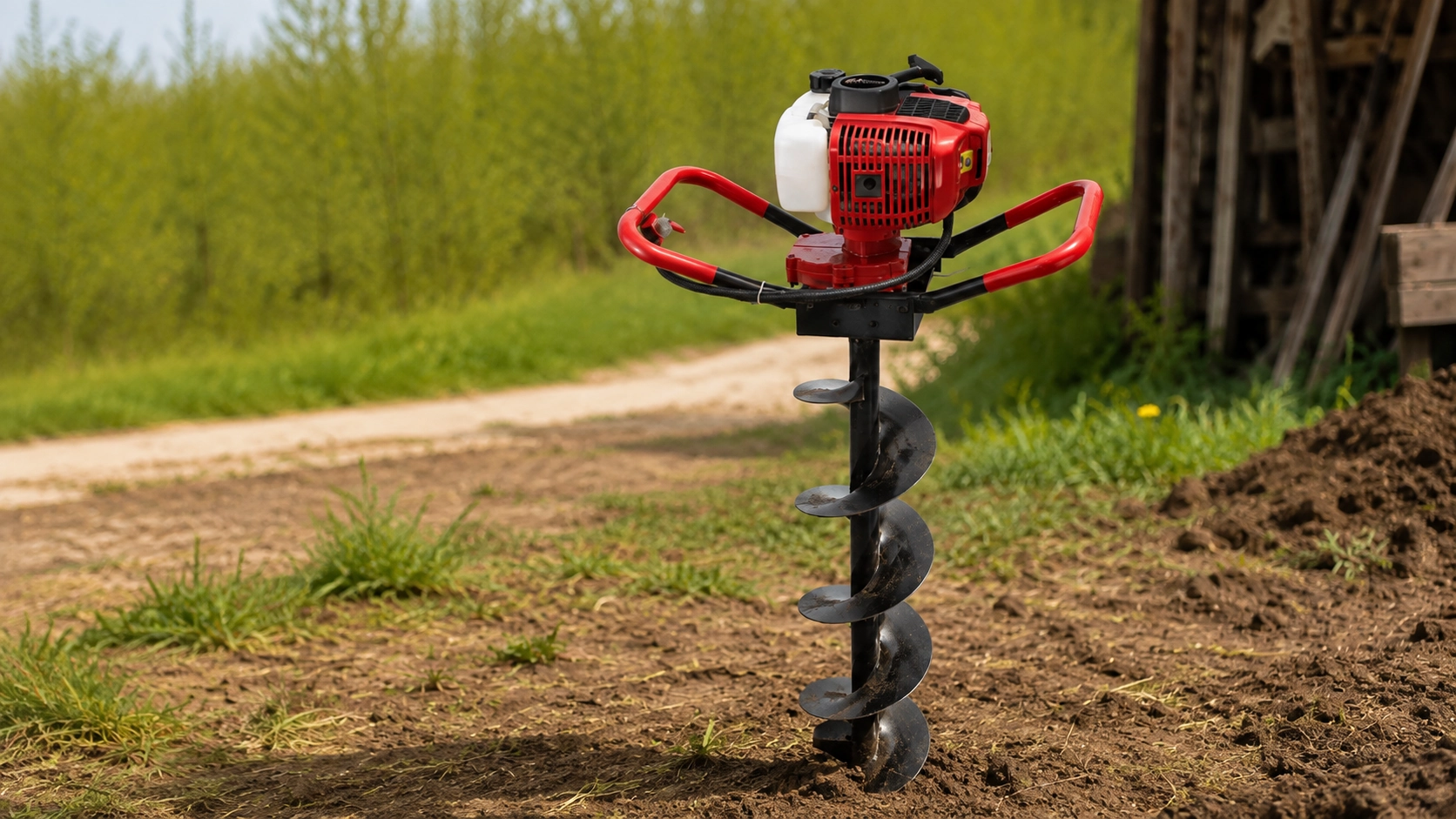
Why Does an Earth Auger Bit Spin at Idle? Dealer Troubleshooting Guide
If an earth auger bit spins at idle after the throttle trigger has been released, stop using the machine until the cause is identified. A brief coast while the rotating bit loses momentum is different from a drill bit that continues receiving drive after the engine has settled at idle.
This guide covers an earth auger whose engine runs normally but the drill bit continues rotating with no throttle applied. It does not cover an auger that stops under drilling load, becomes stuck in a hole, jumps after contacting an obstruction, drills crooked holes, or rotates normally but cannot bite into the soil. For this symptom, the useful diagnostic order is throttle return → engine idle condition → centrifugal engagement mechanism.
1. First Separate Normal Coast-Down From Continued Drive
Do not diagnose the machine from the instant the throttle is released. A rotating auger assembly carries momentum, so the drill bit may continue moving briefly while engine speed falls.
Observe from a safe position without touching the drill. The important point is what happens after the engine has returned to a stable idle.
| Observed behavior | Likely interpretation | Next action |
| Bit steadily slows and stops | Likely normal coast-down | Confirm behavior after several normal throttle releases |
| Bit keeps rotating at a steady speed | Drive system may still be engaged | Check throttle return and idle speed |
| Bit stops, then begins turning again | Intermittent engagement or unstable idle may be present | Inspect engine speed and centrifugal drive behavior |
| Bit turns strongly as soon as the engine starts | Idle may be excessive or engagement may be premature | Stop repeated testing and diagnose before use |
Shut off the engine before making any physical inspection. Keep hands and clothing away from the drill bit, and disconnect the spark-plug cap before working around the drive mechanism.
2. Check the Throttle Trigger and Cable Before Adjusting the Engine
The first mechanical checks should be outside the transmission. Release the throttle trigger and confirm that it returns completely to its resting position. A partially open throttle can keep engine speed above the intended idle range even when the operator is no longer pressing the trigger.
| 1 | Release the trigger fully. Check whether it snaps back normally or returns slowly. |
| 2 | Inspect the trigger pivot. Look for dirt, damage, obstruction, or a return mechanism that does not move freely. |
| 3 | Follow the throttle cable. Check whether it is trapped, sharply routed, pulled against the frame, or adjusted with excessive tension. |
| 4 | Move the handles through their normal position. Cable tension should not change enough to open the throttle. |
| 5 | Check the engine-side throttle lever. With the engine switched off, operate and release the trigger several times and confirm that the lever returns completely. |
Correct an external control problem before changing carburetor settings. For dealer workshops, this is particularly relevant after transport or assembly because handle positioning and cable routing can change during preparation of the machine.
3. High Idle Speed Can Keep a Centrifugal Drive Engaged
A centrifugal transmission transfers power as engine speed increases and should disengage sufficiently when RPM returns to idle. If idle speed remains too high, the engagement components may continue contacting the drive drum and the earth auger bit can keep rotating.
Important adjustment boundary:
Do not reduce the idle setting randomly until the engine barely runs. The correct condition is a stable engine idle with the auger drive disengaged. If the engine becomes unstable before the drill bit stops, the symptom should not be treated simply as an idle-adjustment problem.
The TM-EA520C gasoline earth auger uses an automatic centrifugal transmission with a 30:1 transmission ratio. It is equipped with a 52cc air-cooled two-stroke engine rated at 1.8 kW. That drive arrangement makes throttle return, idle condition, and centrifugal disengagement the relevant areas to check when the bit remains driven without throttle input.
Because the TM-EA520C product information does not specify an idle-speed value, use the setting applicable to the actual engine configuration or the service information supplied with the machine rather than applying an RPM figure from another auger.
After adjustment, verify three things together: the engine remains stable without throttle, throttle response remains normal, and the drill bit stays stationary once the engine returns to idle.
4. If Idle Is Already Normal, Look for Centrifugal Drive Drag
Do not keep turning the idle adjustment downward when engine speed already appears reasonable and stable. If the throttle closes fully and the engine has clearly returned to idle but the bit continues rotating, the next inspection point is the centrifugal engagement mechanism.
Centrifugal clutch systems normally use spring-loaded components that remain disengaged at low speed and move outward as engine RPM rises. Wear, overheating, weakened springs, or mechanical sticking can allow contact to occur earlier than intended. These are inspection possibilities rather than a reason to replace clutch parts immediately.
- Slow, intermittent rotation that suggests light internal contact.
- Strong rotation immediately after starting.
- A drill bit that stops and then begins rotating again as idle changes.
- Abnormal scraping or rattling around the drive area.
- Unusual heat around the centrifugal transmission or clutch area.
If abnormal sound or heat is present, shut the machine down instead of repeatedly testing it. Do not press the drill bit against the ground to force it to stop while the engine is running. This only places additional load on the transmission and does not remove the cause.
Where internal inspection is required, identify the exact centrifugal transmission or clutch components used in the confirmed machine configuration before ordering replacement parts. Dealer workshops can also compare the suspect unit with a correctly operating machine of the same configuration rather than judging engagement only by engine sound.
5. Drill Bit Size Changes Coast-Down, Not the Diagnostic Rule
Drill configuration can affect what an operator sees immediately after releasing the throttle. The TM-EA520C supports optional drill diameters of 10, 15, 20, and 25 cm and optional drill lengths of 80, 100, 120, and 140 cm.
| Configuration factor | What may look different | What should not change |
| 10 / 15 / 20 / 25 cm diameter | Different rotating mass can affect visible coast-down behavior | The transmission should not keep actively driving the bit at stable idle |
| 80 / 100 / 120 / 140 cm length | Longer assemblies may appear to lose motion differently | Diagnosis still depends on whether drive remains engaged after idle is reached |
The important question is therefore not whether every auger bit stops within exactly the same number of seconds. Technicians should determine whether the drill is merely losing stored rotational momentum or is still being powered by the transmission. This distinction can prevent unnecessary replacement of drive components.
6. TM-EA520C as a Reference for Centrifugal-Drive Earth Augers
Before quoting replacement clutch or transmission parts, importers and service dealers should confirm the actual machine configuration. Parts that appear similar externally are not automatically interchangeable, and the final drill-bit specification should also be recorded with the order.
7. Importer and Dealer Idle-Disengagement Checklist
Idle disengagement is a useful pre-delivery and after-sales inspection point for centrifugal-drive earth augers, especially when machines are assembled after transport or prepared with different handle and drill-bit configurations.
| Pre-Delivery / Workshop Check | Order / Spare-Parts Control |
|
|
Dealer service rule: If the throttle closes correctly and the engine reaches a stable idle but the earth auger still receives continuous drive, stop treating the problem as a simple carburetor adjustment. The centrifugal transmission or clutch mechanism needs closer inspection.
8. FAQ About an Earth Auger Bit Spinning at Idle
Is it normal for an earth auger bit to rotate briefly after releasing the throttle?
Brief coast-down can occur because the rotating drill assembly still has momentum. The important distinction is whether the bit continues slowing until it stops or remains actively driven after the engine has settled at idle.
Why does my earth auger turn at idle even when the throttle is released?
Start by checking whether the throttle trigger, cable, and engine-side throttle lever return completely. If they do, check whether engine idle is too high. Continued rotation at an otherwise normal idle can point toward drag or premature engagement inside the centrifugal drive.
Should I lower the idle until the auger bit stops?
Only adjust idle within the requirements of the actual engine configuration. Do not keep lowering it until the engine becomes unstable. If normal idle cannot be maintained without driving the auger, inspect the centrifugal engagement system.
Can a throttle cable cause an earth auger to spin at idle?
Yes. Excessive cable tension, poor routing, trapping against the frame, or a control that does not return completely can hold the throttle slightly open after the trigger is released. Check this before opening the transmission.
Does a larger auger bit mean the clutch is faulty if it takes longer to stop?
Not by itself. Different drill diameters and lengths can change visible coast-down behavior. Diagnose the machine according to whether the transmission continues applying drive after the engine has reached idle, not simply by comparing stopping time between different bit configurations.
When should a dealer stop troubleshooting and service the auger?
Stop operating the machine when the throttle has fully returned and the engine is at a stable idle but the drill bit continues receiving drive. If external controls and idle condition are correct, the centrifugal transmission or clutch mechanism requires inspection before the auger returns to service.
Confirm the Correct TM-EA520C Configuration for Your MarketFor wholesale enquiries, confirm the required earth-auger configuration, drill diameter, drill length, centrifugal transmission specification, and compatible replacement parts before shipment. This is especially useful when planning dealer stock for after-sales support of an earth auger bit spins at idle complaint. |
|