
Is a Wheeled Brush Cutter Suitable for Orchard Weed Clearing?
A wheeled brush cutter for orchard weed clearing can work well between tree rows when cutting width, terrain, vegetation and access match the machine.
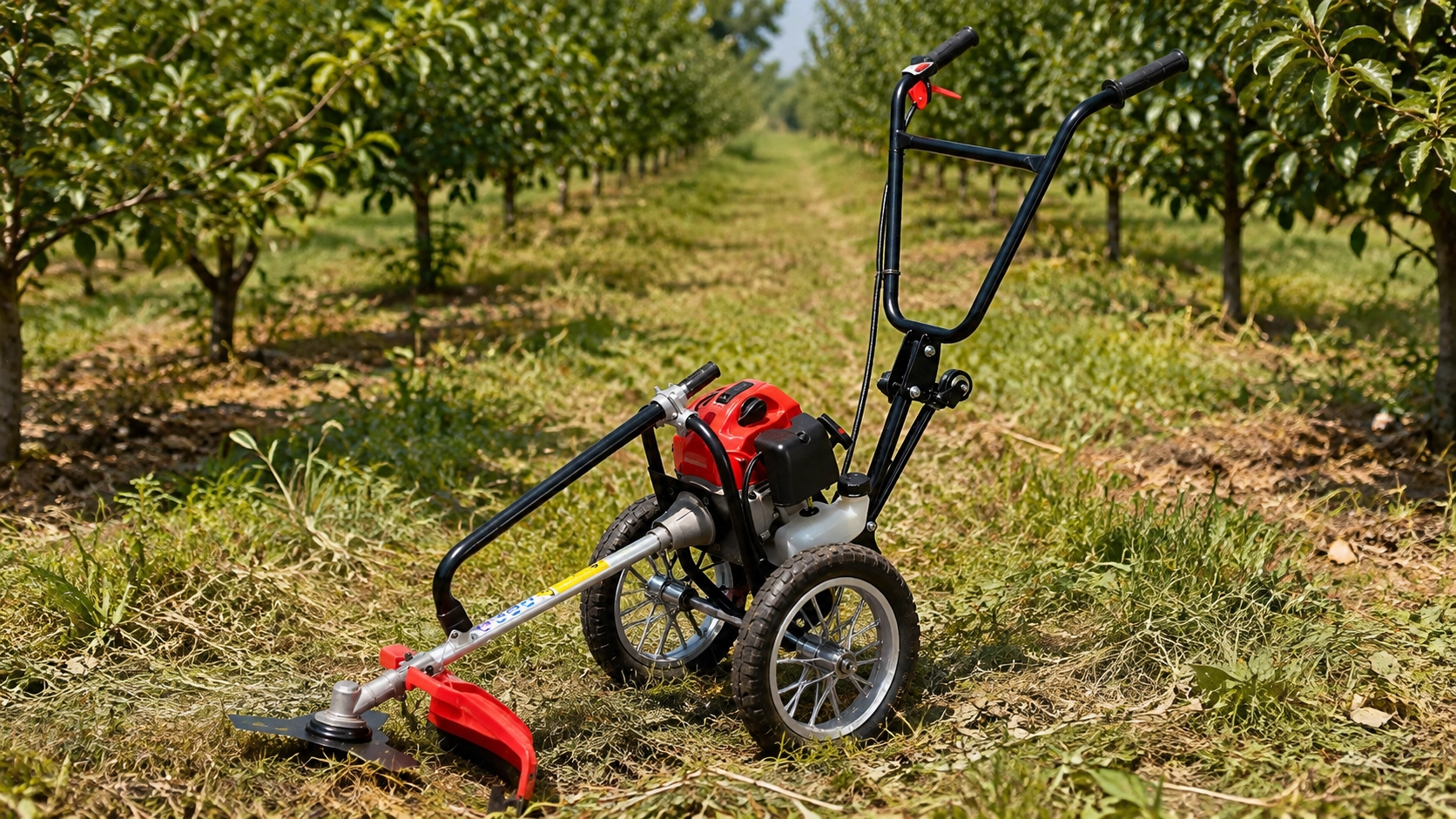
Is a Wheeled Brush Cutter Suitable for Orchard Weed Clearing? Model Selection Guide
A wheeled brush cutter for orchard weed clearing can be a practical choice when most vegetation is located in reasonably open lanes between tree rows and the ground allows a hand-push machine to move without constant obstruction. Engine size alone, however, does not determine whether the machine will fit the orchard.
Row clearance, turning space, terrain, grass and weed type, low branches, irrigation equipment and the machine's complete assembled dimensions all affect the result. Buyers should also separate inter-row grass cutting from precision weed removal directly around trunks, posts and irrigation fittings because the same machine may not be equally suitable for both zones.
| QUICK ANSWER |
Quick answer: A wheeled brush cutter is generally better suited to open orchard lanes than to tight spaces immediately around tree trunks. Before ordering, compare the orchard's narrowest usable passage and turning area with the machine's confirmed assembled dimensions. For the TM-WBC520A, the published 700 mm cutting width, 18.0 kg net weight and hand-push structure are more useful for orchard selection than engine displacement alone. Also confirm terrain, low branches, irrigation obstacles and the cutting attachment supplied with the actual order. |
1. Decide Which Part of the Orchard the Machine Will Maintain
The orchard floor should first be divided into two working zones. The open lane between rows can usually be approached in longer, straighter passes. This is where a wheeled cutting machine can be easier to guide over a larger area than a brush cutter carried continuously on the operator.
The second zone is immediately beside trunks, trellis posts, drip lines, sprinkler fittings or other fixed obstacles. This area requires much more precise positioning and may favor a more maneuverable tool.
| More Suitable for a Wheeled Machine | Needs More Caution |
|
|
A buyer should therefore ask where the machine will spend most of its working time rather than simply whether the orchard contains grass.
2. Compare Row Clearance With the Whole Machine, Not Only Cutting Width
The TM-WBC520A hand-push brush cutter has a listed 700 mm cutting width. This is useful for estimating the width of each cutting pass, but it does not give the complete outside width of the assembled machine.
Procurement point: A 700 mm cutting width should not automatically be treated as a 700 mm machine width. Importers supplying narrow orchard markets should request or confirm the assembled outside dimensions of the actual order configuration.
Usable orchard clearance can also be smaller than the distance measured between the centers of two trees. Trunks widen near ground level, branches may extend into the lane, irrigation equipment occupies space and older orchards often have less uniform planting geometry.
| Dimension to Check | Why It Matters | Buyer Action |
| 700 mm cutting width | Indicates nominal cutting pass | Compare with the open vegetation strip |
| Assembled outside width | Determines whether the frame actually fits | Confirm for the selected configuration |
| Turning area | A machine that fits the lane may still be difficult to turn | Check headlands, gates and row ends |
| Lowest obstruction clearance | Branches and irrigation may reduce usable space | Measure representative rows at machine height |
3. Terrain Can Matter More Than a Small Difference in Engine Size
The TM-WBC520A is a hand-push model with a listed net weight of 18.0 kg. The operator provides the forward movement, so ground condition directly affects how practical the machine feels during orchard maintenance.
Firm, reasonably open lanes are a more natural match for this structure. Soft soil, deep wheel ruts, steep sections, exposed roots, abrupt terraces and drainage channels can increase pushing effort or interrupt straight passes.
Orchard AWide, dry lanes between mature trees, relatively level ground, long passes and enough space at the headland. A hand-push wheeled brush cutter can be evaluated primarily around cutting width, working pace and vegetation type. |
Orchard BNarrow terraces, exposed roots, irrigation channels and frequent direction changes. Even with similar grass, wheel travel and maneuverability may become more important than nominal engine power. |
This is a model-selection question rather than a fault diagnosis. A machine that is difficult to push because it is being used in unsuitable terrain is different from a machine that suddenly becomes difficult to push during normal operation.
4. Match the Cutting Setup to the Actual Orchard Vegetation
The TM-WBC520A uses a 51.7 cc, two-stroke 1E44F-5 engine with listed rated output of 1.80 kW (2.5 HP). These specifications identify the machine category, but they do not establish a maximum woody stem diameter.
The available product information positions the model for grass and weed clearing, including orchard use. It does not provide a confirmed maximum branch or sapling diameter, and buyers should not assume that every order contains exactly the same cutting attachment.
Grass, soft weeds and routine row maintenance: evaluate cutting width, access, terrain and working area.
Woody regrowth, thick saplings or pruning debris: confirm the supplied cutting attachment and whether the selected configuration is intended for that material before placing the order.
This avoids a common distributor mismatch: using engine displacement as proof that a grass- and weed-clearing machine can automatically handle every type of brush.
5. Low Branches, Irrigation and Row Ends Can Decide Whether the Machine Fits
An orchard lane that appears wide enough on paper can still restrict a wheeled brush cutter near ground level. Low branches, drip lines, sprinkler risers, support posts, wires and exposed roots may reduce the practical operating corridor.
For an established orchard, a simple field walk is often more useful than relying only on planting-row specifications. Check several typical rows rather than measuring one ideal section.
- Measure the narrowest passage at the height and width where the machine frame will travel.
- Look below the canopy for branches that restrict the operator or machine.
- Locate irrigation fittings that project into the cutting lane.
- Check exposed roots and drainage edges that may interfere with wheels.
- Inspect replanted or missing-tree areas where the normal row geometry changes.
- Measure the headland to make sure the machine can be turned without repeated lifting or repositioning.
6. TM-WBC520A Orchard Application Reference
TM-WBC520AHand-Push Brush Cutter Engine: 1E44F-5 Type: 2-stroke Displacement: 51.7 cc Output: 1.80 kW (2.5 HP) Cutting width: 700 mm Net weight: 18.0 kg Fuel mixture: 1:30 Idle speed: 3000 ±200 rpm |
Why this model is relevant to orchard buyers: The 700 mm cutting width provides a reference for planning inter-row passes, while the hand-push structure and 18.0 kg net weight make ground condition and maneuvering space important parts of the buying decision. It can be evaluated for gardens, farms, orchards and roadside weed clearing, but final orchard suitability should be based on the confirmed assembled dimensions, cutting attachment and local terrain rather than engine specifications alone.
|
7. Importer Checklist Before Ordering for Orchard Markets
Published engine and cutting specifications are only the starting point for wholesale selection. Orchard distributors should confirm the machine around the actual planting layout and local maintenance practices.
| 01 | Confirm complete assembled dimensions, not only the published 700 mm cutting width. |
| 02 | Compare dimensions with the narrowest orchard passage and usable clearance around trunks and branches. |
| 03 | Check headland and gateway turning space before assuming the machine is suitable because it fits between rows. |
| 04 | Assess ground firmness, ruts, terraces and slopes because the TM-WBC520A is a hand-push machine. |
| 05 | Describe the vegetation accurately as grass, soft weeds, woody regrowth or other material. |
| 06 | Confirm the cutting attachment supplied with the selected order configuration. |
| 07 | Identify replacement cutting parts and wear components required by local dealers. |
| 08 | Check wheel and frame configuration against local orchard terrain and access conditions. |
| 09 | Communicate the listed 1:30 mixed-fuel requirement to dealers and end users accustomed to four-stroke equipment. |
| 10 | Record the confirmed configuration in the quotation or proforma invoice so repeat orders and spare-parts supply remain consistent. |
8. FAQ About Wheeled Brush Cutters for Orchards
Is a wheeled brush cutter good for orchard weed clearing?
It can be a good fit when the orchard has sufficiently open inter-row lanes, manageable terrain and grass or weeds suited to the confirmed cutting attachment. Tight spaces immediately around trunks and irrigation fittings may still require a more maneuverable tool.
Is a 700 mm cutting width suitable for narrow orchard rows?
The 700 mm figure describes the cutting width of the TM-WBC520A, not necessarily the machine's complete assembled outside width. Buyers should confirm the full dimensions and compare them with the orchard's narrowest usable passage.
Can the TM-WBC520A cut woody saplings in an orchard?
The available product information does not provide a confirmed maximum woody stem diameter. For substantial woody regrowth or saplings, confirm the cutting attachment supplied and its intended application before ordering.
Is a hand-push brush cutter suitable for sloping orchards?
Suitability depends on the actual slope, ground firmness and row layout. Because the TM-WBC520A is a hand-push model with an 18.0 kg listed net weight, steep, deeply rutted or irregular terrain can require more operator effort than firm and relatively level lanes.
Can a wheeled brush cutter replace a handheld brush cutter in an orchard?
Not in every orchard. A wheeled machine can suit open row sections, while a handheld unit may remain more maneuverable beside trunks, posts, drip lines and other confined obstacles. Some operations may use both types for different parts of the same orchard.
What should importers confirm before ordering the TM-WBC520A for orchard dealers?
Confirm the assembled dimensions, selected cutting attachment, wheel and frame configuration, replacement cutting parts and final order specification. The published 51.7 cc engine, 1.80 kW output, 700 mm cutting width and 18.0 kg net weight are useful reference values, but orchard fit depends on the actual operating layout.
Selecting a Wheeled Brush Cutter for Orchard Dealers?For orchard applications, compare the actual row layout, terrain and vegetation with the confirmed TM-WBC520A dimensions and cutting configuration before ordering. Engine specification is only one part of deciding whether a wheeled brush cutter for orchard weed clearing will match your market. |
|