
Why Does a Chainsaw Chain Stop in Wood While the Engine Revs?
If a chainsaw chain stops in wood while the engine keeps revving, check chain tension, guide-bar resistance, clutch condition and drive sprocket wear.
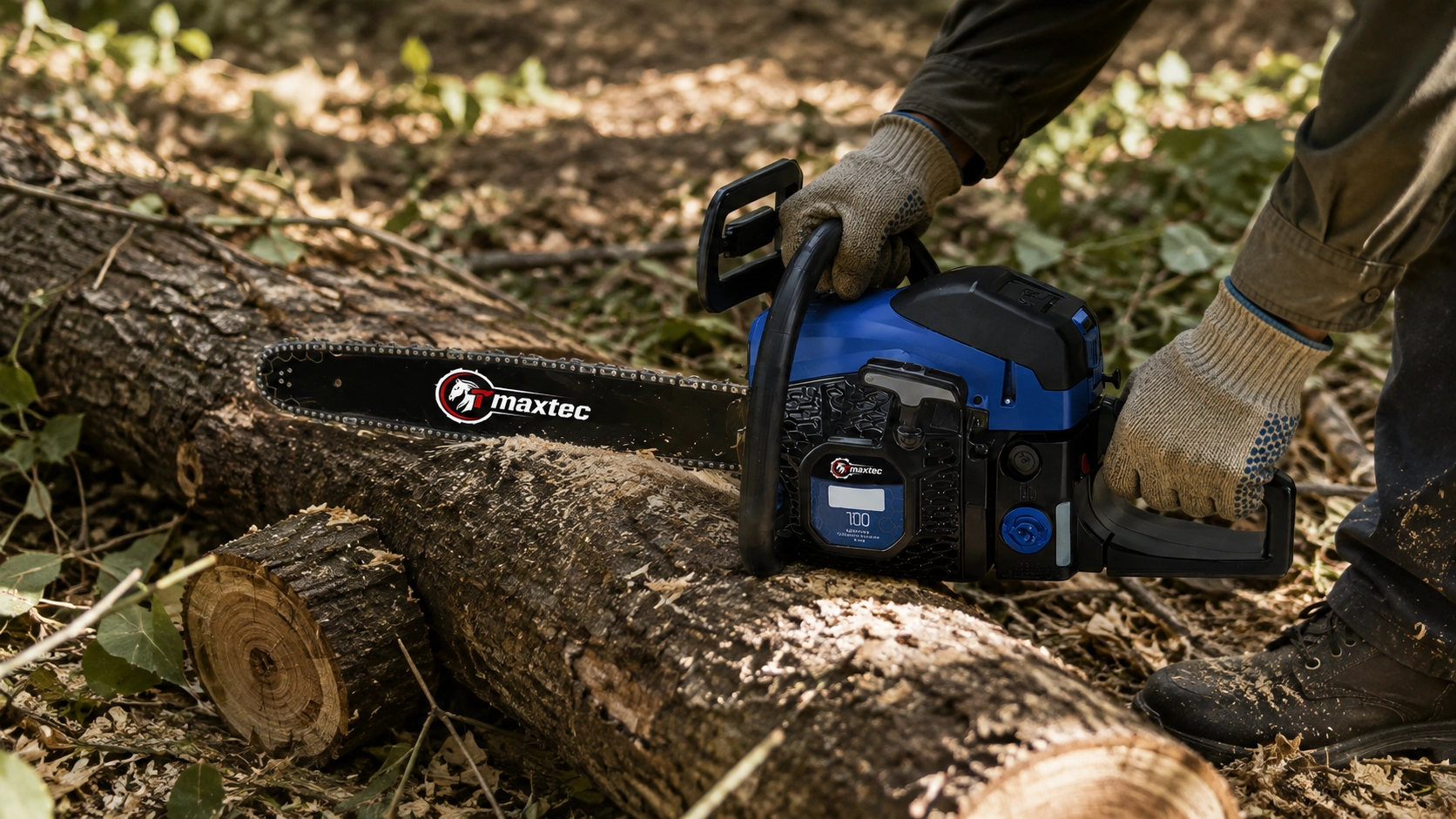
Chainsaw Chain Stops in Wood but Engine Keeps Revving: Causes and Drive-System Checks
If a chainsaw chain stops in wood but the engine keeps revving, diagnose the cutting attachment and drive system before treating it as an engine-power problem. A chain can rotate normally with no load yet lose its ability to transmit cutting force once resistance rises.
The first checks are chain tension, guide-bar resistance and cutting-component compatibility. If the chain and bar move freely and the pitch matches the drive sprocket, inspect sprocket wear, the clutch drum and finally the centrifugal clutch. This guide does not cover an engine that bogs or stalls under load, a chain that never moves at all, or a chain that continues rotating normally but simply cuts slowly.
QUICK ANSWER
Quick answer: When the engine continues revving but the chain slows sharply, stops or appears to slip only after entering wood, first eliminate mechanical drag at the chain and guide bar. Then verify that chain pitch, gauge, drive-link count, guide bar and drive sprocket belong to the same cutting configuration. If those parts are correct and move freely, inspect sprocket wear and clutch-drum engagement. Only after these external checks should the clutch become the main suspect.
1. Confirm the Symptom Before Opening the Clutch Side
The most useful diagnostic clue is the relationship between engine speed and chain speed when cutting resistance increases.
| What happens | What it suggests | Where to investigate |
| Engine keeps revving but chain stops in wood | Torque is not reaching the chain effectively, or the cutting attachment has excessive resistance | Chain tension → bar resistance → sprocket → clutch drum → clutch |
| Engine RPM drops sharply together with chain speed | Engine output or excessive cutting resistance may be involved | Treat as a different troubleshooting path |
| Chain keeps rotating but cuts very slowly | Cutter sharpness, depth gauges, chain direction or wood conditions are more relevant | Inspect the cutting edges rather than assuming clutch slip |
| Engine runs but chain never moves | A different drive or brake fault is present | Begin with chain brake and complete drive engagement checks |
Keeping these symptom boundaries separate prevents unnecessary carburetor adjustment or clutch replacement when the real fault is at the bar, chain or sprocket.
2. Check Chain Tension and Guide-Bar Drag First
A chain adjusted too tightly may still travel around the guide bar when the engine is running at high speed with no load. Once the cutters enter wood, the extra resistance can expose excessive friction between the chain and bar.
Before handling the cutting attachment: switch the engine off, disconnect the spark-plug cap, release the chain brake only when required for inspection, and wear gloves when moving the chain by hand.
With the saw stopped, the chain should sit correctly in the guide bar without excessive sag while still being able to move freely around the bar. If pulling it by hand requires unusual force, investigate the resistance before touching the clutch.
| A | Release excessive chain tension if the chain is adjusted too tightly. |
| B | Check the drive links and confirm that they sit correctly inside the guide-bar groove. |
| C | Clean packed sawdust from the guide-bar groove and sprocket area. |
| D | Check the bar nose sprocket, if fitted to the actual guide bar, for free rotation. |
| E | Inspect the drive links for burrs, deformation or another point that can bind inside the groove. |
Do not compensate for a dragging chain by increasing throttle or pushing the guide bar harder into the wood. Mechanical resistance should be removed before evaluating drive-system torque.
3. Separate Guide-Bar Resistance From the Powerhead
If chain tension looks reasonable but the chain is still difficult to drive, remove the clutch cover, chain and guide bar according to the procedure applicable to the machine. Keep the engine fully stopped and the spark-plug cap disconnected.
Clean the guide-bar groove and the area around the drive sprocket. Then inspect how the chain drive links travel through the bar. One damaged drive link can move normally through much of the loop yet bind at a particular point, making the problem difficult to see during free-revving.
| Comparison | Diagnostic value |
| Chain moves freely away from the guide bar but binds when installed | Investigate bar groove condition, chain fit and tension before suspecting the clutch |
| Chain has a tight point even when inspected separately | Look for damaged or deformed drive links |
| Bar and chain move freely after correct reassembly | Move to cutting-component compatibility and drive-sprocket inspection |
4. Confirm Chain, Bar and Drive Sprocket Compatibility
Replacement parts create another possible failure point. The TM-CS5812 gasoline chainsaw is listed with 20-inch or 22-inch guide-bar options and either .325-inch or 3/8-inch chain pitch. Its reference engine configuration is 58cc with 2.4 kW rated output, while 45cc, 52cc and 62cc displacement options are also listed.
These options mean that a replacement chain cannot be identified correctly from guide-bar length or engine displacement alone.
| Chain pitch | Must match the compatible drive sprocket and bar setup. A 3/8-inch chain is not interchangeable with a .325-inch drive sprocket. |
| Chain gauge | Must correspond to the actual guide-bar groove specification. |
| Drive-link count | Must match the selected guide bar and chain loop configuration. |
| Bar length | 20 or 22 inches alone is not enough information to order the correct chain. |
Dealers should therefore avoid treating one chain as a universal “TM-CS5812 chain” unless the actual ordered cutting configuration has first been confirmed.
5. Inspect Drive-Sprocket Wear Before Blaming the Clutch
Once the guide bar and chain move freely and their specifications are correct, inspect the drive sprocket. This is the component that transfers rotation from the clutch drum into the chain drive links.
Repeated chain contact can wear the sprocket surface. As wear develops, engagement with the drive links may become less consistent under load even though the chain still rotates when there is little resistance.
| Inspect for | Why it matters |
| Abnormal grooves | May indicate repeated wear at the chain contact points |
| Uneven contact surfaces | Can affect how cleanly the drive links engage under resistance |
| Visible deformation | May prevent correct chain engagement |
| Incorrect pitch relationship | A mismatched chain and sprocket cannot create a correct drive system even if bar length appears suitable |
For importer spare-parts planning, identify chains and sprockets according to the confirmed cutting setup rather than only by the TM-CS5812 model name or nominal engine displacement.
6. When the Clutch and Clutch Drum Become the Main Suspects
The clutch becomes a more reasonable suspect only after excessive chain drag, guide-bar resistance, component mismatch and drive-sprocket problems have been eliminated.
Useful load test observation
Engine keeps revving strongly + chain slows dramatically or stops: engine rotation is being produced, but it is not reaching the chain effectively. After external resistance and sprocket problems are excluded, inspect the clutch shoes, springs, clutch drum and sprocket arrangement.
A centrifugal chainsaw clutch uses engine speed to engage the drive. Worn, contaminated, overheated or mechanically damaged components can affect torque transfer when cutting resistance increases. That does not mean the complete clutch should automatically be replaced.
Inspect the actual condition of the clutch shoes, springs, drum and sprocket arrangement and replace only according to the fault found and the confirmed machine configuration.
Do not repeatedly force the chainsaw into wood to test suspected clutch slip. Stop operation if abnormal heat, smell, noise or obvious slipping develops around the clutch area.
7. TM-CS5812 Cutting Configuration and Dealer Spare-Parts Planning
|
REFERENCE MODEL TM-CS5812 Gasoline ChainsawReference displacement: 58cc Rated output: 2.4 kW Other listed displacement options: 45cc / 52cc / 62cc Guide bar: 20 in / 22 in Chain pitch options: .325 in / 3/8 in |
Why this model needs configuration-based parts orderingThe availability of two guide-bar lengths and two chain-pitch options means replacement chains, guide bars and drive sprockets should be matched to the specific configuration originally supplied. Two TM-CS5812 units should not automatically be assumed to use interchangeable cutting components if different bar-and-chain specifications were ordered.
|
For quotations, replacement parts and repeat orders, confirm the final guide-bar specification, chain pitch, chain gauge, drive-link count and compatible powerhead sprocket instead of inferring the cutting setup from model name or bar length alone.
8. Dealer Diagnostic and Bulk Spare-Parts Checklist
| Check | Dealer / Importer Action |
| 1. Symptom boundary | Confirm that the engine continues revving while chain speed falls under cutting load. |
| 2. Chain tension | Check that the chain is snug but still moves freely around the guide bar. |
| 3. Guide-bar groove | Remove packed sawdust and inspect for areas that restrict drive-link movement. |
| 4. Drive links | Look for burrs, deformation or a tight section that binds in the bar. |
| 5. Chain pitch | Confirm whether the actual cutting system is .325 inch or 3/8 inch before supplying chains or sprockets. |
| 6. Gauge and drive-link count | Match both specifications to the exact guide bar rather than ordering only by 20-inch or 22-inch length. |
| 7. Drive sprocket | Inspect grooves, contact surfaces, deformation and correct engagement with the chain. |
| 8. Clutch drum | Check only after bar, chain and sprocket resistance have been eliminated. |
| 9. Clutch components | Inspect shoes, springs and associated parts according to the actual drive design rather than replacing the whole assembly by assumption. |
| 10. Repeat-order control | Record the confirmed bar, pitch, gauge, drive-link count and sprocket combination in the quotation or proforma invoice. |
9. FAQ About a Chainsaw Chain Stopping Under Load
| Q1 |
Why does my chainsaw chain stop in wood while the engine keeps revving?The cutting attachment may have excessive friction, the chain and sprocket may not match, the drive sprocket may be worn, or the clutch system may be slipping. Begin with the chain and bar because they can create high resistance without an internal clutch failure. |
| Q2 |
Can an overly tight chainsaw chain stop only when cutting?Yes. The engine may still move an overly tight chain with little external load, while resistance becomes much more noticeable once the cutters enter wood. Check free chain movement before diagnosing clutch slip. |
| Q3 |
Can I use a 3/8-inch chain on a .325-inch chainsaw sprocket?No. Chain pitch must match the compatible drive sprocket and guide-bar setup. For the TM-CS5812, both .325-inch and 3/8-inch configurations are listed, so dealers should confirm the exact version before supplying replacement cutting parts. |
| Q4 |
Does a 20-inch bar tell me which replacement chain to order?No. Bar length alone is insufficient. The replacement chain must also match pitch, gauge and drive-link count, together with the compatible drive sprocket. |
| Q5 |
How do I know when the chainsaw clutch should be inspected?If the engine continues revving strongly while the chain slows or stops, and chain drag, guide-bar resistance, component mismatch and sprocket wear have already been eliminated, the clutch and clutch drum become the next logical inspection points. |
| Q6 |
Can a dull chain create the same symptom as clutch slip?A dull chain can cut slowly and require more feeding pressure, but this article concerns a chain that actually loses rotation or stops while the engine continues revving. If the chain keeps rotating normally, inspect cutter condition, depth gauges and chain orientation instead. |
Confirm TM-CS5812 Bar, Chain and Sprocket Configuration Before Ordering PartsFor distributors handling a chainsaw chain that stops in wood while the engine keeps revving, replacement parts should be selected by the confirmed cutting configuration. Check the 20-inch or 22-inch guide bar, .325-inch or 3/8-inch pitch, gauge, drive-link count and compatible sprocket before arranging chains, sprockets or clutch-side components for wholesale stock. |
|