
Why Does a Brush Cutter Lose Power When Cutting Grass or Weeds?
Learn why a brush cutter loses power when cutting grass and how to check the cutting head, fuel system, air filter, spark plug, and workload.
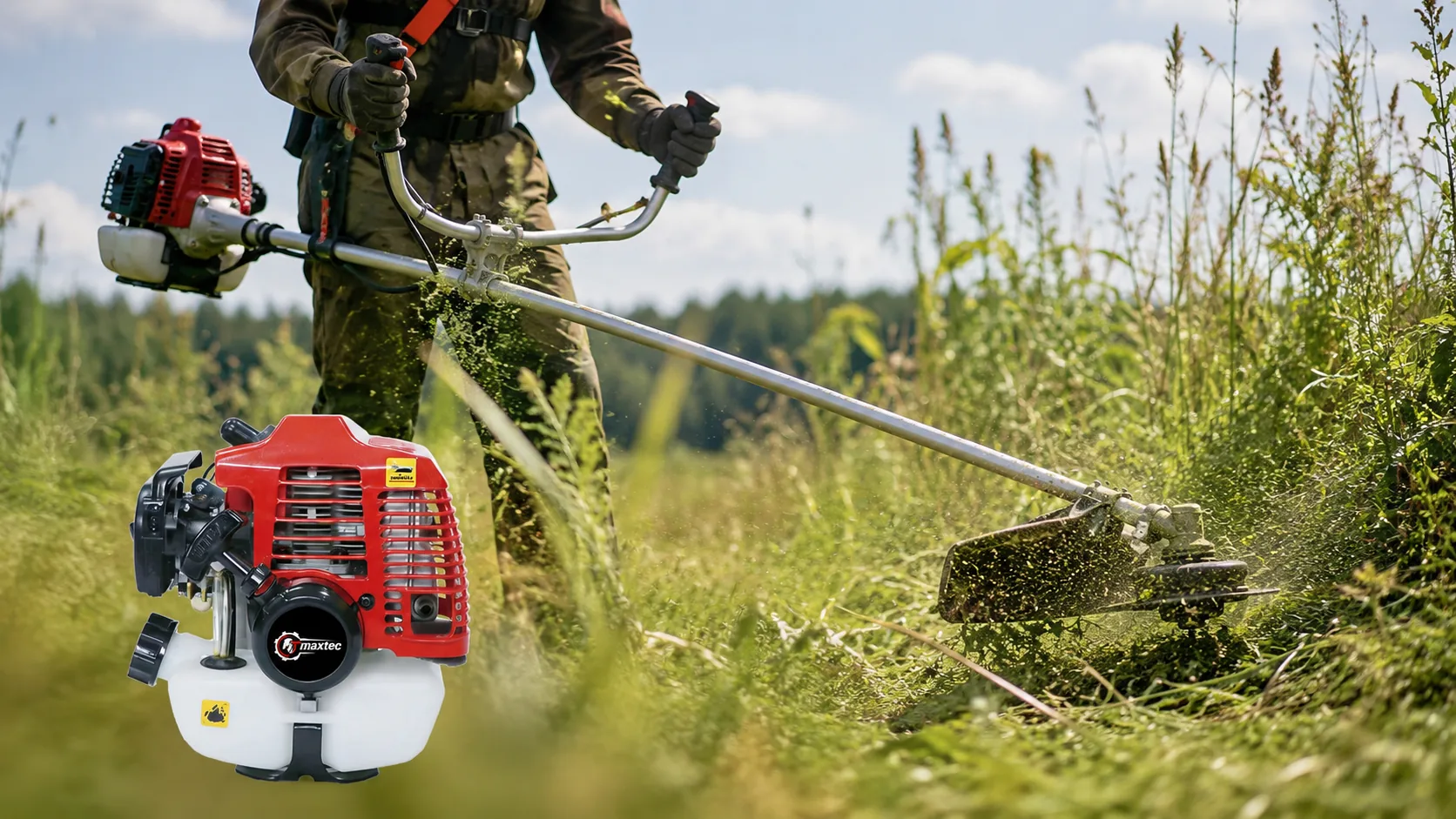
Brush Cutter Troubleshooting Guide
A practical diagnostic guide for operators, repair technicians, importers, and dealers handling brush cutters that idle normally but bog down under cutting load.
A brush cutter usually loses power while cutting because the cutting head is overloaded, grass has wrapped around the gearbox, the air filter is blocked, the fuel mixture is old or incorrect, or fuel cannot flow properly to the carburetor.
The first diagnostic question is whether the engine only slows down when the blade or nylon head touches vegetation, or whether it also hesitates when accelerating without a cutting load. This distinction helps technicians avoid unnecessary carburetor adjustment and engine disassembly.
A brush cutter that runs normally in the air but loses speed in grass is usually overloaded at the cutting attachment. Check for wrapped vegetation, a blunt blade, excessive nylon line, an oversized cutting head, or vegetation that is too dense for the machine. If the engine also hesitates without cutting, inspect the fuel, air filter, spark plug, fuel lines, tank vent, carburetor, and exhaust system.
Why Does the Engine Run Normally Until It Touches Grass?
When an engine reaches normal speed without a load but slows down as soon as cutting begins, the resistance at the blade or trimmer head may be greater than the machine can handle. This does not automatically mean that the cylinder, piston, or carburetor is damaged.
Common workload-related causes include:
- Long grass wrapped around the gearbox output shaft
- A blunt, bent, damaged, or incorrectly installed blade
- Too much nylon line extending from the trimmer head
- Nylon line that is too thick for the machine
- Trying to cut tall vegetation in one pass
- Using a light-duty brush cutter in dense or fibrous weeds
- A gearbox, clutch, or drive shaft that does not rotate freely
Safety note: Stop the engine, allow it to cool, and disconnect the spark plug before touching the cutting attachment. Do not attempt to remove wrapped grass while the engine is running.
Three Symptoms That Help Identify the Problem
|
SYMPTOM 01
Power Drops Only in GrassInspect the blade, nylon head, wrapped vegetation, gearbox resistance, and cutting technique first. |
SYMPTOM 02
Engine Hesitates Without LoadCheck fuel quality, the air filter, fuel pipes, tank ventilation, spark plug, and carburetor condition. |
SYMPTOM 03
Power Falls After Several MinutesLook for increasing grass buildup, a blocked tank vent, overheating, or restricted fuel flow. |
Can Grass Wrapped Around the Cutting Head Reduce Power?
Yes. Long grass frequently winds around the output shaft between the gearbox and the blade or trimmer head. As more material collects, friction increases and the engine must work harder to maintain cutting speed.
The machine may cut normally when first started but feel weaker after several minutes. The gearbox can become unusually warm, and the cutting attachment may feel difficult to rotate after the engine is switched off.
Remove the blade or trimmer head according to the machine instructions, clear all wrapped material, and check that the gearbox output shaft rotates smoothly. Also confirm that the correct washers, fixing plate, nut, and cutting attachment have been installed in the correct direction.
Can a Dirty Air Filter Make a Brush Cutter Bog Down?
A blocked air filter restricts airflow into the engine. This can cause poor acceleration, weak cutting performance, excessive fuel consumption, difficult starting, overheating, or heavy exhaust smoke.
Machines used in dusty fields, dry agricultural areas, and roadside clearing normally require more frequent air-filter inspection than machines used on maintained lawns.
Remove the filter cover and inspect the element for dust, oil, grass particles, deformation, or physical damage. Cleaning procedures depend on the filter material. Some elements can be serviced, while others should be replaced.
Do not operate the engine without an air filter as a test. Dust entering the cylinder can accelerate piston, ring, and cylinder wear. Importers should stock replacement filters and clearly identify which filters fit each engine platform.
Can Old or Incorrect Fuel Cause Power Loss?
Old fuel, contaminated fuel, and an incorrectly measured two-stroke mixture can all cause hesitation and reduced power. Fuel stored for an extended period may leave deposits in the fuel filter, fuel lines, or carburetor passages.
When diagnosing a customer complaint, ask the operator:
- When was the fuel mixed?
- Was suitable two-stroke oil used?
- Was the ratio measured accurately or estimated?
- Was the fuel container clean?
- Was the machine stored for a long period with fuel in the tank?
Replace doubtful fuel with a fresh mixture prepared according to the machine specification. Do not assume that every gasoline brush cutter uses the same oil-to-fuel ratio.
The TM-CG260, TM-CG411, and TM-CG430TB specifications list a 1:30 mixed-fuel ratio. Operators should still verify the label, manual, or confirmed specification supplied with the actual machine before mixing fuel.
What If the Brush Cutter Idles but Will Not Reach Full Speed?
If the engine idles but hesitates, stalls, or sounds weak when the throttle is pressed, fuel may not be reaching the carburetor quickly enough.
Possible causes include:
- A blocked fuel filter
- Cracked, hardened, or loose fuel pipes
- A dirty carburetor or blocked internal passage
- A blocked fuel-tank vent
- An incorrect carburetor setting
Inspect the fuel pipes for cracks, air leakage, loose connections, or hardening. Check whether the fuel filter inside the tank is dirty and whether it remains submerged when the brush cutter is tilted during use.
A blocked tank vent can produce similar symptoms. The machine may start and run normally, gradually lose power, and recover after being stopped. Any fuel-cap or vent inspection must be performed away from flames, sparks, and hot engine components.
Can a Spark Plug Cause Weak Cutting Performance?
A worn, carbon-covered, oil-fouled, or incorrectly gapped spark plug may produce an inconsistent spark. The engine may still start and idle but misfire when higher power is required.
Remove the spark plug only after the engine has cooled. Heavy wet deposits may indicate excessive fuel, too much oil in the mixture, a blocked air filter, repeated operation with the choke partly closed, or a carburetor problem.
Replacing the plug may restore operation, but a dealer should also identify why the original plug became fouled. Otherwise, the same complaint may return after only a few hours of operation.
Can a Blocked Muffler Restrict Engine Power?
Carbon deposits in the muffler or spark-arrestor area can restrict exhaust flow and prevent a two-stroke engine from reaching normal operating speed.
When the fuel is fresh, the air filter is clean, and the carburetor appears serviceable, exhaust restriction is another area a trained technician may need to inspect. Do not remove or modify exhaust safety components simply to increase engine speed.
Should You Adjust the Carburetor Immediately?
Carburetor adjustment should not be the first response to every power-loss complaint. Fresh fuel, a clean air filter, a clear fuel path, a serviceable spark plug, and a freely rotating cutting attachment should be confirmed first.
Incorrect high-speed adjustment can cause the engine to run too lean, over-speed, overheat, or receive insufficient lubrication. Some models may require speed measurement rather than adjustment by sound alone.
Train at least one technician to inspect the complete fuel, airflow, ignition, attachment, and exhaust systems. Avoid allowing untrained sales staff or customers to turn carburetor screws whenever an engine loses power.
Is the Brush Cutter Too Small for the Vegetation?
A mechanically healthy brush cutter can still slow down when the cutting load exceeds its intended application. A compact garden model should not be expected to clear dense agricultural vegetation at the same speed as a machine selected for regular field maintenance.
Dealers should match the machine to vegetation density, cutting attachment, operating hours, maintenance ability, and local customer habits rather than recommending a model based only on engine displacement.
Product Selection Reference
TM-CG260 Gasoline Brush Cutter
A compact option for soft grass, garden edges, light weeds, and routine property maintenance. When customers report power loss, first confirm that the nylon line is not too long or thick and that the machine is not being used in dense field vegetation.
| View This Model |
Mixed Garden and Farm Use
TM-CG411 Gasoline Brush Cutter
Designed for grass cutting, weed trimming, garden maintenance, landscaping, and farm applications. This category may better suit users who regularly move between maintained areas and agricultural vegetation.
| Check Specifications |
Regular Agricultural Cutting
TM-CG430TB Gasoline Brush Cutter
An option for dealers serving customers involved in field maintenance, farm weed control, and more demanding cutting work. Correct blade selection, sharp cutting edges, fresh fuel, and proper operating technique remain essential.
| View Product Details |
Brush Cutter Application and Diagnostic Comparison
| Application | Suitable Model Reference | Buying Focus | Common Power-Loss Risk |
|---|---|---|---|
| Garden edges and soft grass | TM-CG260 | Low weight, easy handling, correct nylon head | Excessive line length or oversized attachment |
| Landscaping and mixed weed cutting | TM-CG411 | Attachment options, service parts, regular maintenance | Dirty filters, blunt blades, unsuitable cutting speed |
| Farm fields and heavier vegetation | TM-CG430TB | Gearbox durability, blade supply, after-sales support | Wrapped grass, overload, incorrect blade selection |
What Is the Fastest Order for Checking Power Loss?
A fixed troubleshooting sequence helps repair technicians avoid changing several parts at the same time.
| 1 | Stop the engine and inspect the blade, nylon head, gearbox, and wrapped grass. |
| 2 | Confirm that the attachment matches the machine and the vegetation. |
| 3 | Replace doubtful fuel with a fresh and correctly measured mixture. |
| 4 | Inspect and service the air filter according to its material. |
| 5 | Check the fuel filter, fuel pipes, and tank ventilation. |
| 6 | Inspect or replace the spark plug. |
| 7 | Inspect the muffler and exhaust path for restriction. |
| 8 | Ask a trained technician to inspect and adjust the carburetor. |
| 9 | Test engine compression if all external systems are in good condition. |
Change only one condition at a time where possible. If the fuel, filter, spark plug, and carburetor are all changed together, the technician may repair the machine but will not know which fault caused the original complaint.
What Spare Parts Should Dealers Stock?
Importers and distributors selling gasoline brush cutters should prepare an after-sales parts package before the machines arrive in the local market.
Routine Service Parts
|
Wear and Repair Parts
|
Parts should be organized by engine model and machine model rather than appearance. The TM-CG260 uses a different engine platform from the TM-CG411 and TM-CG430TB, so buyers should confirm which service parts are shared and which must be ordered separately.
Dealers should record the symptom reported with every repair. These records can reveal whether local complaints mainly come from incorrect fuel, unsuitable attachments, poor maintenance, operator misuse, or a part that should be added to the next spare-parts shipment.
Importer and Dealer Procurement Checklist
☐ Confirm that the model matches local grass density and user workload.
☐ Check engine consistency, gearbox operation, shaft alignment, and cutting-head installation.
☐ Confirm the specified fuel mixture and provide clear operating instructions.
☐ Prepare air filters, fuel filters, fuel pipes, spark plugs, and carburetor parts.
☐ Confirm blade, trimmer-head, gearbox, and shaft compatibility by model.
☐ Review packaging strength for long-distance transport and warehouse handling.
☐ Clarify MOQ requirements for machines, spare parts, and customized packaging.
☐ Check whether local repair shops can service the engine platform easily.
☐ Evaluate local user habits, including fuel mixing and maintenance frequency.
☐ Confirm repeat-order consistency and stable availability of matching spare parts.
When Should the Operator Stop Using the Machine?
Stop operating the brush cutter if it has a fuel leak, unusual metallic noise, excessive vibration, rapidly rising gearbox temperature, a damaged blade, a loose cutting attachment, persistent abnormal smoke, or sudden severe loss of compression.
Continuing to use the machine may turn a minor service issue into damage to the clutch, shaft, gearbox, cylinder, or piston. Stop the engine, allow the machine to cool, disconnect the spark plug, and arrange a proper inspection.
Frequently Asked Questions
Why does my brush cutter lose power only when cutting thick grass?
The cutting load may be too high. Inspect for wrapped grass, a blunt blade, excessive nylon line, an oversized cutting head, or vegetation that is too dense for the machine. Try cutting tall grass in stages instead of one deep pass.
Why does a brush cutter bog down when I press the throttle?
If the engine hesitates even without touching vegetation, inspect the fuel mixture, air filter, fuel filter, fuel pipes, tank vent, spark plug, carburetor, and exhaust system.
Can too much trimmer line make a brush cutter lose power?
Yes. Excessive line length or line that is too thick increases drag and can prevent the engine from maintaining cutting speed. Use a line diameter and extension length suitable for the machine.
Should I adjust the carburetor when the engine feels weak?
Not immediately. First check the cutting attachment, fuel quality, air filter, fuel flow, spark plug, and exhaust path. Incorrect high-speed adjustment can cause overheating or engine damage.
What spare parts should brush cutter importers order?
Useful parts include air filters, fuel filters, fuel pipes, spark plugs, starter assemblies, carburetors, carburetor repair parts, clutch parts, gear cases, inner shafts, trimmer heads, and common cutting blades.
How can dealers reduce brush cutter after-sales complaints?
Match the model to the customer’s vegetation, explain fuel mixing and air-filter maintenance, demonstrate how to remove wrapped grass, and keep model-specific service parts in stock.
Which brush cutter model is suitable for regular farm use?
The correct model depends on vegetation density, working hours, cutting attachment, and local maintenance conditions. Compact models fit light maintenance, while TM-CG411 and TM-CG430TB categories may better suit regular garden, landscaping, and agricultural work.
Compare Brush Cutter Models for Your Market
For importers and dealers looking for brush cutters for light maintenance, landscaping, or agricultural cutting, Teamax Power provides different model options and matching spare-parts support. Compare the models according to local vegetation, customer workload, service ability, and repeat-order requirements.
| Compare Models |