
Why Does a Wheeled Brush Cutter Leave Strips of Uncut Grass?
Learn why a wheeled brush cutter leaves uncut grass, how to fix uneven cutting, and what importers should inspect before placing bulk orders.
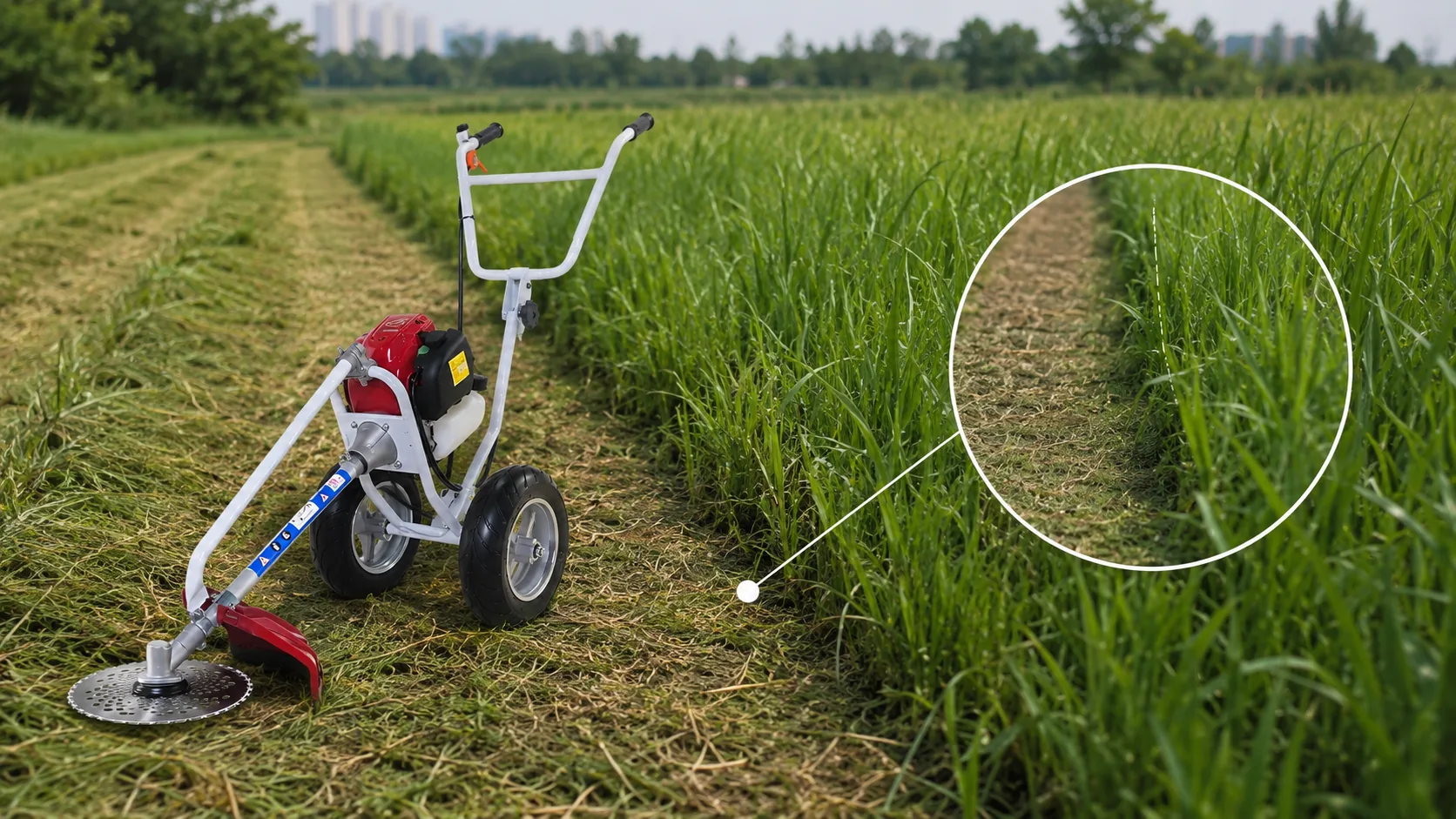
A wheeled brush cutter may leave narrow strips, random patches, or raised grass behind even when the engine appears to run normally. The cause is often related to cutting-head alignment, forward speed, wet vegetation, worn cutting line, reduced engine speed, or grass being pressed down by the wheels.
For farmers, contractors, dealers, and machinery importers, identifying the cutting pattern is the fastest way to separate an operating issue from a setup, maintenance, or product-selection problem.
A wheeled brush cutter usually leaves strips of uncut grass because the cutting head is tilted, the operator is walking too fast, or the cutting line is too short or weak for the vegetation. Stop the machine, remove wrapped grass, check that both wheels and the cutting head are level, restore the correct line length, and test the machine again on dry grass using a slower, slightly overlapping pass.
Start With the Pattern of the Missed Grass
The shape and position of the uncut area usually provide the first useful clue. Dealers should ask customers to photograph the cutting result before recommending replacement parts, because a consistent strip and a random patch often have completely different causes.
|
PATTERN 01
One-Sided StripA strip that repeatedly appears on the same side normally points to an uneven wheel position, a tilted cutting head, loose frame hardware, or unequal height adjustment. |
PATTERN 02
Random PatchesIrregular missed areas are more commonly caused by changing walking speed, uneven ground, wet vegetation, low engine speed, or cutting line that has become too short. |
PATTERN 03
Center or Wheel TrackGrass missed behind the wheels or frame may have been pressed flat before reaching the cutting path, especially when the vegetation is wet or growing at an angle. |
Before replacing a head, clutch, shaft, or engine part, test the machine on a flat and dry section of grass. Complete two straight passes at a stable engine speed and overlap the second pass slightly with the first. If slowing down improves the result, the machine was probably being moved faster than the cutting attachment could handle the vegetation.
Check Whether the Cutting Head Is Level
Unlike a handheld brush cutter, a wheeled model relies on its frame and wheels to maintain the cutting angle. If one wheel sits lower because of incorrect assembly, loose fasteners, wheel wear, tire condition, or a bent bracket, one side of the cutting attachment may run closer to the ground than the other.
Simple Alignment Test
- Switch off the engine and place the machine on level ground.
- Confirm that both wheels contact the surface evenly.
- View the cutting head from the front and check whether it is parallel to the ground.
- Compare the left and right height-adjustment positions.
- Tighten frame, handle, wheel, guard, and cutting-head fasteners before testing again.
For distributors, unclear wheel and frame assembly instructions can become a major source of early complaints. Machines should be inspected after assembly, not only while still folded or partially packed in the carton.
Reduce Walking Speed in Tall or Heavy Vegetation
A push-type brush cutter reduces the need to carry the engine, but it still requires enough contact time to cut each section cleanly. When the operator moves too quickly, the cutting line or blade may push the grass forward instead of cutting it.
This is especially common in tall weeds, fibrous grass, wet growth, orchard floors, field boundaries, and areas that have not been cleared for a long time. The engine may continue running, but the cutting attachment cannot recover quickly enough between stems.
Confirm That the Engine Maintains Working Speed
A brush cutter may start and idle normally but still leave grass behind when the cutting head cannot maintain enough speed under load. Common causes include a dirty air filter, restricted fuel flow, incorrect fuel mixture, poor carburetor adjustment, a worn clutch, or vegetation wrapped around rotating parts.
Listen for a clear drop in engine speed when the machine enters the grass. If the engine repeatedly bogs down, stop and inspect the cutting area. Continuing to push the machine while rotation is slowing can increase clutch wear, produce an uneven finish, and create avoidable after-sales complaints.
| Observed Problem | Likely Cause | First Check | Dealer Advice |
|---|---|---|---|
| Engine loses speed in grass | Overload, blocked air filter, restricted fuel flow, or wrapped vegetation | Clean the head, inspect the filter, and test on lighter vegetation | Ask for a video under load |
| Same side always misses grass | Wheel or cutting-head alignment | Place the machine on a level surface | Check assembly before approving a return |
| Wide gaps between passes | Line is too short or passes do not overlap | Measure line reach and test an overlapping pass | Provide correct consumable guidance |
| Grass returns upright after cutting | Wet or flattened vegetation | Test after the surface has dried | Explain vegetation-condition limits |
Inspect the Cutting Line, Blade, and Head
The real cutting width depends on the usable reach and condition of the installed line or blade. Line that has become too short can leave visible gaps. Line that is badly worn, softened during storage, or too light for the vegetation may bend backward instead of cutting cleanly.
Both sides of the line should be replaced evenly to keep the head balanced. Incorrect winding can restrict line feeding and create different line lengths on each side. Importers should also consider the type of vegetation in the target market rather than supplying one consumable specification for every application.
Consumable Selection Matters
Maintained garden grass, roadside weeds, dry fibrous growth, orchard grass, and thick tropical vegetation may require different line thicknesses, blade options, and working methods. Dealers should stock the consumables customers will actually need, not only the attachment supplied with the machine.
Can Wet or Flattened Grass Create Missed Strips?
Wet grass is heavier and more likely to lie flat under the wheels, guard, or frame. Once pressed down, it may pass underneath the cutting path and stand up again after the machine moves forward. The result can look like a mechanical defect even though the same machine cuts evenly in dry conditions.
Whenever possible, wait until surface moisture has dried. Approach flattened vegetation from another direction, reduce forward speed, and overlap passes near wheel tracks, field edges, drainage channels, and sloped ground.
Which Wheeled Brush Cutter Fits the Customer’s Work?
Uneven cutting complaints sometimes come from product-market mismatch rather than a mechanical failure. A machine selected for maintained garden grass may not satisfy customers who regularly clear heavy weeds, vacant plots, dry field edges, or dense tropical vegetation.
TM-WBC435 Wheeled Brush Cutter
The TM-WBC435 wheeled brush cutter uses a GX35 four-stroke, air-cooled engine and has a listed net weight of 18 kg.
It may suit garden maintenance, orchard rows, roadside work, and buyers who prefer straight gasoline operation instead of preparing a two-stroke fuel mixture. It also provides an alternative for customers who do not want to carry a side-mounted or backpack brush cutter during longer jobs.
| View This Model |
TM-WBC520A Hand-Push Brush Cutter
The TM-WBC520A hand-push brush cutter is specified with a 51.7 cc two-stroke engine, 1.80 kW rated output, a 1:30 mixed-fuel ratio, and a 700 mm cutting width.
This configuration may be more relevant for customers clearing taller grass, rough weeds, orchard floors, vacant plots, and field edges. Dealers should clearly explain the required mixed-fuel ratio, because incorrect fuel preparation is a common preventable cause of performance problems.
| Check Specifications |
Four-Stroke and Two-Stroke Model Comparison
| Buying Factor | TM-WBC435 | TM-WBC520A |
|---|---|---|
| Engine type | GX35 four-stroke | 51.7 cc two-stroke |
| Fuel handling | Suitable for buyers who prefer gasoline without preparing mixed fuel | Requires correct 1:30 fuel mixture and clear user training |
| Typical market fit | Garden maintenance, orchard rows, roadside work, regular clearing | Taller grass, rough weeds, field edges, vacant plots, heavier clearing |
| Main dealer concern | Local four-stroke servicing familiarity | Fuel-mixing education and consumable selection |
| Recommended sales approach | Promote ease of fuel handling and reduced carrying effort | Explain working conditions, fuel ratio, line or blade choice, and pass speed |
What Importers and Dealers Should Check Before Ordering
Engine displacement alone does not determine whether a wheeled brush cutter will perform well in a target market. The complete machine must be stable, simple to assemble, suitable for local vegetation, and easy for dealers to service.
Importer and Dealer Checklist
|
|
Dealers should record the recommended walking speed, pass overlap, consumable type, fuel method, and maintenance routine during sample testing. These instructions can then be provided to sales staff and end users before complaints occur.
How Dealers Should Handle Uneven Cutting Complaints
When a customer says that the machine “does not cut evenly,” replacing the machine immediately may not solve the problem. Dealers should first collect enough information to identify whether the complaint relates to setup, vegetation condition, consumables, engine performance, or product selection.
Questions to Ask the Customer
- Was the grass dry, wet, flattened, fibrous, or unusually tall?
- Does the missed strip always appear on the same side?
- Was cutting line or a metal blade installed?
- Did the engine lose speed when entering the vegetation?
- Were the wheels and handle assembled by the dealer or the customer?
- Does the result improve when the operator walks more slowly?
A practical remote test is to ask the customer to remove wrapped vegetation, restore the correct line length, place the machine on level ground, and make a slow pass on dry grass. If the same side still misses grass, inspect the wheel frame and cutting-head position. If the result improves at lower speed, the machine was probably overloaded by vegetation density or excessive forward movement.
How to Prevent Uneven Cutting From Returning
Before each use, inspect the cutting line or blade, remove wrapped grass, confirm that the guard and cutting head are secure, and check the wheel frame for looseness. Keep the air filter clean, use the correct fuel for the engine type, and replace damaged consumables before they become unbalanced.
During operation, maintain normal working speed, walk steadily, and overlap each pass. Trying to cover the maximum possible width on every pass often creates more missed grass and increases the need to repeat the same area.
Uneven cutting is rarely caused by one major defect. It is more often the combined result of a tilted frame, unsuitable consumables, reduced cutting speed, difficult vegetation, or an incorrect operating pace. A short inspection and controlled test cut can usually identify the cause before unnecessary parts are replaced.
Frequently Asked Questions
Why does my wheeled brush cutter miss grass on one side?
A consistent missed strip on one side normally indicates that the cutting head is tilted or one wheel is sitting at a different height. Place the machine on level ground, compare both wheel positions, and inspect the frame and cutting-head mounting points.
Can walking too fast cause uneven brush cutter results?
Yes. When the machine moves too quickly, the line or blade may push vegetation forward instead of cutting it. Reduce walking speed and use narrower, overlapping passes in tall or dense areas.
Does wet grass make a wheeled brush cutter leave strips?
Wet grass can be pressed flat by the wheels or frame and pass below the cutting path. It may stand up again after the machine moves forward. Cutting after the surface dries and changing the direction of travel usually improves the result.
What spare parts should dealers stock for wheeled brush cutters?
Common stock should include cutting line, line heads, blades, throttle cables, wheels, guards, air filters, fuel-system parts, starter parts, and clutch-related components. The exact list should match the engine and cutting system supplied with each model.
Should importers choose a four-stroke or two-stroke wheeled model?
A four-stroke model may suit customers who prefer straightforward gasoline operation and familiar four-stroke servicing. A larger two-stroke model may fit markets with heavier vegetation, but dealers must clearly explain the mixed-fuel requirement and stock suitable consumables.
How can dealers reduce returns caused by uneven cutting?
Inspect machine alignment after assembly, test samples on local vegetation, provide clear operating instructions, and ask customers for photos or videos before approving a return. Many complaints can be resolved through adjustment, cleaning, correct line length, or slower operation.
Compare Wheeled Brush Cutter Models for Your Market
For importers and dealers looking for wheeled brush cutters for garden maintenance, orchard clearing, roadside work, or heavier vegetation, Teamax Power can provide different engine configurations for different market requirements. Compare the models, local servicing conditions, fuel habits, and spare-parts needs before confirming a bulk order.
| View TM-WBC435 |
| View TM-WBC520A |