
Brush Cutter Warranty Claims: What Should Suppliers Review?
Prepare a brush cutter warranty claim with machine identification, symptom evidence and service records so importers and suppliers can review the same case.
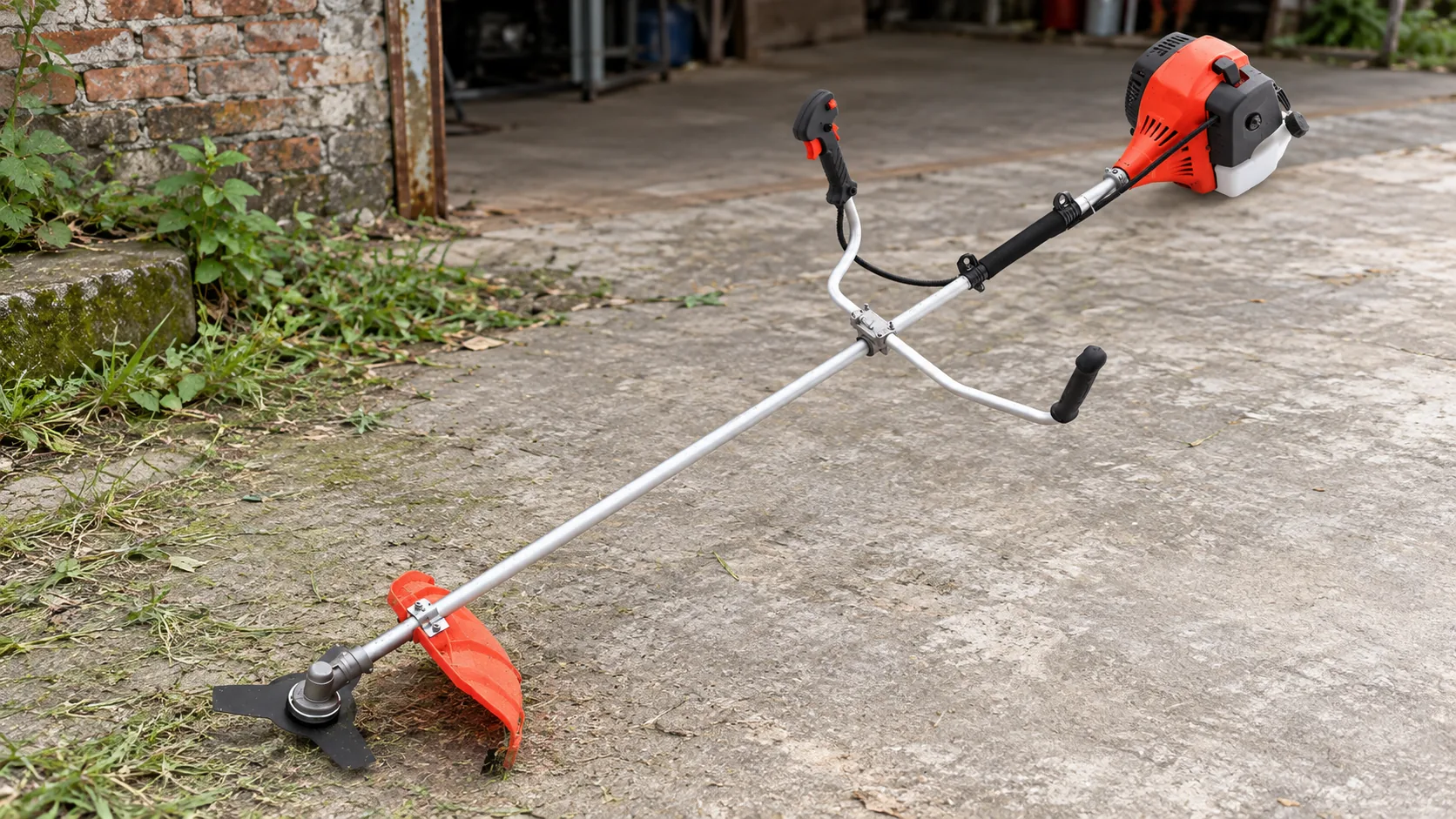
DEALER SERVICE RECORDS / IMPORTER AFTER-SALES
Brush Cutter Warranty Claim: What Evidence Should Dealers Submit?
A brush cutter warranty claim needs to identify the individual machine, describe the observed fault and preserve evidence for review. The importer’s report should distinguish the customer’s account from the dealer’s inspection. A short video labeled “engine problem” usually leaves too many questions unanswered.
The initial report establishes a reviewable case. Coverage, authorized repair work and any commercial remedy follow the warranty terms agreed for the order; submitting evidence does not automatically establish eligibility.
Identify the Returned Machine Before Assessing the Complaint
Start with the purchase order or invoice reference, supplied model, dealer handling the return and available machine identification. Use a serial number or production marking where provided. If individual numbering is unavailable, assign a dealer case reference and photograph identifying features. Make clear that the dealer reference is not a factory serial number.
For the TM-CG520TN, the listed 1E44F-5N engine and 51.7cc displacement help distinguish the machine from other products sold in the commercial 52cc category. Photograph the actual engine marking rather than relying on the customer’s description of a “52cc cutter.”
The listed 28mm shaft diameter is another reference point. For cutting-end or transmission complaints, include the complete supplied shaft assembly and fitted attachment. Diameter alone does not establish that components fitted later belong to the original configuration.
Record whether the machine arrived assembled, was assembled locally or has had an attachment, engine-related part or control component changed since sale. A configuration difference belongs in the evidence; it does not automatically explain the fault. Keep shipment damage and missing-item reports distinguishable from operating faults, since their evidence may begin with carton condition or delivery records.
Describe What Happens and Under Which Conditions
“Weak,” “bad quality” and “broken engine” may express the customer’s concern, but they do not identify an observable symptom. Ask what happens, when it happens and what the machine does immediately before and after.
| Reported observation | Information to add | Keep the finding open |
| Engine will not start | Cold or warm condition, last successful use and dealer observations | Do not name a failed component without inspection. |
| Engine stops during work | Whether it stops at idle, on acceleration or after entering vegetation | Record the operating stage rather than assuming overload. |
| Engine runs but cutting stops | Whether engine speed also falls and which attachment is fitted | Describe engine and attachment behavior separately. |
| Machine vibrates | Where movement is felt and whether it began after an attachment change or impact | A preceding event is relevant history, not proof of cause. |
Record when the symptom was first noticed, the reported operating history and any available service history. Label customer-estimated hours as estimated. For cutting complaints, describe the vegetation and attachment without deciding in advance that the operator overloaded the machine or that the engine failed.
Keep the source of each statement visible. “Customer reports difficult hot restarting” and “technician observed difficult hot restarting” describe different levels of verification. Several machines returned on the same day still need separate symptom records.
Preserve the Received Condition Before Making Changes
Photograph the complete machine, identification markings and complaint area. Start with an overall view, then add close-ups so the supplier can locate each detail. For visible damage, show its location and extent rather than submitting only a tightly cropped fragment.
Where a demonstration is safe, identify the machine in the video, state the test condition and retain the transition into the symptom. Avoid edits that remove what happened immediately before the fault. If operation would be unsafe, use photographs and a written description instead.
Stop operation when the evidence already shows an unsafe condition
Do not run a brush cutter with a fuel leak, insecure cutting attachment, damaged guard or severe unexplained vibration to obtain a more convincing video. Stop the engine and prevent accidental starting according to its instructions before close inspection.
Record the condition before cleaning, adjustment or dismantling where practical. If cleaning is necessary for safe handling, explain what was done. Preserve removed parts and their identification until the supplier provides retention or return instructions.
Agree on Inspection Scope and Verify the Repair Outcome
The supplier’s first response should identify missing evidence and propose a specific next step. Confirm that the local dealer has the tools, instructions and competence to perform it. Where the agreed process requires authorization, obtain it before opening an assembly or replacing an engine. Document urgent work needed to make the machine safe.
Maintain a short service log: date, person performing the work, instruction followed, components disturbed and result. For a measured setting, record the instrument and value. Describe visual or audible observations as such instead of presenting them as measurements.
When a replacement part is proposed, identify its reference and intended machine configuration. Record what was replaced and whether the original symptom remains after the prescribed verification. Delivery of a spare part does not establish that the case is resolved.
Close the record with the technical finding where established, action taken and outcome. If the cause remains uncertain, retain that uncertainty rather than assigning an unsupported manufacturing defect or operator error.
Compare Multiple Claims Using Individual Machine Records
Keep one case per machine, then compare order references, production markings where available, configurations, first-use dates, symptoms and confirmed workshop findings. These fields allow the importer to investigate a pattern without losing the evidence behind each return.
Count affected machines separately from messages and replacement requests. Repeated discussions about one machine remain one case; several machines mentioned in one dealer message require separate identification.
Similar complaints warrant investigation but do not establish a common cause. Compare inspection results before deciding whether to examine retained stock, request further samples or revise dealer guidance.
Build a Brush Cutter Warranty Claim File Dealers Can Complete
Agree on the reporting contact, required information, inspection authorization process and closing record before distribution begins. Use the following checklist to review each submission.
Importer / Dealer Evidence Checklist
- Purchase order or invoice reference and dealer handling the return
- Supplied model, actual engine marking and available serial or production identification
- Clearly labeled dealer case reference when individual factory numbering is unavailable
- Assembly history, fitted attachment and known component changes
- Observable symptom, operating condition and date first noticed
- Customer account separated from technician findings, with estimated use labeled accordingly
- Overall photographs, identification images and relevant damage or component close-ups
- Safe demonstration video where appropriate, or an explanation of why operation was stopped
- Record of cleaning, adjustments, dismantling and retained removed parts
- Inspection authorization and service log, including replacement-part references
- Verification result, case outcome and any unresolved uncertainty
MODEL FOR A CONFIGURATION-SPECIFIC REPORTING PROCESS
TM-CG520TN Gasoline Brush Cutter
Reference details: 1E44F-5N engine, 51.7cc displacement and 28mm shaft diameter.
For importers distributing this model, build claim records around the actual engine identification and supplied shaft-and-attachment assembly. These details support case identification; they do not establish a fault diagnosis, parts compatibility or warranty coverage.
| View Product Details |
Questions Dealers Ask Before Submitting a Claim
Does a brush cutter warranty claim require a confirmed diagnosis?
The initial report should identify the machine and document the observed symptom. It does not need to assert a failed component before inspection. Coverage and further work follow the agreed warranty process.
What if the machine has no individual serial number?
Use available production markings, order details and photographs. Assign a dealer case reference for tracking, but do not describe it as a factory serial number.
Must the dealer provide a running video?
Only demonstrate the symptom when it can be done safely. For an unsafe condition, submit photographs and a written description. Do not recreate the fault simply to strengthen the claim.
Does an attachment change automatically explain the problem?
No. Record the change and relevant timing, then assess it with the other evidence. A configuration difference alone does not establish the cause.
Can several similar returns be submitted as one failure?
Maintain an individual record for each machine and group them for comparison. Similar symptoms justify investigation, but a common cause requires supporting findings.
When should the dealer mark a case as resolved?
After documenting the action taken and the result of the prescribed verification. Receipt of a replacement part alone does not confirm that the original symptom has been resolved.
Agree on the Reporting Route Before DistributionFor a TM-CG520TN supply agreement, define who receives each brush cutter warranty claim, which evidence dealers must provide and how inspection and closure are recorded. Give the supplier an identifiable case and give the dealer a specific next action.
|