
4-Stroke Brush Cutter Smoking: Causes, Checks and Fixes
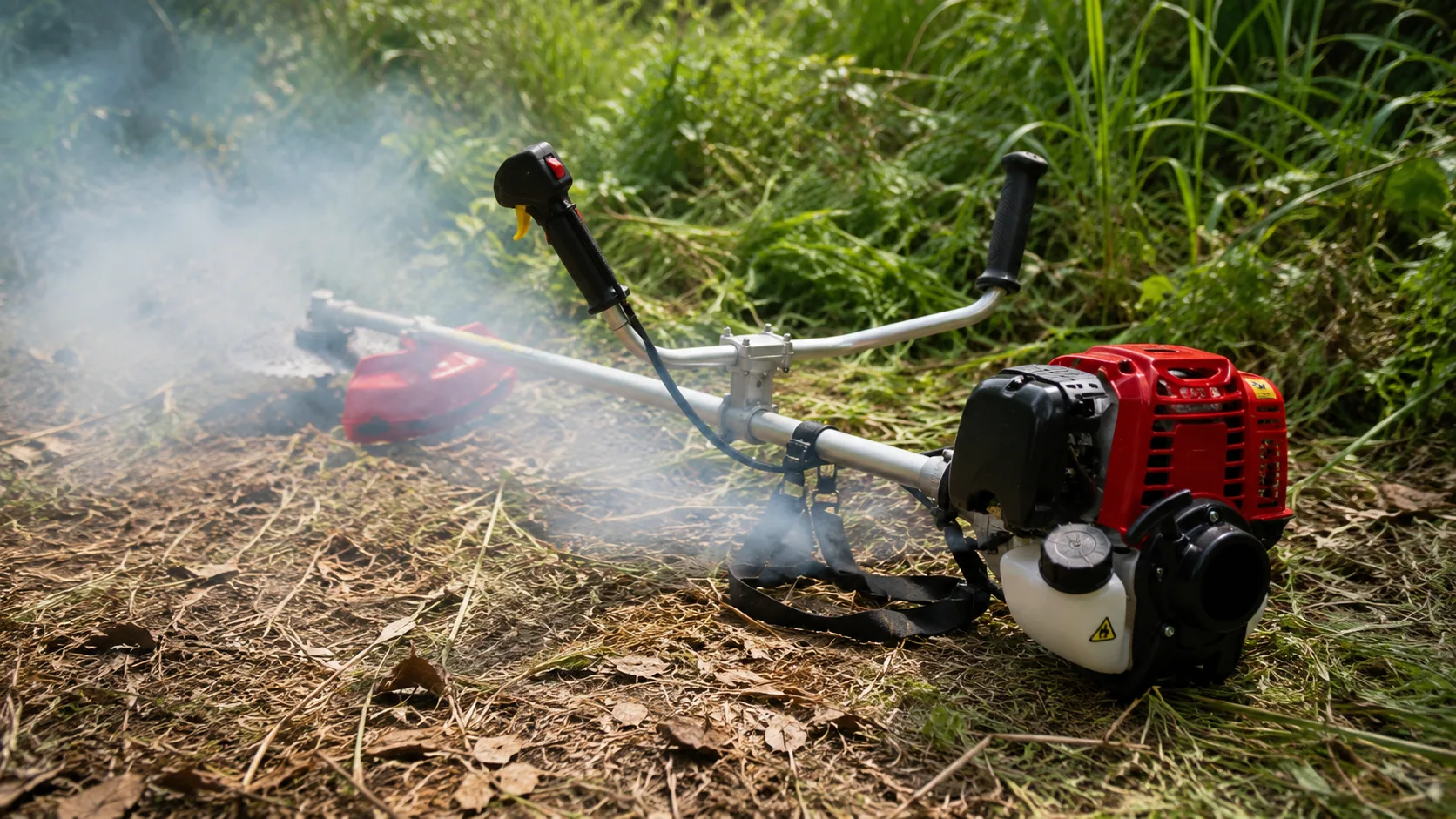
Is your 4-stroke brush cutter smoking? Check oil level, storage position, air filter, fuel mixture and engine wear before replacing major parts.
|
4T
|
Engine Smoke Diagnosis for Dealers and Importers A 4-stroke brush cutter may smoke because of excess engine oil, incorrect transport position, oil inside the air-filter housing, restricted airflow or an overly rich fuel mixture. Smoke that clears shortly after transport may be temporary, but continuous smoke during normal cutting requires a structured inspection. |
|
Quick Answer Start with the oil level and smoke color. Blue or blue-gray smoke usually points to engine oil entering the combustion chamber, while black smoke usually indicates excessive fuel or insufficient airflow. Check the machine position, oil quantity, air filter and choke operation before adjusting the carburetor or opening the engine. |
Smoke color, operating temperature and the moment when the smoke appears provide useful diagnostic clues. Dealers should ask whether the smoke started after an oil change, after transport, when the machine was tilted, during full-throttle work or only during the first few seconds after startup.
These details help separate a correctable maintenance issue from fuel-system faults or internal engine wear. They are also important for importers evaluating whether a complaint is caused by operation, packaging, transport or production consistency.
Three Referenced 4-Stroke Brush Cutter Models
|
|||
|
|||
|
What the Smoke Color Usually Indicates
Smoke color is a useful starting point, although it should not be treated as a final diagnosis. Lighting conditions, engine temperature and fuel quality can change its appearance.
|
Blue or Blue-Gray Engine Oil Is BurningPossible causes include overfilling, incorrect storage, prolonged tilting, oil inside the intake system or internal engine wear. |
Black or Dark Gray Fuel Mixture Is Too RichCheck the choke position, air-filter restriction, carburetor condition and whether too much fuel is entering the engine. |
Light White Smoke May Be TemporaryBrief smoke after transport or incorrect positioning may clear, but persistent smoke after warm-up requires inspection. |
Also record whether the smoke appears:
- Only during cold starting
- Immediately after transport or unpacking
- When the brush cutter is tilted
- During full-throttle cutting
- After an oil change
- Continuously at idle and working speed
Check for Too Much Engine Oil First
Overfilling is one of the most common conditions to investigate when a 4-stroke brush cutter starts smoking after maintenance. Compact handheld engines have relatively small oil capacities, so even a modest excess can push oil into the breather, air-cleaner housing or combustion chamber.
Check the oil with the engine stopped and positioned exactly as described in the model instructions. The machine normally needs to be level. Depending on the engine design, the dipstick may need to be inserted without being screwed into the filler neck.
Corrective Steps When the Engine Is Overfilled
| 01 | Stop the engine and allow it to cool. |
| 02 | Drain the excess oil into a suitable container. |
| 03 | Recheck the level with the machine correctly positioned. |
| 04 | Clean oil from the engine exterior and muffler area. |
| 05 | Inspect the air-filter housing for oil contamination. |
| 06 | Restart outdoors and observe whether the smoke gradually clears. |
Maintenance warning: Do not assume additional oil provides better protection. Both insufficient oil and excessive oil can damage a small 4-stroke engine.
Was the Machine Stored or Transported on the Wrong Side?
A handheld 4-stroke engine may work at different cutting angles, but this does not mean that every storage or transportation position is acceptable. During shipping, engine oil can move into the breather, cylinder or air-cleaner housing when the machine is placed on the wrong side.
This condition can cause heavy smoke when the brush cutter is first started after delivery, even when the internal engine components are not damaged.
Before Transportation
|
Before Restarting
|
When several machines from one shipment smoke during their first startup, investigate carton orientation, warehouse stacking, pre-delivery oil preparation and transport handling before treating every engine as internally defective.
Inspect the Air Filter for Excess Oil or Dust
Some small 4-stroke engines use a reusable foam filter that is lightly treated with oil. When excessive oil remains in the element after cleaning, it can enter the intake and cause smoke during startup.
| Filter Condition | Possible Effect | Recommended Action |
|---|---|---|
| Foam saturated with oil | Oil may enter the carburetor inlet | Clean correctly and squeeze out excess oil |
| Heavy dust contamination | Restricted airflow and rich combustion | Clean or replace the filter |
| Oil inside the housing | Incorrect storage or overfilled crankcase | Correct oil level and clean the housing |
| Damaged filter seal | Dust can enter the engine directly | Replace the element |
| Blocked intake opening | Air restriction remains after filter replacement | Clear grass, mud or packaging debris |
Do not operate the brush cutter without the air filter to see whether the smoke disappears. Unfiltered dust can rapidly wear the cylinder, piston rings and valve components.
Check Whether the Choke Is Remaining Closed
Black smoke, uneven running and a strong gasoline odor may indicate that the engine is operating with the choke partly or fully closed. The choke enriches the mixture for cold starting and should return to the normal operating position after the engine starts.
Control InspectionConfirm that the choke lever moves through its complete range and that the choke plate opens fully. |
Linkage InspectionCheck for bent control parts, packaging damage or debris preventing normal movement. |
Operator TrainingMake sure customers understand when to release the choke after a cold start. |
Underlying FaultAn engine that only runs with partial choke may have restricted fuel flow or carburetor contamination. |
Leaving the choke partly closed is not a proper repair. It can increase fuel consumption, contaminate the spark plug and hide the real fuel-delivery problem.
Gasoline and Engine Oil Must Be Handled Separately
A conventional 4-stroke brush cutter uses gasoline in the fuel tank and engine oil in a separate lubrication system. Gasoline should not be mixed with two-stroke oil unless the actual engine specification explicitly requires it.
Importer Documentation Check
Product pages, machine labels, carton stickers, manuals and dealer training sheets must all describe the same engine type. A specification sheet that identifies a four-stroke engine but still instructs customers to prepare premixed fuel can create smoking, poor lubrication and serious warranty disputes.
Confirm These Details for Every Model
- Whether the engine is two-stroke or four-stroke
- Correct gasoline requirements
- Recommended engine-oil grade
- Correct oil-level checking position
- Crankcase oil capacity
- Initial filling procedure
- Oil-change interval
Could the Carburetor Be Running Too Rich?
If the choke opens completely and the air filter is clean, persistent black smoke may be caused by excessive fuel delivery. The carburetor should only be inspected after basic fuel, air and oil checks have been completed.
| Possible Cause | Typical Result | Dealer Check |
|---|---|---|
| Incorrect adjustment | Rich operation and black smoke | Record settings before changing them |
| Leaking needle valve | Fuel enters the engine continuously | Inspect sealing and fuel level |
| Contaminated metering parts | Unstable fuel delivery | Clean using the correct procedure |
| Incorrect replacement carburetor | Wrong fuel calibration | Confirm the part number and engine family |
| Fuel leakage while stopped | Flooding during the next start | Inspect valve, gasket and fuel system |
Random adjustment may hide the original fault or create an excessively lean condition that raises engine temperature. Dealers should record starting behavior, idle stability, throttle response and smoke level before changing any setting.
When Blue Smoke Suggests Internal Engine Wear
Persistent blue smoke after correcting the oil level, storage position and air filter may indicate internal oil consumption. Possible causes include worn piston rings, cylinder wear, valve-guide wear, damaged seals or a crankcase-ventilation problem.
| Oil Level Drops
The crankcase needs repeated topping up between normal service intervals. |
Spark Plug Is Oily
Oil deposits repeatedly contaminate the plug after cleaning or replacement. |
Compression Is Reduced
The engine becomes difficult to start and produces weak cutting performance. |
| Smoke Under Acceleration
Blue smoke becomes heavier when engine speed or load increases. |
Crankcase Pressure
Oil mist or leakage appears around the breather or filler area. |
Smoke Never Clears
The engine continues smoking after reaching normal operating temperature. |
Do not diagnose internal wear from smoke alone. Compression, leak-down and crankcase-breather checks should be completed according to the engine service procedure. New machines with persistent oil-burning symptoms should be isolated from sale until the cause is confirmed.
Dealer Test Procedure for a Smoking Complaint
A structured test prevents unnecessary replacement of carburetors, ignition components and internal engine parts.
| Step | Inspection | What to Record |
|---|---|---|
| 1 | Confirm the engine type and fuel instructions | Label and manual consistency |
| 2 | Photograph the storage or transport position | Which side faced downward |
| 3 | Measure the engine-oil level correctly | Below, within or above specification |
| 4 | Inspect the air-filter housing | Oil, dust and sealing condition |
| 5 | Check full choke movement | Whether the plate opens fully |
| 6 | Start outdoors and observe at idle | Smoke color and duration |
| 7 | Apply throttle without cutting | Throttle response and smoke change |
| 8 | Test under controlled cutting load | Smoke under angle and load |
| 9 | Recheck oil after cooling | Evidence of oil consumption |
Which Model Fits Which Market?
| Model | Listed Engine | Recommended Market Use | Buying Focus | Dealer Advice |
|---|---|---|---|---|
| TM-CG139B | 139F-2 | Light maintenance and routine trimming | Clear oil instructions and spare-filter supply | Train users not to mix oil into gasoline |
| TM-CG435 | GX35 Type | Farm maintenance and commercial grass clearing | Oil-checking method and transport position | Test smoking after tilting and transport |
| TM-CG450 | GX50 Type | Heavier clearing and higher-load applications | Cooling, oil control and load performance | Inspect smoke under realistic cutting load |
Importer and Dealer Purchase Checklist
|
Product Quality
|
Documentation
|
|
Spare Parts
|
Commercial Supply
|
When the Brush Cutter Must Be Stopped Immediately
Arrange Inspection When Smoke Is Accompanied By:
- Abnormal knocking or metallic engine noise
- Repeated overheating
- Major engine-oil leakage
- Severe loss of cutting power
- Rapidly falling oil level
- Persistent blue smoke after warm-up
- Low compression or difficult starting
- Oil contamination around the spark plug
The safest diagnostic order is to check the oil quantity, machine position, air filter, choke and fuel instructions before investigating the carburetor or internal engine components. Continued operation can turn a simple maintenance problem into major engine damage.
Frequently Asked Questions
Why is my 4-stroke brush cutter producing blue smoke?
Blue smoke usually means engine oil is entering the combustion chamber. Check for overfilling, incorrect storage, excessive filter oil and internal engine wear.
Can too much engine oil make a brush cutter smoke?
Yes. Excess oil can enter the breather, air-filter housing or cylinder. Drain the excess and recheck the level with the machine positioned according to the manual.
Why does a new brush cutter smoke after transport?
The machine may have been stored on the wrong side, allowing engine oil to enter the intake or combustion chamber. Inspect the oil level and air-filter housing before restarting.
Can a dirty air filter cause black smoke?
Yes. A restricted air filter reduces airflow and creates an overly rich mixture. The engine may produce black smoke, lose power and consume more fuel.
Should gasoline and oil be mixed for a 4-stroke brush cutter?
Normally no. A conventional four-stroke engine uses gasoline in the fuel tank and engine oil in a separate crankcase. Always follow the actual model specification.
What should dealers check before selling 4-stroke brush cutters?
Dealers should check oil level, transport position, choke movement, air-filter condition, smoke at idle and under load, documentation consistency and spare-parts availability.
|
Four-Stroke Model Selection Compare Engine Configurations Before Placing a Bulk OrderFor importers and dealers looking for 4-stroke brush cutters, Teamax Power provides models for routine grass maintenance, agricultural use and heavier clearing work. Model selection should consider local service capability, engine-oil availability, operator habits and the expected cutting load.
|